Why Bees Build Hexagons: A Scientific Journey Into the Honeybee Hive
Beeswax is precious, yet bees build extravagant hexagonal hives. Discover why through interactive science experiments in a VR Science Lab — exploring biology, geometry, structural engineering, and biomimicry all in one immersive lesson.
When we think of bees, sweet honey usually comes to mind. But the honeycomb that holds it — seemingly ordinary — hides astonishing scientific wisdom. Today, let's immerse ourselves in the world of bees and their hives using the XR virtual teaching system in a VR Science Lab — a perfect example of how interactive science experiments can bring cross-disciplinary learning to life.

1. Bees and Their Hives
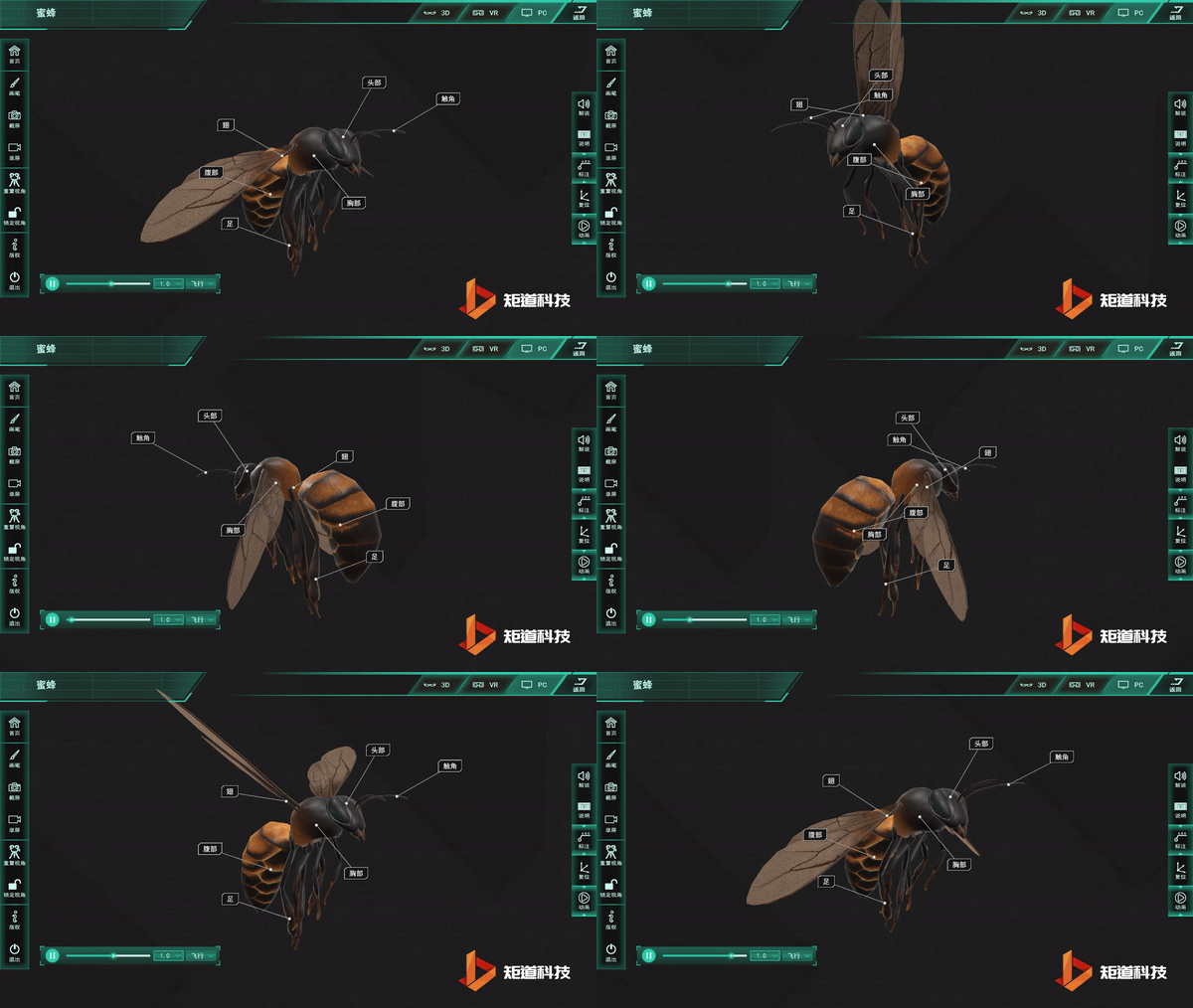
Bees are flying social insects belonging to the family Apidae, order Hymenoptera. Within a bee colony, there's a clear social division of labor: the queen bee, dedicated to laying eggs; worker bees, responsible for labor and construction; and drones, whose role is mating. All three types work together, and the hive serves as their home, their granary, and their nursery all at once.
2. Where Does Beeswax Come From?
Honeycombs are built mainly from beeswax secreted by worker bees. Under the abdomen of worker bees are specialized wax glands. After consuming honey, the wax glands inside a worker bee's body convert the carbohydrates in the honey into beeswax, which is then secreted in the form of wax scales for nest building.
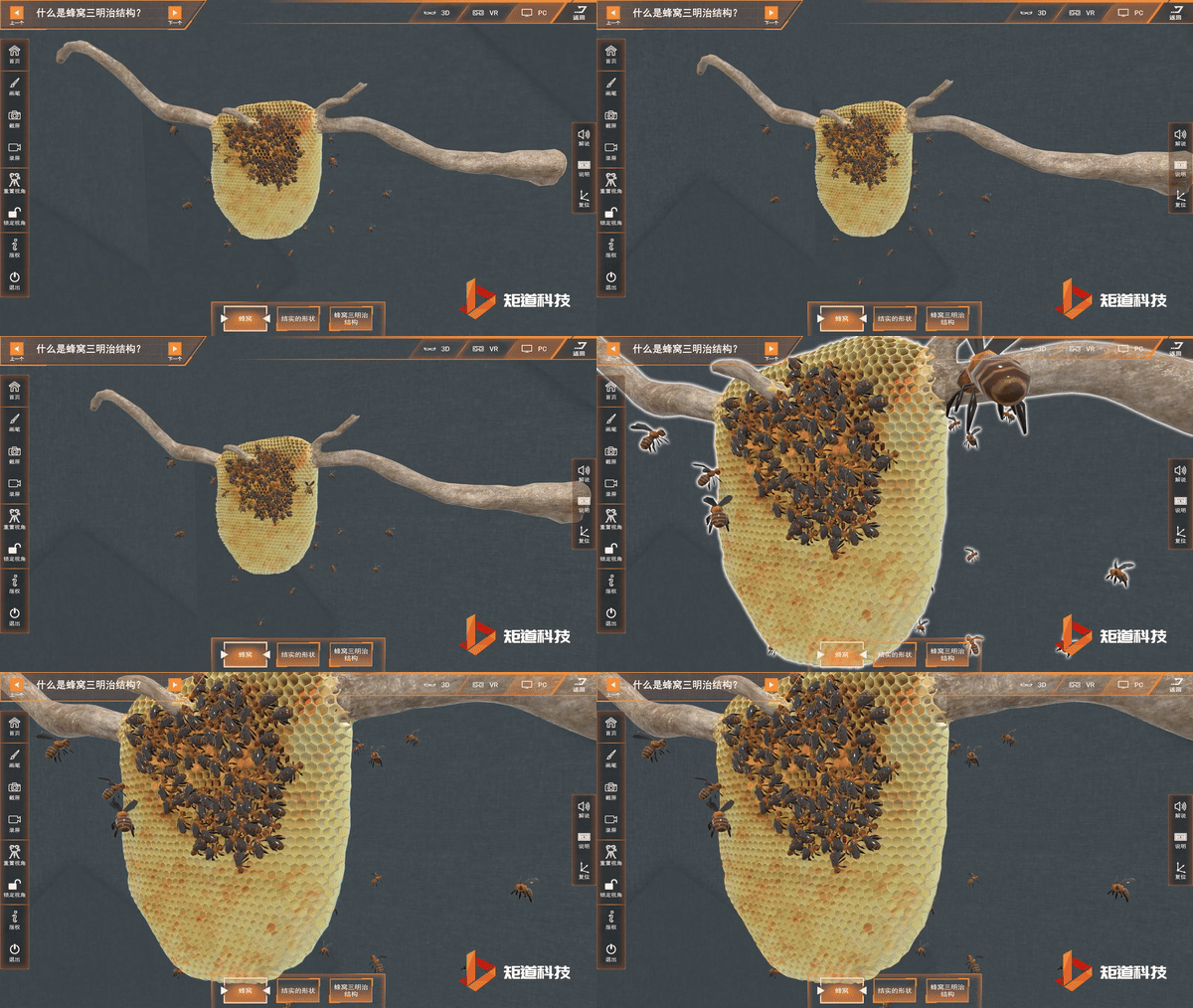
Obtaining beeswax isn't easy. To produce just a little wax, bees must consume several times their weight in honey — making every drop of wax in the hive incredibly valuable. The honeycomb consists of countless neatly arranged cells: some store honey, some hold pollen, some nurture larvae. Each cell has a clear purpose. What's most remarkable is the cross-sectional shape of these cells: in every hive, in every country, they're almost perfectly regular hexagons.
3. The Genius of Hexagons
① Hexagons tile the plane completely. If cells need to fit together tightly, their shape must fill an entire surface without gaps or overlaps — mathematically called "tessellation." Only three regular polygons can do this: equilateral triangles, squares, and regular hexagons. Circles always leave gaps between them, and regular pentagons always leave a missing corner when joined together.
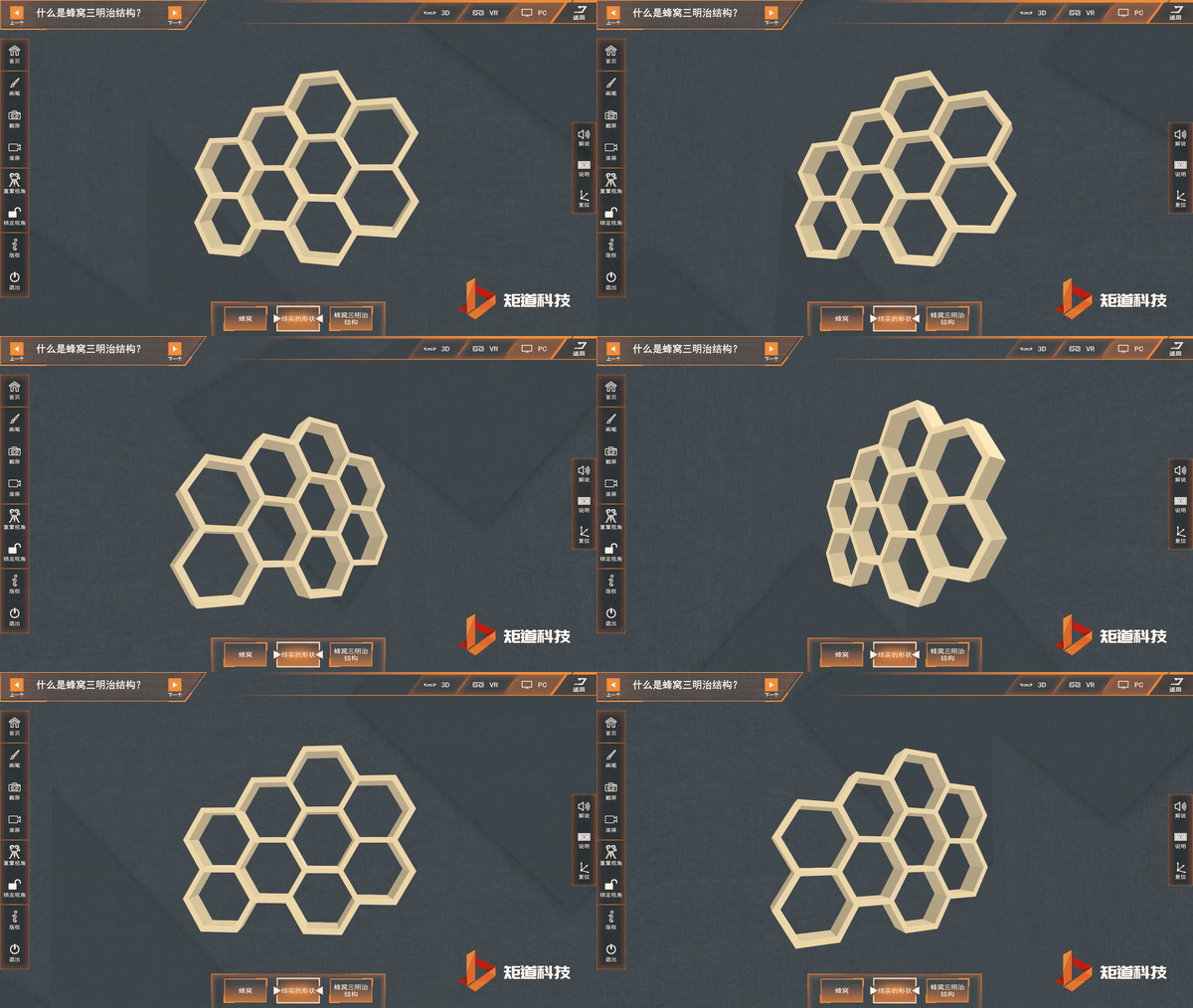
② Compared with triangles and squares, regular hexagons save more material. It can be mathematically proven that among the three tessellating regular polygons, when enclosing the same area, triangles and squares have longer perimeters, while hexagons have the shortest perimeter — meaning they use the least "wall" to enclose the same space. For bees, shorter dividing walls mean less honey and beeswax consumed in construction.
③ Hexagonal structure lets bees "build stronger houses with less building material." The honeycomb walls are interconnected, so when force is applied, the load distributes along the connected walls rather than concentrating at any single weak point. A thin layer of beeswax is enough to support honey and larvae many times its own weight, and it withstands the daily trampling of thousands upon thousands of bees.
4. Did Bees "Design" the Honeycomb?
The wisdom embedded in honeycombs goes even further. The cells tilt slightly upward, helping direct some of their contents' weight toward the thicker middle partition walls and improving the load-bearing capacity of the entire comb. Honey-storage cells and larva-rearing cells also differ in wall thickness and depth.
So are these remarkable hives "designed" by bees? Scientists have observed that bees initially build cells closer to circular in shape. It's when beeswax softens and becomes fluid under body heat that multiple circular wax tubes press against each other at their junctions and, under surface tension, "automatically" flow into hexagons — more like natural shaping through physical laws.
The hexagon comes both from the evolutionary wisdom of natural selection and from the physical properties of beeswax itself. Bee instinct and material properties together create the honeycomb. That's precisely what makes nature so fascinating.
5. Humans "Copying" Bees' Homework
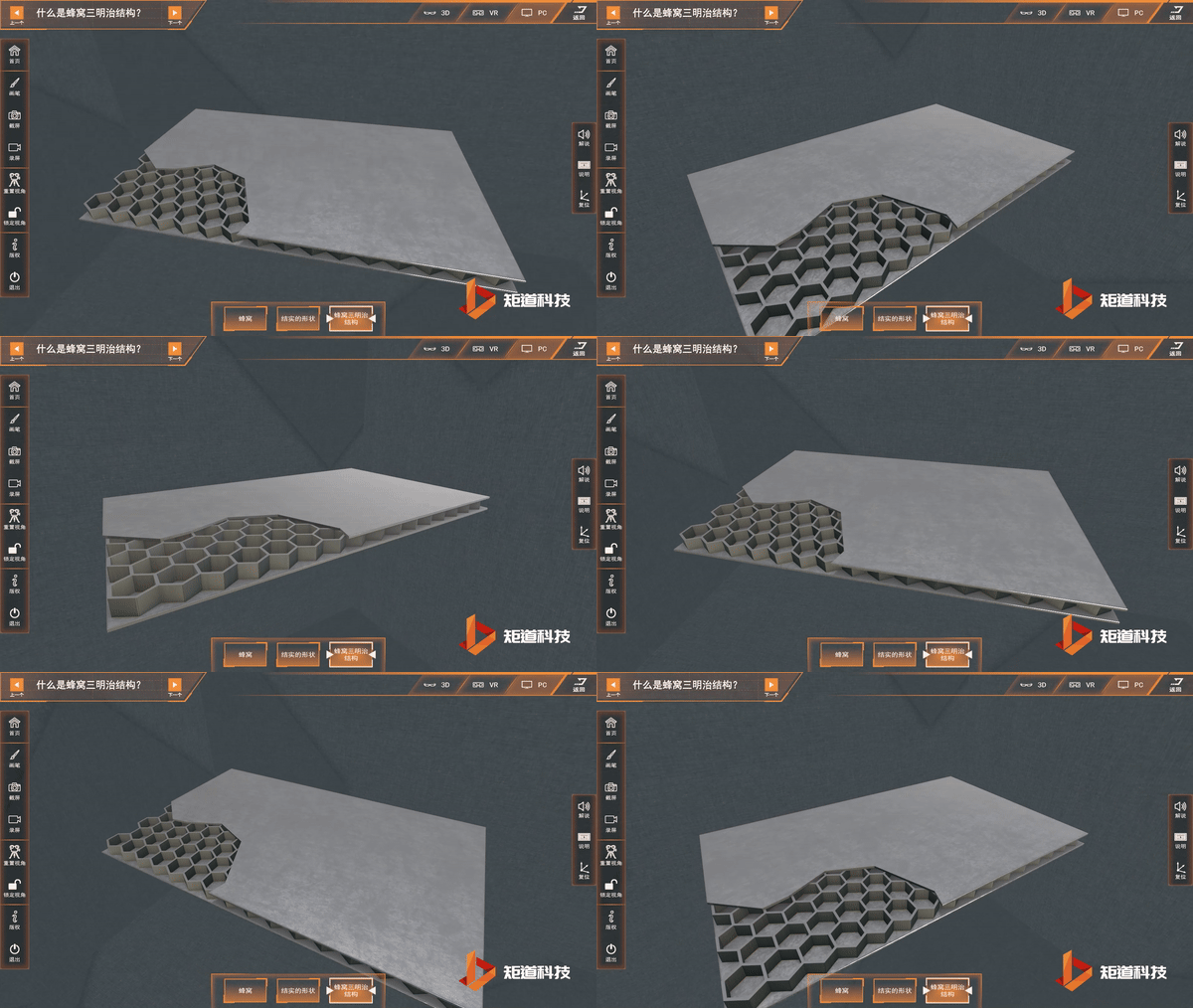
In biomimicry, the honeycomb is a textbook case. Aerospace and engineering fields extensively use honeycomb sandwich structures: two thin face sheets with a hexagonal honeycomb core in between. The whole structure is as light as a thin plate yet as strong as a thick wall. It's widely used in aircraft, rockets, satellites, and other spacecraft, providing an important material solution for humanity's exploration of the universe.
From the tiny honeybee to the vast reaches of space — the humble hexagon connects them all. In a VR Science Lab, students can rotate the honeycomb model, test different shapes for tessellation, and see for themselves why nature chose six sides over any other number. It's science you can reach out and touch.