VReaLab Biology Body Function

Bringing human physiology to life, enabling clear, intuitive understanding of complex body systems through immersive VR/3D experiences.

Compatible hardware:
Windows PCPICO Neo3 EnterprisePICO 4 Ultra Enterprise
Free Trial

What VR/3D Changes in Biology Body Function Learning

VR/3D makes biology visible, accessible, hands-on, and relevant for every young learner.

  • Beyond Traditional Perspectives

    Breaks the limitations of conventional teaching by expanding learning into immersive, multi-dimensional environments.

  • Dynamic Visualization

    Transforms abstract physiological concepts into clear, real-time visual processes.

  • Immersive Human Scenarios

    Recreates lifelike internal body environments for deeper understanding.

  • Interactive Learning Experience

    Encourages active exploration and inquiry through hands-on VR interaction.

VReaLab Biology Body Function — Three Themes

Digital curriculum spanning physiological visualization, health simulation, and interactive assessment.

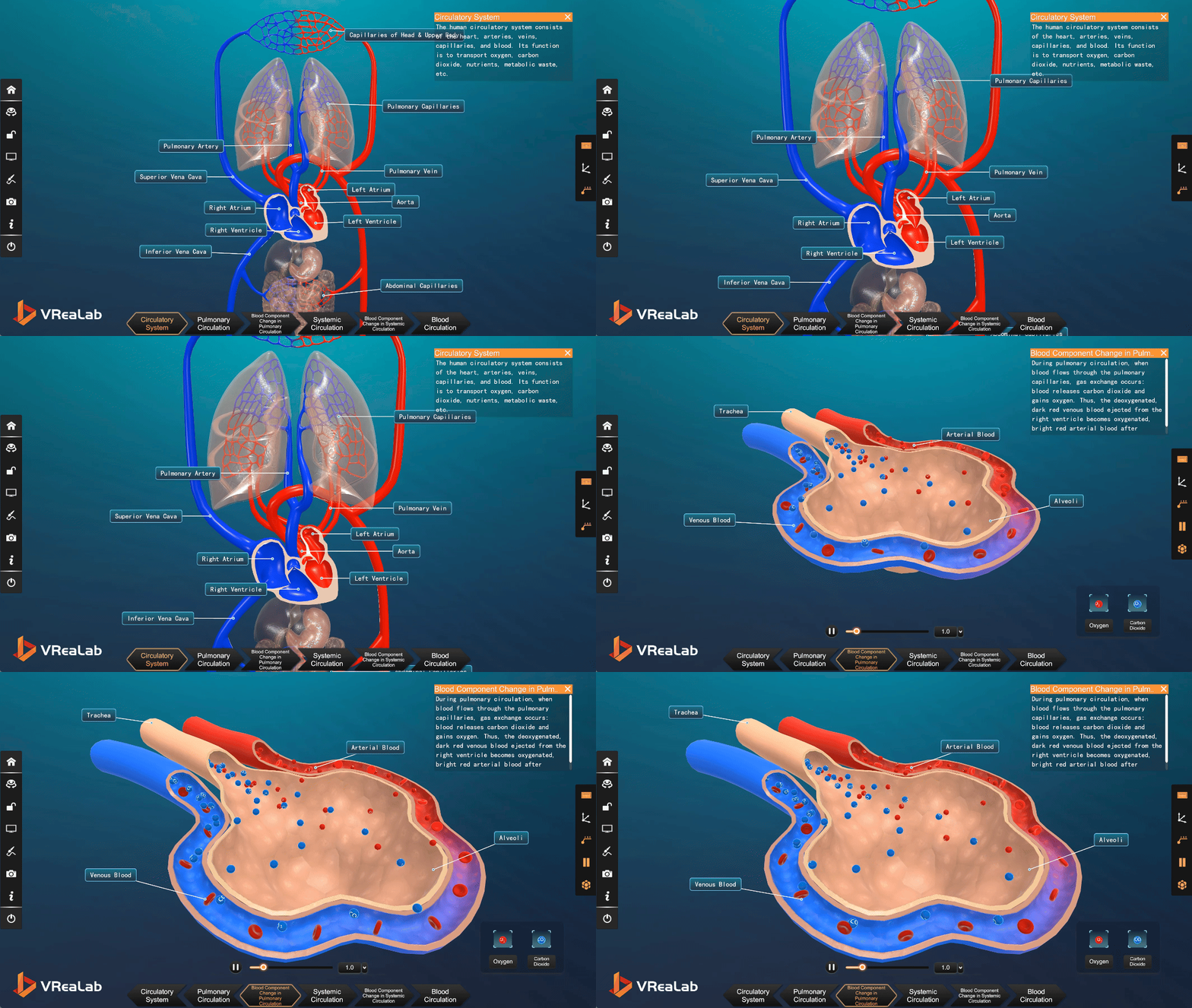
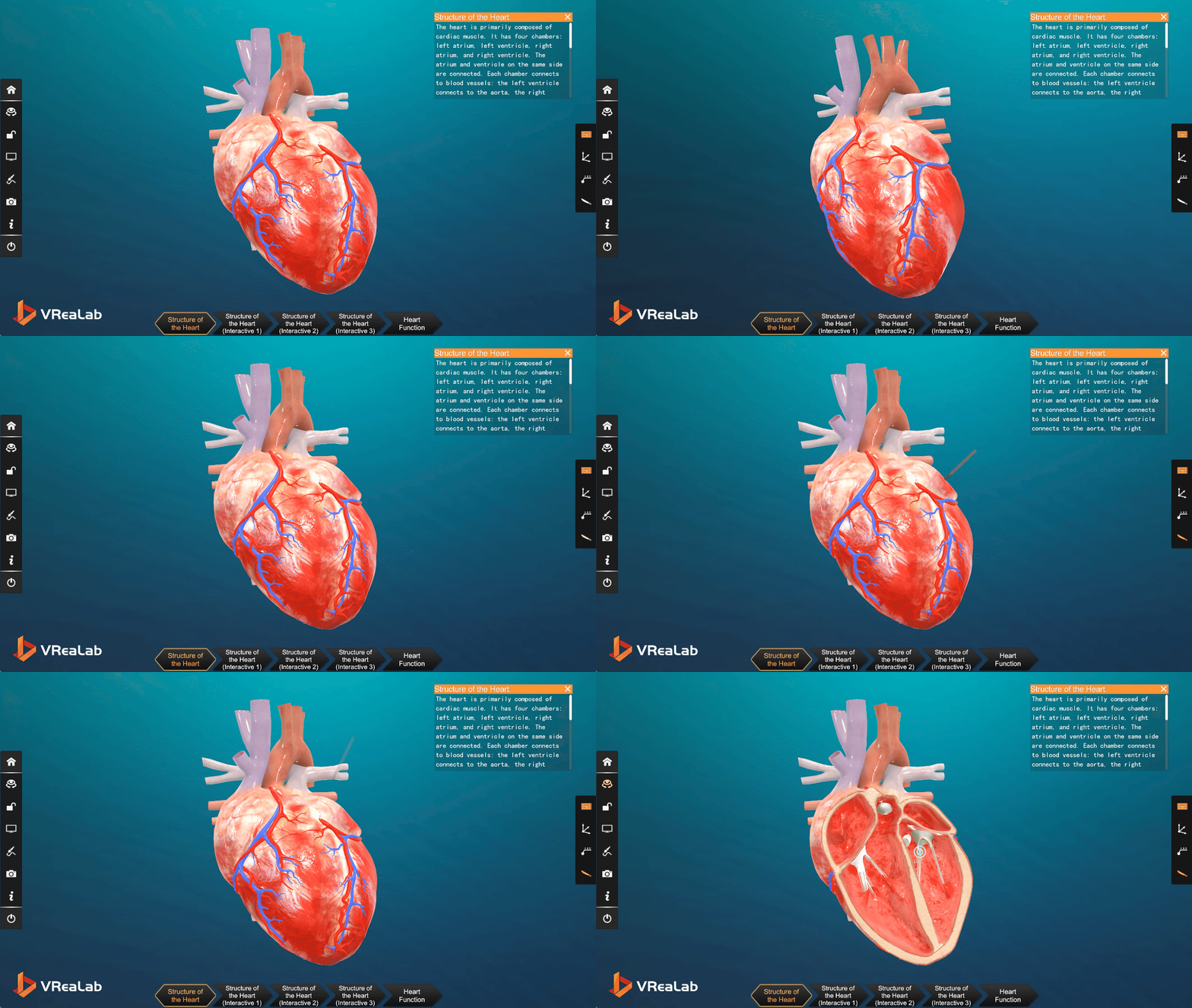
Visualization of Human Physiological Functions

Visualize human body structures, metabolic processes, and functional principles through dynamic VR interactions, making abstract physiology easier to understand.

Formation of Urine

Explore the structural basis and microscopic principles of urine formation from the perspective of the nephron.

Key Advantage: Makes urine formation visible and interactive, helping students understand nephron structures and microscopic processes more easily.
Health Simulation and Practice Activities

Practice essential health and first-aid skills, such as bleeding control and bandaging, in immersive VR scenarios to build health awareness and emergency response skills.

Myopia and Its Correction

Investigate the causes of blurred distance vision in myopia, along with its correction methods and biological principles.

Key Advantage: Links vision health to correction methods through immersive investigation, building practical health awareness alongside biological understanding.

VR-Based Visualized Interactive Assessment

Turn key learning points into interactive visual assessments with real-time feedback, supporting repeated practice and integrated teaching, learning, and evaluation.

Structure and Function of Blood Vessels (Interactive)

Learn about the structure and function of the circulatory system, with real-time classroom practice to reinforce learning.

Key Advantage: Blood-vessel-based assessments turn key concepts into interactive visual practice with instant feedback.

Redefining Biology Education

Transforming Passive Biology Lessons into Active 3D Explorations

Transforming Passive Biology Lessons into Active 3D Explorations

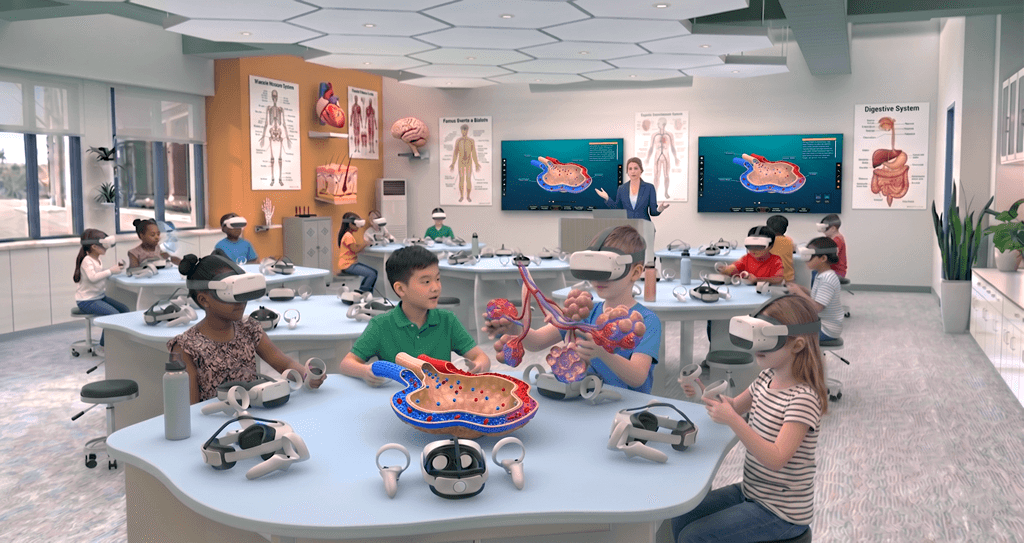
A VR Journey into the Respiratory System

In this immersive virtual reality classroom, students step beyond the textbook and dive directly into the human body. Equipped with advanced VR headsets, young learners can interact with highly detailed 3D holographic models of the respiratory system right at their desks, fostering a deeper curiosity and comprehension of human physiology and health.

Reimagining Biology Education through Immersive Visualization and Interdisciplinary Exploration

Reimagining Biology Education through Immersive Visualization and Interdisciplinary Exploration

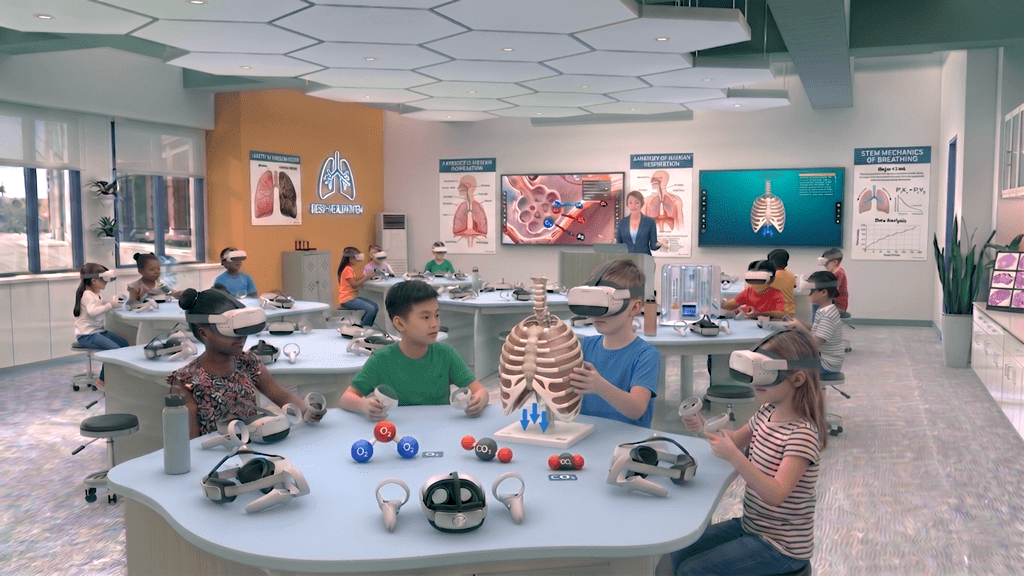
Guarding the Airway: VR Respiratory Health and Heimlich Rescue Practice

This immersive VR classroom brings interdisciplinary STEM education to life by transforming abstract biological concepts into tangible 3D experiences. By actively manipulating holographic lung models and molecular structures, students gain a deep, hands-on understanding of the respiratory system and crucial life-saving skills, fostering genuine curiosity and a holistic understanding of human health.