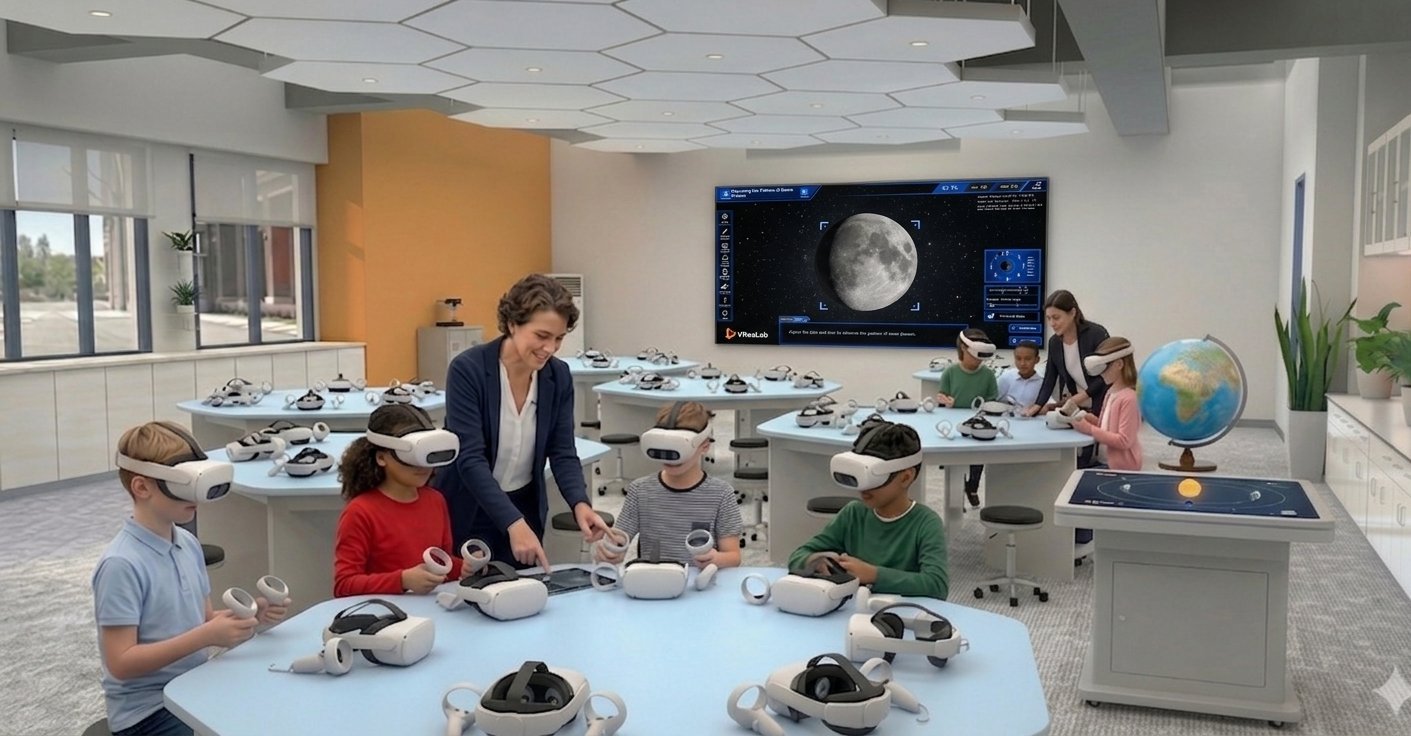
Reaching for the Stars: How VR Science Lab Solves Primary Astronomy Teaching Challenges
Astronomy has long been one of the most challenging topics in primary science education. A VR Science Lab brings the universe into the classroom, transforming passive learning into active cosmic exploration and making STEM Education truly immersive.
Among the many topics in primary science education, astronomy has always been one that gives teachers headaches. Why does the moon change its phases? What causes the changing seasons? How exactly are the eight planets of our solar system arranged? These questions may seem simple, yet they require students to possess strong spatial imagination and abstract thinking abilities. In traditional classrooms, the tools teachers can rely on are nothing more than textbook illustrations, PPT animations, and simple models — students can only passively "watch" but cannot actively "explore."

Breaking Through: Bringing the Universe into the Classroom
The emergence of JuDao Primary Science Lab software offers a completely new approach to solving this dilemma. Opening the software and entering the "Earth and Space Science" module, students instantly find themselves standing beneath a starry sky — this is not just a picture, but a three-dimensional virtual space they can freely explore.
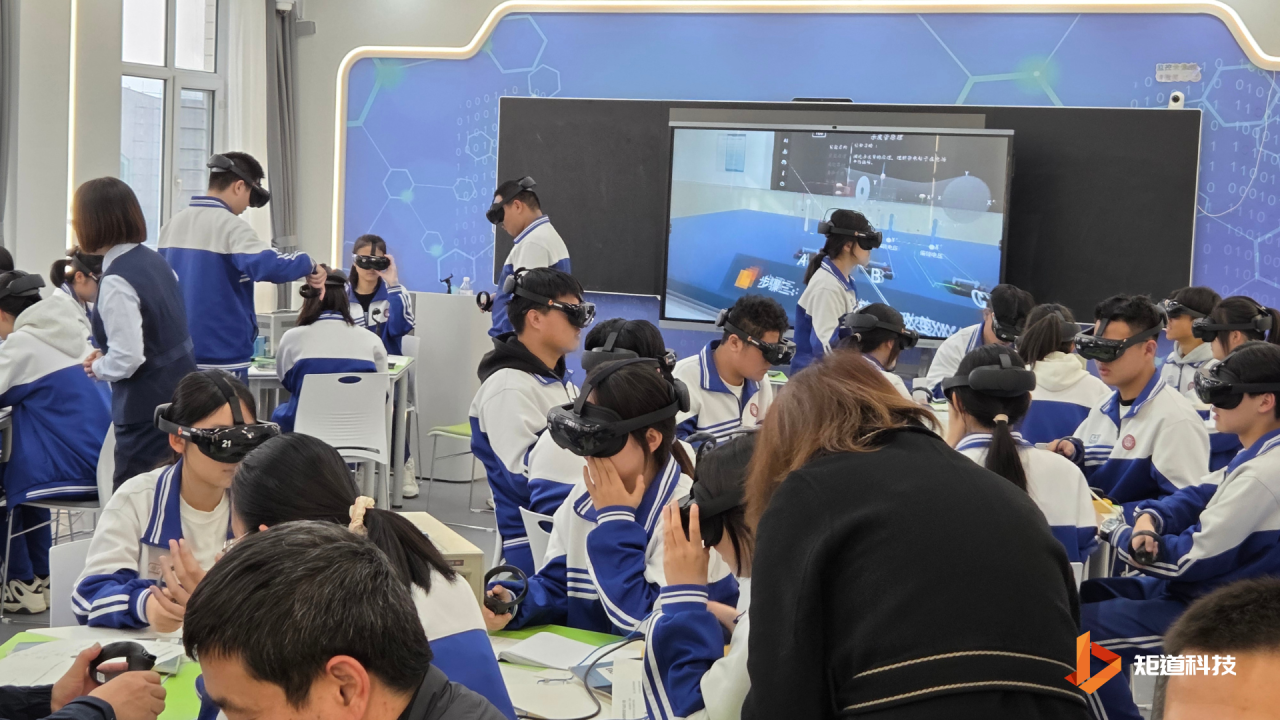
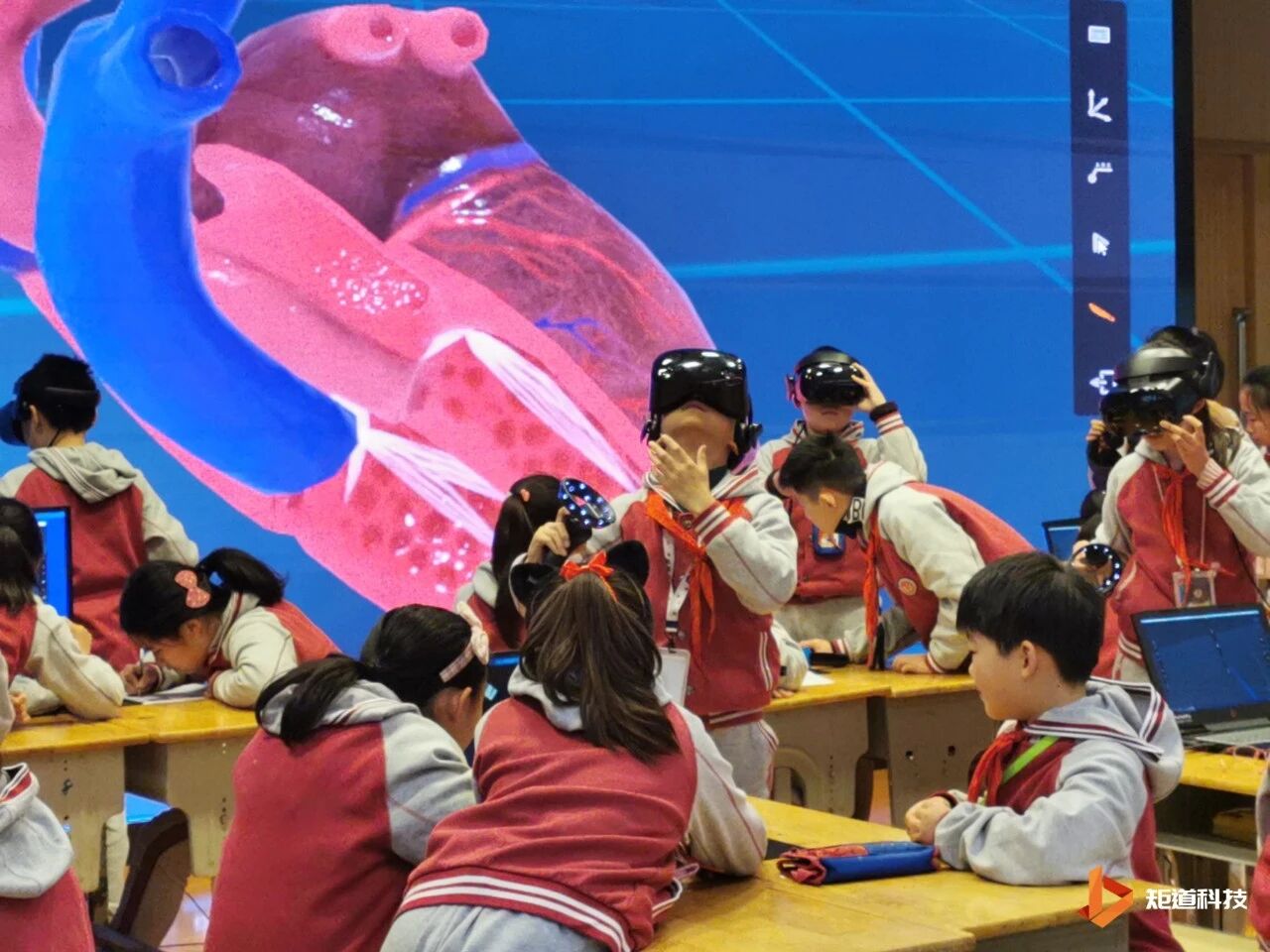
In a VR Science Lab, the universe becomes a classroom without walls. Students aren't just learning about astronomy — they're experiencing it firsthand, bringing STEM Education to life in ways traditional textbooks never could.


In the moon phases teaching scene, students can drag the timeline to see the complete cycle of the moon changing from new moon to first quarter, to full moon, and then to last quarter over the course of a month. More importantly, students can freely switch observation perspectives: standing on Earth and looking up at the night sky, they see the familiar moon phase view we know from daily life; with one click, switching to a space overhead view clearly reveals the positional relationship between the sun, Earth, and moon, making the cause of moon phase changes instantly clear. This free switching of perspectives is precisely the key to breaking through the bottleneck of spatial imagination.

In solar system lessons, students can freely travel among the eight planets, observing Jupiter's Great Red Spot, Saturn's beautiful rings, and Mars' red surface up close. "Mercury, Venus, Earth, Mars, Jupiter, Saturn, Uranus, Neptune" is no longer just a mnemonic to memorize — it becomes a real world that students can see with their own eyes and "fly to" with their own hands. This immersive observation experience brings students a depth of cognition far beyond any textbook illustration.
The Shift: From Passive Reception to Active Exploration
It's worth emphasizing that the design philosophy of this system is not "using virtual reality to replace teacher lectures" but rather "enabling students to explore independently in virtual space." The software includes rich inquiry-based tasks, such as "Operate the model to discover the patterns of moon phase change" — students need to drag the timeline, rotate perspectives, switch observation points, and perform other operations to observe, compare, and synthesize on their own, ultimately discovering patterns and drawing conclusions.
This model is precisely the inquiry-based learning advocated by the new curriculum standards: instead of teachers telling students the conclusions, students construct knowledge through firsthand experience. Supported by the virtual lab, abstract astronomical concepts become perceptible experiences, spatial imagination becomes visual intuition, and passive memorization becomes active exploration. This is the essence of modern STEM Education — learning by doing, discovering through exploration.

One science teacher who has used the software remarked: "Before, when I taught moon phases, I'd talk until my throat was dry and students still only half-understood. Now I let them 'fly' out into space and look around for themselves — when they come back, they understand everything." This simple statement captures the core value of technology-enabled education: it's not about making teaching more complex, but about making learning more natural.
Looking Ahead: Making Science Accessible to All
Technology won't replace teachers, but it can make teaching easier for teachers and learning clearer for students. When the VR Science Lab brings the vast universe into a classroom of just a few dozen square meters, when astronomy teaching shifts from "learning from pictures" to "reaching for the stars," we have every reason to believe: every child who looks up at the stars can find their own light of science at the intersection of virtual and real.