Discovering New Substances Through Change: Interactive Science Experiments in VR
Everyday phenomena hold rich scientific principles. Explore how candle burning and sugar heating produce new substances through interactive science experiments in a VR Science Lab — making chemistry visible, safe, and unforgettable for young learners.
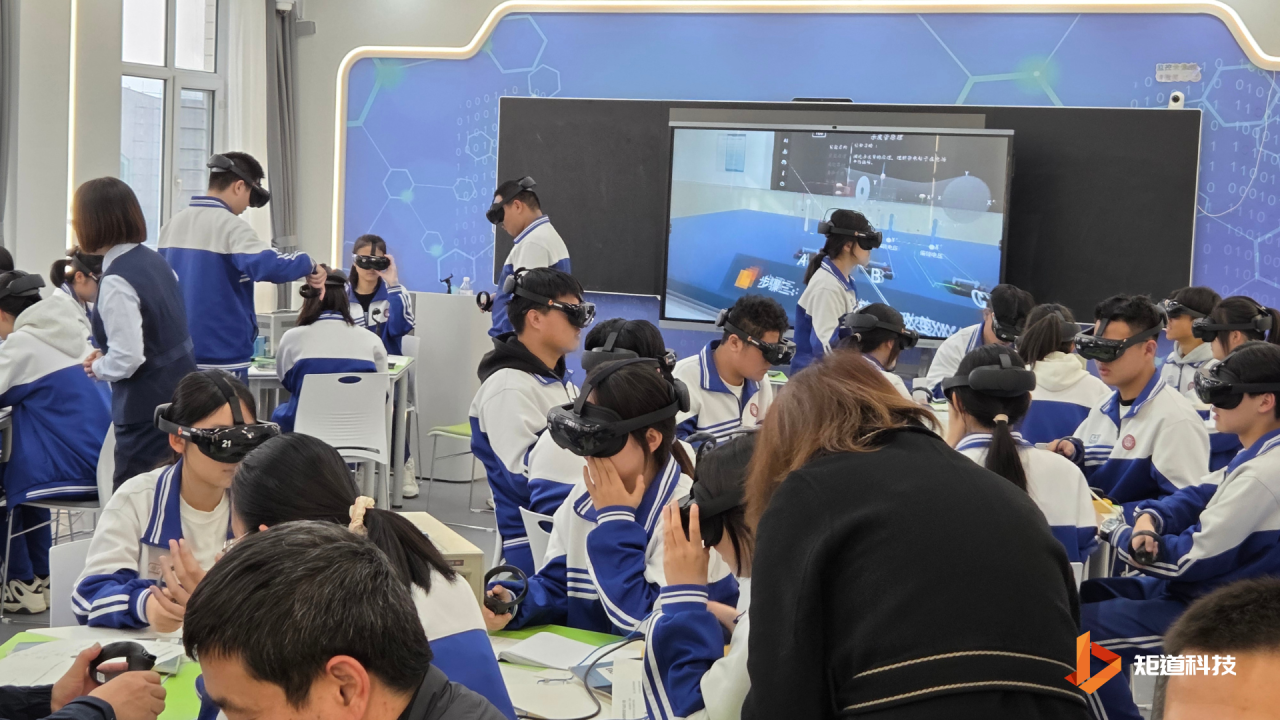
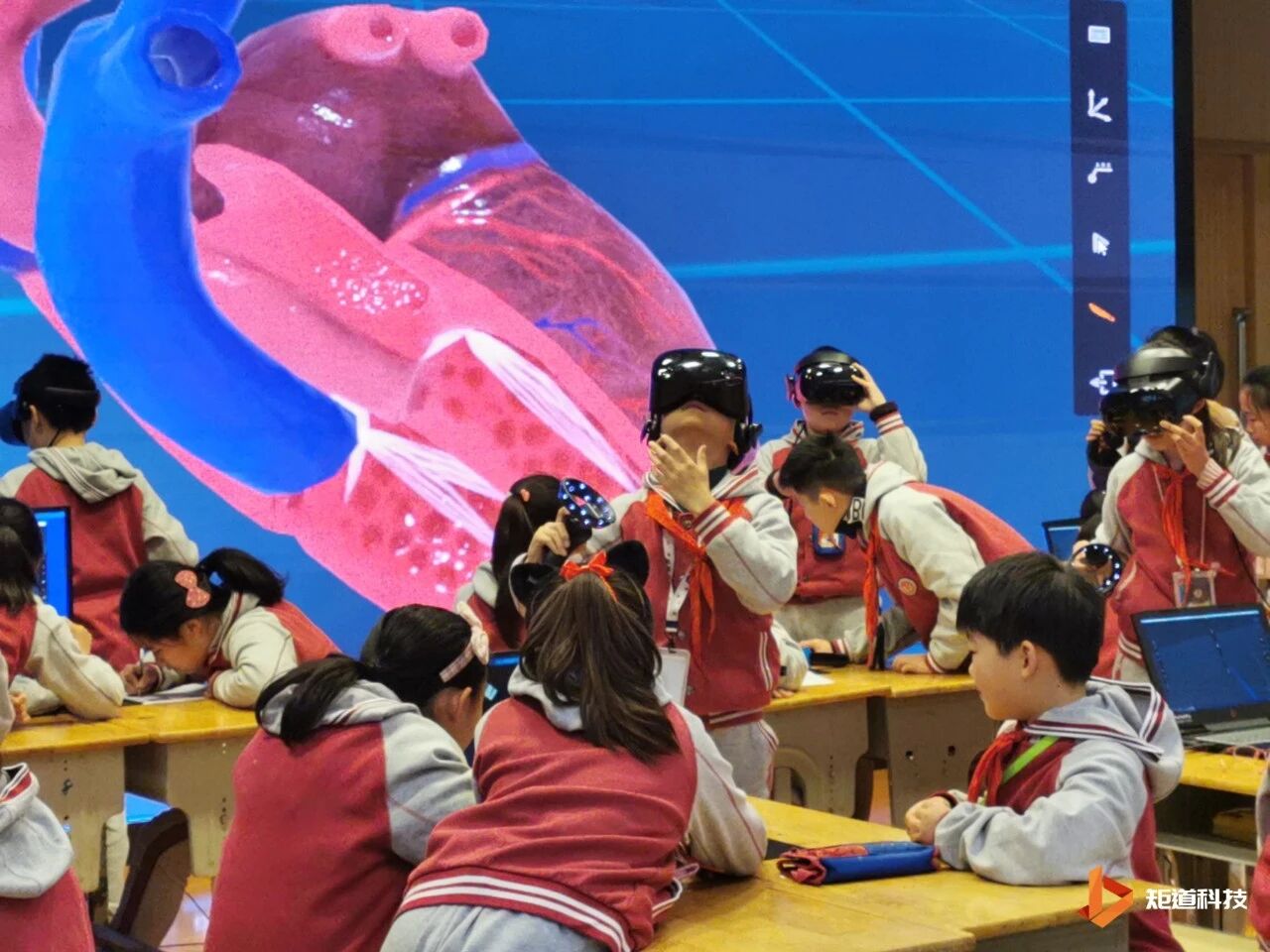
In our daily lives, many seemingly ordinary phenomena are actually packed with rich scientific principles. Today, we'll use the XR virtual teaching system in primary science software to explore how substances change under specific conditions and what new substances are produced in these changes — all through two interactive science experiments in a virtual environment.
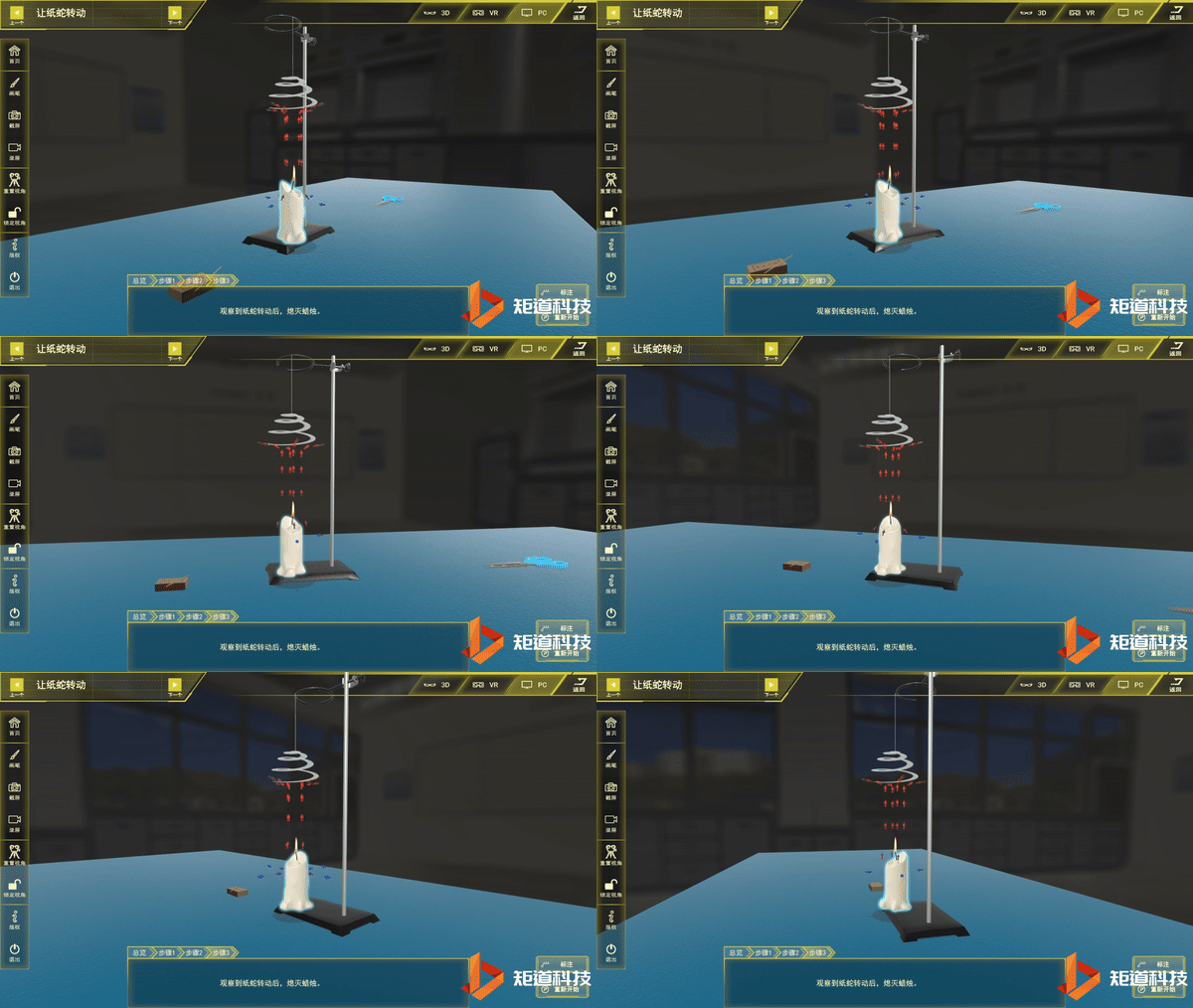
Experiment 1: Candle Burning Produces New Substances
To understand what new substances are produced when a candle burns, we'll need our lab equipment: matches, a candle, a beaker, a test tube clamp, and a glass slide. Let's follow these steps:
Step 1: Light the candle with a match.
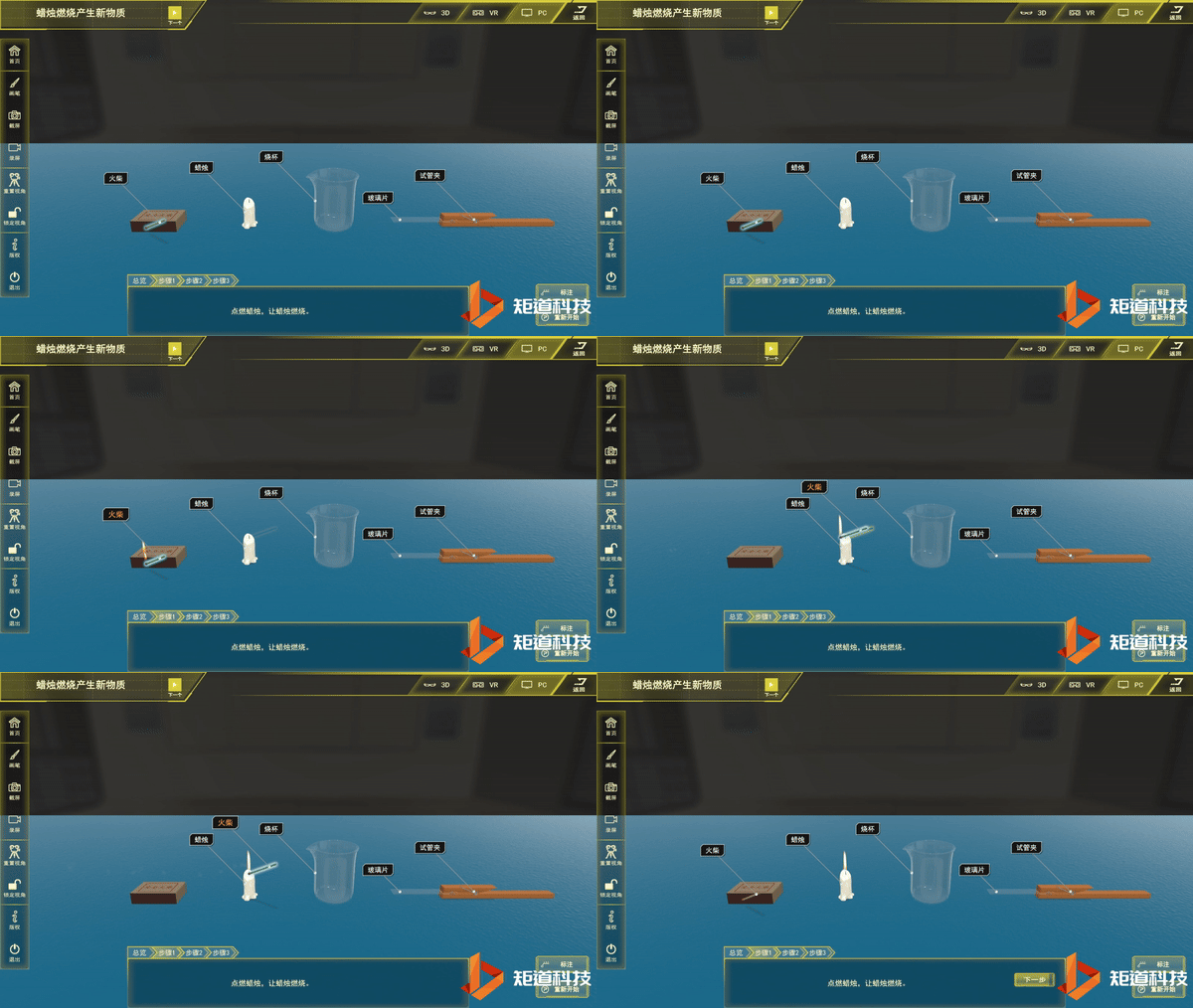
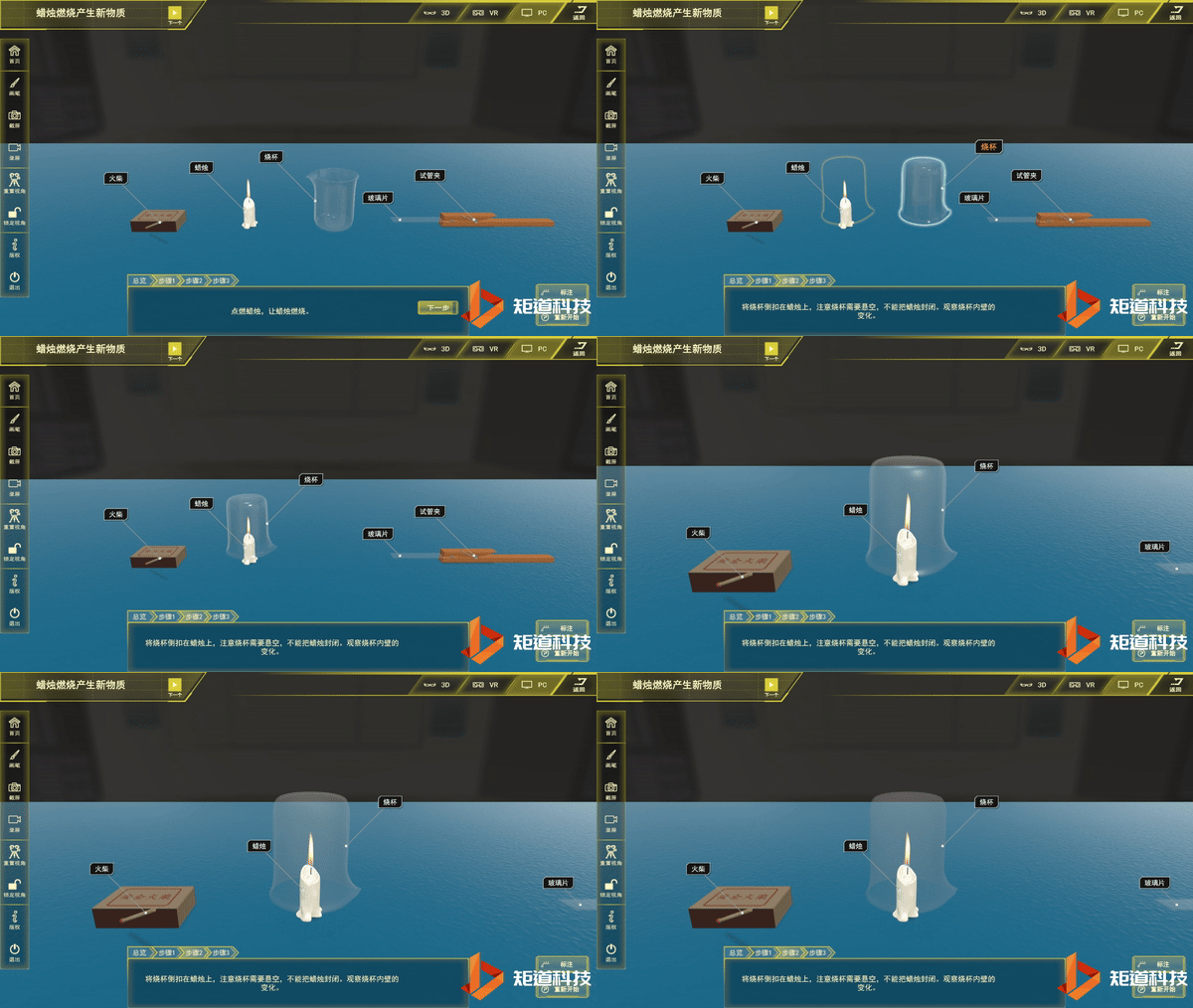
Step 2: Invert a transparent glass cup over the candle — make sure the cup is suspended and doesn't completely seal the candle. Observe the inner wall of the cup, and you'll notice water mist appearing.
Step 3: Use the test tube clamp to hold a glass slide and briefly touch it to the candle flame — be careful not to get burned. You'll observe black carbon soot forming on the glass slide.
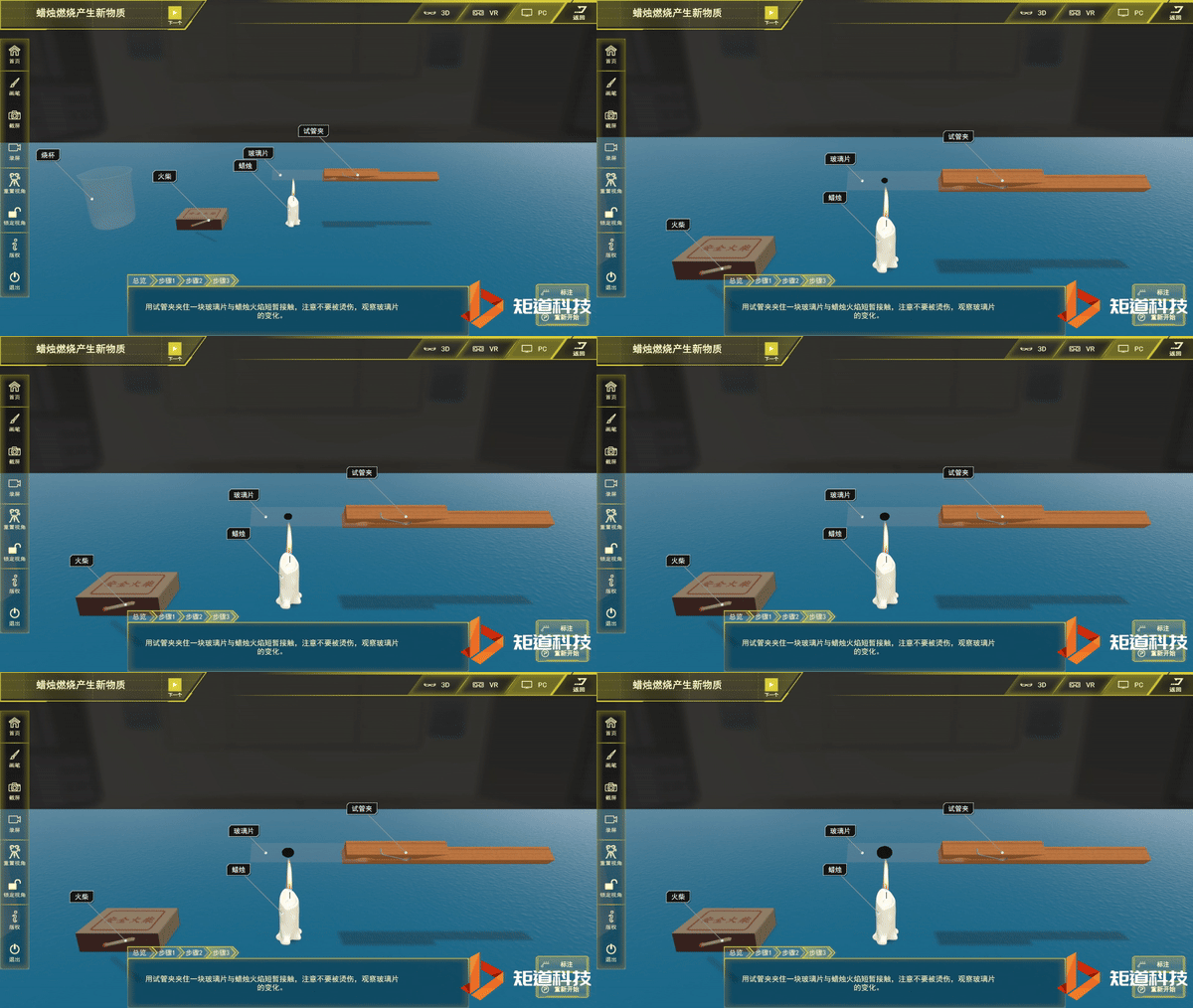
Through this experiment, we can see that candle burning not only produces light and heat but also generates new substances like water and carbon soot.
Experiment 2: Heating White Sugar Produces New Substances
What happens to common white sugar when it's heated? With white sugar, a candle, and a metal spoon, we can find out through this experiment. Follow these steps:
Step 1: Add a small amount of white sugar to the metal spoon and heat it over the lit candle. Observe how the sugar changes.
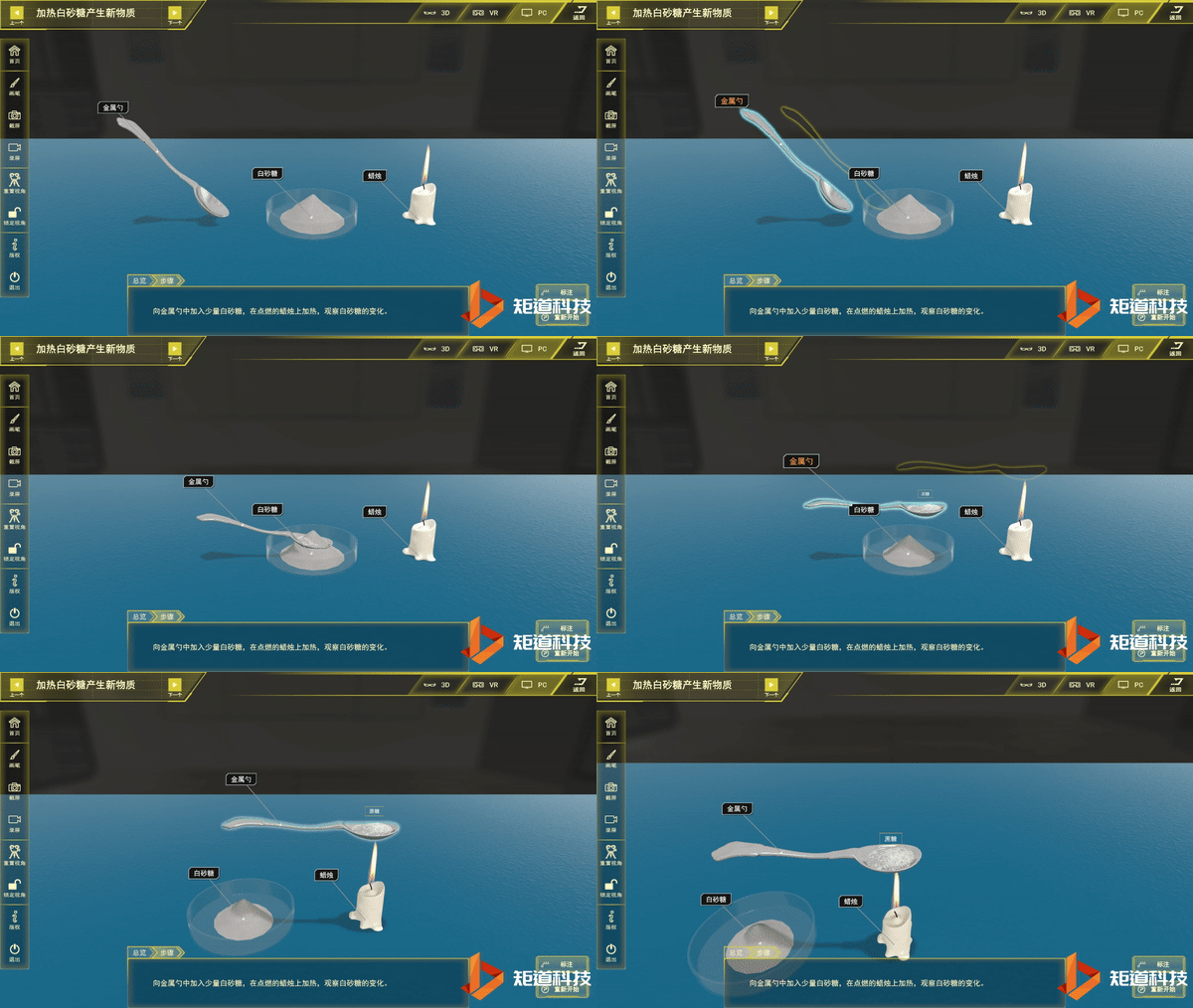
Step 2: During heating, the sugar first melts — this is a physical change. But soon, as water evaporates, the sugar's color turns yellow, then darker and darker. That's because heating produces a new colored substance — caramel.
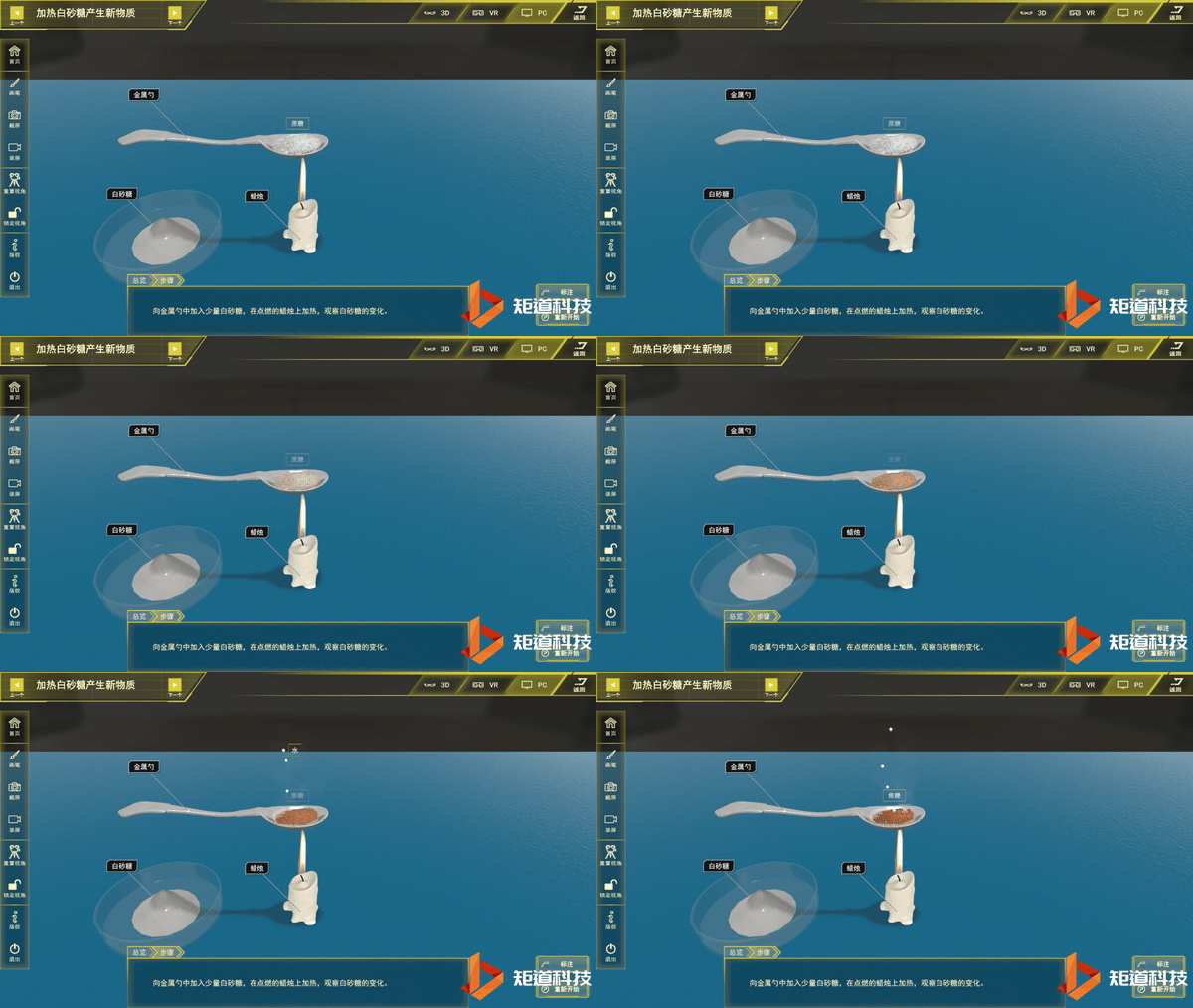
Step 3: Eventually, the sugar turns into a black solid substance, and we'll notice a special smell. The black solid is a new substance — carbon — and the smell comes from new substances released into the air.
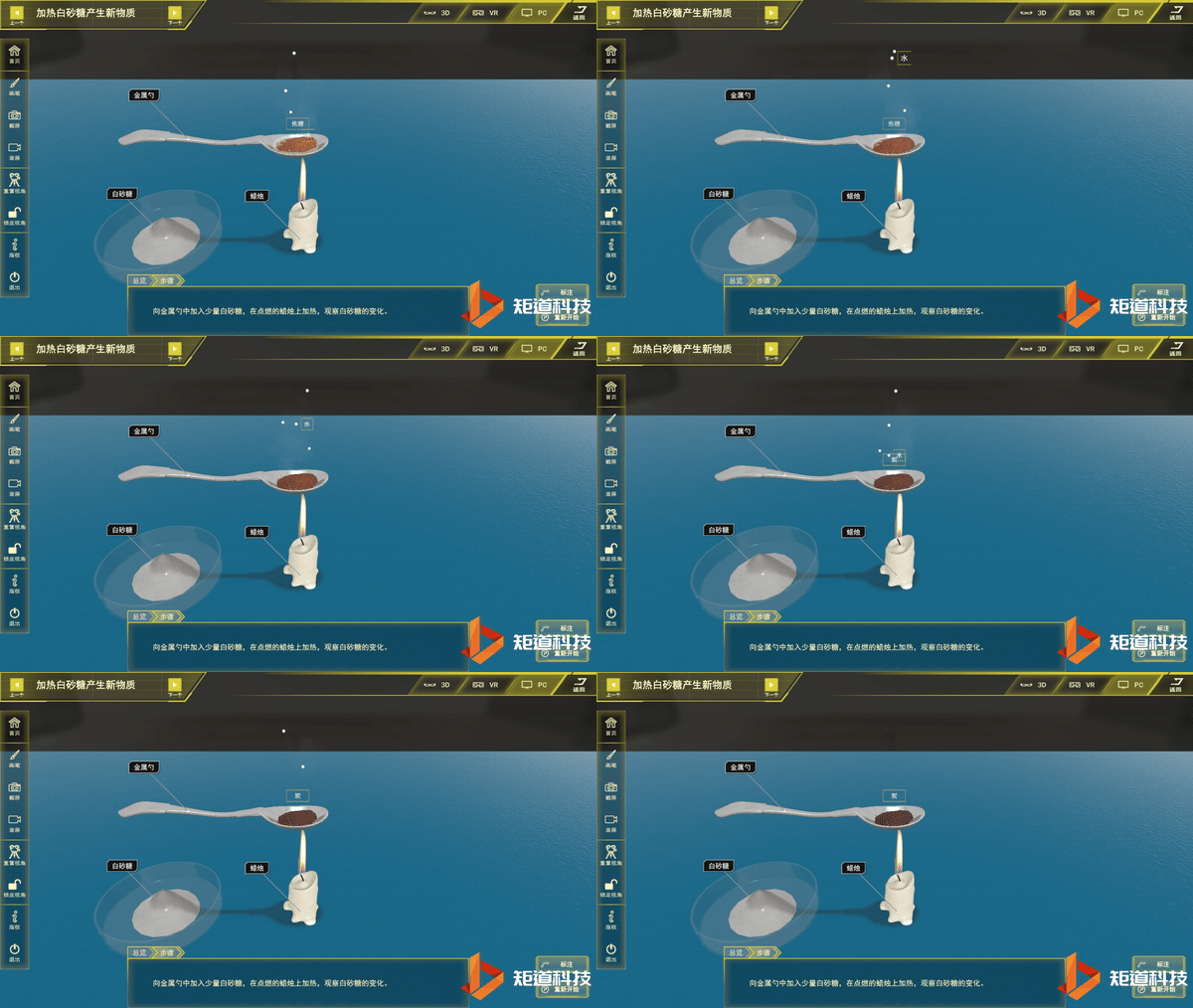
Analyzing these phenomena, we can conclude that during the heating process, the yellowed and blackened solid substances and the odorous gases are all new substances produced by heating.
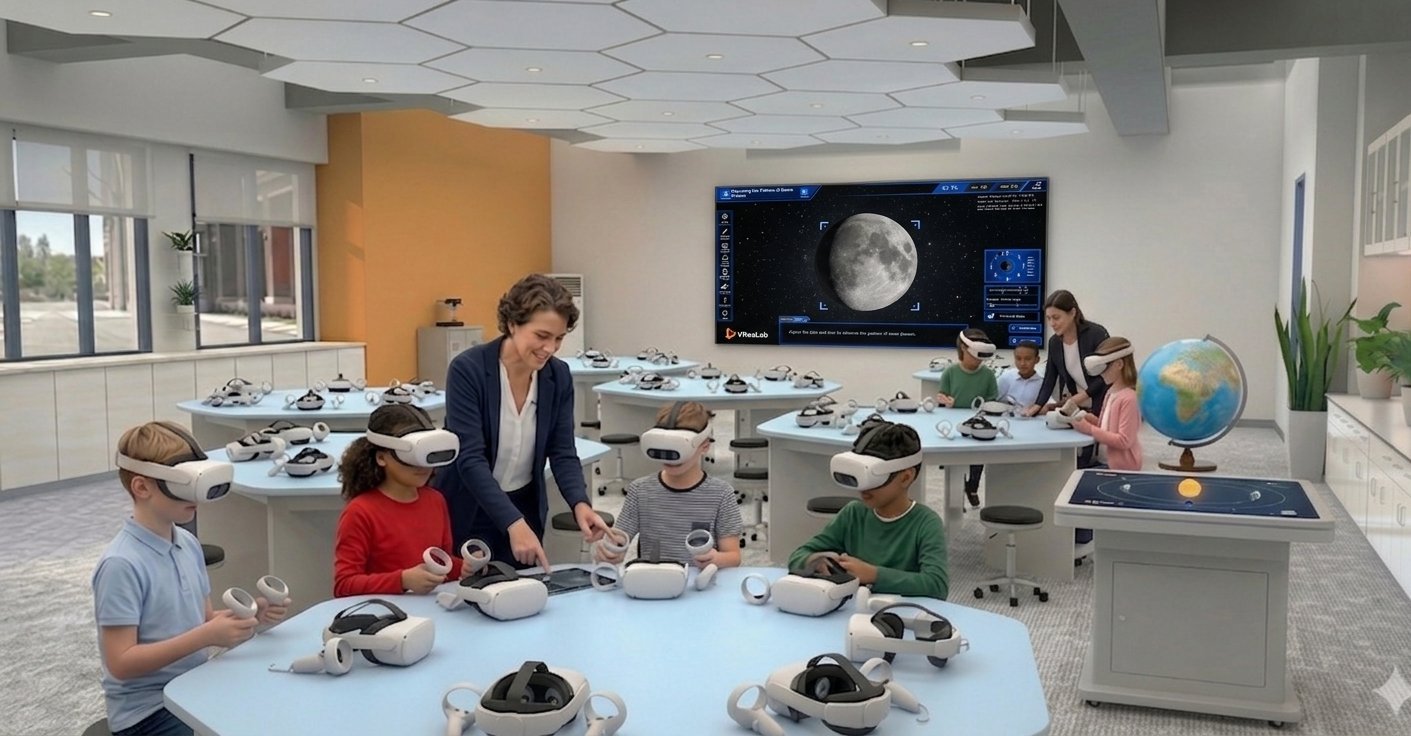
With the XR virtual teaching system in primary science software, these interactive science experiments can be practiced repeatedly in the classroom. Students' understanding of "new substances" becomes more intuitive and solid — no wasted materials, no safety concerns, and every student gets hands-on time in the VR Science Lab.