VReaLab Biology Body Structure

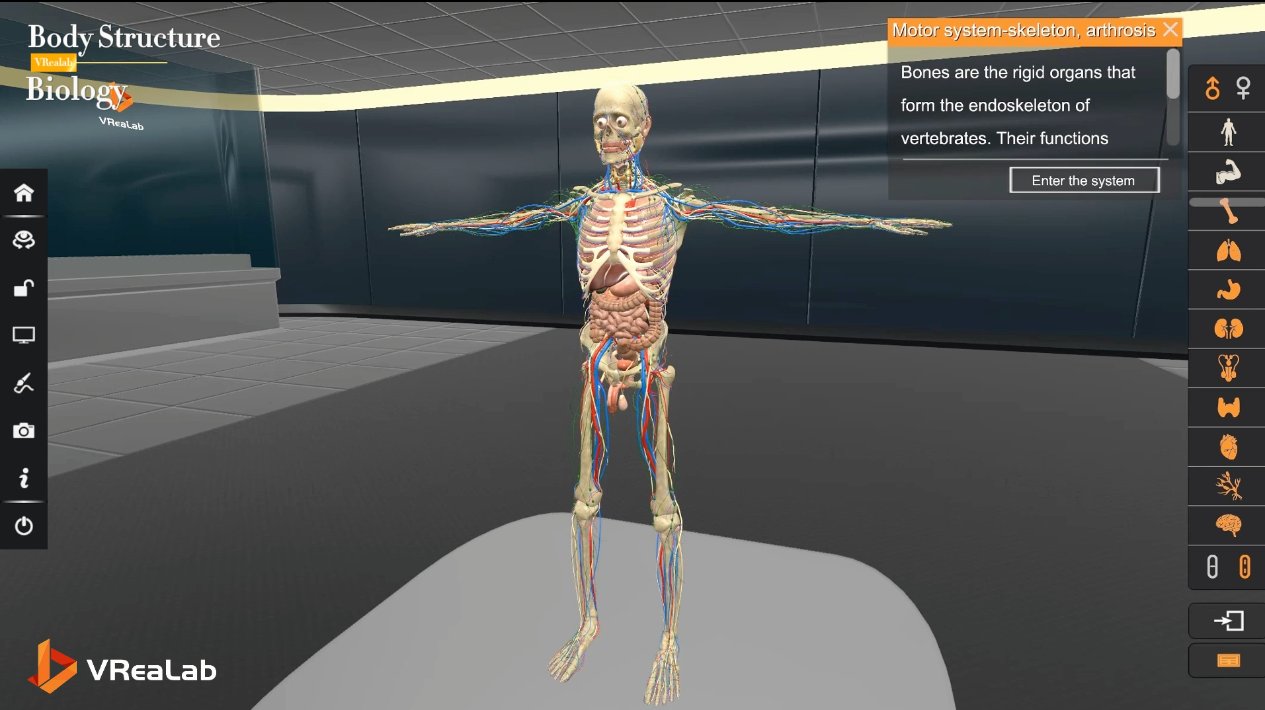
Exploring human anatomy in depth, enabling intuitive understanding of structure and function through immersive VR/3D interaction.

Compatible hardware:
Windows PCPICO Neo3 EnterprisePICO 4 Ultra Enterprise
Free Trial

What VR/3D Changes in Biology Body Structure Learning

VR makes biology visible, accessible, hands-on, and relevant for every young learner.

  • Comprehensive Anatomical Coverage

    Covering nine major human body systems with complete structural representation and detailed organ visualization.

  • Dynamic Mechanism Understanding

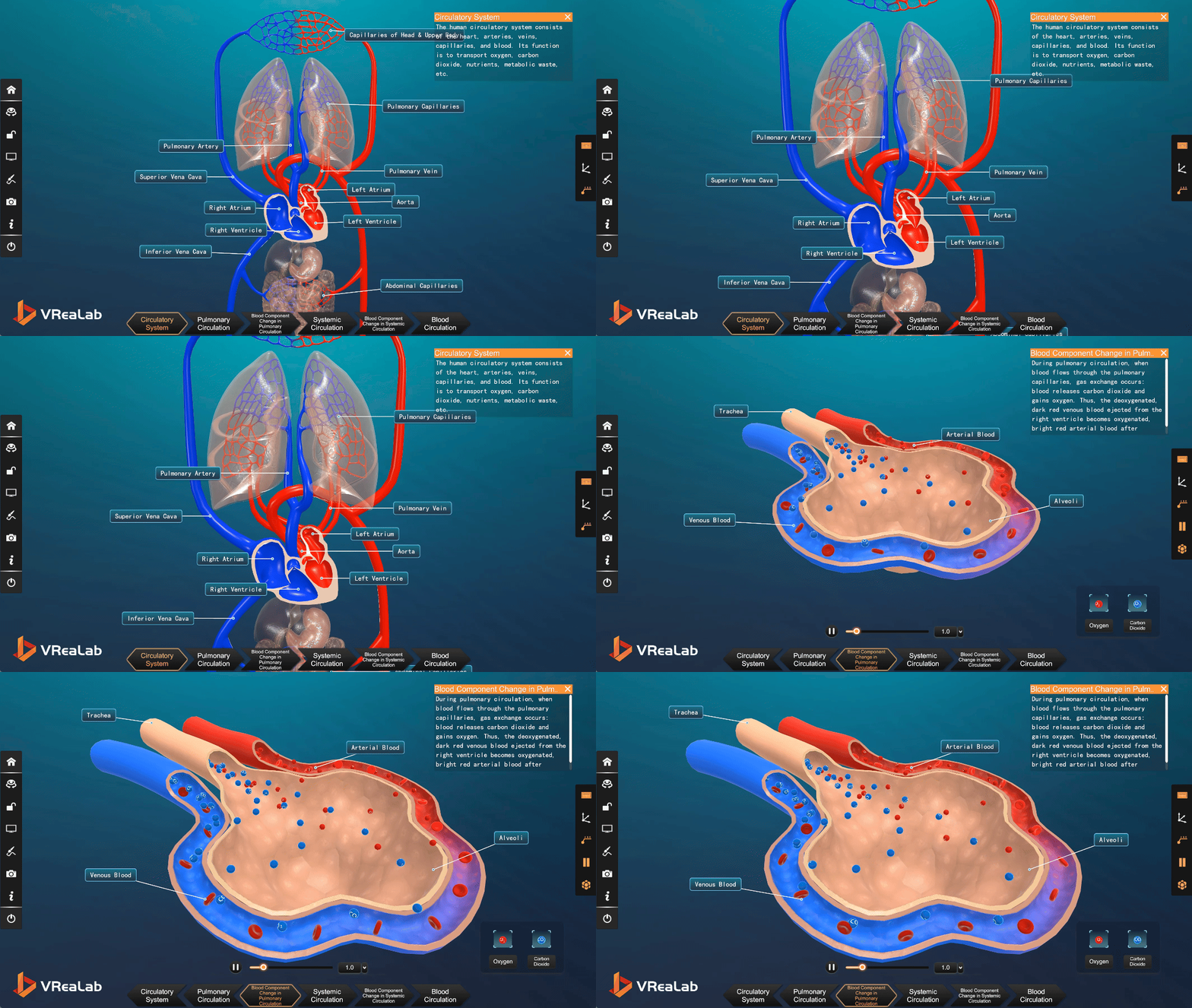
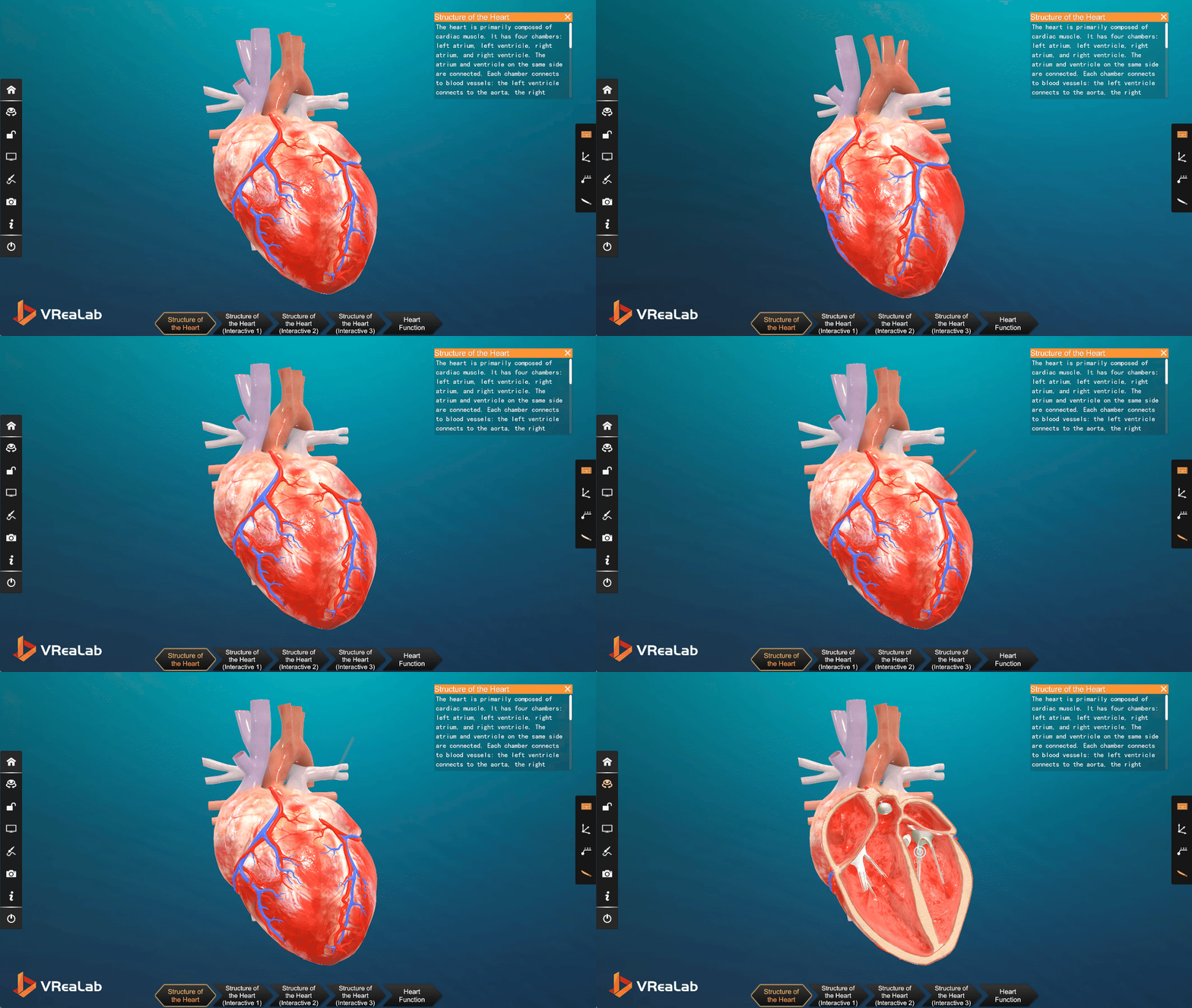
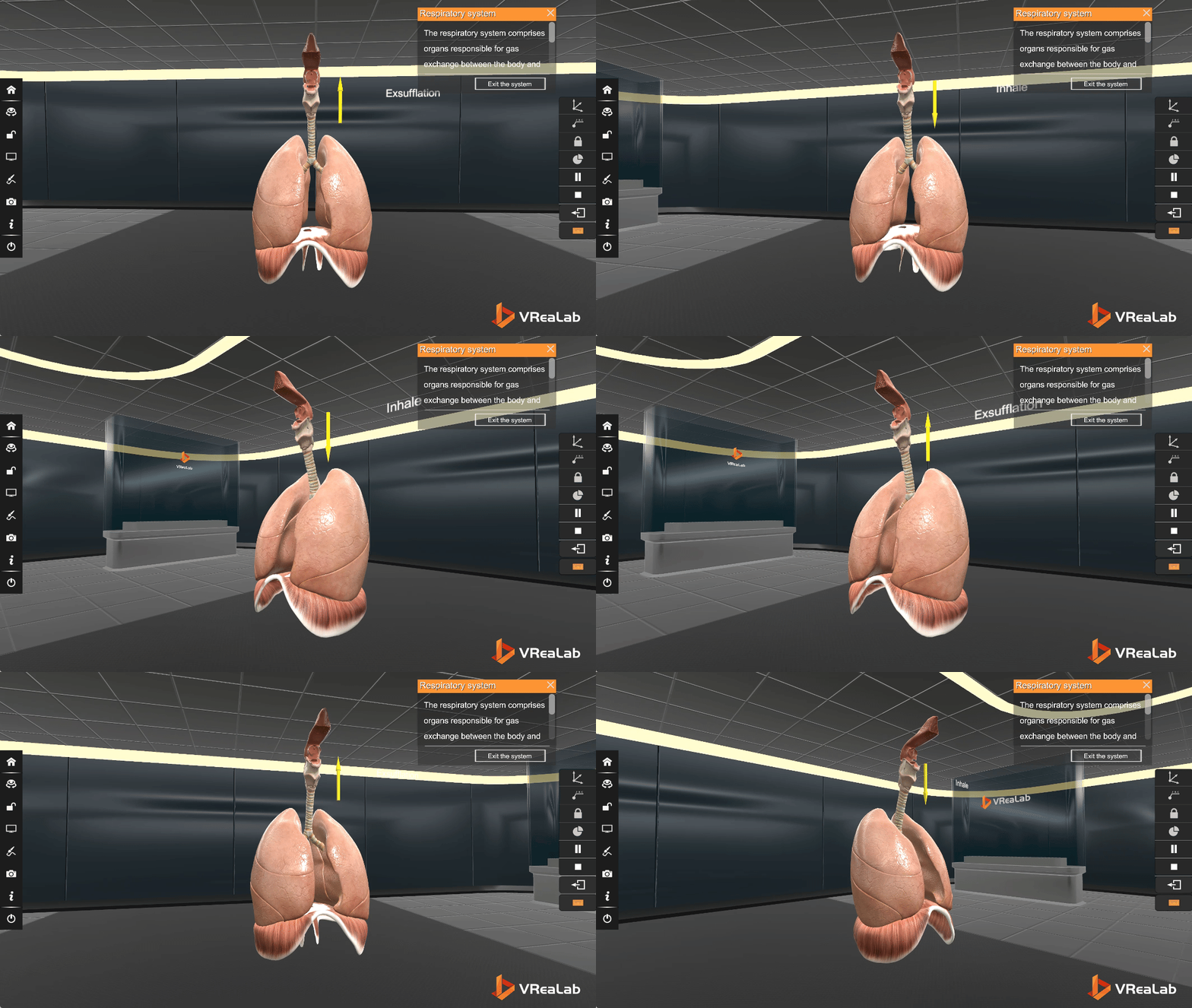
    Presenting key physiological activities such as breathing, digestion, and cardiac function through dynamic 3D animations.

  • Immersive & Interactive Learning

    Supporting system selection, organ transparency adjustment, and multi-layer structural observation for in-depth learning.

  • Accessible & Understandable Concept Bridging

    Providing selection, labeling, drawing, and scene control functions to support hands-on inquiry and exploration.

VReaLab Biology Body Structure — Three Themes

Digital curriculum spanning human body systems, major organs, and tissues and cells.

Human Body Systems

Explore how different organs work together to support essential functions of the human body, including circulation, respiration, digestion, movement, and coordination.

Digestive System

Explore how food is broken down, absorbed, and transformed into energy through the coordinated work of digestive organs.

Key Advantage: Gain a whole-body perspective by visualizing how organs and systems work together to support life functions.
Human Organs

Learn about the structure and function of major human organs, such as the heart, lungs, brain, stomach, and liver, and understand their roles in maintaining life.

Structure of the Eyeball

Discover the key structures of the eyeball and understand how they work together to support vision.

Key Advantage: Explore major organs in immersive 3D and understand the relationship between organ structure and function.

Human Tissues and Cells

Discover the basic building blocks of the human body. Students can explore how cells form tissues, how tissues form organs, and how these structures support human body functions.

Nerve Cells

Learn about the structure of nerve cells and how they transmit signals to support communication within the body.

Key Advantage: Brings microscopic cell structures into clear 3D view, helping students connect cells, tissues, and organs in a single learning path.

Redefining Biology Education

Transforming Passive Biology Lessons into Active 3D Explorations

Transforming Passive Biology Lessons into Active 3D Explorations

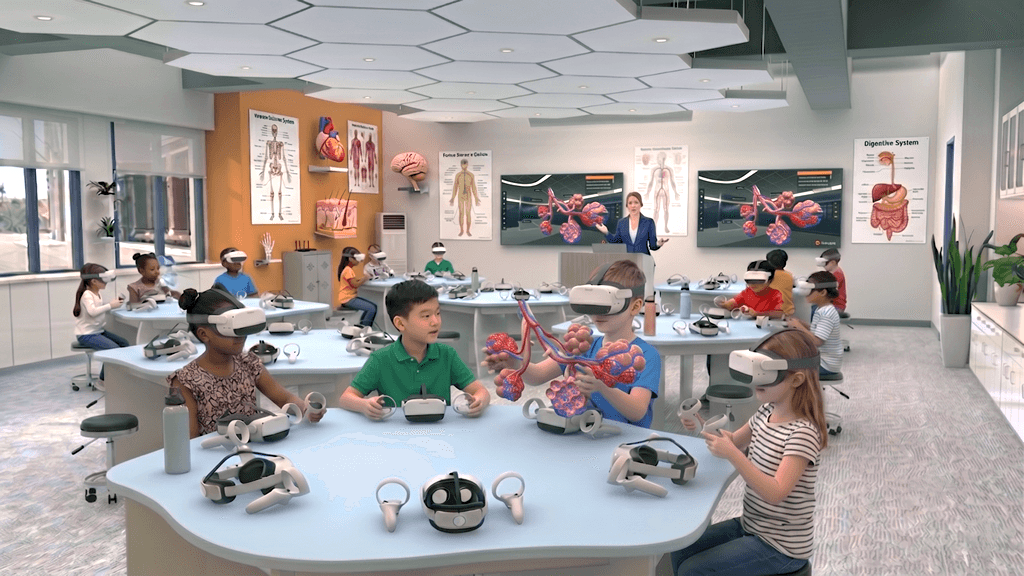
A VR/3D Journey into the Respiratory System

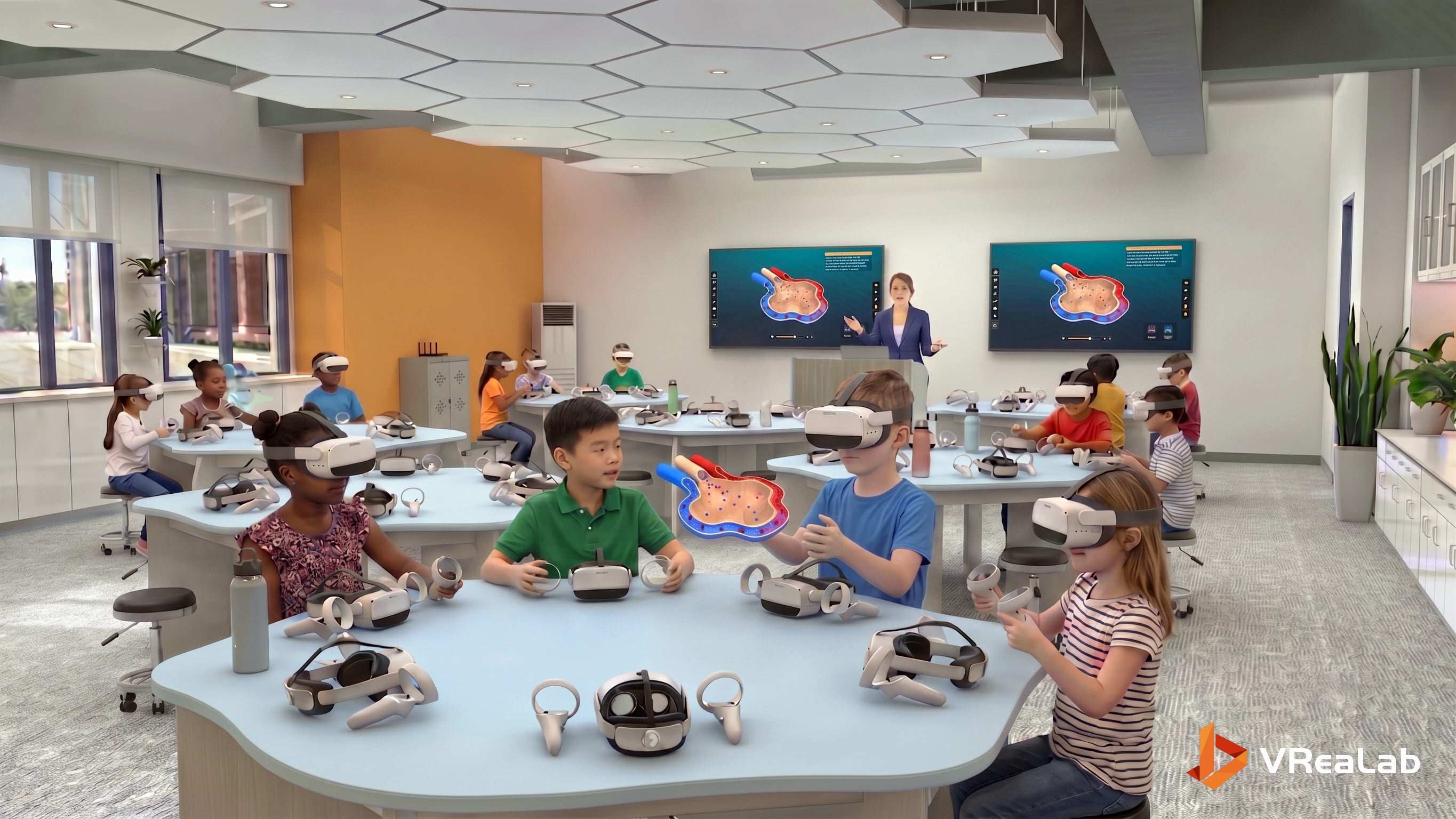
In this immersive virtual reality classroom, students step beyond the textbook and dive directly into the human body. Equipped with advanced VR/3D headsets, young learners can interact with highly detailed 3D holographic models of the respiratory system right at their desks, fostering a deeper curiosity and comprehension of human physiology and health.

Reimagining Biology Education through Immersive Visualization and Interdisciplinary Exploration

Reimagining Biology Education through Immersive Visualization and Interdisciplinary Exploration

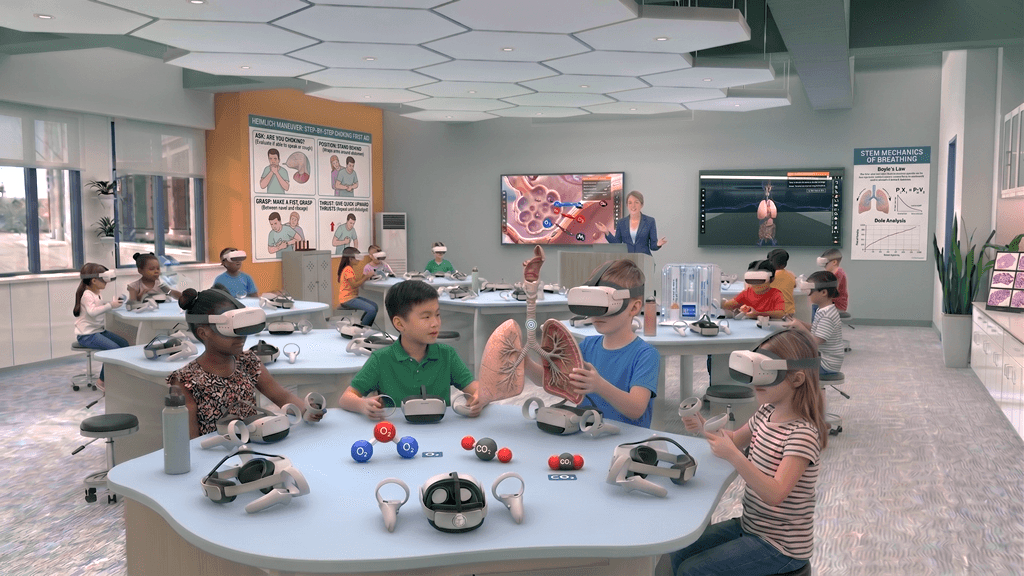
Guarding the Airway: VR/3D Respiratory Health and Heimlich Rescue Practice

This immersive VR/3D classroom brings interdisciplinary STEM education to life by transforming abstract biological concepts into tangible VR/3D experiences. By actively manipulating holographic lung models and molecular structures, students gain a deep, hands-on understanding of the respiratory system and crucial life-saving skills, fostering genuine curiosity and a holistic understanding of human health.