VReaLab Chemistry Material Structure

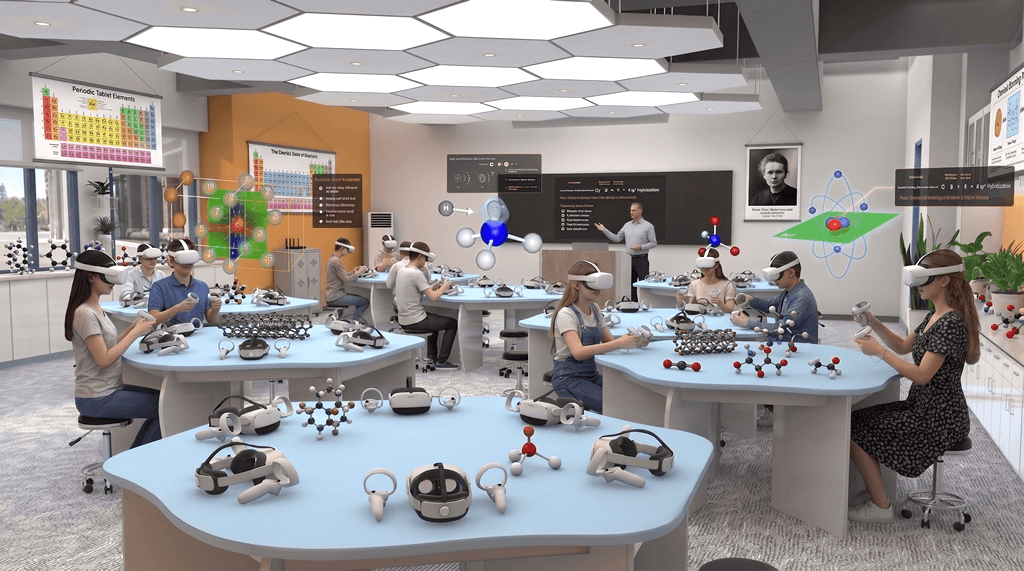
Visualizing microscopic structures and simplifying complex transformations, enabling deep understanding of chemical structure and properties through immersive 3D/VR experiences.

Compatible hardware:
Windows PCPICO Neo3 EnterprisePICO 4 Ultra Enterprise
Free Trial

What VR Changes in Chemistry Material Structure Learning

VR makes chemistry visible, accessible, hands-on, and relevant for every young learner.

  • Comprehensive Structure Visualization

    Providing high-fidelity VR/3D representations of microscopic particles. By converting the invisible microscopic world into clear VR/3D imagery, it explicitly presents spatial structures and material properties.

  • Dynamic Mechanism Understanding

    Transforming static textbook knowledge into dynamic process evolutions, clearly visualizing bonding processes and structural transformations. It reveals complex changes at the microscopic level, seamlessly linking the logical chain of structure → property → transformation.

  • Immersive & Interactive Learning

    Breaking away from traditional passive learning. By allowing students to freely zoom and rotate models using VR equipment, it visualizes spatial structures and calculations, enabling inquiry learning and drastically reducing cognitive abstraction.

  • Accessible & Understandable Concept Bridging

    Simplifying highly difficult exam topics and unit cell calculations, transforming complex concepts into accessible insights. This fosters students' core chemistry competencies in macroscopic identification and microscopic analysis, as well as evidential reasoning and model cognition.

VReaLab Chemistry: Material Structure — Three Themes

Digital curriculum spanning atomic structure, molecular structure, and crystal structure.

Atomic Structure and Properties

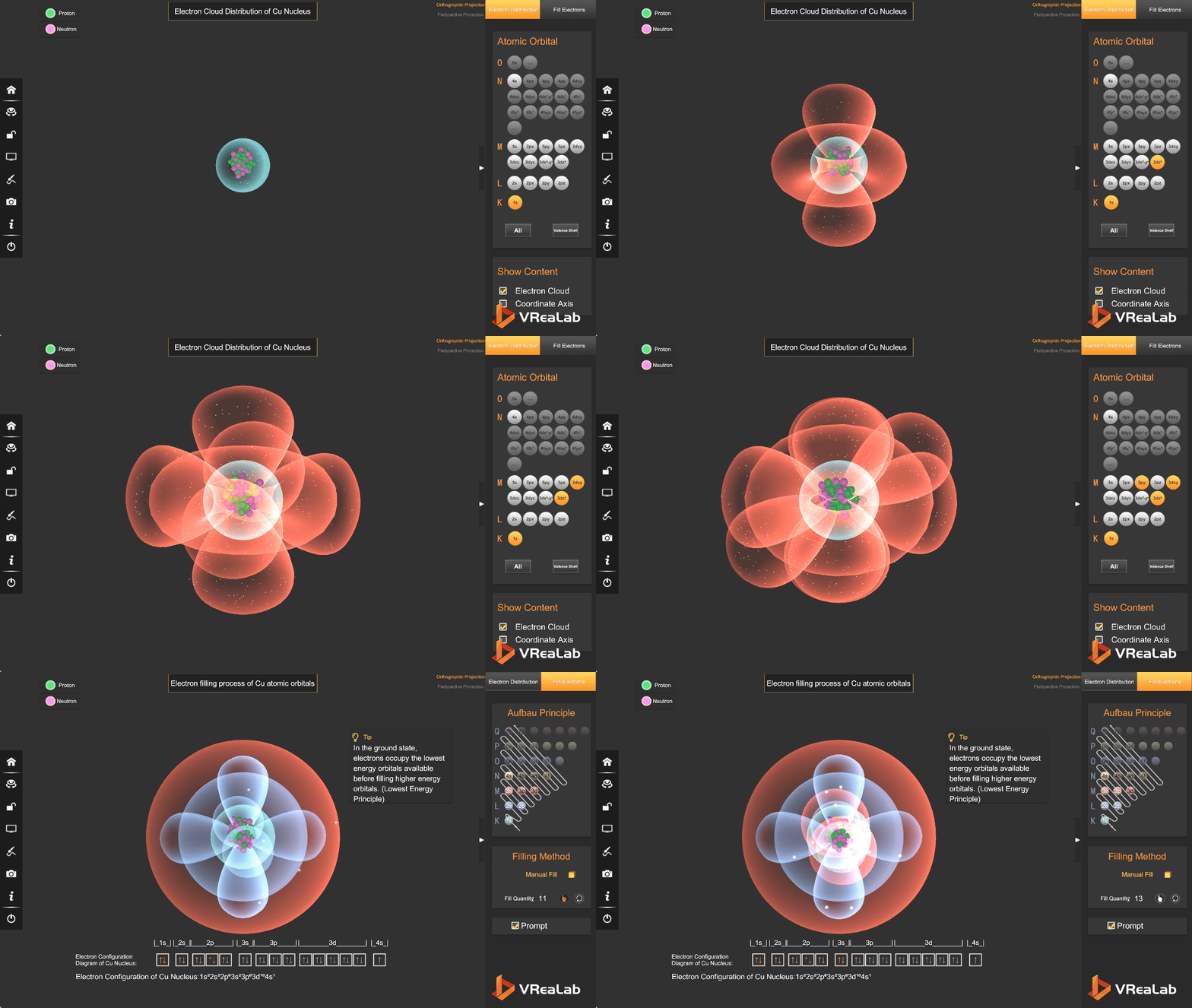
Visualizes electron clouds and atomic orbitals to intuitively explain the periodic law of elements.

Structure and Properties of Cu

Atomic orbitals, coordinate axes, electron-filling tracking, and core principles (Pauli, Hund, Aufbau).

Key Advantage: Visualizes invisible atomic architectures and step-by-step electron arrangements, making abstract concepts instantly intuitive.
Molecular Structure and Properties

Explores 3D spatial configurations and molecular polarity using VSEPR and hybrid orbital theories.

BeCl₂

Covalent bond formation, interactive VSEPR calculator, bond parameters (length/angle), and assembly animations.

Key Advantage: Displays dynamic bonding processes and geometric evolutions to clearly embody chemical and molecular polarity.

Crystal Structure and Properties

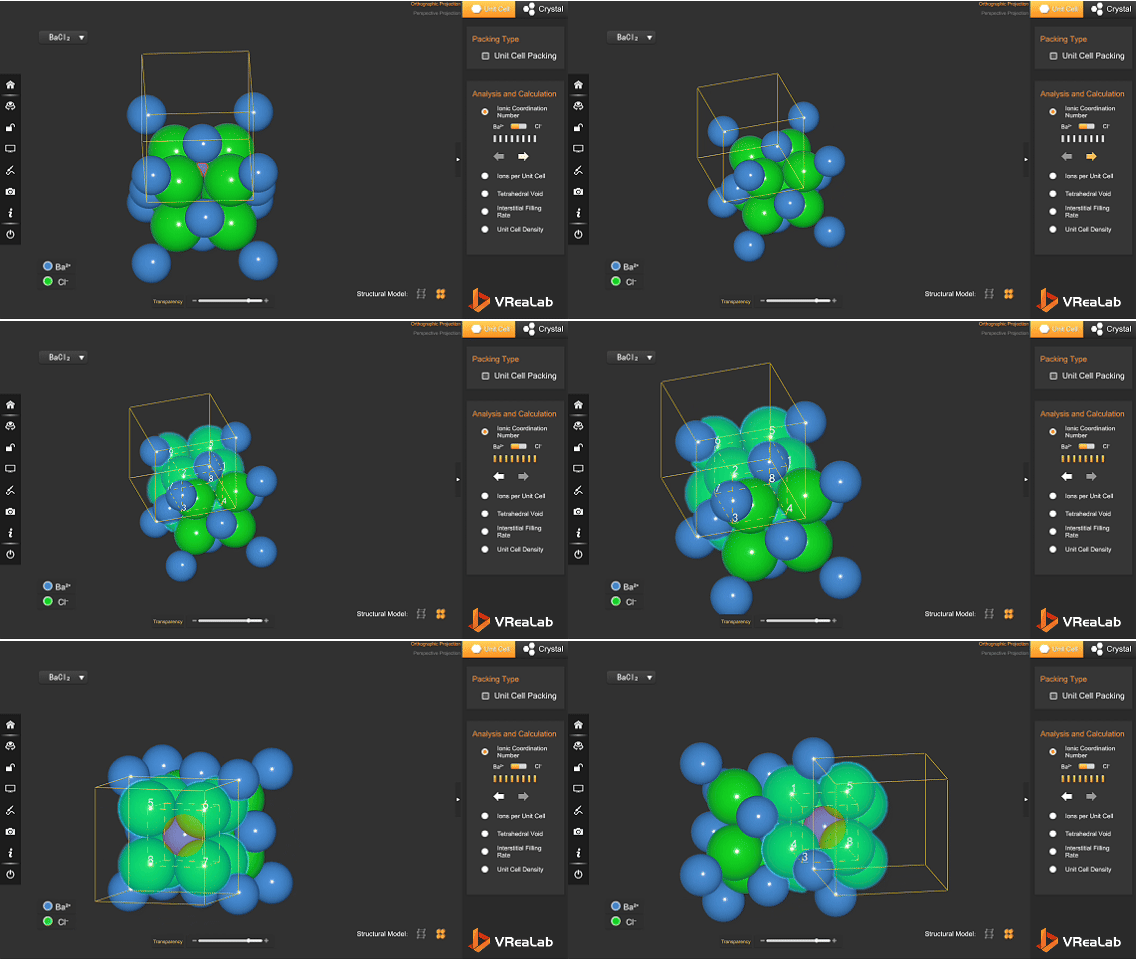
Dissects 3D unit cells to simplify crystal packing models and particle distribution calculations.

Face-Centered Cubic (FCC) Close-Packing (Copper type)

Crystal and unit cell models with interactive calculators for coordination number, atom count, packing efficiency, voids, and density.

Key Advantage: Simplifies intricate lattice structures and transforms abstract formulas into tangible, process-oriented workflows to lower learning barriers.

Redefining Chemistry Education

Micro-Modeling to Macro-Mastery: 3D Revolution in High School Structural Chemistry

Micro-Modeling to Macro-Mastery: 3D Revolution in High School Structural Chemistry

3D Revolution in High School Structural Chemistry

Redefining high school chemistry by transforming the most abstract concepts of structure and properties of matter into intuitive, immersive learning experiences. By leveraging 3D/VR visualizations, the curriculum overcomes the limitations of traditional, flat teaching methods, allowing students to explore three-dimensional, multi-angle micro-worlds.

STEM Synergy: Integrating Micro-Science, VR Tech, Molecular Engineering, and Crystal Math

STEM Synergy: Integrating Micro-Science, VR Tech, Molecular Engineering, and Crystal Math

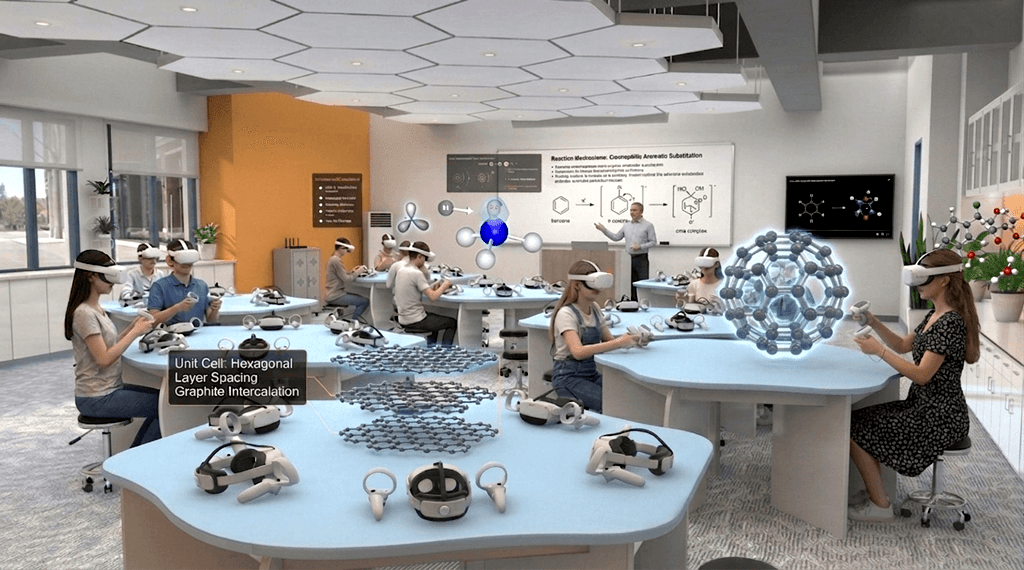
Shaping Future Digital Classrooms with VR Molecular Architecture

By integrating STEM—the science of microscopic principles, technology of immersive VR, engineering of molecular building, and mathematics of crystal geometry—this course lowers cognitive barriers. It fosters high schoolers' core chemistry competencies in macroscopic recognition and microscopic analysis and evidence-based reasoning and model cognition, unlocking a new era of digital education.