Visualizing Air, Fire, and Thrust in the Primary Science VR Learning Device
"How does a jet engine work?" — for primary school students, this is one of the most thrilling questions in science. The Primary Science VR Learning Device makes every stage visible, turning a hidden mechanical process into interactive science experiments children can run, pause, and rewind.
"How does a jet engine work?" — the question appears at the top of the VR scene the moment the lesson begins. For primary school students, this is one of the most thrilling questions in all of science, because the answer involves invisible air, controlled fire, and the very reason an aeroplane can fly. With the Primary Science VR Learning Device, that question is no longer answered with words alone. The platform uses immersive STEM virtual labs to make every stage of the engine visible, turning a hidden mechanical process into a series of interactive science experiments that children can run, pause, and rewind.
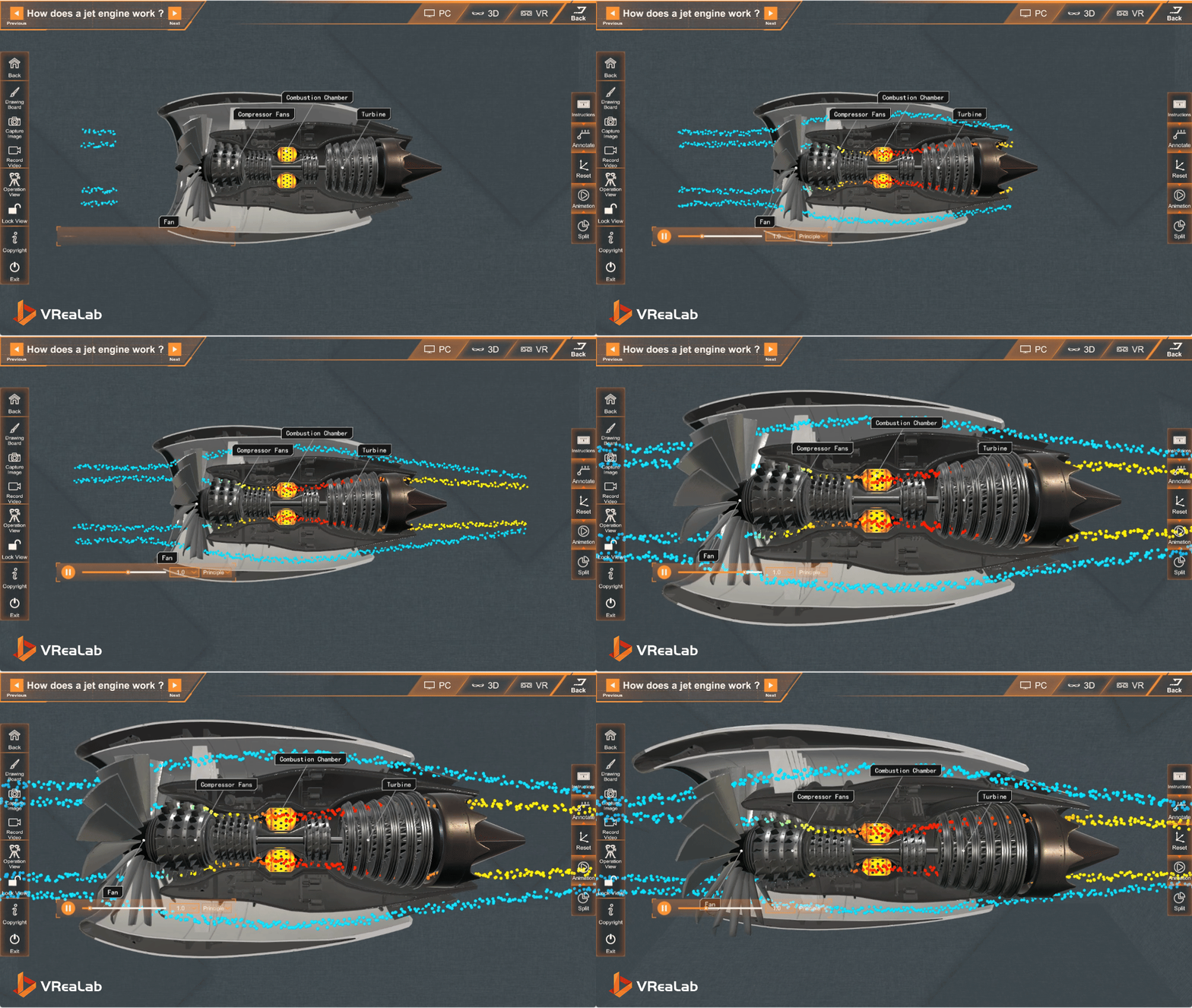
Figure 1. The principle view of the jet engine, where streams of air particles reveal the path of intake and exhaust through every section.
1. Step One: Sucking in the Air
Every jet engine begins with the Fan at the front. As it spins, it draws enormous amounts of air into the engine's core. In the VR scene, students can see this as a steady stream of cool blue particles flowing in from the left. Nothing is hidden — the airflow is shown exactly as it happens, and students can slow it down, speed it up, or rotate the engine to view it from any angle. This first step already demonstrates a key idea behind STEM Education: the engine is not a mystery box. It is a system whose behaviour can be observed, measured, and predicted.
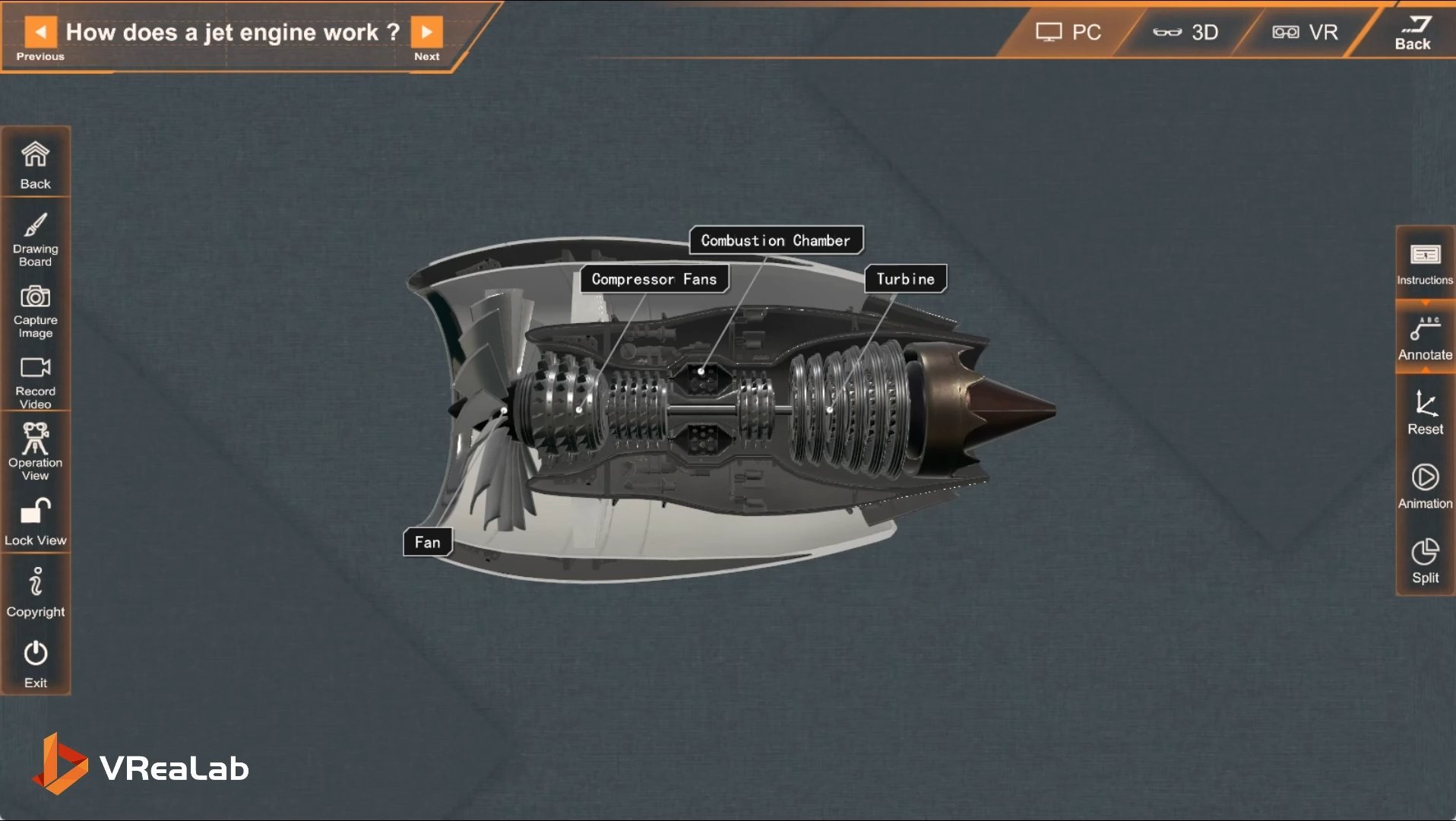
Figure 2. A clean cross-section view of the same engine, with every section labelled — a reference map students can return to at any point during the lesson.
2. Step Two: Squeezing the Air Until It Glows
Once the air passes the fan, the Compressor Fans take over. Their job is to squeeze the incoming air into a much smaller volume, which dramatically increases its pressure and temperature. In the VR model, students watch the particles move from a relaxed, spread-out flow into a tight, fast-moving stream. The lesson here is about cause and effect: a mechanical action (spinning blades) changes a physical property (air pressure) that the next part of the engine will depend on. By letting children adjust a slider that controls compressor speed, the device turns a textbook diagram into one of the most engaging interactive science experiments available in any primary classroom.
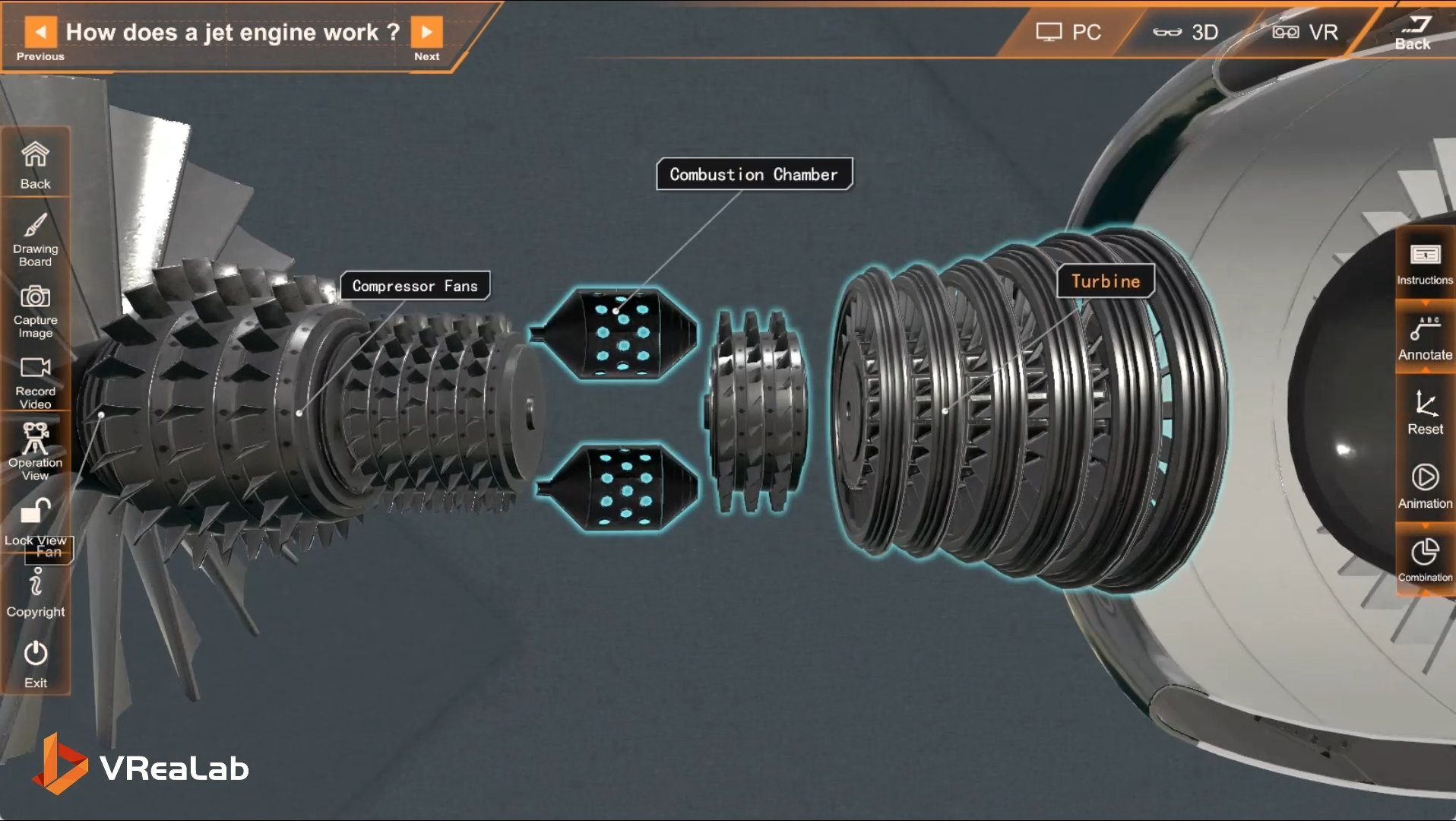
Figure 3. A close-up of the compressor section, where children can count the blade stages and see how each one adds a little more pressure to the airflow.
3. Step Three: Lighting the Fire
Now comes the moment every student remembers. Inside the Combustion Chamber, the highly compressed air meets a fine spray of fuel and ignites. In the VR scene, the chamber glows bright orange and red, and the particle stream changes colour to show the explosive expansion of hot gas. Children can clearly see that fire here is not destruction — it is energy. The burning gas rushes backward at tremendous speed, and that movement is the very force that will push the aircraft forward. This is the heart of the engine, and one of the most powerful visual moments in the entire STEM virtual labs curriculum.
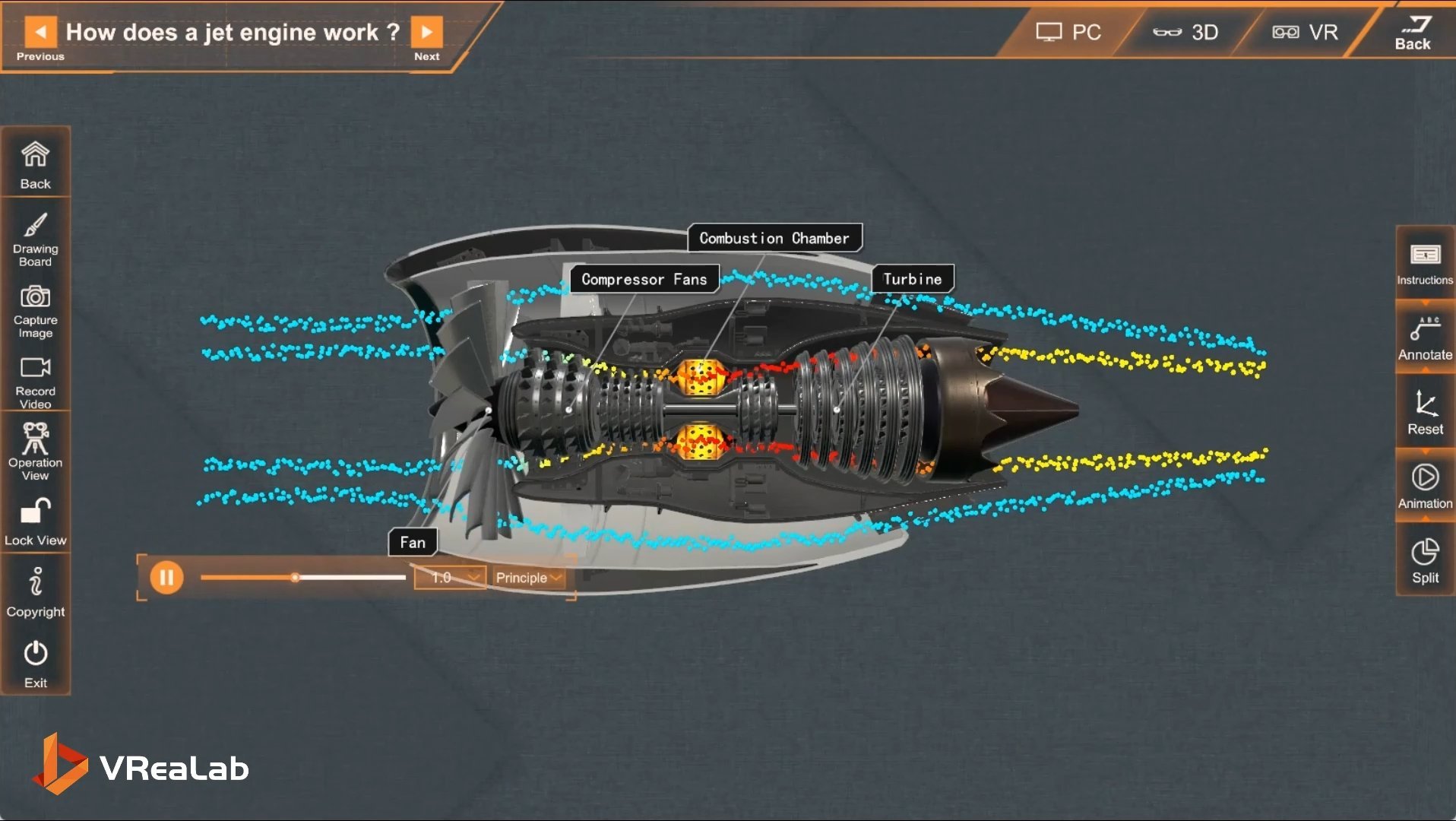
Figure 4. The combustion view inside the VR lab, where the orange glow inside the Combustion Chamber represents the burning of fuel and the violent expansion of hot gas.
4. Step Four: Turning Heat into Motion
The rushing hot gas does not just leave the engine — it first passes through the Turbine at the rear, whose blades spin and feed energy back along a shared shaft to keep the compressor and fan running. The remaining gas shoots out as exhaust, and that backward push is what thrusts the aircraft forward. With the VR model, students trace this entire loop on a single, clearly labelled screen, replaying any step until the logic clicks.
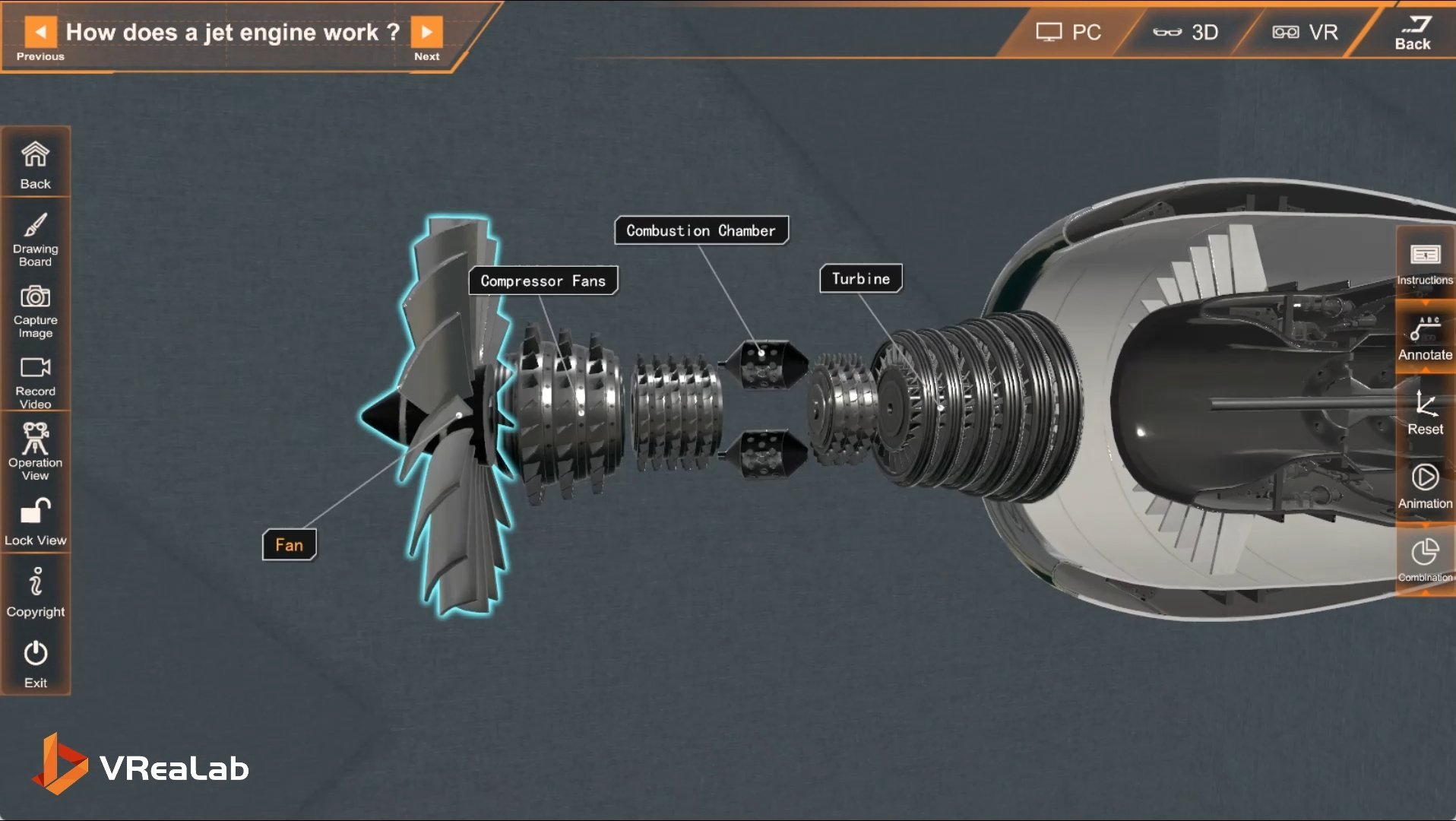
Figure 5. The exploded view shows how the Fan, Compressor, Combustion Chamber, and Turbine line up along a single shaft — the physical link that lets the engine power itself.
5. Why This Lesson Matters Beyond the Engine
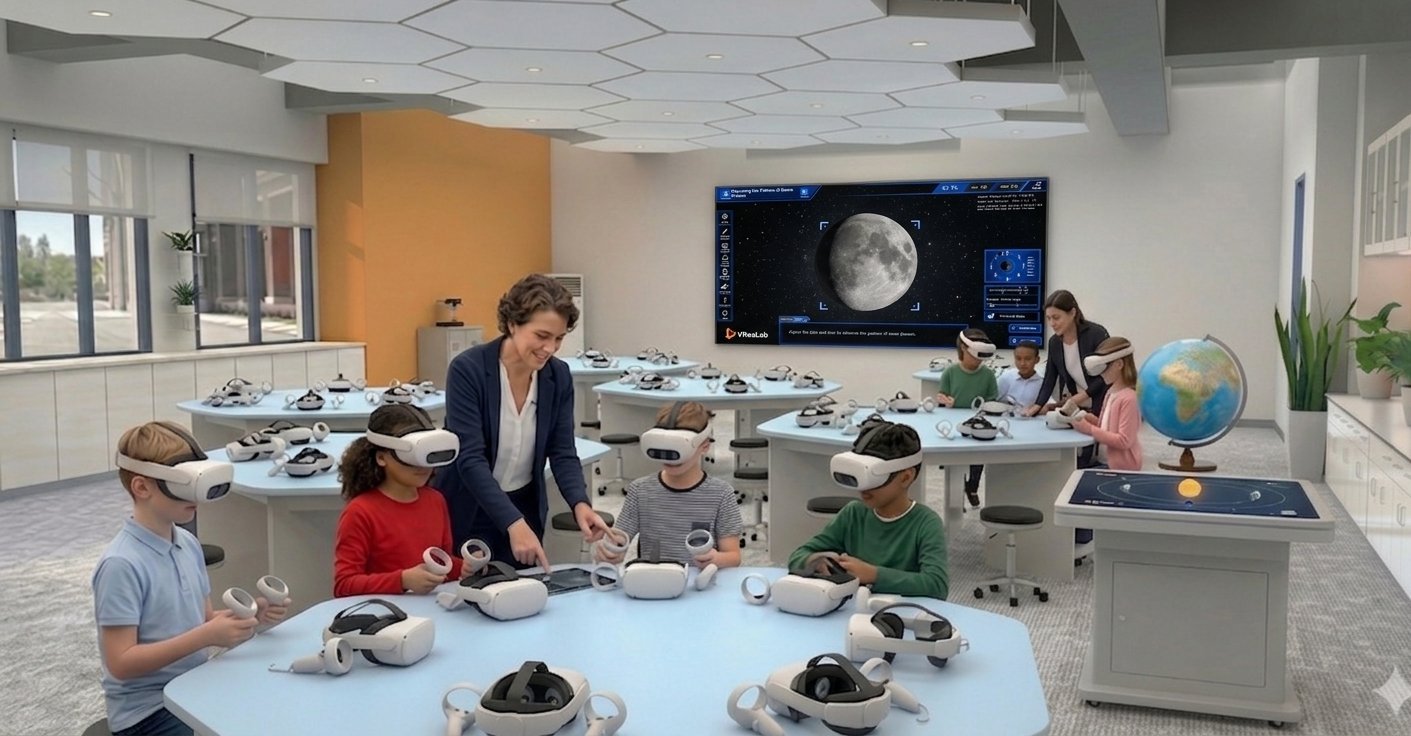
Jet engines are a perfect entry point to STEM Education because they combine physics, chemistry, and engineering in one object. When children see the airflow, compression, combustion, and thrust in a single VR experience, science stops being a list of facts and becomes a story about how the modern world works. The Primary Science VR Learning Device does not replace the teacher — it gives the teacher a stage on which the most exciting question in the curriculum can finally be answered in a way every child can see, touch, and remember.