Visualizing the Invisible: How VReaLab Biology Micro World Transforms Microbiology Education
Microorganisms shape nearly every aspect of life on Earth, yet they remain fundamentally invisible to students. VReaLab Biology Micro World visualizes the microscopic structures of bacteria, viruses, fungi, and more through immersive VR, turning passive memorization into active, three-dimensional understanding.
Microorganisms shape nearly every aspect of life on Earth, yet they remain fundamentally invisible to the students who are asked to understand them. Bacteria, viruses, fungi, algae, protozoa — these organisms operate at scales far below the resolution of any school microscope. Teachers describe their structures with words and flat diagrams, but the three-dimensional reality of a spike protein, a bacterial cell wall, or a viral capsid cannot be conveyed through two-dimensional illustration. Students memorize the facts, pass the exam, and move on without ever developing a genuine feel for the microscopic world.
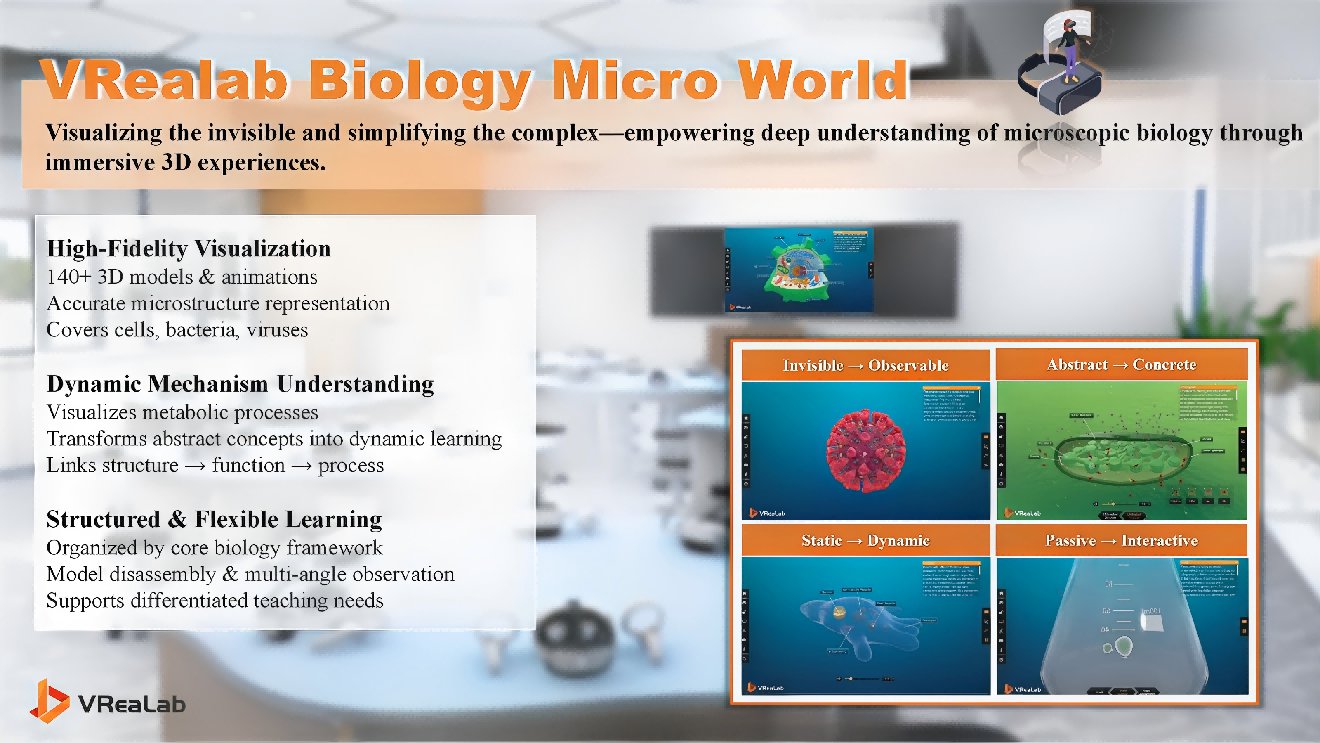
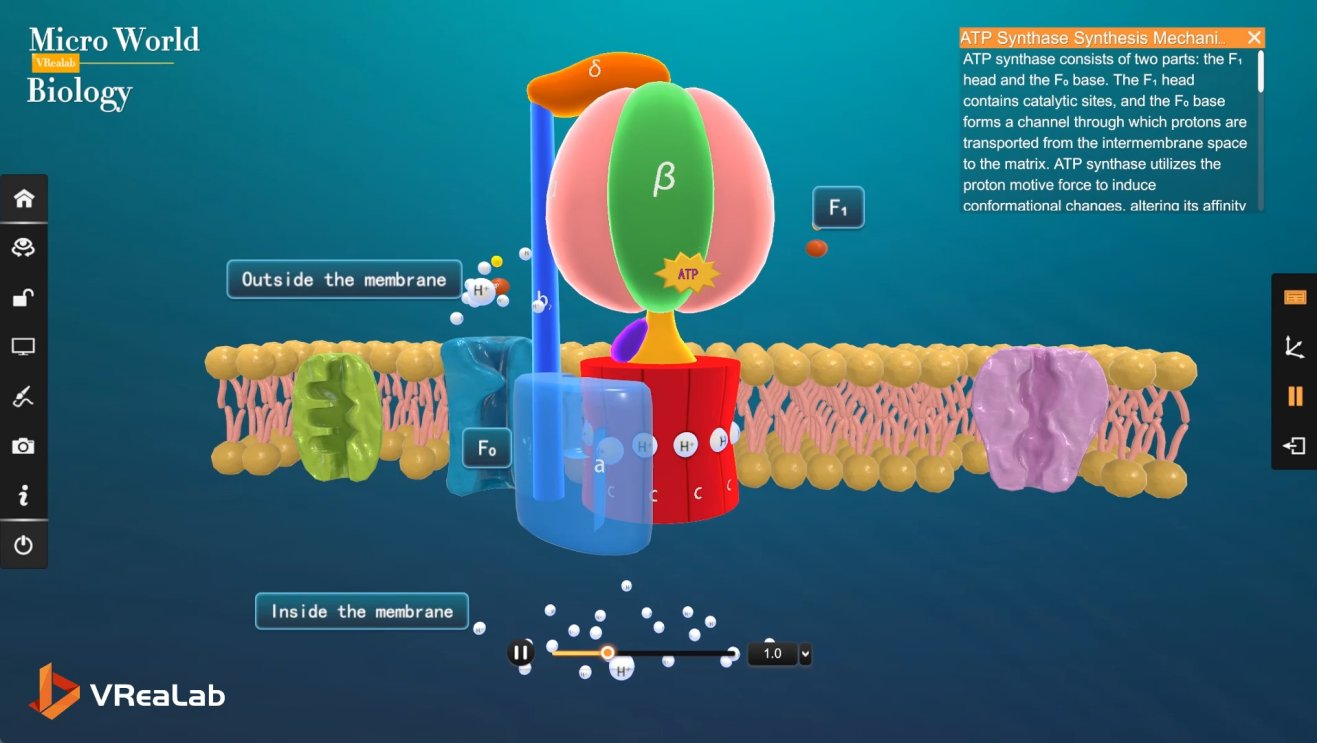
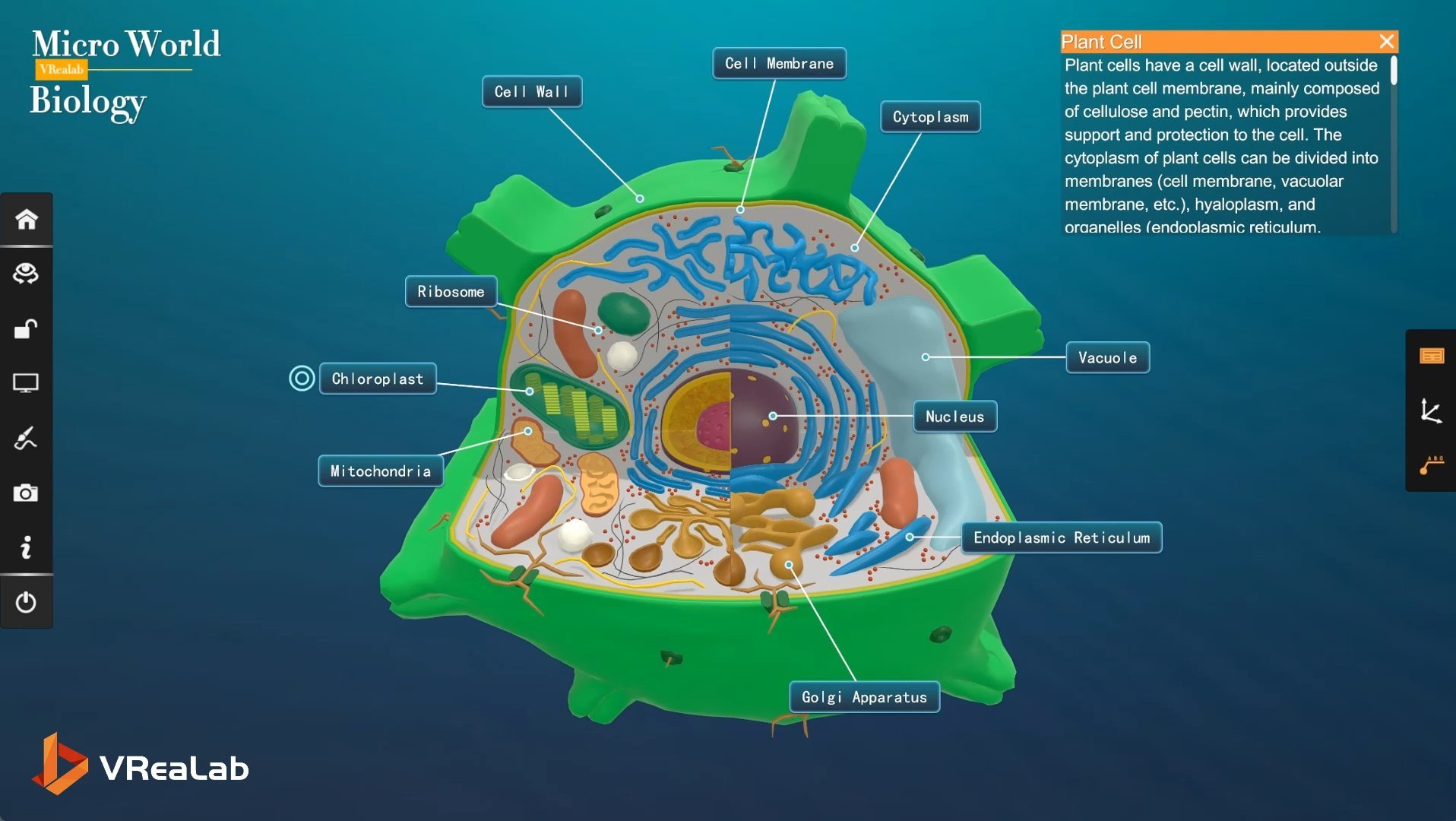
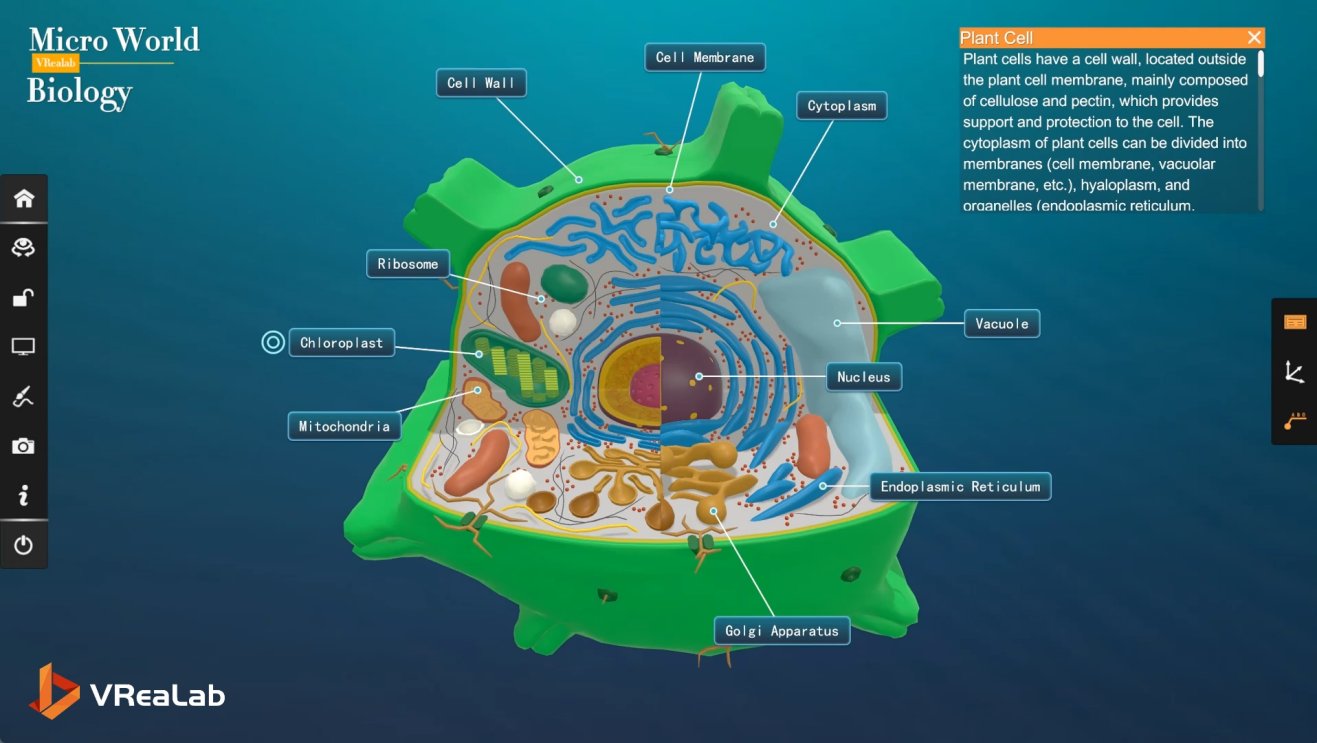
VReaLab Biology Micro World is built to change this. As a comprehensive VR Biology Lab, it visualizes the microscopic structures and key functions of microorganisms that are difficult to observe directly, covering fungi, bacteria, algae, protozoa, mycoplasma, chlamydia, and rickettsia. Rather than treating VR as a supplementary demonstration, the system embeds immersive, interactive experiences directly into the biology curriculum, making the invisible visible, the abstract tangible, and the passive active.
Consider the Novel Coronavirus module as a defining example. In a traditional lesson, students learn about the virus through textbook diagrams — a circle with spikes, a strand of RNA inside. The information is accurate but lifeless. In the Microbiology Virtual Lab, students embark on a nanoscale 3D exploration of the coronavirus, examining spike proteins and RNA in fully three-dimensional space. They can rotate the virus, zoom into specific structural components, and visually interact with the spike proteins to understand how they bind to human cell receptors. The mechanism of viral infection — a process that once required pages of explanation — becomes immediately clear when students can see it unfolding before their eyes.
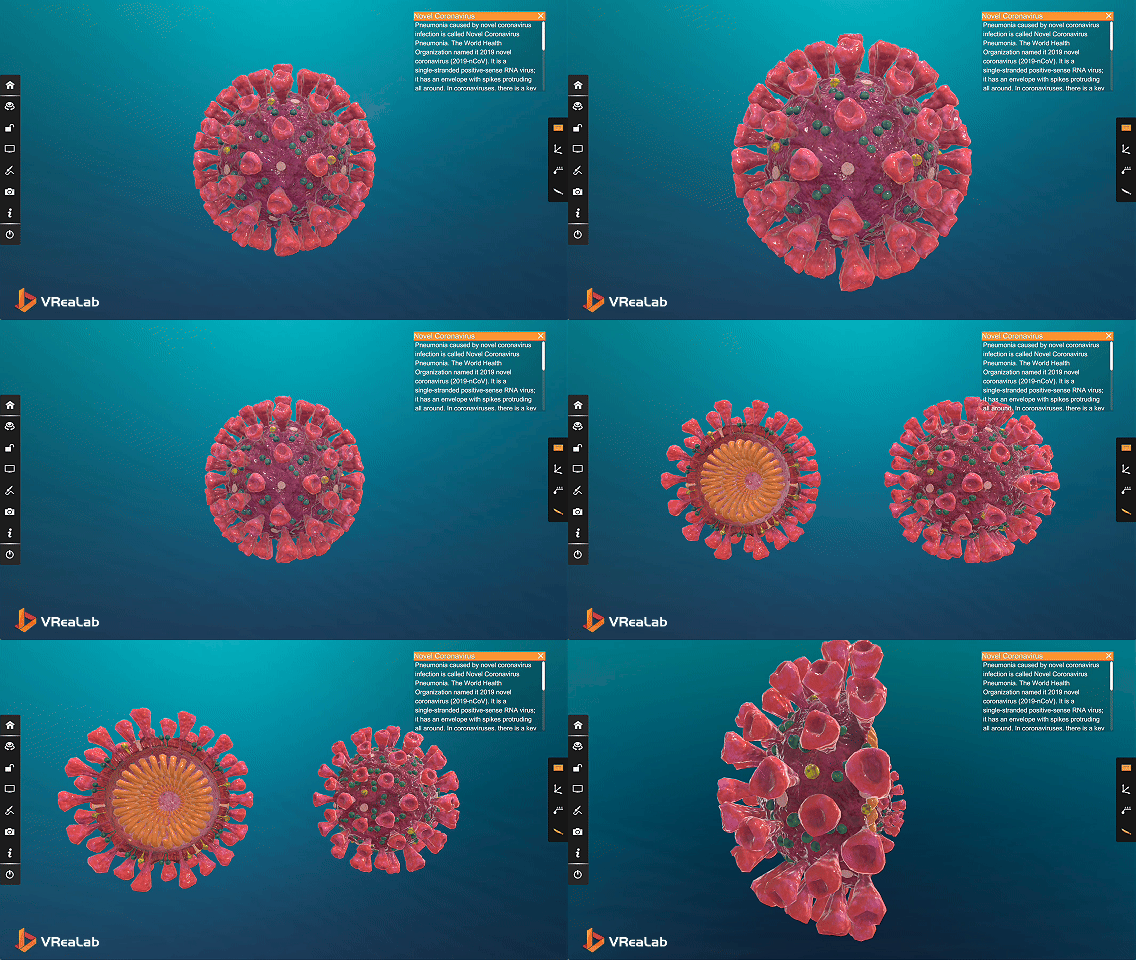
This kind of Immersive Biology Learning does more than improve engagement. It fundamentally changes how students process information. When a student reads that spike proteins bind to ACE2 receptors, that statement is an abstract proposition. When the same student watches a 3D spike protein dock with a cell receptor in the Microbiology Virtual Lab, the binding becomes a visual memory — a spatial, experiential understanding that is far more durable than any verbal description. This is the core advantage of Immersive Biology Learning: it converts information into experience, and experience into understanding.
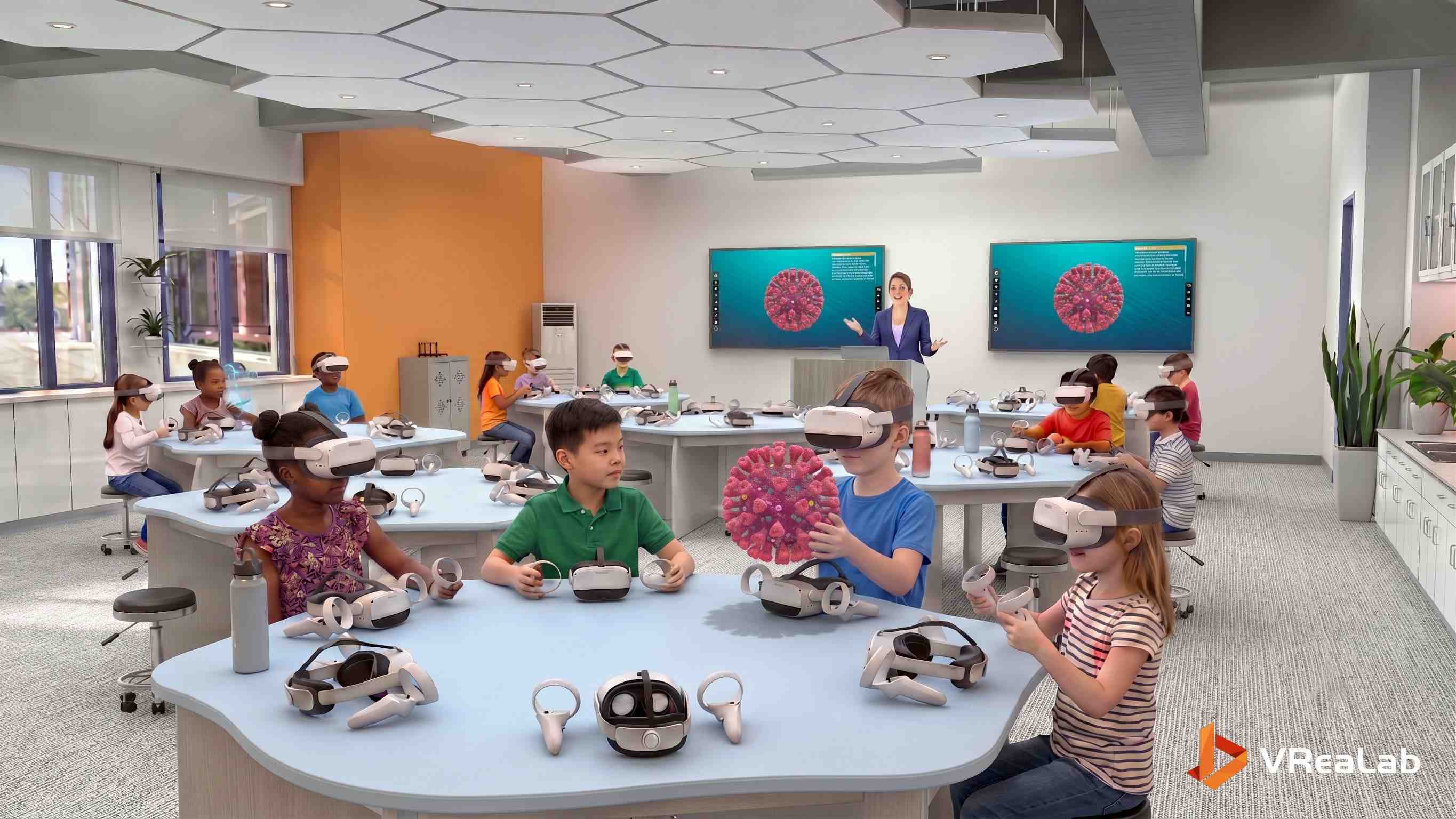
The VR Biology Lab also addresses one of the most persistent challenges in microbiology education: diversity. The microbial world is not a single type of organism but an entire ecosystem of fundamentally different life forms, each with its own structural logic. Fungi have cell walls made of chitin. Bacteria have peptidoglycan layers. Viruses are not even technically alive. Asking students to keep these distinctions straight through memorization alone is a recipe for confusion. The Microbiology Virtual Lab solves this by allowing students to compare structures side by side, rotating each model, zooming into key features, and building a mental library of three-dimensional reference structures that makes classification intuitive rather than arbitrary.
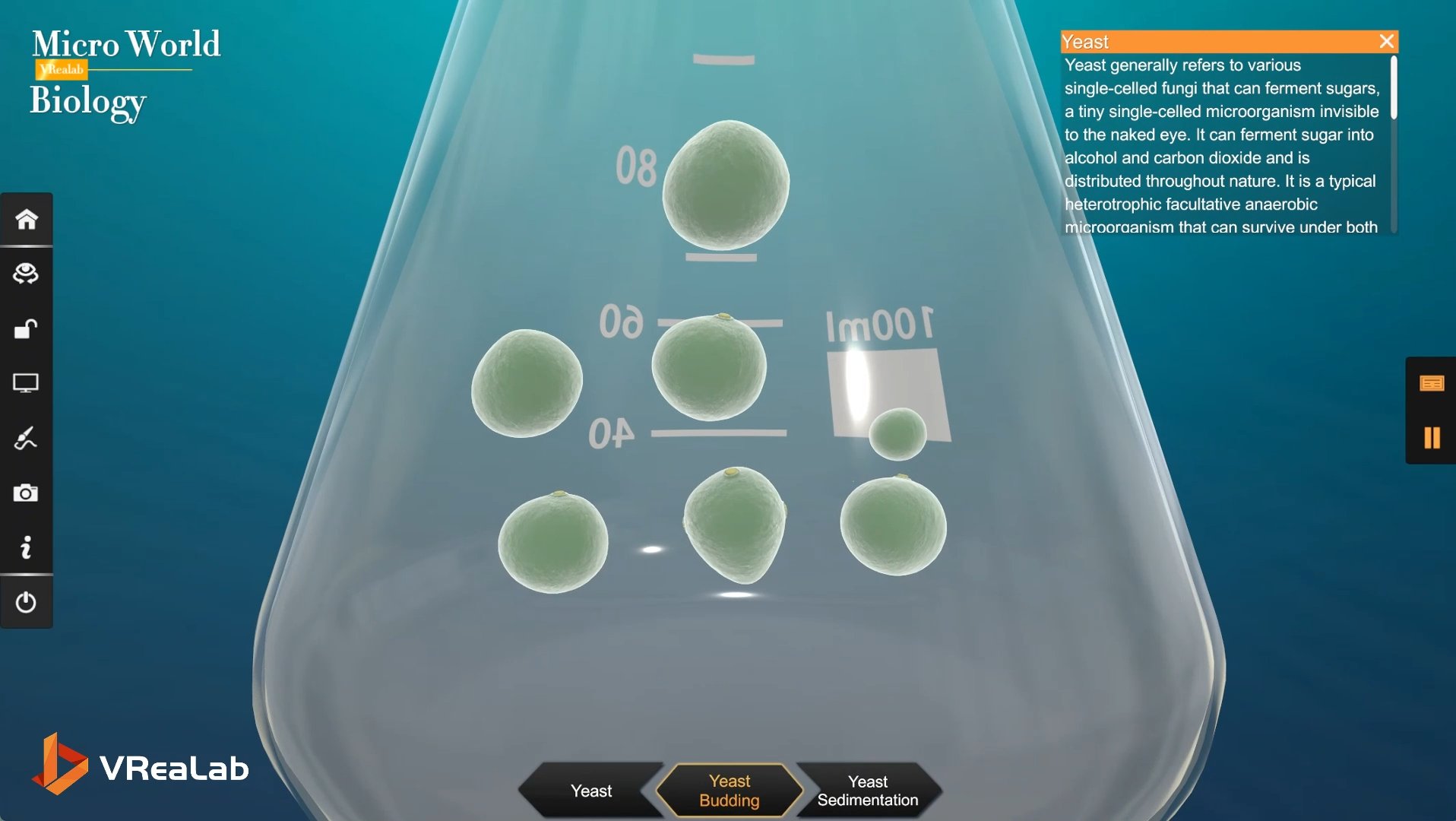
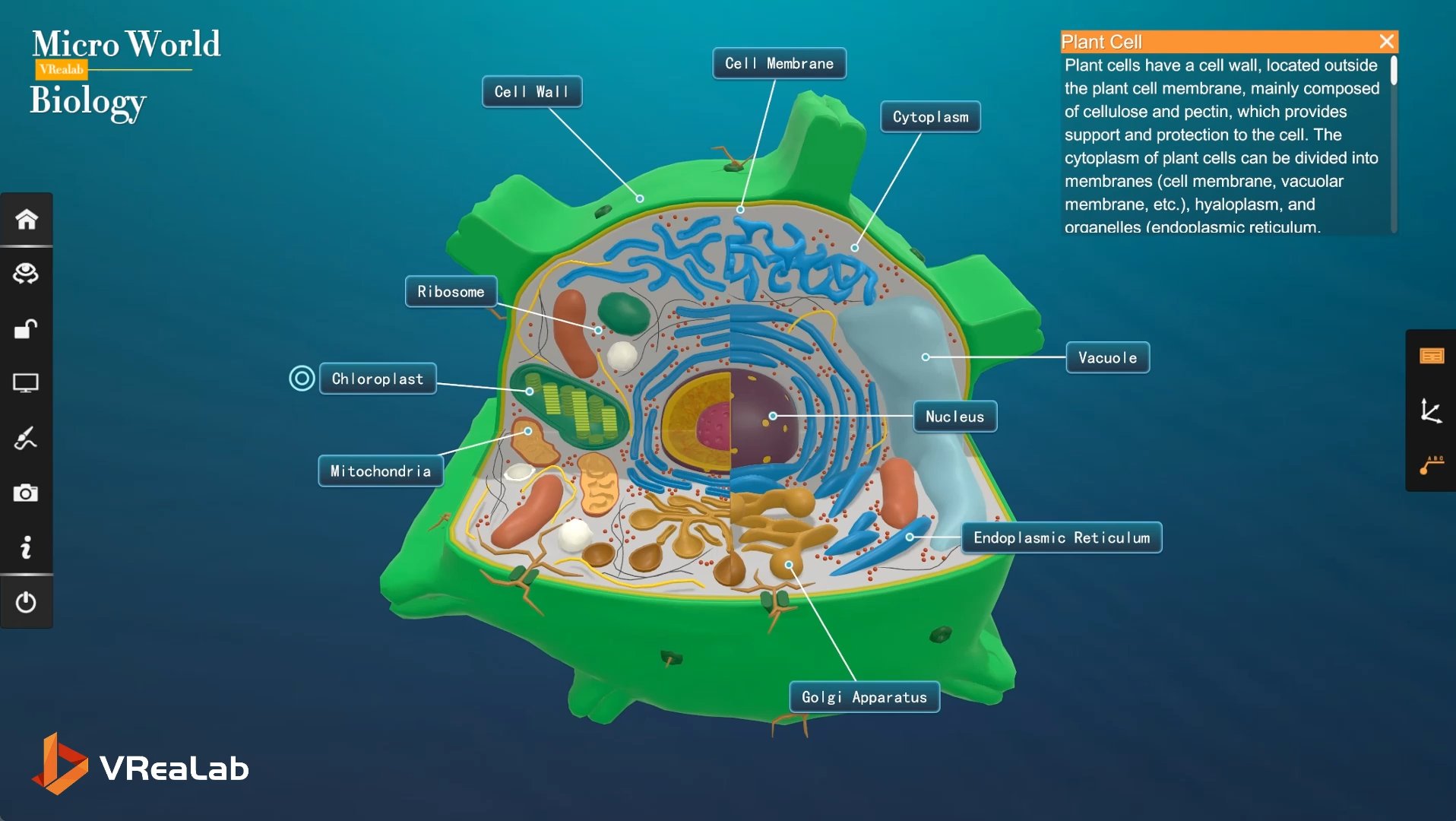
The system also provides interactive learning tools that support inquiry-based exploration. Students can label structures, manipulate models, and decompose complex organisms into their component parts. Multi-scale and multi-angle observation means a student can start with the whole virus, zoom into the spike protein, and then zoom further to examine the molecular interaction at the binding site. This seamless movement across scales is something no physical microscope can replicate, and it is what makes the VR Biology Lab a genuinely new tool rather than a digital replacement for an old one.
By making microorganisms visible, interactive, and explorable, VReaLab Biology Micro World ensures that no student has to learn microbiology blind. Through Immersive Biology Learning in a fully equipped Microbiology Virtual Lab, the invisible world becomes a place students can visit, explore, and truly understand. The VR Biology Lab is not just a teaching aid — it is a redefinition of what microbiology education can be when students are finally allowed to see what they have always been asked to imagine.