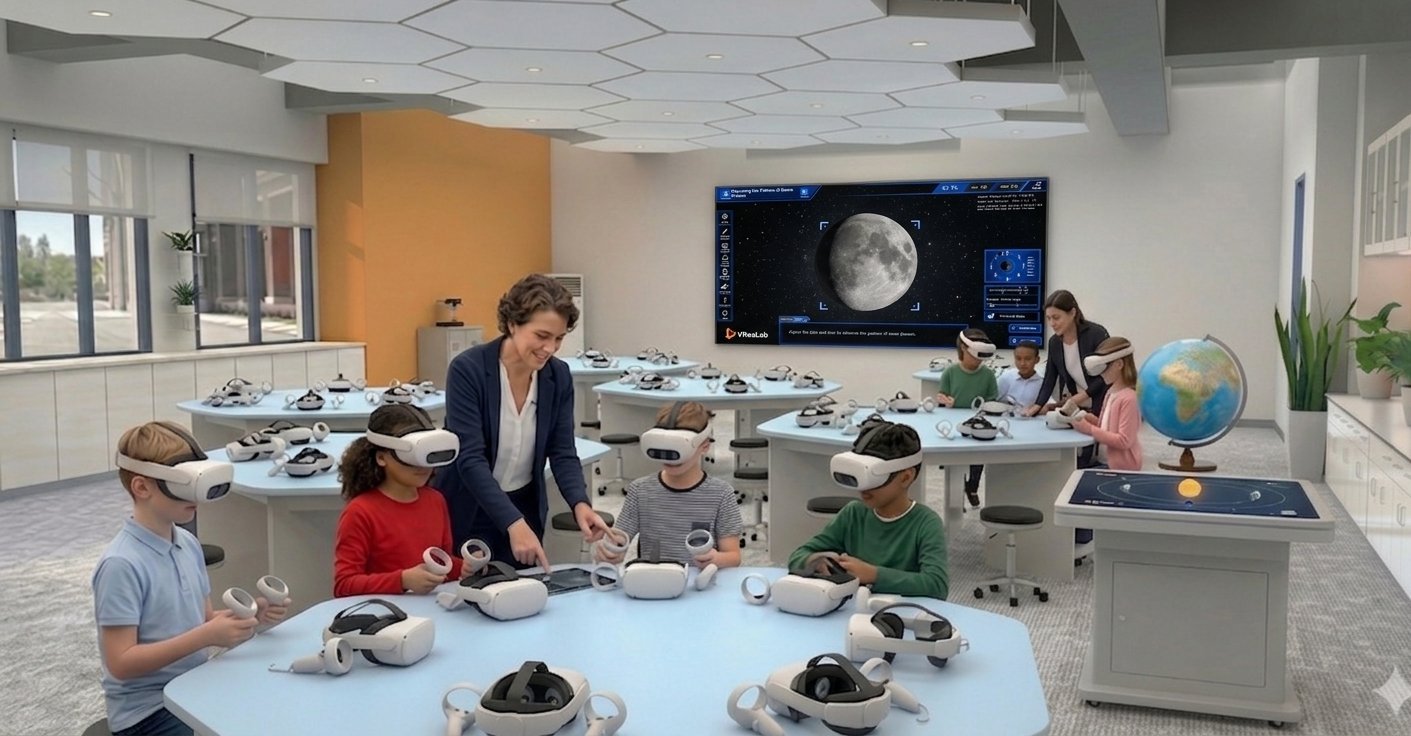
Bringing the Night Sky into the Classroom: How VR Science Lab Transforms Astronomy Learning for Kids
Gone are the days when stargazing required perfect weather and nighttime conditions. JuDao's VR Science Lab brings 88 constellations, planets, and nebulae into the classroom through immersive virtual exploration, making STEM education truly engaging.
Does learning about the stars always mean waiting for a clear night, or staring at pictures and videos in a textbook? These limitations have long restricted the breadth and depth of children's first encounters with astronomy. But today, advances in AI and VR technology have made "exploring the starry sky anytime, anywhere" a reality.
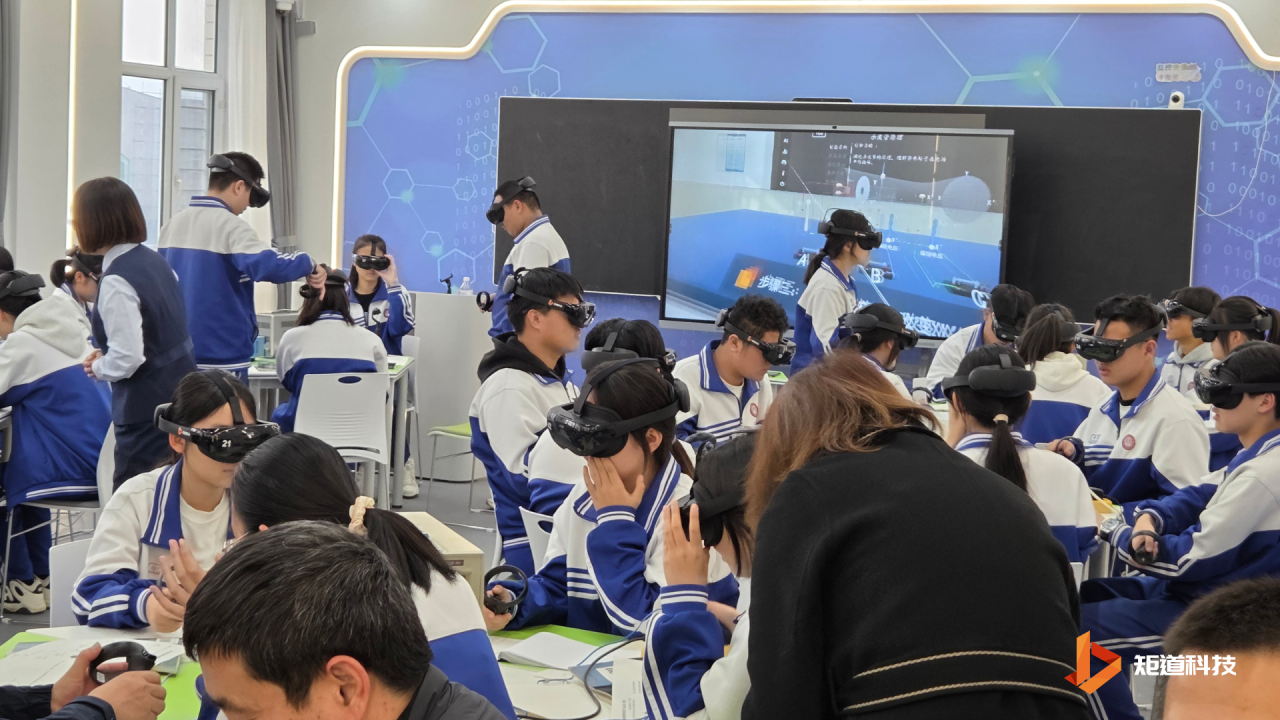
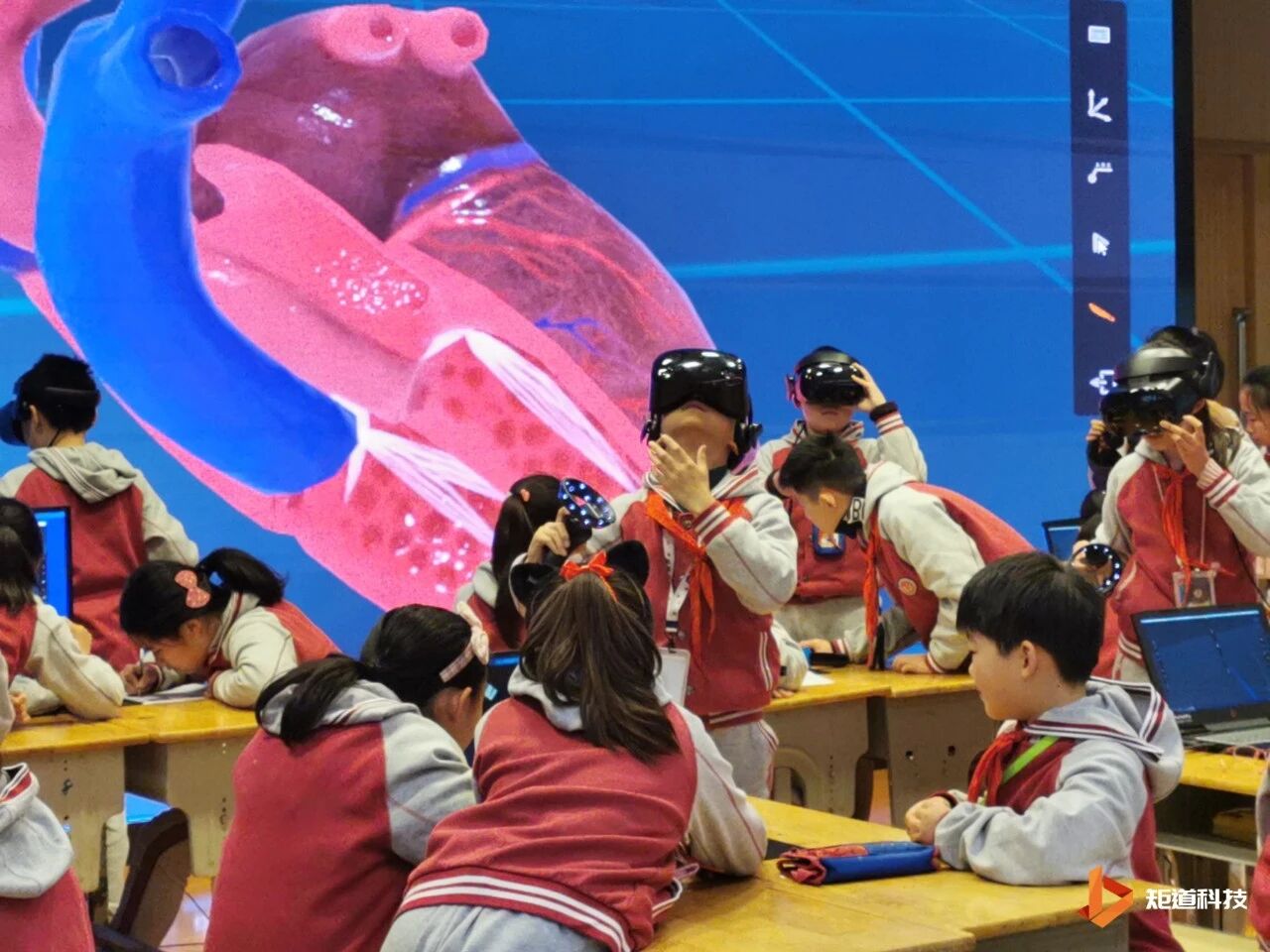
JuDao's primary school science laboratory software, featuring its Starry Sky Exploration platform, represents a meaningful step forward in technology-enhanced education. It breaks through the barriers of time and space, using highly immersive and interactive virtual scenes to transform abstract astronomical concepts into tangible sensory experiences. This VR Science Lab not only makes learning more enjoyable but also opens new pathways for classroom instruction, turning science class into an immersive journey of discovery that lies at the heart of modern STEM education.

Constellation Guidance: Learning the Language of the Stars
Curiosity has no boundaries, and exploration knows no distance. Starry Sky Exploration makes astronomical knowledge truly reachable. In a standard STEM education setting, students rarely get to connect what they read about constellations with what they see in the sky—but the VR Science Lab changes that entirely.

Which stars form Scorpius? Where does the brightest star sit within that constellation? The "Constellation Guidance" feature connects the dots, helping children recognize the "skeleton" of each constellation. Simple sketched lines outline the shapes of Leo, Ursa Major, Orion, and more, while glowing 3D models help children build a vivid, three-dimensional understanding of each constellation's structure.


▲ Constellation connecting lines

▲ Constellation patterns

▲ Constellation models
Additional tools like constellation boundaries, equatorial grids, horizon grids, and azimuthal ground grids further help children build a sense of constellation positioning. The "remove atmosphere" feature allows for even clearer, more immersive stargazing. It's the kind of layered learning that makes a VR Science Lab such a powerful tool for STEM education—students don't just hear about celestial coordinates; they interact with them directly.

▲ Constellation boundaries

▲ Atmosphere removed view
Each feature is like a piece of a puzzle: from points and lines to planes and three-dimensional space, the outline and orientation of each constellation gradually comes into focus, ultimately leaving students with a complete, vivid picture of the night sky in their minds.
Free Exploration: Four Paths Through the Heavens
The "Free Exploration" mode in Starry Sky Exploration offers children four curated stargazing paths. Each path reveals different constellations and different celestial highlights, turning the complexity of astronomical observation into an intuitive, engaging experience. Children can pick up the controls quickly and simply enjoy the wonder of exploring the stars—exactly the kind of hands-on discovery that makes STEM education in a VR Science Lab so effective.

Beyond the Basics: Time Travel, Multiple Viewpoints, and 88 Constellations
To give children the most自由的 exploratory experience possible, Starry Sky Exploration supports switching between different observation locations and times—crossing latitudes and longitudes, moving through the seasons, and jumping instantly to the best stargazing moments of the year anywhere on Earth. Three viewing modes are also available: naked eye, binoculars, and astronomical telescope—layer by layer, drawing the distant and unreachable universe closer until it sits right before the child's eyes.

JuDao's primary school science laboratory Starry Sky Exploration platform covers the shapes, legends, and observation methods of all 88 constellations, along with related stars, nebulae, planets, star clusters, and galaxies. Through AI and VR technology, it "breaks down" the classroom walls, letting children explore actively in an immersive environment and gain real knowledge through interaction—truly inquiry-based learning at its finest.

What makes this VR Science Lab stand out is how naturally it fits into STEM education goals: it encourages curiosity, builds spatial reasoning, and gives students firsthand experience with the scientific method of observation. When the night sky comes alive inside the classroom, children don't just learn about astronomy—they begin to think like astronomers.
Source: Judao Edu