Interactive Science Experiments in the Middle School VR Classroom
Three classic experiments — the vacuum bell jar, myopia correction, and pigeon anatomy — demonstrate how interactive VR science labs solve the trio of classroom barriers: dangerous, too fast, and too hidden to see.
Every science teacher knows the trio of classroom barriers: experiments that are too dangerous to run, too fast to observe, and too hidden to see. The Middle School Physics, Chemistry & Biology VR Learning Device addresses all three by moving the laboratory into a guided virtual space. What follows is a look at how its interactive science experiments reshape the daily rhythm of a middle school science lesson, using three experiments that every teacher will recognize.
Sound Needs a Medium: An Experiment With a Built-In Pause Button
The alarm clock in a vacuum bell jar is a traditional demonstration with a traditional problem: it happens once, in real time, and half the class misses the moment when the ringing fades. In the VR version, students control the alarm switch, the valve, and the air pump themselves. Step 4 asks them to pump out the air gradually and observe the change in sound, which means the fading ring can be slowed, repeated, and compared at different air pressures. The experiment also offers a microscopic diagram, connecting the macroscopic silence with what air molecules are doing. In this Virtual Lab, the most fleeting observation in physics becomes a controllable variable.
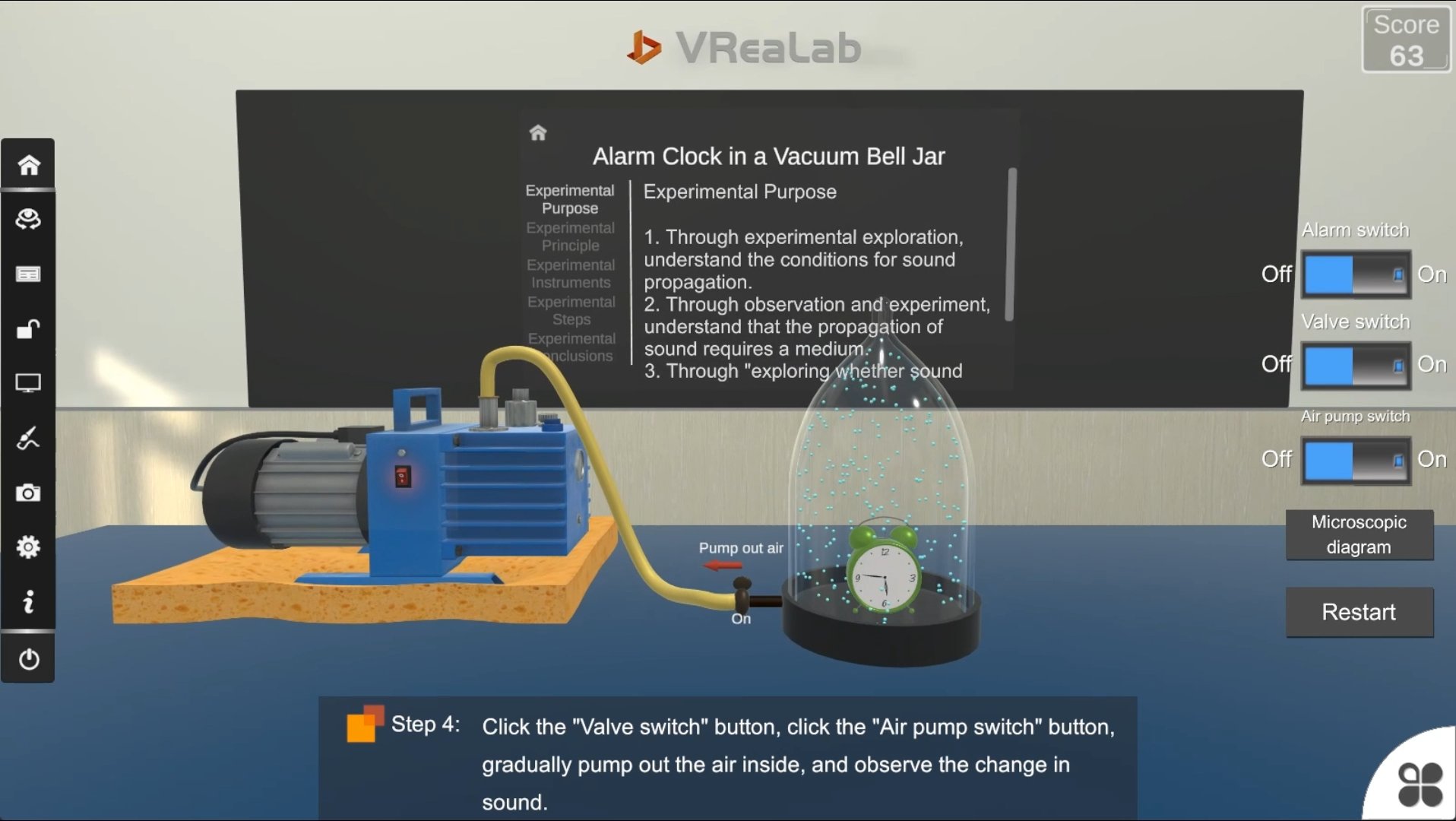
Figure 1. Alarm clock in a vacuum bell jar: students pump out the air step by step and listen to the sound fade as the medium disappears.
Myopia and Its Correction: Optics Students Can Feel
Vision correction is where physics meets personal health, and it is usually taught with two static ray diagrams. The myopia module lets students see light from a distant object focus in front of the retina, then take a pair of concave glasses and watch the rays diverge onto the retina exactly where they should. The explanation panel states the principle plainly: myopia occurs when the lens is too thick or the eyeball too long, and it is corrected with concave lenses. Because students toggle between the principle and the correction with one button, the cause-and-effect chain is experienced rather than recited. This is precisely the kind of interactive science experiments that turns a health topic into a physics lesson students remember.
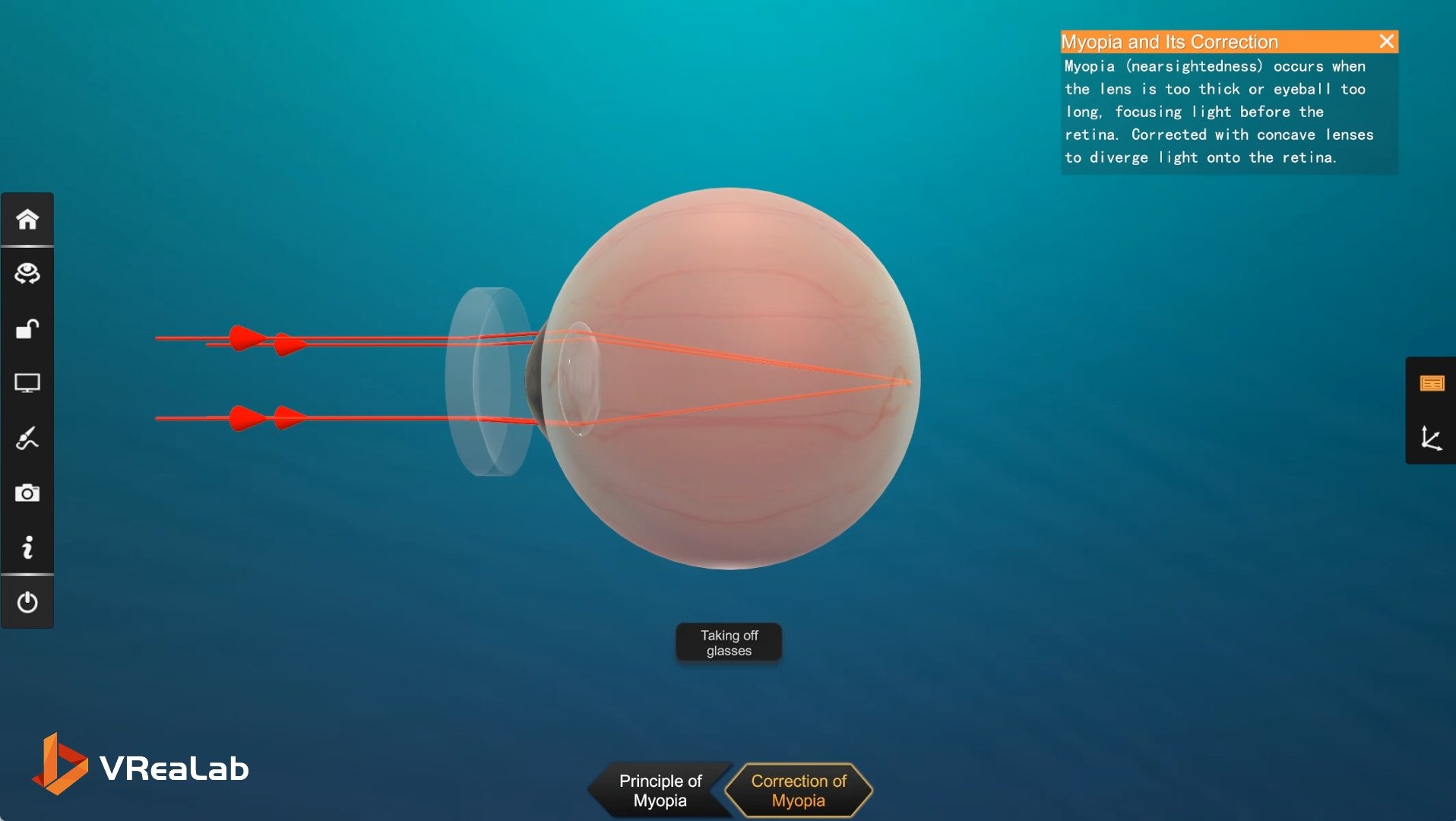
Figure 2. Myopia and its correction: students switch between the uncorrected eye and the concave-lens correction, watching light land on the retina.
Inside a Pigeon: Biology Without the Specimen
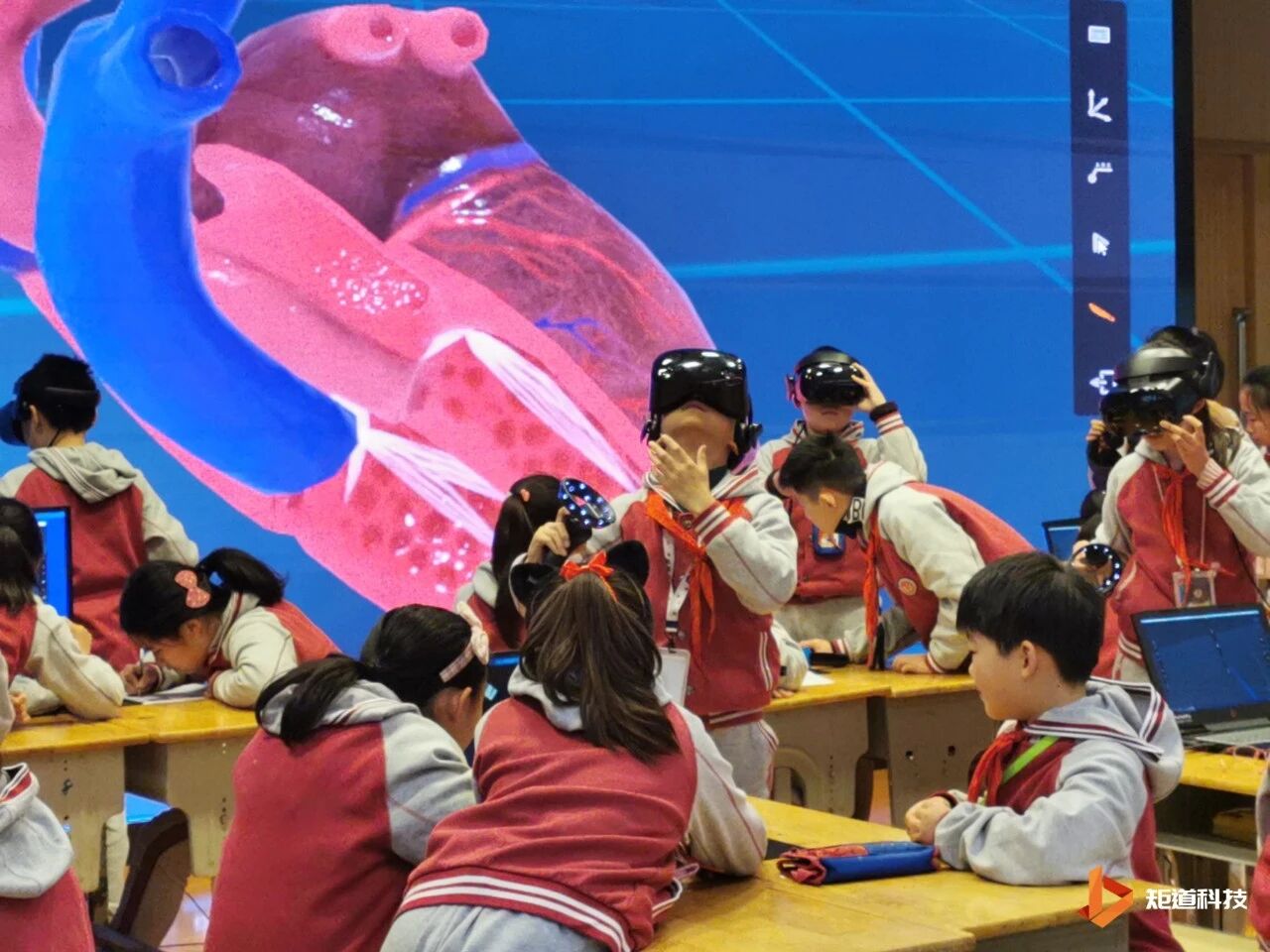
The third experiment moves to biology. Observing the morphological features of a pigeon traditionally means a photo, a stuffed specimen, or a dissection that only a few students can approach. In the VR module, every student clicks through the whole bird, the spread-wing posture, the skeleton, and the internal organs. The skeletal adaptations for flight, the hollow bones, the organ layout: all of it is visible from any angle, at any pace, for every student at once. One module replaces a cupboard of specimens and gives the teacher a common visual reference for the whole class discussion.
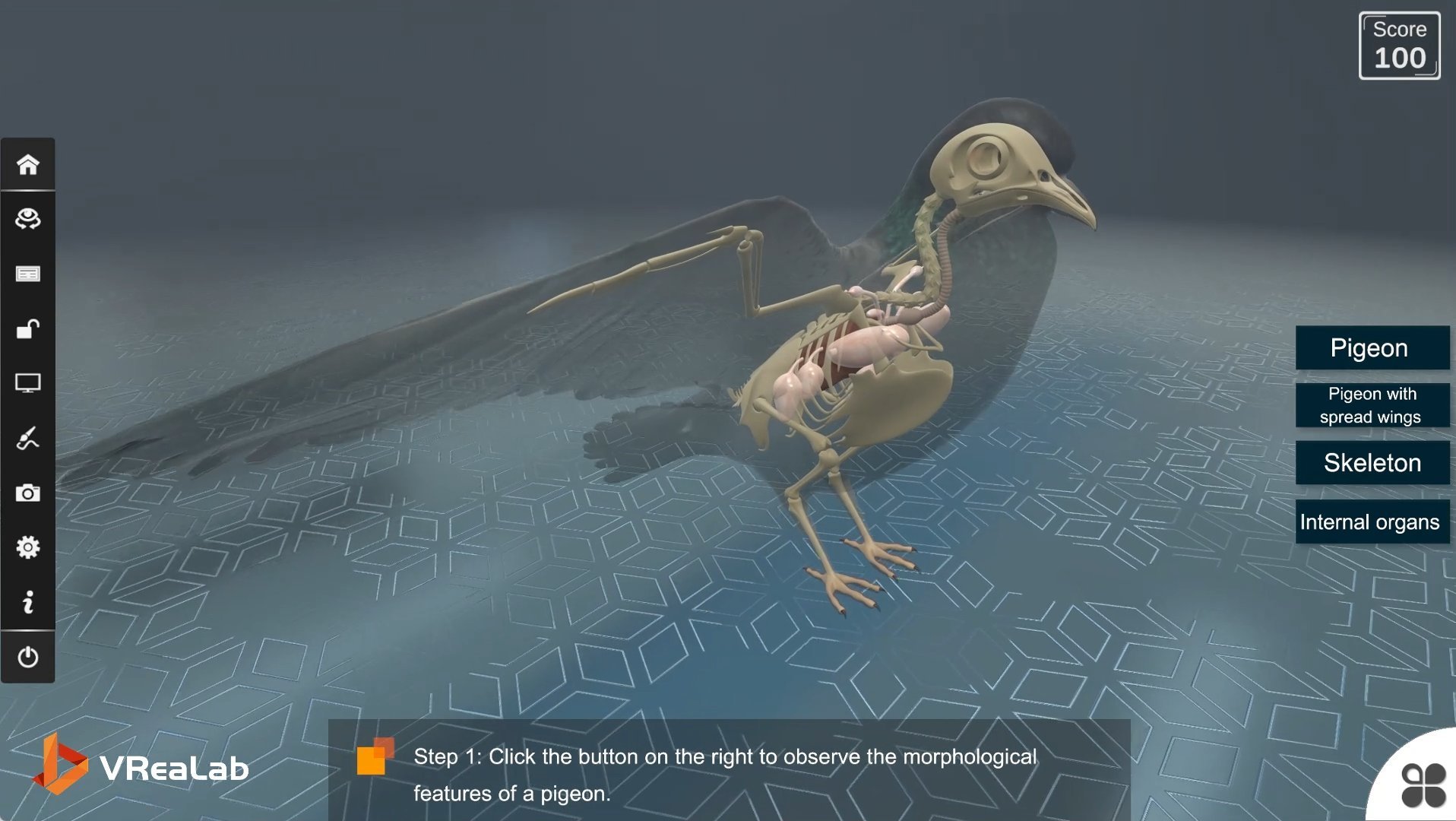
Figure 3. Pigeon anatomy in VR: the skeleton and internal organs are revealed layer by layer for whole-class observation.
Opening a Lesson the VR Way
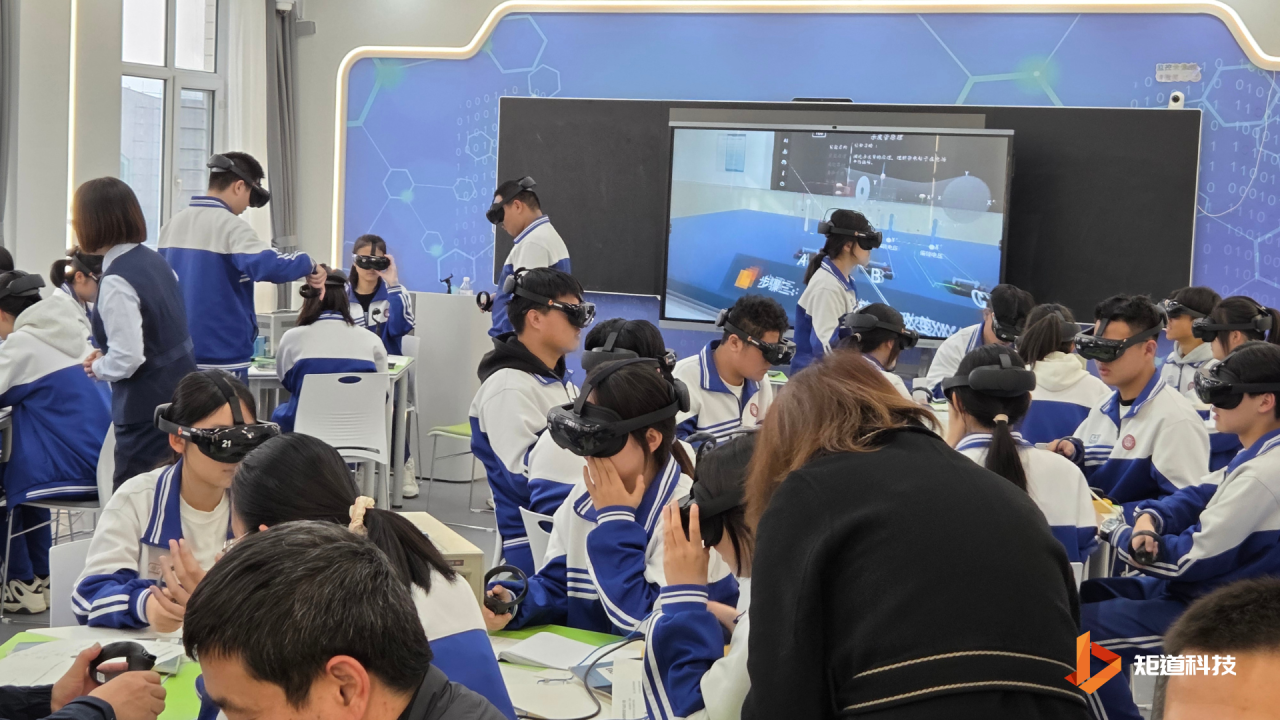
In practice, a lesson built on the device follows a simple rhythm. The blackboard in the virtual scene states the experimental purpose before any apparatus appears, so students know what question they are answering. Step-by-step prompts then guide the operation, and buttons on the right side of the view expose the variables: an alarm switch, a valve, a direction toggle. Because the interface is shared, the teacher can demonstrate on a projected screen while students repeat on their own headsets, and both are looking at the same thing.
What Changes for Teachers
The three experiments share the same teaching advantages. Safety risks disappear, because there is no vacuum pump to malfunction and no specimen to handle. Time becomes adjustable, so a demonstration that once flashed past can now be replayed until the whole class sees it. And every student moves from watching to operating, which is the difference between being told a conclusion and earning one. A Virtual Lab does not replace the teacher; it hands the teacher a classroom where nothing important is hidden, too fast, or too dangerous to teach.