Inside a Jet Engine: How Primary Science VR Turns a Hidden Machine into a Visible Lesson
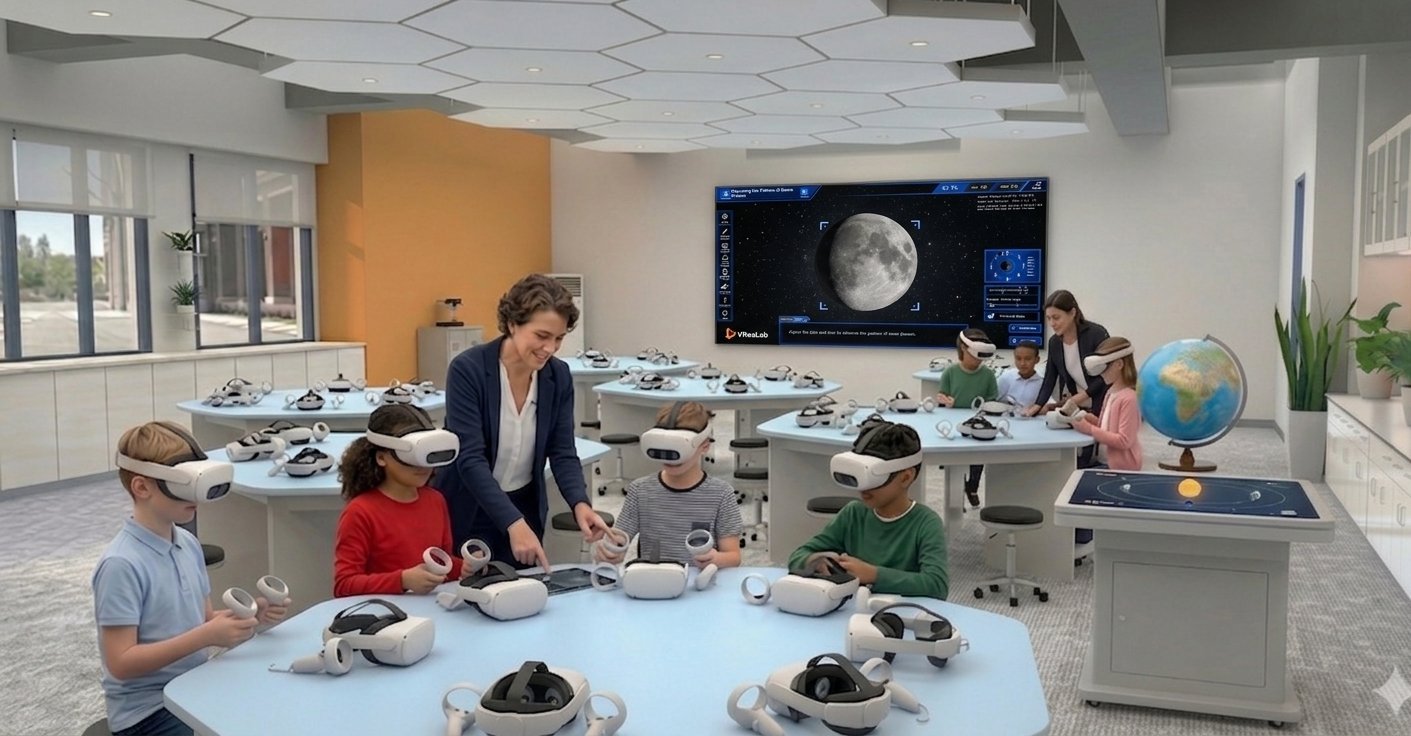
For most primary school students, a jet engine is just a roaring metal tube bolted to a wing. They see the outside, hear the noise, and feel the thrust — but never the inside. With the Primary Science VR Learning Device, the entire engine lifts off the page and comes apart in front of the students’ eyes.
For most primary school students, a jet engine is just a roaring metal tube bolted to a wing. They see the outside, hear the noise, and feel the thrust — but never the inside. Traditional textbooks flatten this complex machine into a two-dimensional diagram with arrows and labels that few children can truly connect. With the Primary Science VR Learning Device, the entire engine lifts off the page and comes apart in front of the students’ eyes. Built on immersive STEM virtual labs, the platform transforms an engineering marvel into a classroom-ready exploration that links directly to everyday STEM Education.

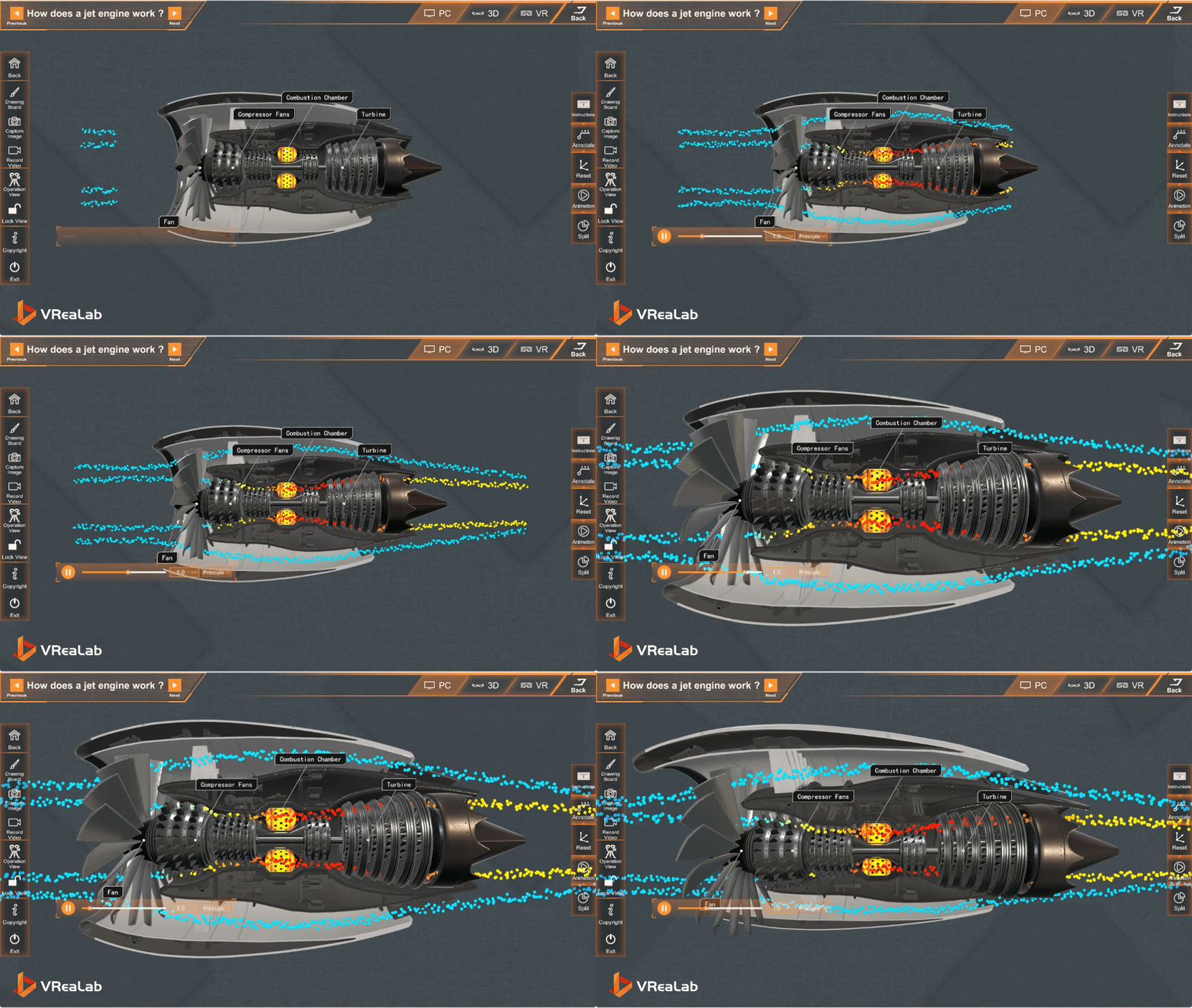
Figure 1. How does a Jet Engine work
1. Why Structure Comes First in a Jet Engine Lesson
Before students can understand how something flies, they need to see what they are looking at. A jet engine is, at heart, a tightly packed sequence of four mechanical sections, each with a clearly different job. Without seeing those sections, words like “thrust,” “compression,” and “turbine” stay abstract. The VR device solves this by placing the learner next to a 1:1 cross-section of a real engine, where every part is labelled, rotatable, and zoomable. This is exactly the kind of interactive science experiments that primary classrooms have long needed but rarely had.
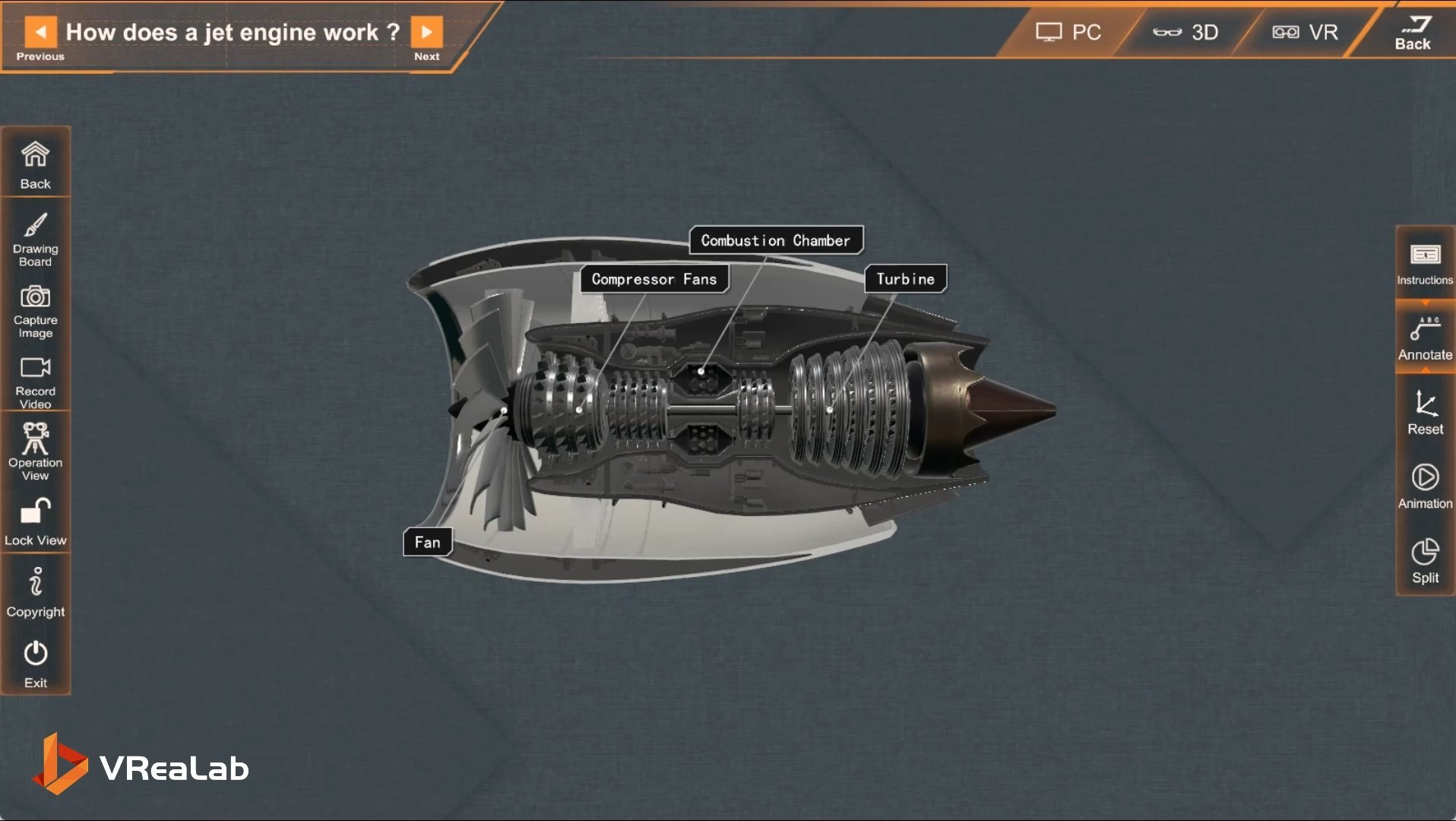
Figure 2. A clean cross-section view of the jet engine inside the VR lab, with the four key components clearly labelled.
2. The Four Building Blocks, Laid Out in Order
From the front of the engine to the back, the four sections work in a strict order. The front-mounted Fan pulls huge volumes of air into the engine. Behind it, the Compressor Fans squeeze that air into a much smaller space, raising its pressure. In the middle sits the Combustion Chamber, where fuel is mixed with the compressed air and ignited. Finally, the Turbine at the rear harvests energy from the expanding hot gases to keep the compressor and fan spinning. In the VR scene, students can rotate around each section individually, peer inside, and connect each part to its function — a sequence of interactive science experiments that turns memorization into real comprehension.
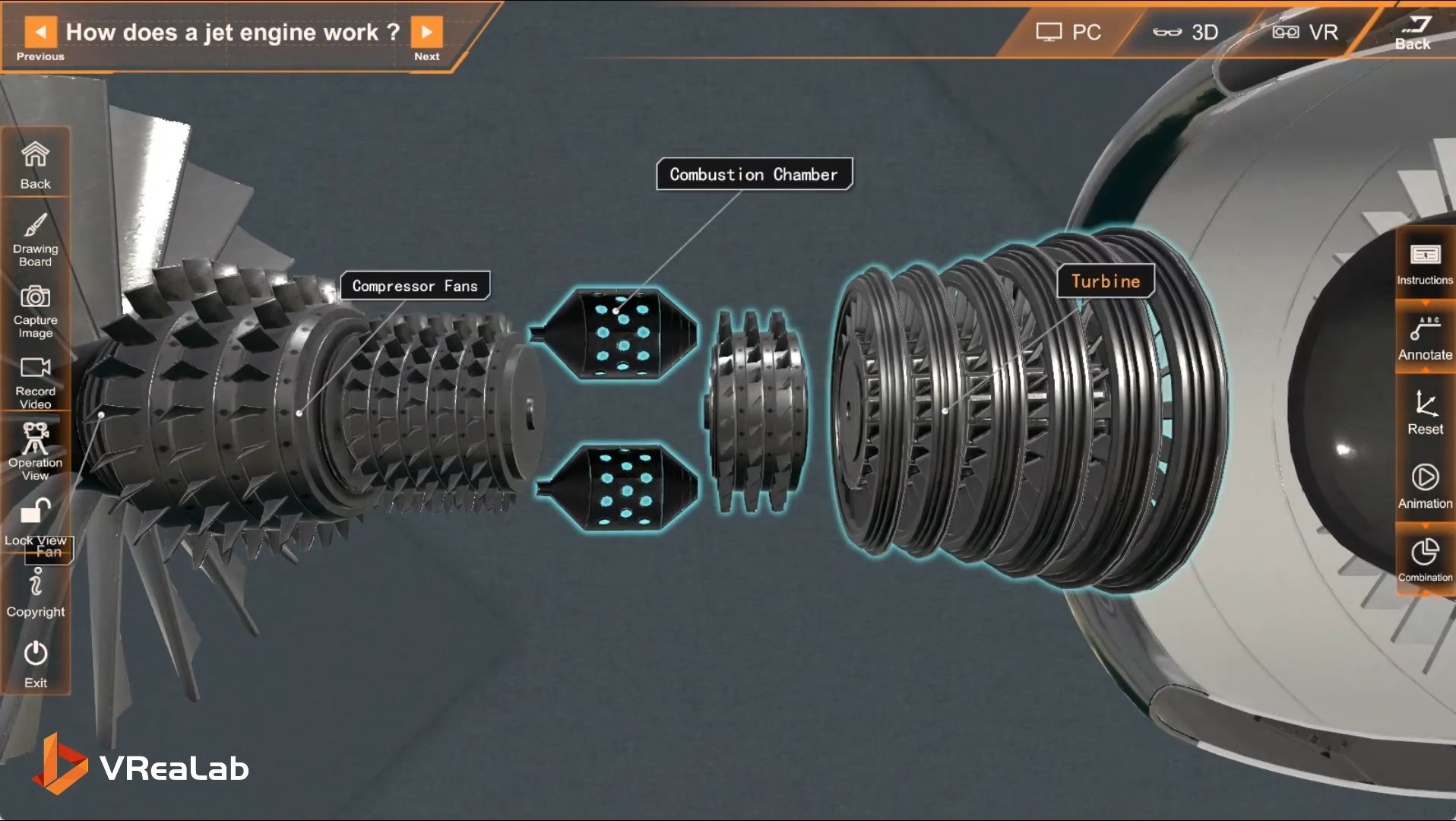
Figure 3. A close-up of the engine core, where the perforated Combustion Chamber sits between the Compressor Fans and the Turbine.
3. An Exploded View That Makes Assembly Obvious
One of the most powerful features of the VR device is the exploded-view mode. With a single gesture, the engine pulls apart along its central axis, separating the fan, compressor, combustion chamber, and turbine into floating pieces. Students see exactly how the parts stack together and why each one must sit precisely where it does. This is hands-on STEM Education at its best: structure is no longer something to memorize from a textbook — it is something to inspect, rotate, and reassemble. Children quickly notice that the compressor and turbine are connected by a single shaft, which leads naturally to the next lesson on how the engine actually works.
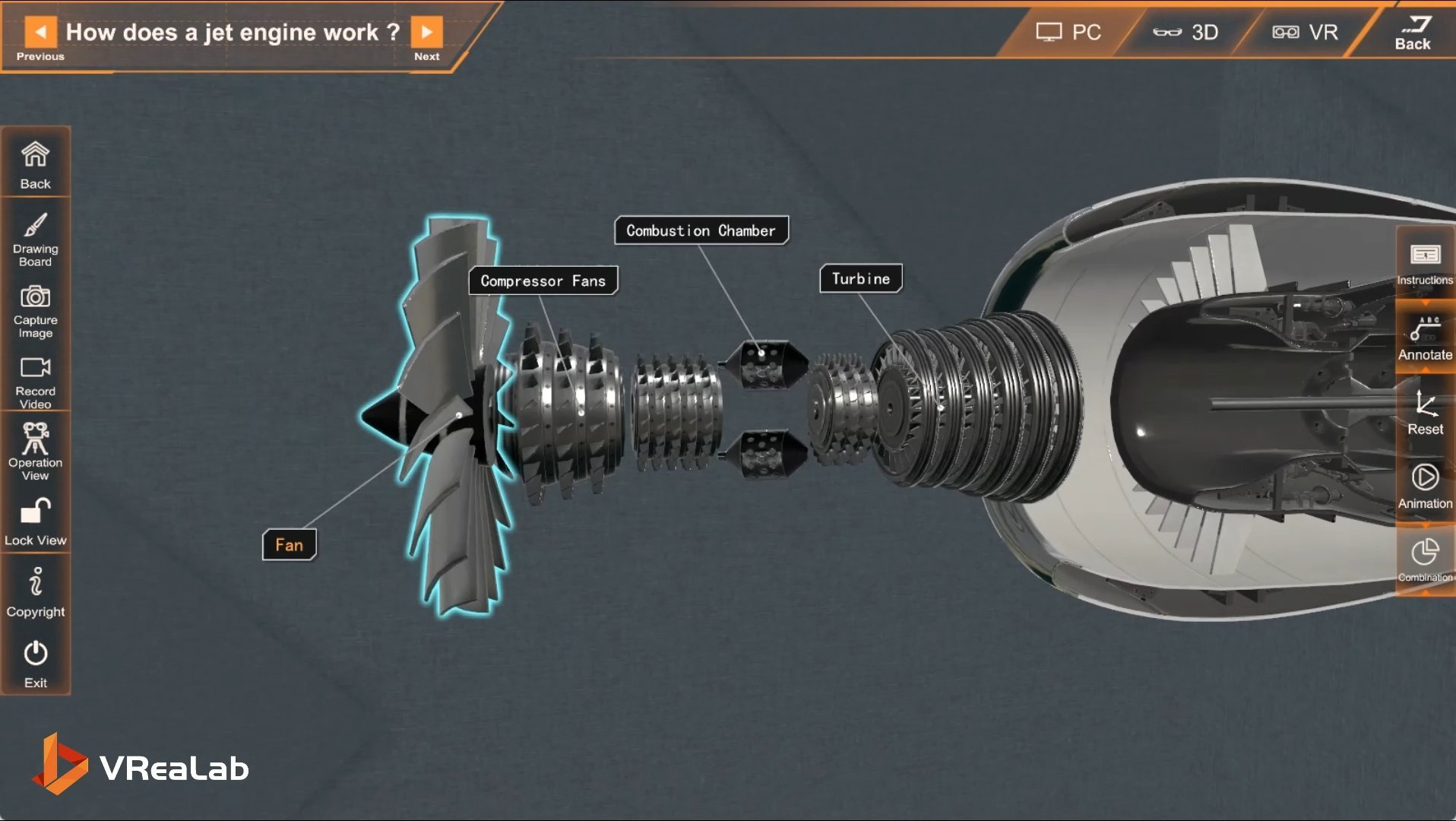
Figure 4. The exploded view inside the VR lab, showing the Fan, Compressor Fans, Combustion Chamber, and Turbine as separate components along the engine’s central axis.
4. From a Hidden Machine to a Classroom Conversation
What makes the Primary Science VR Learning Device especially valuable is how it scales the same lesson for different age groups. Younger students can simply name the parts and follow the air’s path; older students can compare blade shapes, count the compressor stages, and discuss why the combustion chamber has a perforated wall. The teacher remains at the centre of the lesson, but now has a living 3D model to anchor every question. By the end of the class, a machine that once seemed impossibly complex has become something every student can describe, draw, and explain — a small but real step toward the kind of engineering confidence that STEM virtual labs are designed to build.
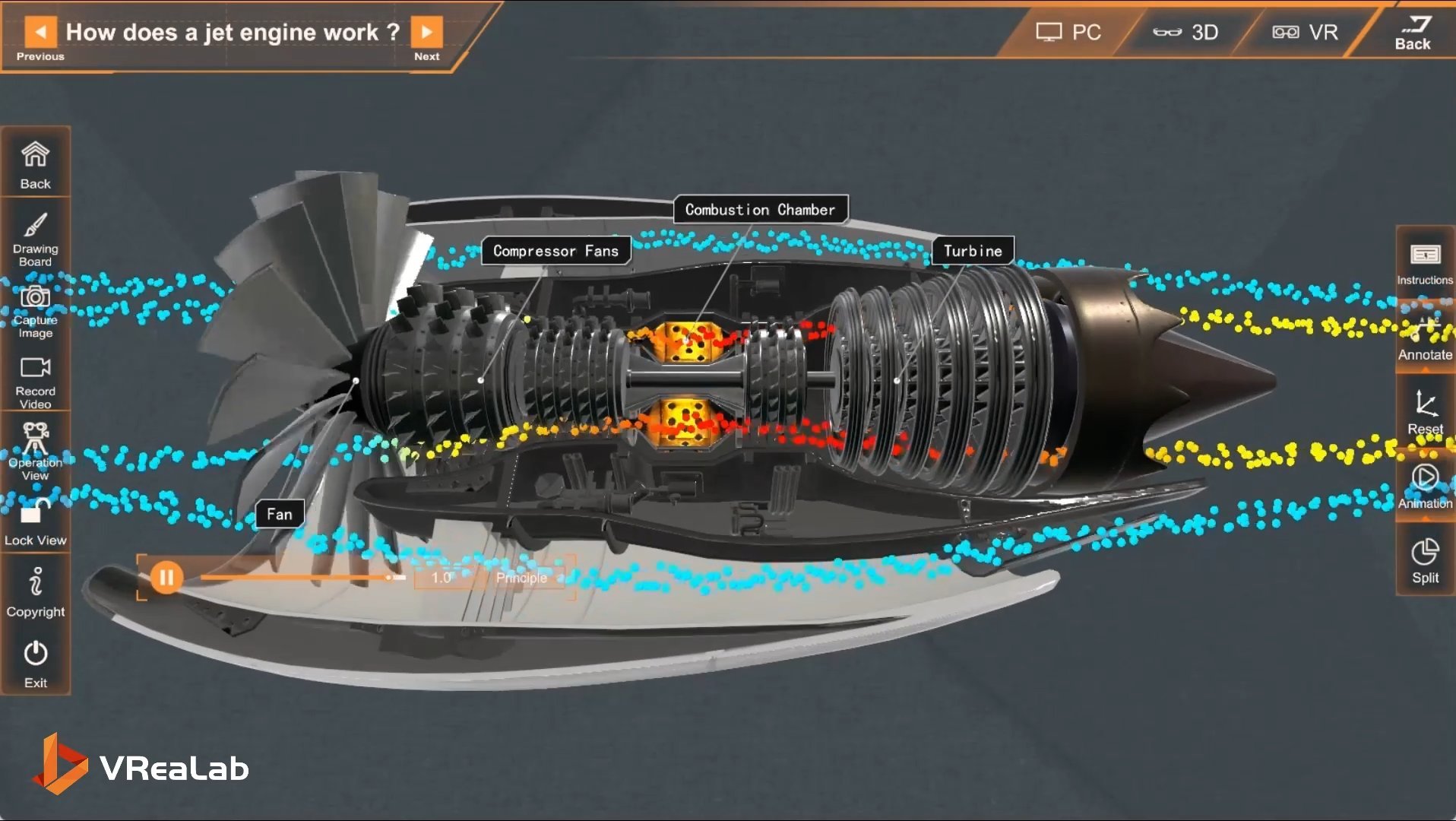
Figure 5. The principle view of the jet engine, with the same four components shown in action — streams of air particles reveal the path of intake and exhaust.