Always Wiring Circuits Wrong? The VR Physics Lab Lets Students Learn by Making Mistakes
Circuit wiring is the first real hurdle in middle school physics. Students freeze up afraid of burning out equipment. The VR Physics Lab changes this by offering a zero-risk environment where every mistake becomes a learning opportunity.
Circuit wiring is the first real hurdle every middle school student faces in physics learning. The teacher repeatedly emphasizes on the podium — “ammeters go in series, voltmeters go in parallel” — yet when it comes time for hands-on work, students still get the wires wrong. Worse still, incorrect wiring can damage equipment and create safety hazards. As a result, many students become timid: “afraid to connect, afraid of getting it wrong” becomes the norm in physics lab class.
Turning Fear into Bold Experimentation
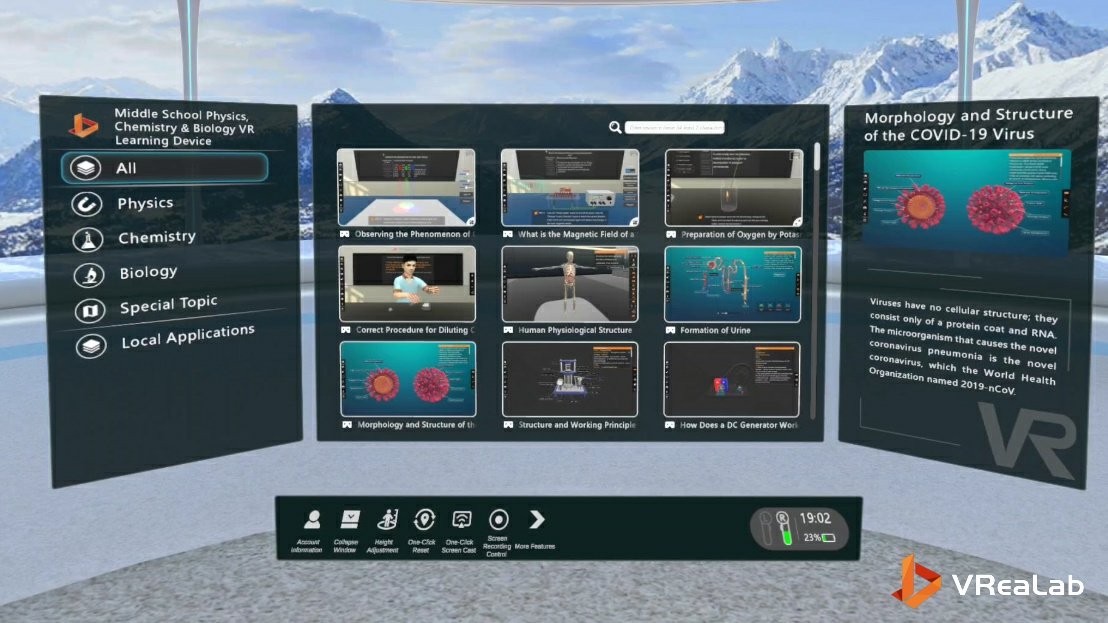
The VR Physics Lab opens a new window for electricity education. It simulates over 50 commonly used electrical components found in middle school laboratories — from power sources, switches, and resistors to ammeters, voltmeters, and rheostats — all with adjustable parameters and visible states.

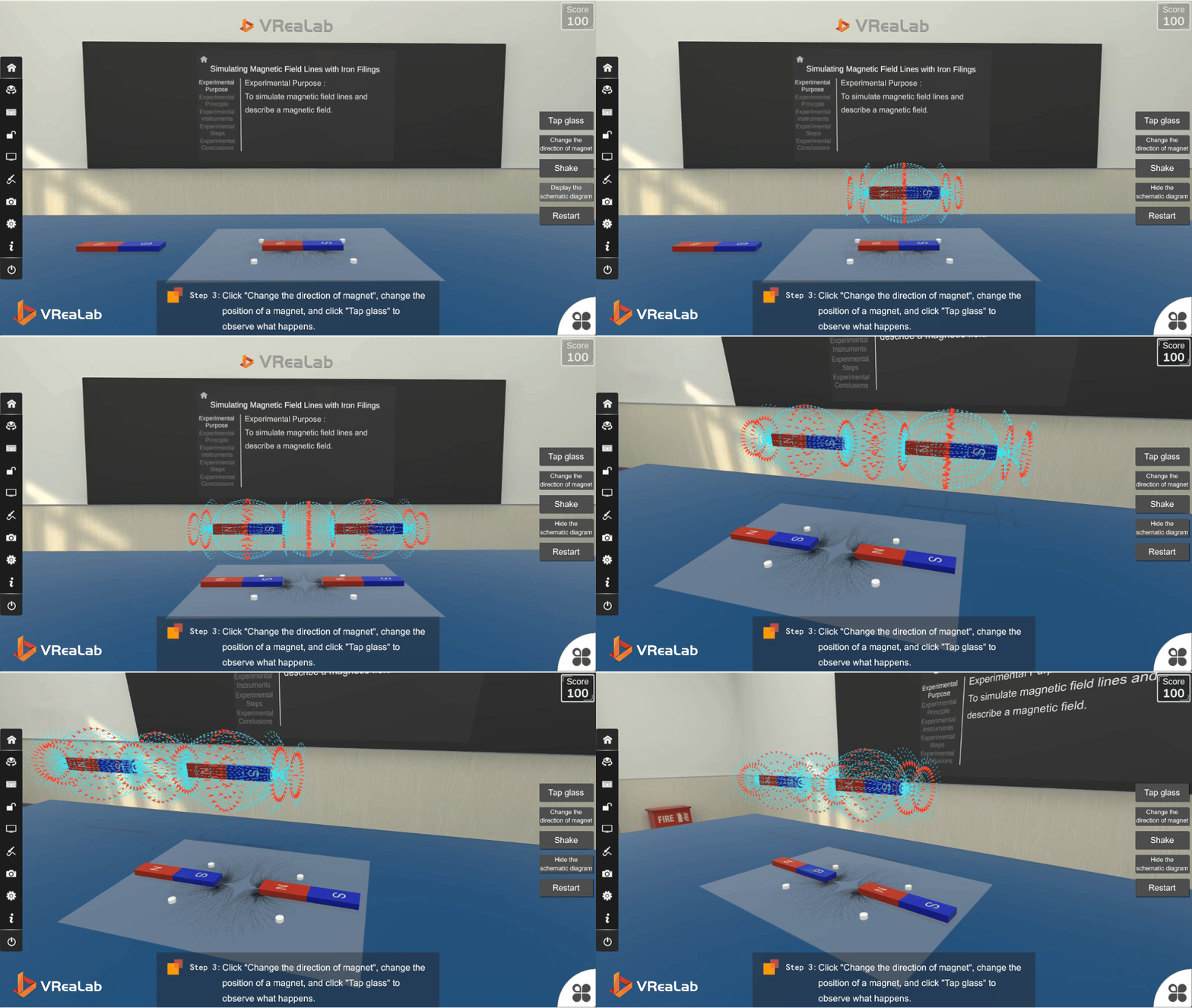
Students can freely build circuits in the virtual lab — series, parallel, mixed configurations, any combination they choose. When a component burns out, it can be restored with a single click. Every operational mistake becomes a learning opportunity.

More importantly, the VR Physics Lab supports one-click switching between circuit diagrams and physical layouts. After wiring the physical layout, students can switch to the schematic view and instantly see what symbols correspond to their setup. This feature directly addresses a persistent pain point for middle schoolers — the inability to read circuit diagrams. With repeated viewing and matching, the mapping between symbols and real components naturally clicks into place.

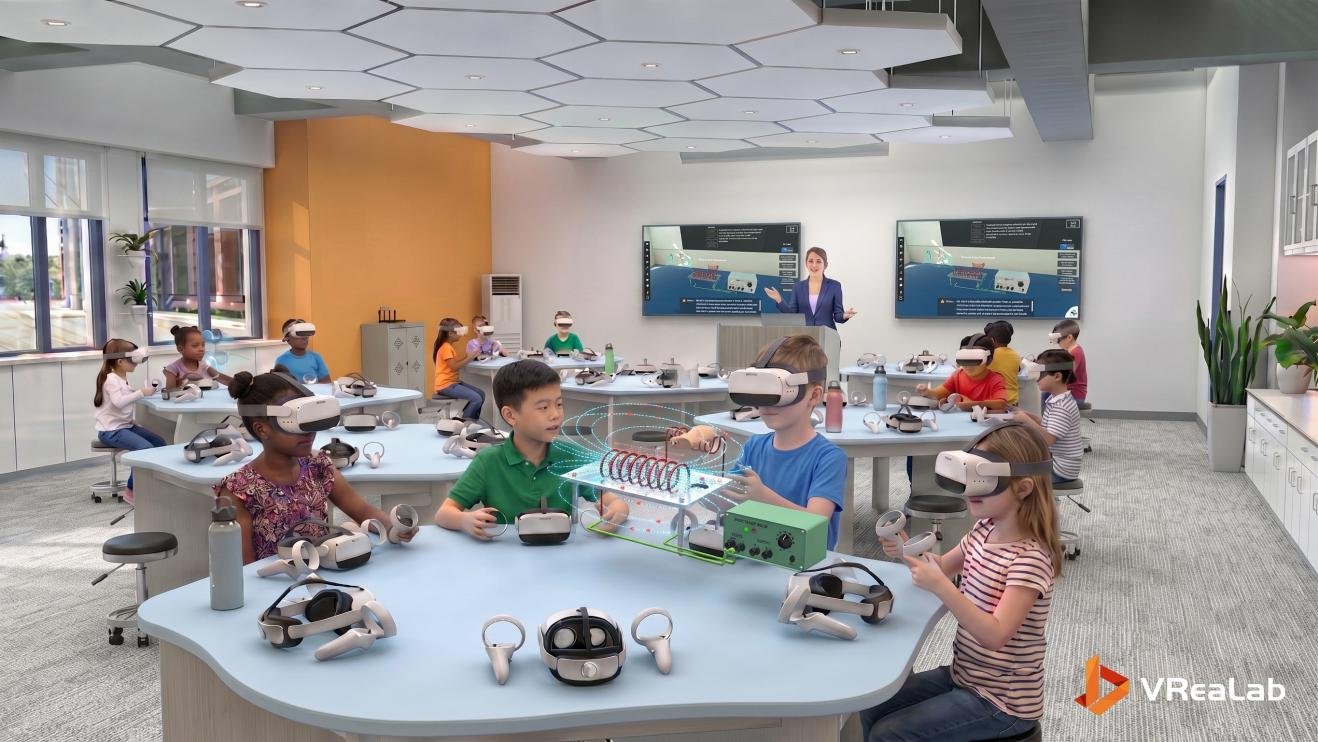
Take the classic experiment “Investigating the Relationship Between Current and Voltage” as an example. In a traditional classroom, the teacher typically demonstrates once and students follow along. In the VR Classroom, every student can operate independently — adjusting the rheostat, recording multiple sets of data, and plotting U-I graphs — experiencing the complete scientific inquiry process of hypothesis, experiment, analysis, and conclusion. The control variable method is no longer an abstract concept spoken by the teacher; it becomes hands-on experience forged by the student.

The Compulsory Education Physics Curriculum Standards explicitly require: “emphasize scientific inquiry, highlight problem-oriented approaches, and stress authentic problem contexts.” The VR Physics Lab provides precisely this kind of “fail-safe, repeatable, inquiry-driven” learning environment, returning physics lab class to the essence of exploration. In STEM Education, the ability to experiment freely without fear is not a luxury — it is a necessity.
Next time in electricity class, try letting students “play” in the VR Physics Lab for ten minutes first. You will find that the children who once hesitated at every step start asking: “Teacher, what happens if I connect two resistors in parallel and then add one in series?”
That is what a physics class should look like.