Step Into the Micro World: Makes Life's Secrets Visible and Touchable
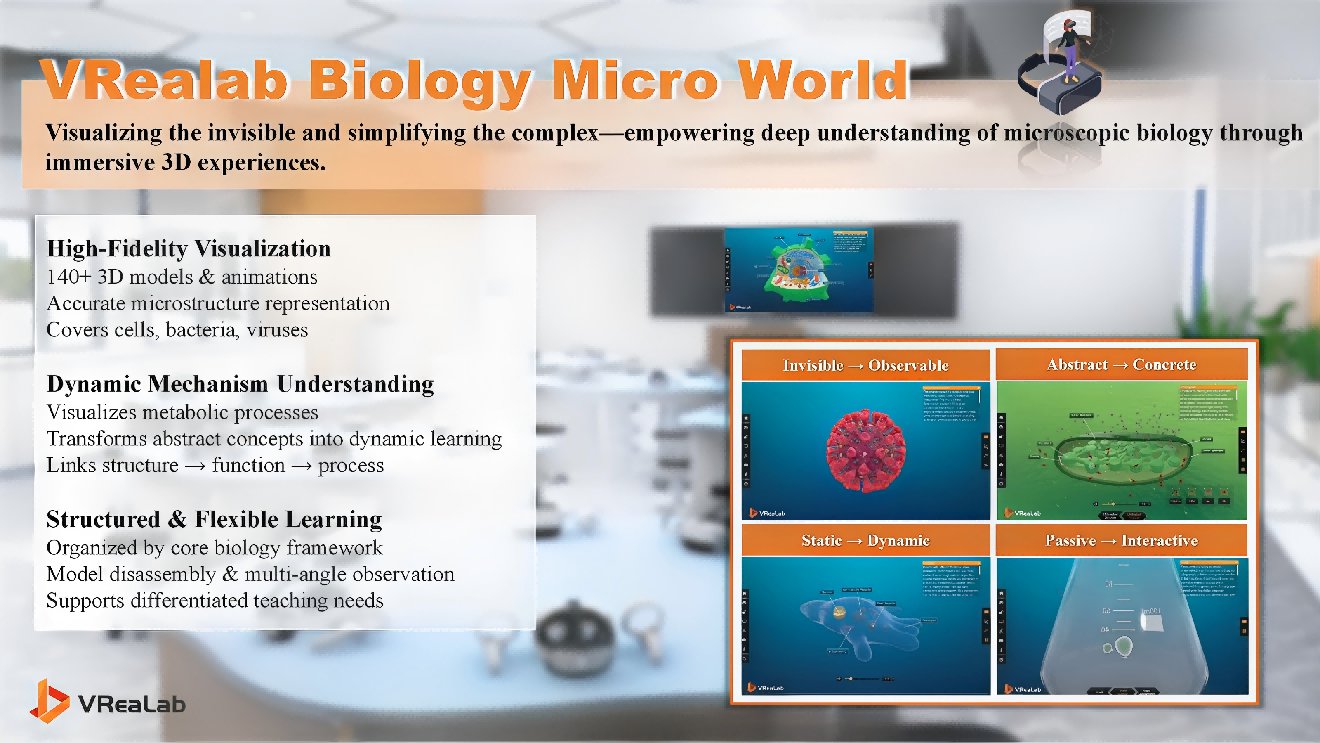
The Micro World Module is designed specifically for middle and high school life-science education. Built with precision 3D models and scientifically accurate simulations, it places learners inside the cell, the organelle, and the biochemical reaction.
The Micro World Module is designed specifically for middle and high school life-science education. Built with precision 3D models and scientifically accurate simulations, it places learners inside the cell, the organelle, and the biochemical reaction. Whether students are exploring a plant cell for the first time or tracing the energy flow of photosynthesis, the module provides Immersive Biology Learning that bridges the gap between textbook theory and real-world biological function. As a next-generation VR Biology Lab, it empowers teachers to move beyond lectures and lead guided discovery.
Scene 1: A Living Plant Cell in Full 3D
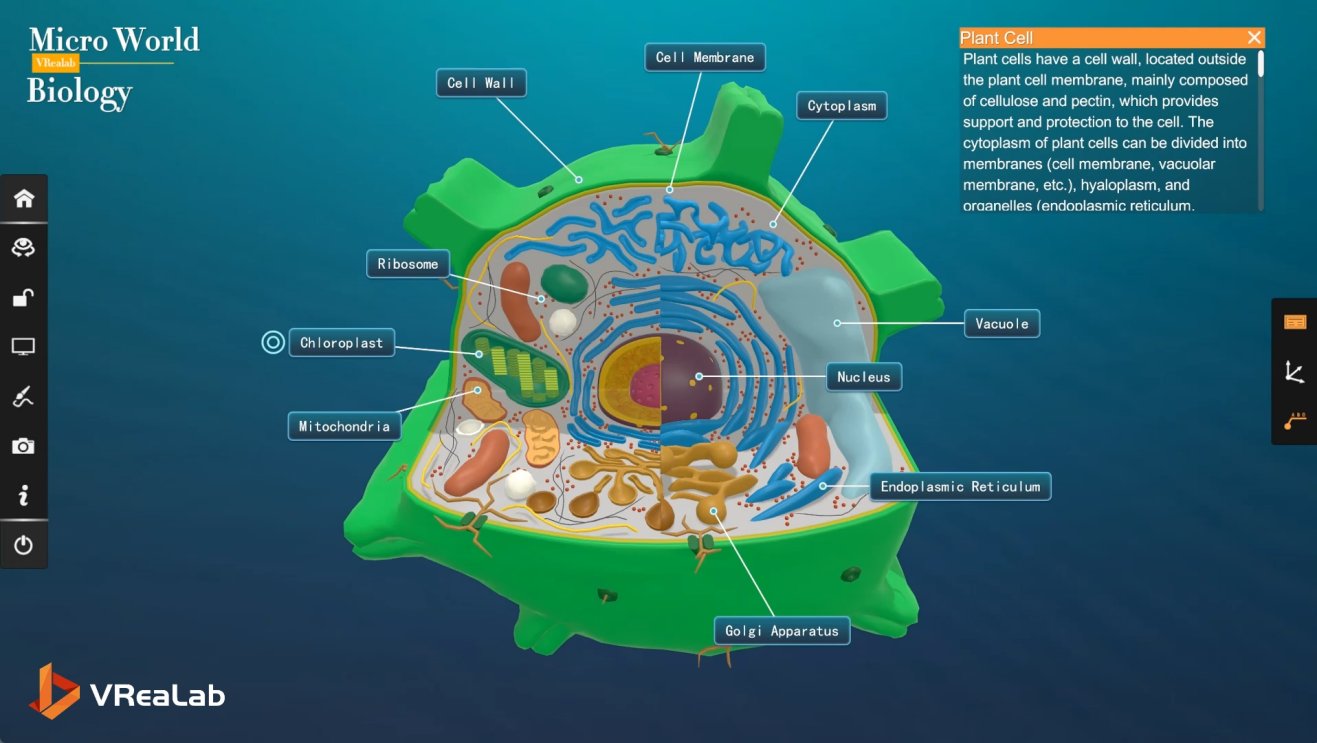
In the first experience, students enter a fully labeled 3D model of a plant cell. The rigid cell wall, flexible cell membrane, cytoplasm, nucleus, vacuole, ribosomes, mitochondria, endoplasmic reticulum, Golgi apparatus, and chloroplasts are all rendered in vivid, explorable detail. Unlike a flat diagram, the Micro World Module lets learners rotate the entire cell, zoom into any organelle, and instantly view labels and explanations. This is the promise of Immersive Biology Learning: students don't just see a cell; they inhabit it.
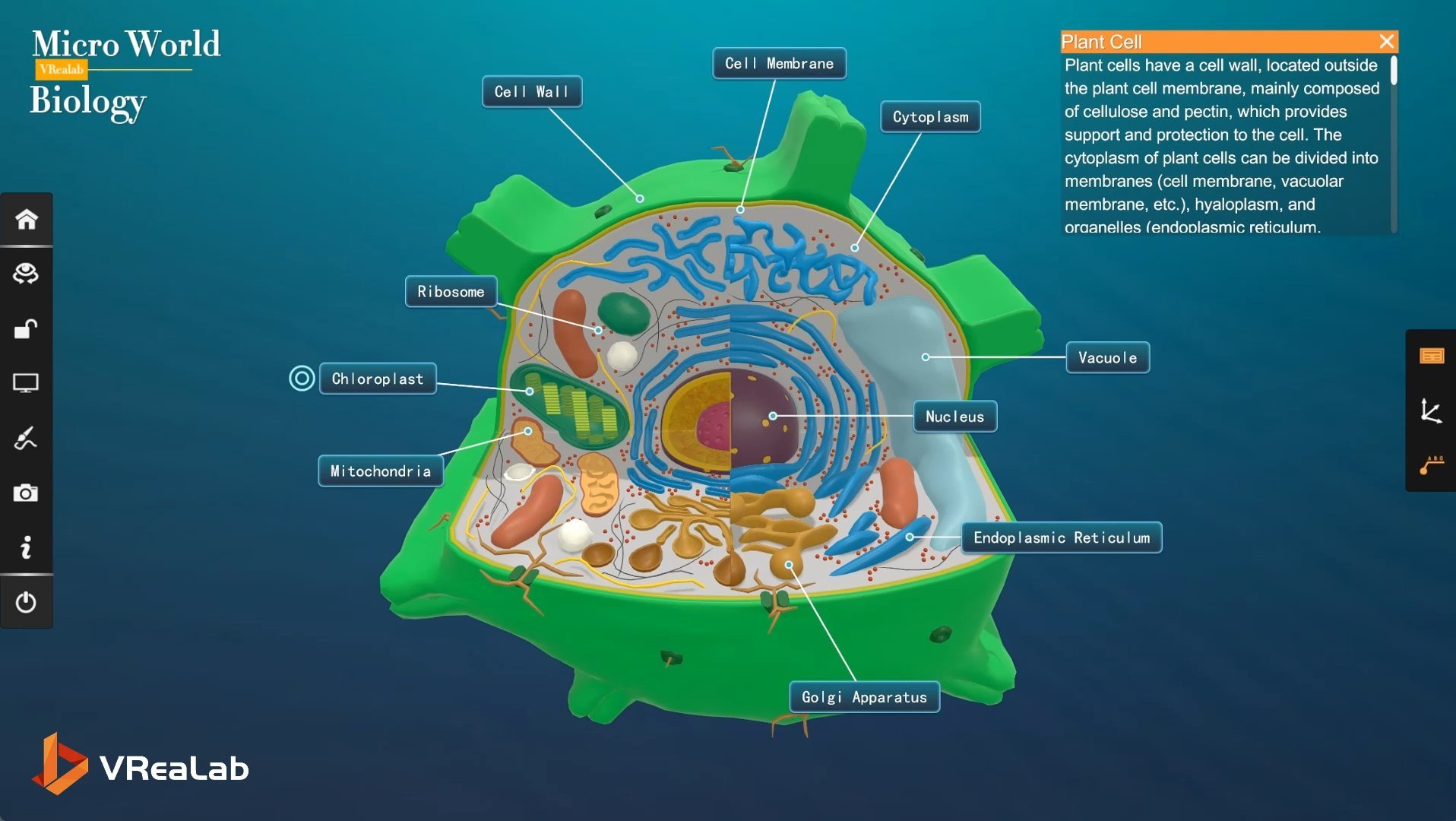
Figure 1: A fully labeled 3D plant cell model in the Micro World Module, showing organelles from cell wall to chloroplasts.
Scene 2: Unpacking the Chloroplast Layer by Layer
Photosynthesis is one of the most important topics in biology, yet it is notoriously difficult to teach. The Micro World Module solves this by deconstructing the chloroplast into its structural layers. Students can peel back the outer membrane, inner membrane, stroma, thylakoids, and grana, observing how each compartment contributes to the overall process. Floating molecules of water, carbon dioxide, and carbohydrates appear in context, making the abstract chemistry of life tangible. In this VR Biology Lab, the chloroplast becomes a real, navigable factory of energy conversion that students can investigate at their own pace.
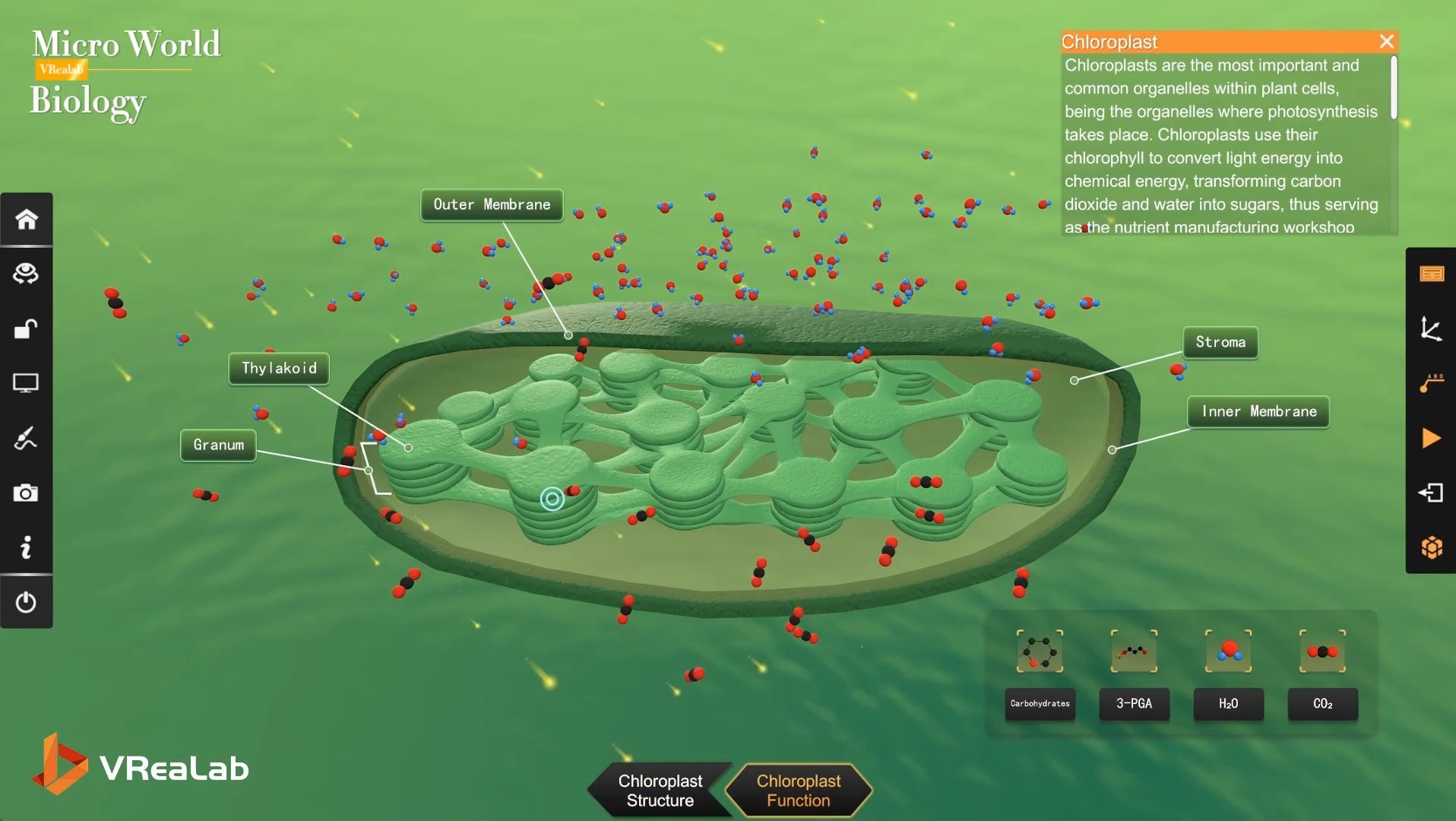
Figure 2: Exploded chloroplast structure in the Micro World Module, revealing outer membrane, inner membrane, thylakoid, granum, and stroma.
Scene 3: Walking Through the Light Reactions Electron Chain
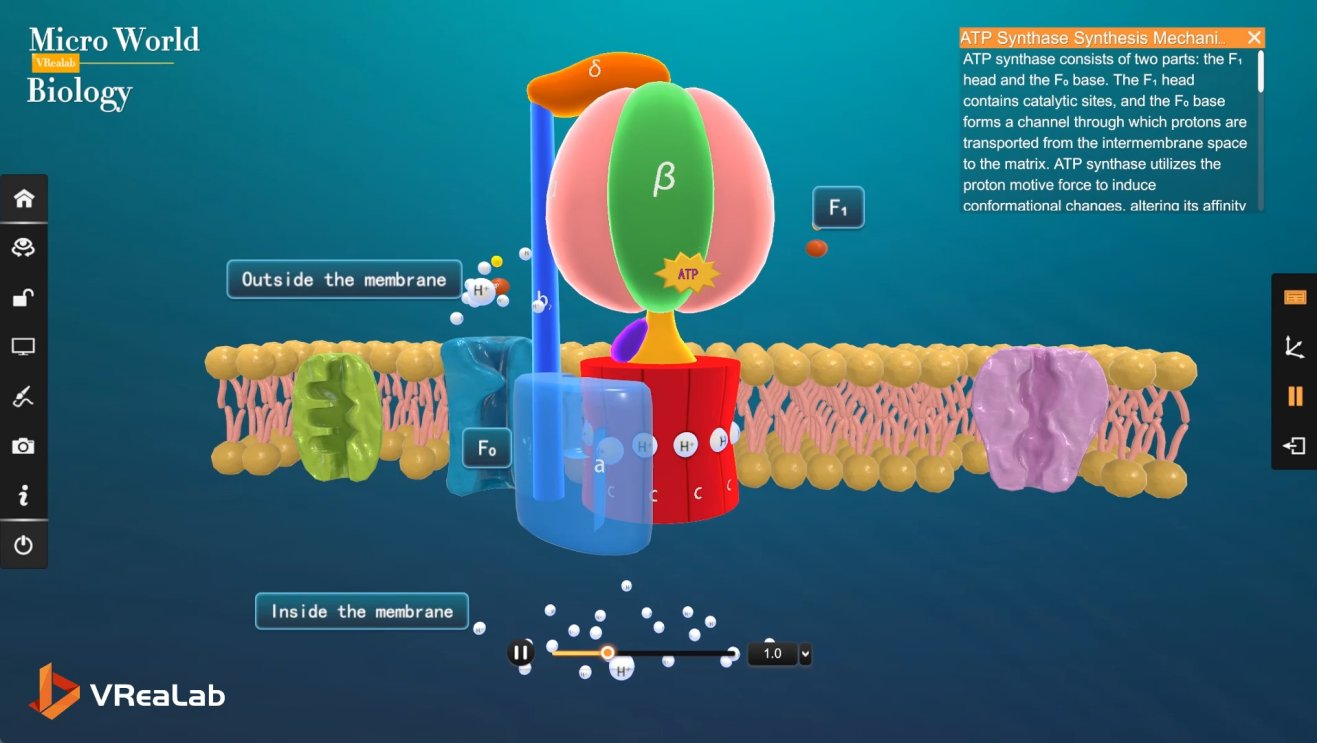
Perhaps the most powerful experience in the Micro World Module is the light-dependent reaction simulation. Students stand on the surface of a thylakoid membrane, where they can follow electrons from Photosystem II, through plastoquinone, the cytochrome b6f complex, plastocyanin, Photosystem I, ferredoxin, and NADP reductase, all the way to ATP synthase. Each protein complex is labeled and animated, showing how sunlight drives the production of ATP and NADPH. This is exactly the kind of Immersive Biology Learning that textbooks cannot deliver: dynamic, spatial, and memorable. The VR Biology Lab transforms a complex biochemical pathway into a clear visual narrative that students can explore, replay, and master.
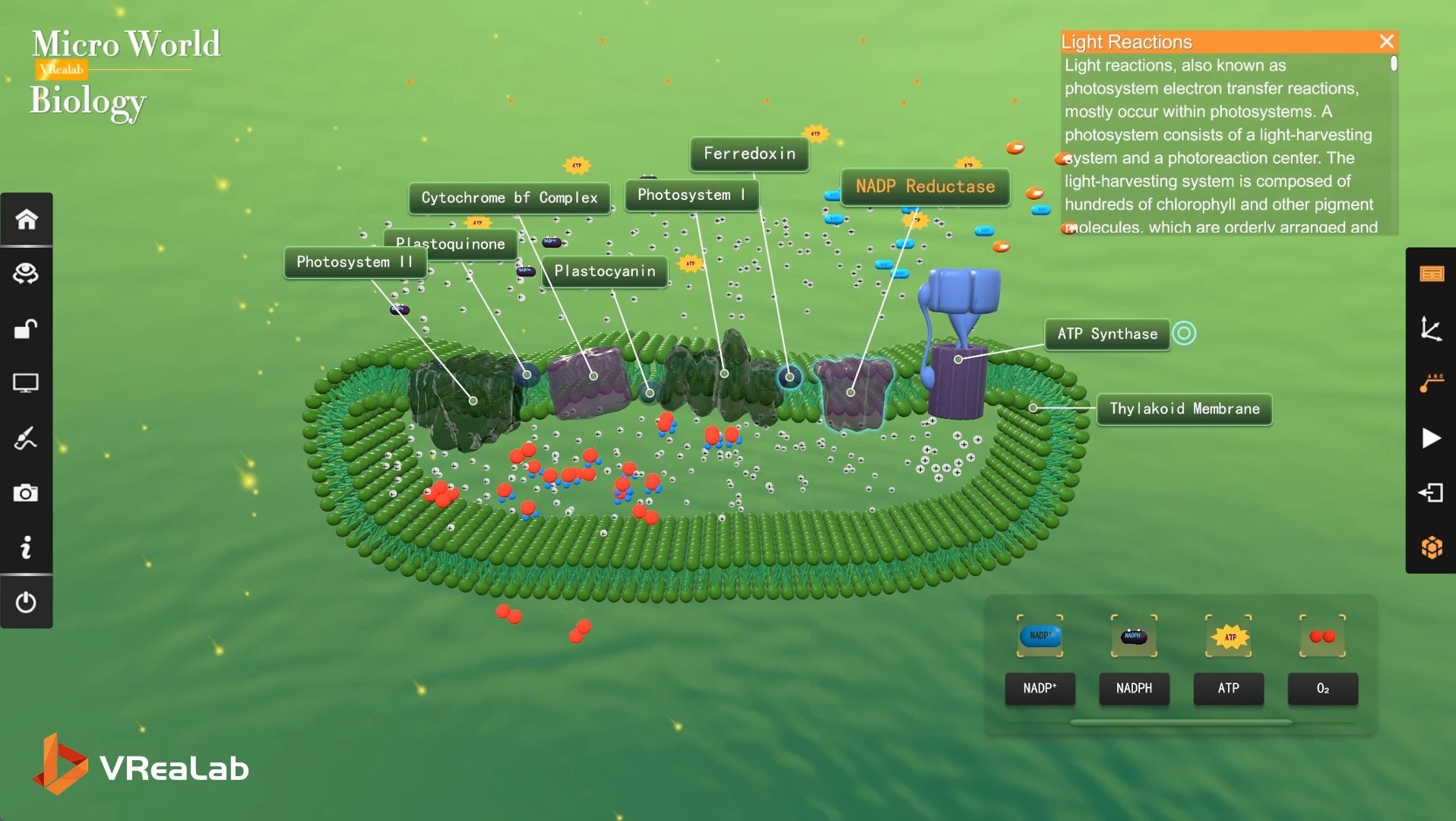
Figure 3: The light-reaction electron transport chain in the Micro World Module, visualized on the thylakoid membrane from Photosystem II to ATP synthase.
Why Educators Are Embracing This VR Biology Lab
The advantages of the Micro World Module go beyond stunning visuals. First, it is safe and repeatable: there are no chemicals, microscopes, or specimens to prepare. Second, it reduces cognitive load by making invisible structures spatial and interactive. Third, it supports inquiry-based learning, because students can ask questions, test hypotheses, and revisit scenes until they understand. Finally, it aligns with modern biology curricula, covering cell structure, organelle function, and photosynthesis — topics that appear in standards around the world. For teachers seeking to upgrade their classroom without sacrificing rigor, the VR Biology Lab offers a practical and inspiring solution.
Bring the Micro World into Your Classroom Today
Every student deserves the chance to see life at the scale where it actually happens. The Micro World Module of the VR Biology Lab makes that possible. From the architecture of a plant cell to the electron dance of photosynthesis, this VR Biology Lab turns the invisible into the unforgettable. If you are ready to give your students an Immersive Biology Learning experience that sparks curiosity, deepens understanding, and builds lasting scientific confidence, step into the Micro World — and watch your classroom come alive.
Source: Word document uploaded by user