From Chloroplasts to Chromosomes: Journeying Inside the Living Cell
The cell is the fundamental unit of life, yet for most students it remains a collection of labeled circles on a textbook page. They learn the names of organelles and memorize their functions for exams, but the dynamic reality of cellular life remains profoundly abstract.
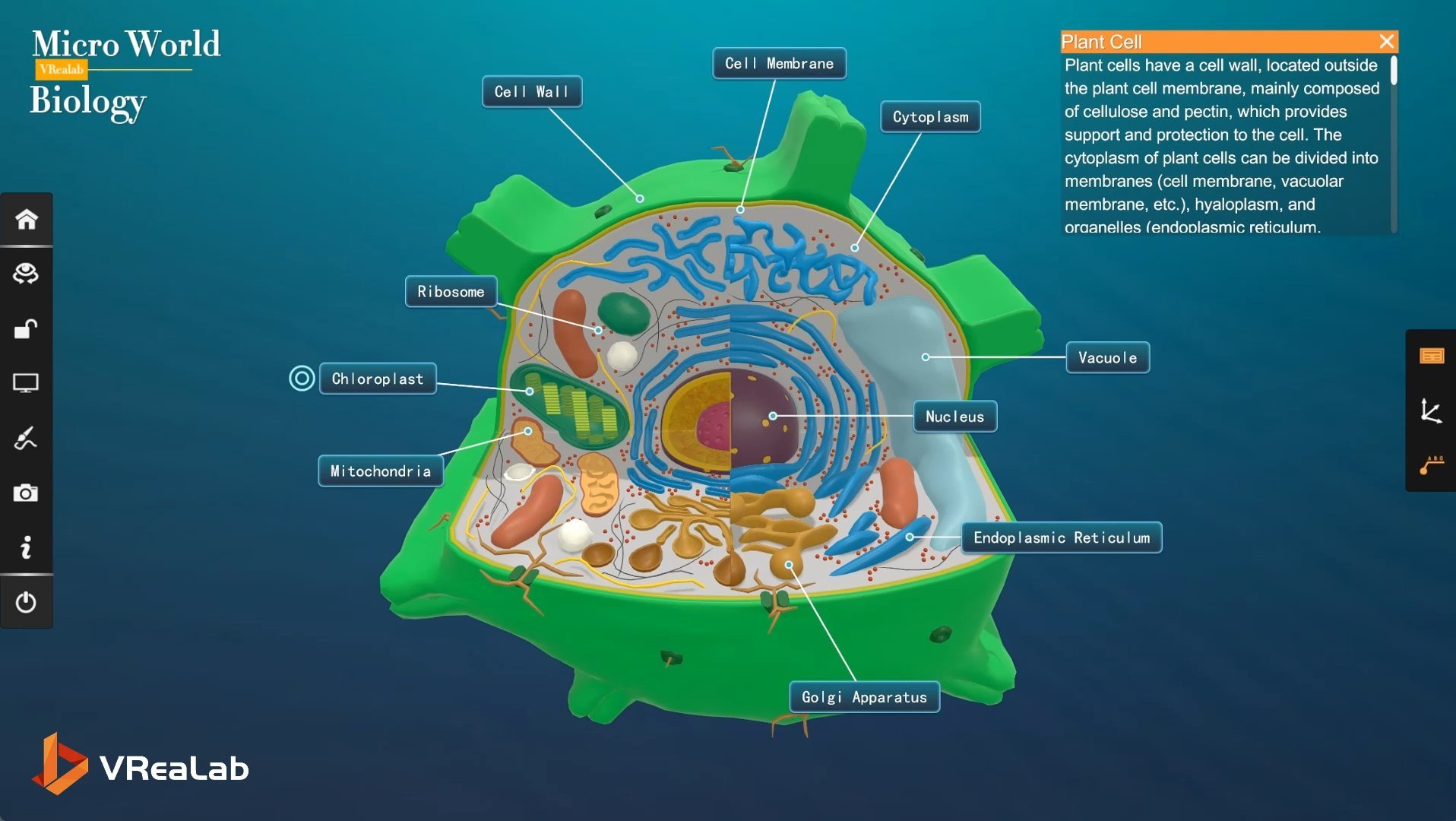
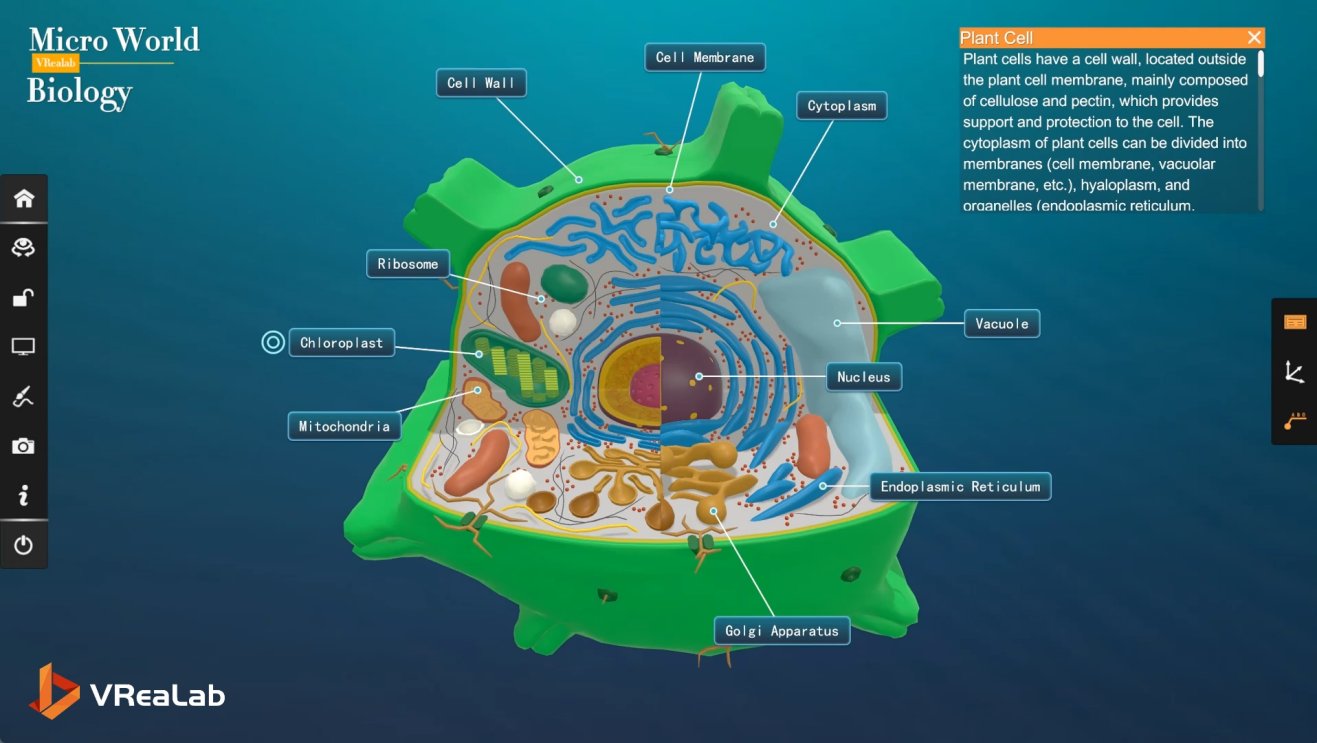
The cell is the fundamental unit of life, yet for most students it remains a collection of labeled circles on a textbook page. They learn the names of organelles — nucleus, mitochondria, chloroplast, ribosome — and they memorize their functions for exams. But the dynamic reality of cellular life, the way these structures interact, exchange materials, and sustain the processes that keep organisms alive, remains profoundly abstract. A flat diagram of a chloroplast cannot convey the molecular flow of photosynthesis. A labeled drawing of a chromosome cannot reveal how nearly two meters of DNA folds into a microscopic nucleus.
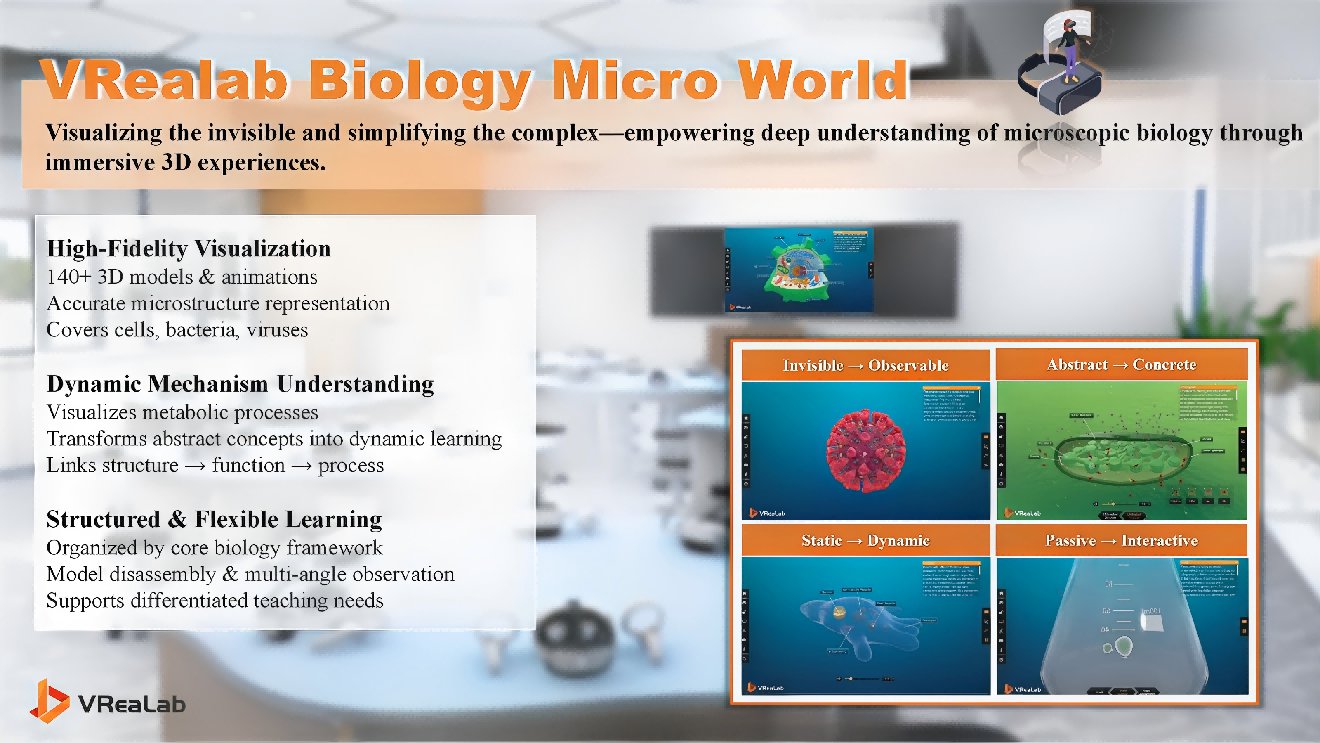
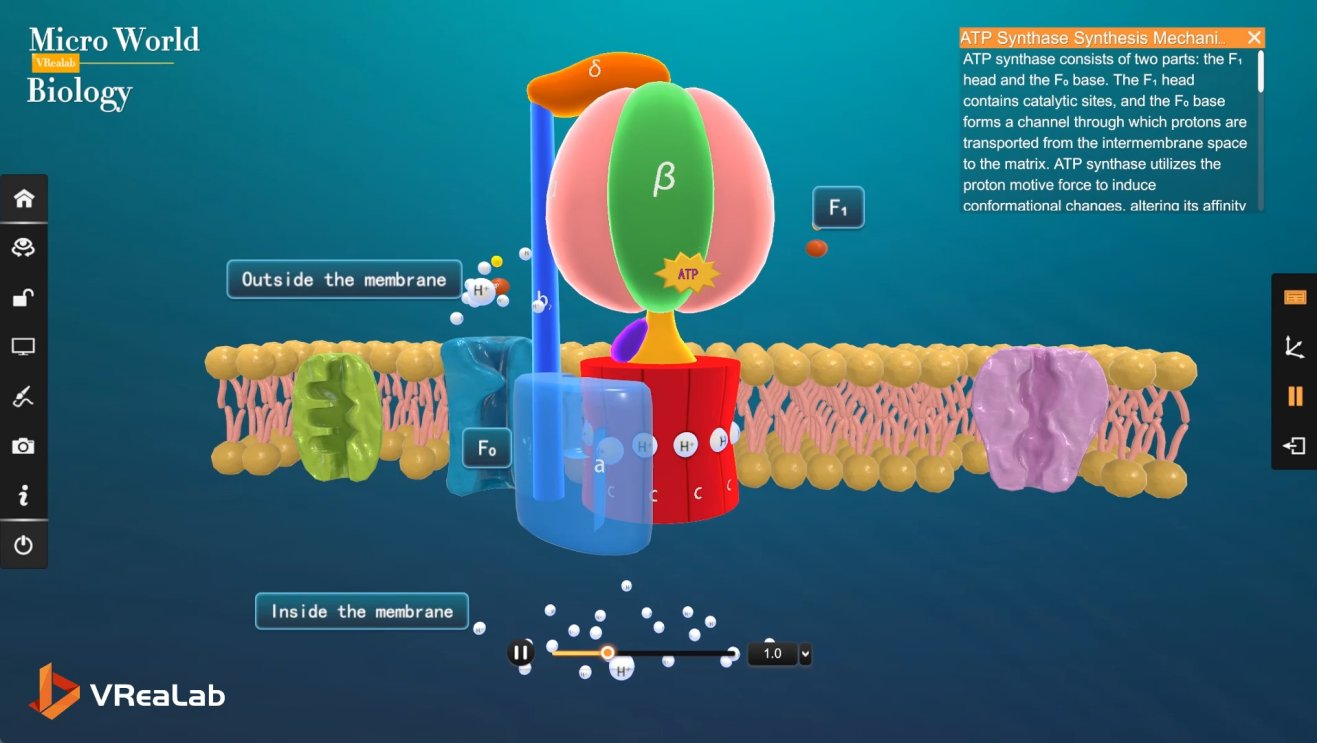
VReaLab Biology Micro World is designed to bridge this gap. Through its molecules and cells theme, it functions as a virtual cell biology lab where students explore cell structures, molecular components, material transport, energy use, and cell life processes through clear and interactive visualizations. The static textbook page gives way to a dynamic, three-dimensional world that students can navigate, manipulate, and investigate.
The chloroplast module illustrates this transformation powerfully. In a conventional lesson, photosynthesis is taught as a chemical equation: carbon dioxide plus water yields glucose plus oxygen, powered by light. The equation is correct, but it tells students nothing about where or how these reactions occur. In the virtual cell biology lab, students take an inside look at a plant cell's power factory. They visualize thylakoids stacked inside the chloroplast, follow the molecular flow of electrons through the photosynthetic pathway, and watch as light energy is converted into chemical energy in real time. Complex biochemical pathways become a dynamic visual factory — not an equation to memorize, but a process to witness.
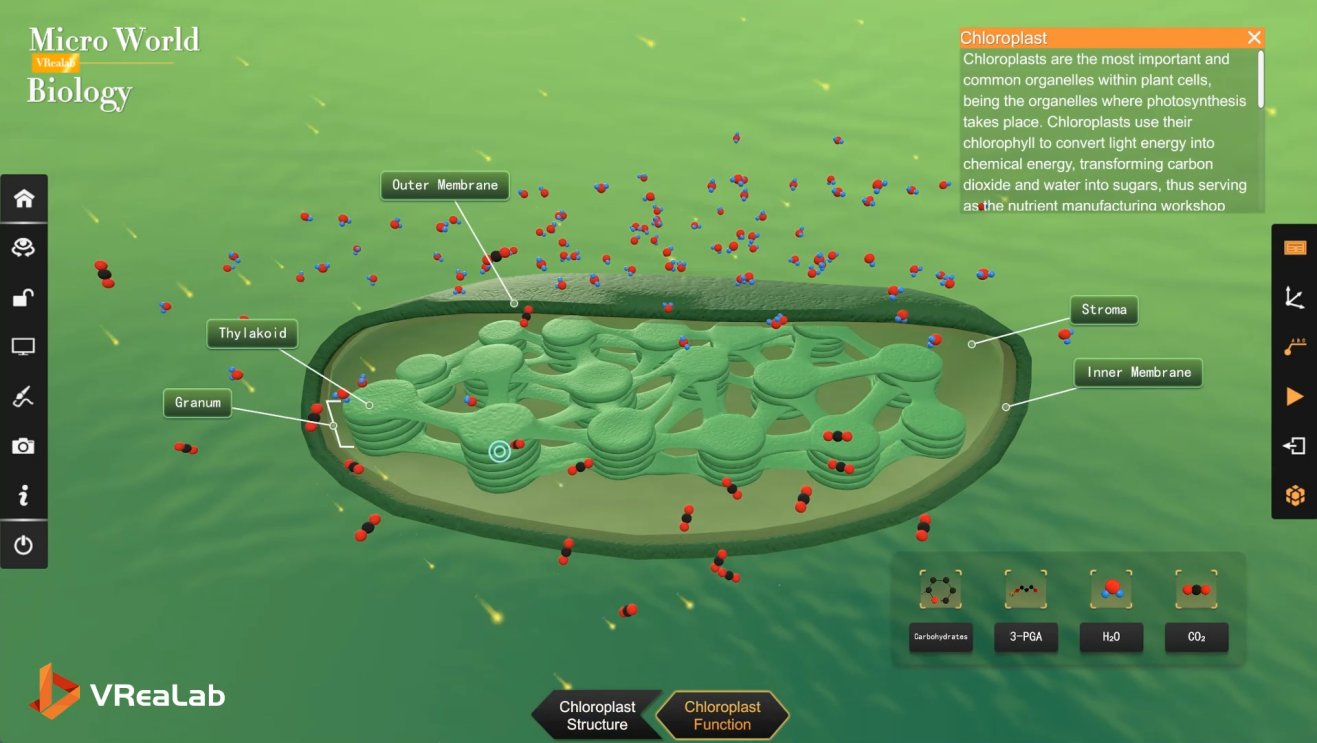
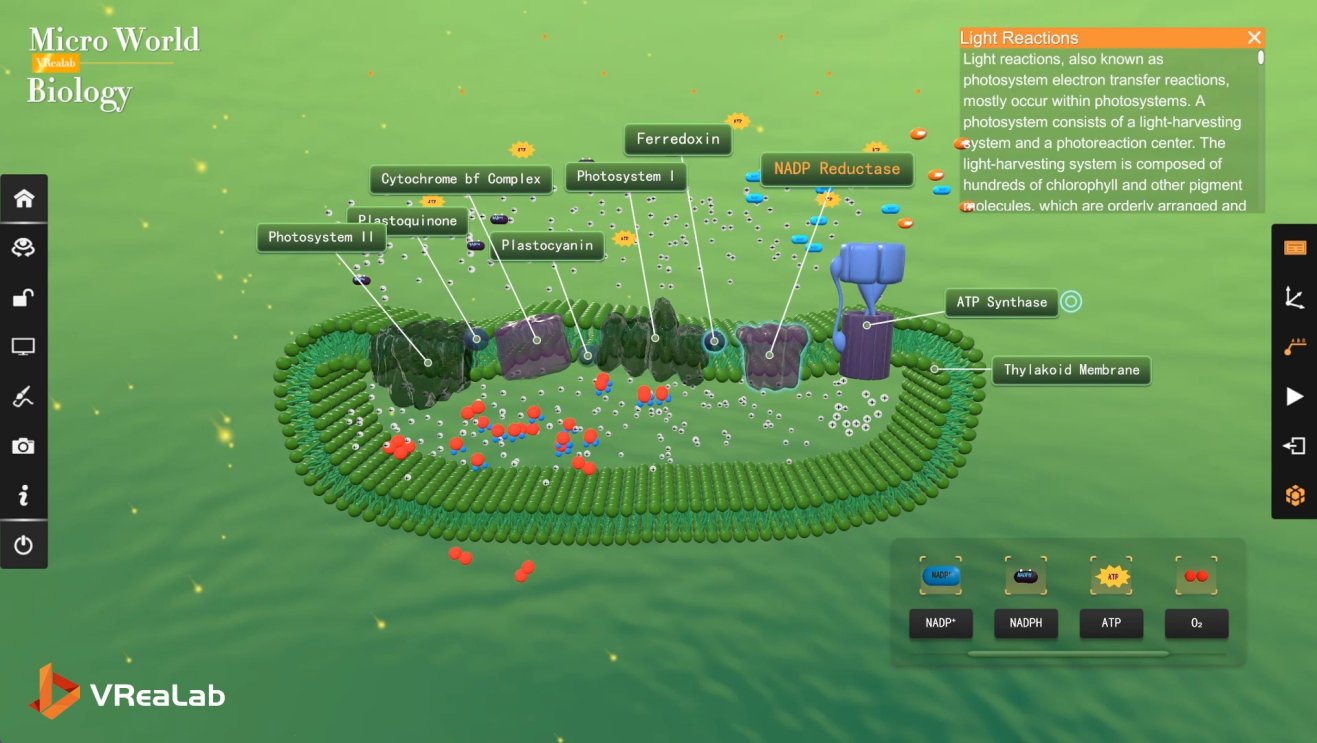
This Immersive Biology Learning approach extends naturally into the genetics and evolution theme. The chromosome module takes students on a zooming journey from the macro-structure of a chromosome down to the nucleosomes and the DNA double helix itself. The key advantage is that it bridges the gap between macro-structures and molecular biology, allowing students to visualize how nearly two meters of DNA can be perfectly folded into a single microscopic cell nucleus. This is a concept that defeats almost every traditional teaching method — the scale is too extreme, the folding too complex, the mental model too demanding. Yet when students can zoom through the levels of genetic packaging interactively, watching the double helix wind around histones and coil into chromatin, the concept becomes intuitive.
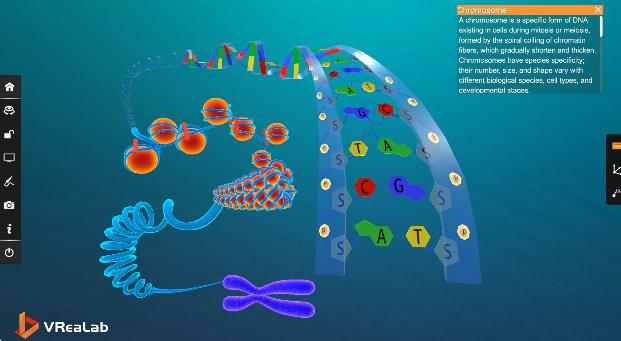
By functioning simultaneously as a virtual cell biology lab and a Molecular Biology Virtual Lab, the system provides a unified platform for understanding life at every relevant scale. Students can start at the level of the whole cell, zoom into an organelle like the chloroplast, trace the molecular pathways within it, and then move to the nucleus to examine the DNA that encodes the proteins driving those pathways. This multi-scale exploration is the hallmark of genuine biological understanding — the ability to connect structure and function across levels of organization, from molecule to organelle to cell to organism.
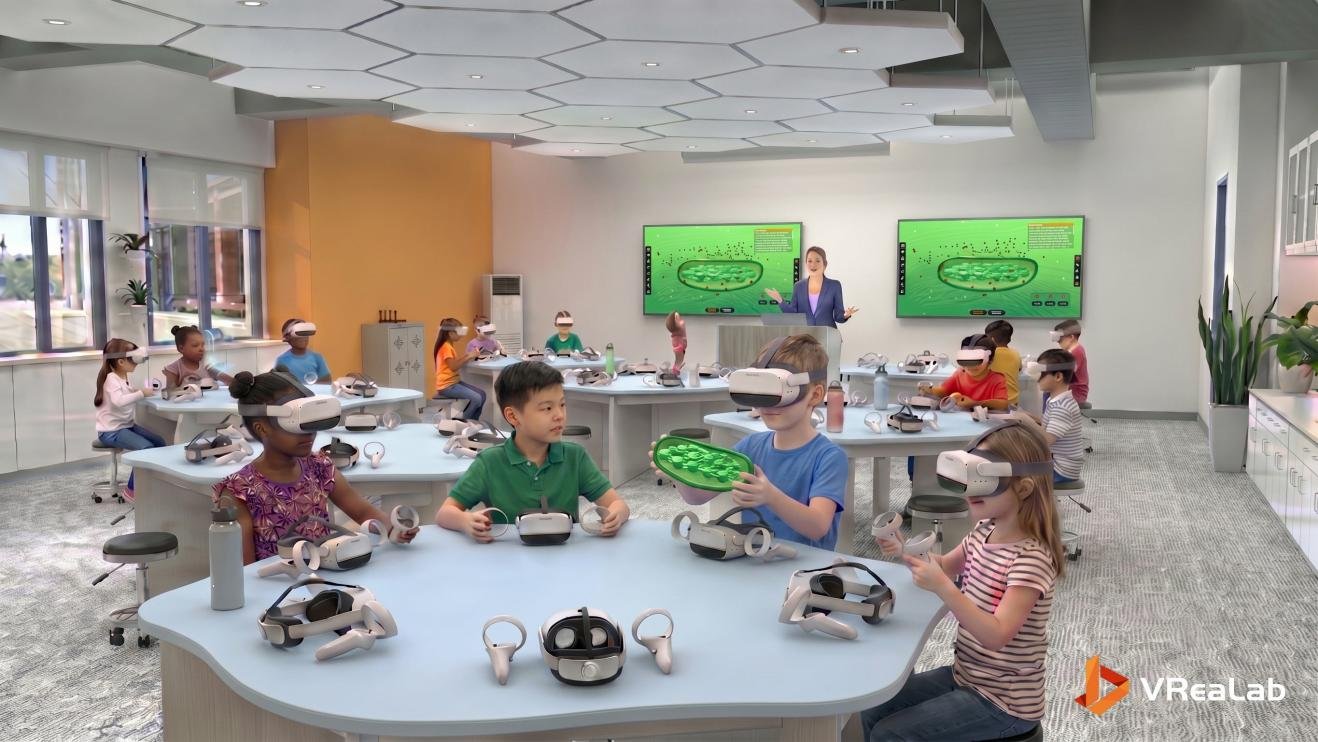
The Molecular Biology Virtual Lab also supports the study of genetics at the molecular level. Students explore chromosome behavior during cell division, gamete formation, DNA structure, and RNA structure through interactive 3D models. They can observe how nucleotides pair, how the double helix unwinds during replication, and how RNA is transcribed from a DNA template. These processes, central to modern biology, are virtually impossible to demonstrate in a physical classroom. In the Molecular Biology Virtual Lab, they unfold as dynamic, manipulable visualizations.
Through Immersive Biology Learning that spans cells, molecules, and genetics, VReaLab Biology Micro World ensures that students do not merely learn about life — they experience it. The virtual cell biology lab makes the chloroplast a place to visit rather than a picture to memorize. The Molecular Biology Virtual Lab makes DNA a structure to explore rather than a string of letters to decode. Together, they redefine what biology education can be when the microscopic world becomes accessible to every student.
Source: Word document uploaded by user