Breaking Boundaries: Interdisciplinary Biology Through Immersive Micro-World Exploration
Biology does not exist in isolation. Every cellular process is simultaneously a chemical reaction, a physical phenomenon, and a health-related event. Yet traditional biology education treats these disciplines as separate silos, losing the connections that make biology meaningful.
Biology does not exist in isolation. Every cellular process is simultaneously a chemical reaction, a physical phenomenon, and a health-related event. Yet traditional biology education treats these disciplines as separate silos, with students learning the chemistry of photosynthesis in one class, the physics of membrane transport in another, and the health implications in a third. The connections that make biology meaningful — the threads that link molecular structure to cellular function to organismal health — are lost in the gaps between subjects.
VReaLab Biology Micro World is designed to restore those connections. By functioning as a VR Biology Lab that spans microorganisms, molecules and cells, and genetics and evolution, it provides a unified platform where interdisciplinary exploration is not an add-on but a structural feature of every lesson. The system's active transport module demonstrates this approach with particular clarity: it explores the mechanism of active transport in cells through biology, chemistry, physics, and health-related perspectives simultaneously.
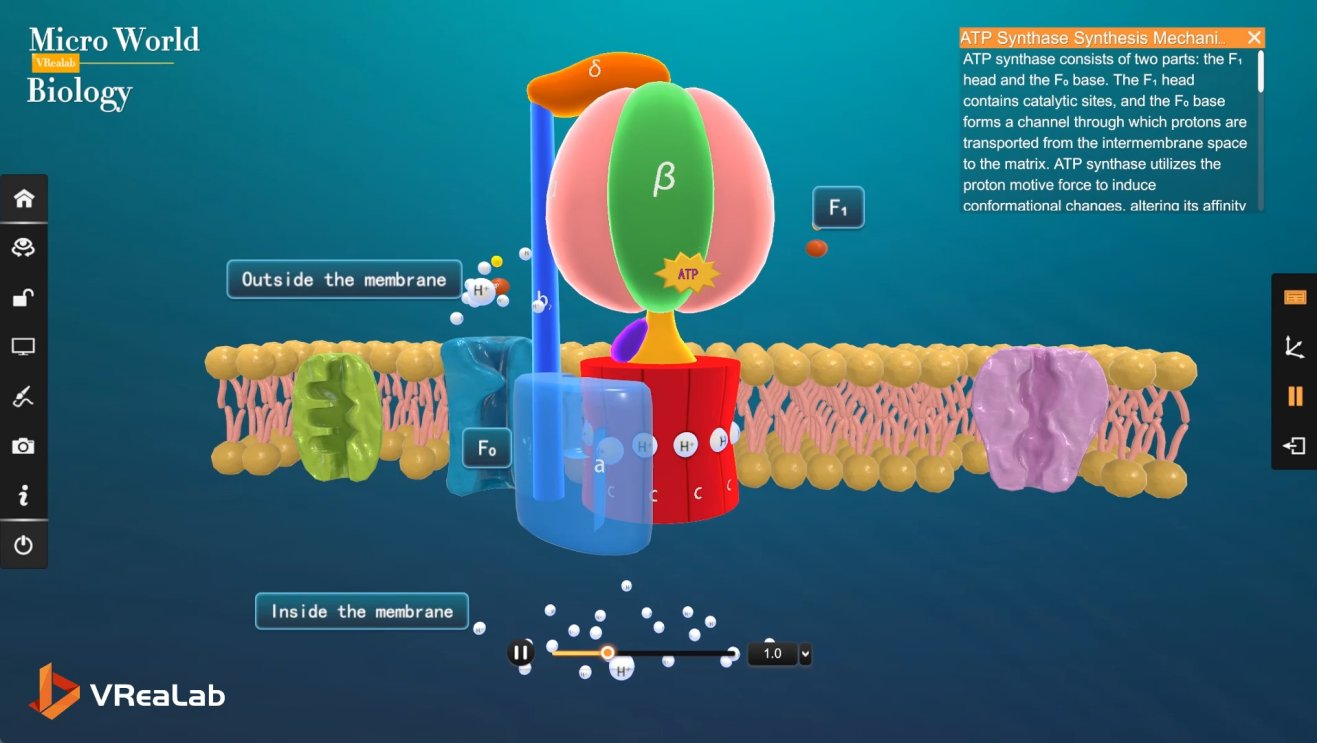
In a traditional classroom, active transport is taught as a biological fact: cells use energy to move substances against a concentration gradient. Students memorize the definition, perhaps draw a diagram with arrows, and move on. In the virtual cell biology lab, the same topic becomes a multi-dimensional investigation. Students use interactive visualizations to see how cell membrane proteins pump ions against their gradient, watch the conformational changes that drive transport, and explore how ATP provides the energy that powers the process. The biological mechanism is inseparable from its chemical basis (ATP hydrolysis), its physical principle (movement against a gradient), and its health significance (nerve impulses, nutrient absorption). Through inquiry-based activities in the virtual cell biology lab, students develop a deeper understanding of cell metabolism, energy use, and the relationship between structure and function.
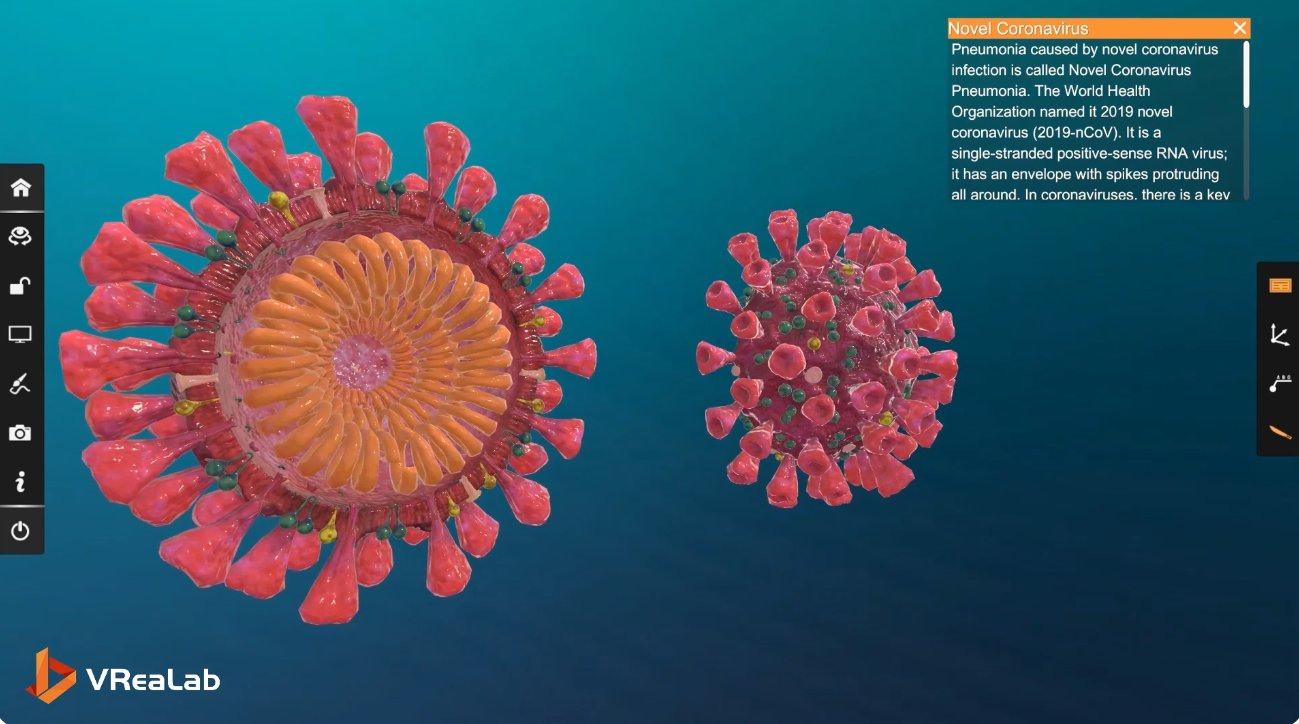
This interdisciplinary approach is equally powerful in the Molecular Biology Virtual Lab. When students explore the Novel Coronavirus module, they are not merely learning about a pathogen. They are simultaneously investigating viral structure (biology), spike protein-receptor binding (chemistry), nanoscale physical interactions (physics), and infectious disease mechanisms (health). The Molecular Biology Virtual Lab makes these connections visible and interactive, allowing students to see how a single biological phenomenon threads through multiple scientific disciplines.
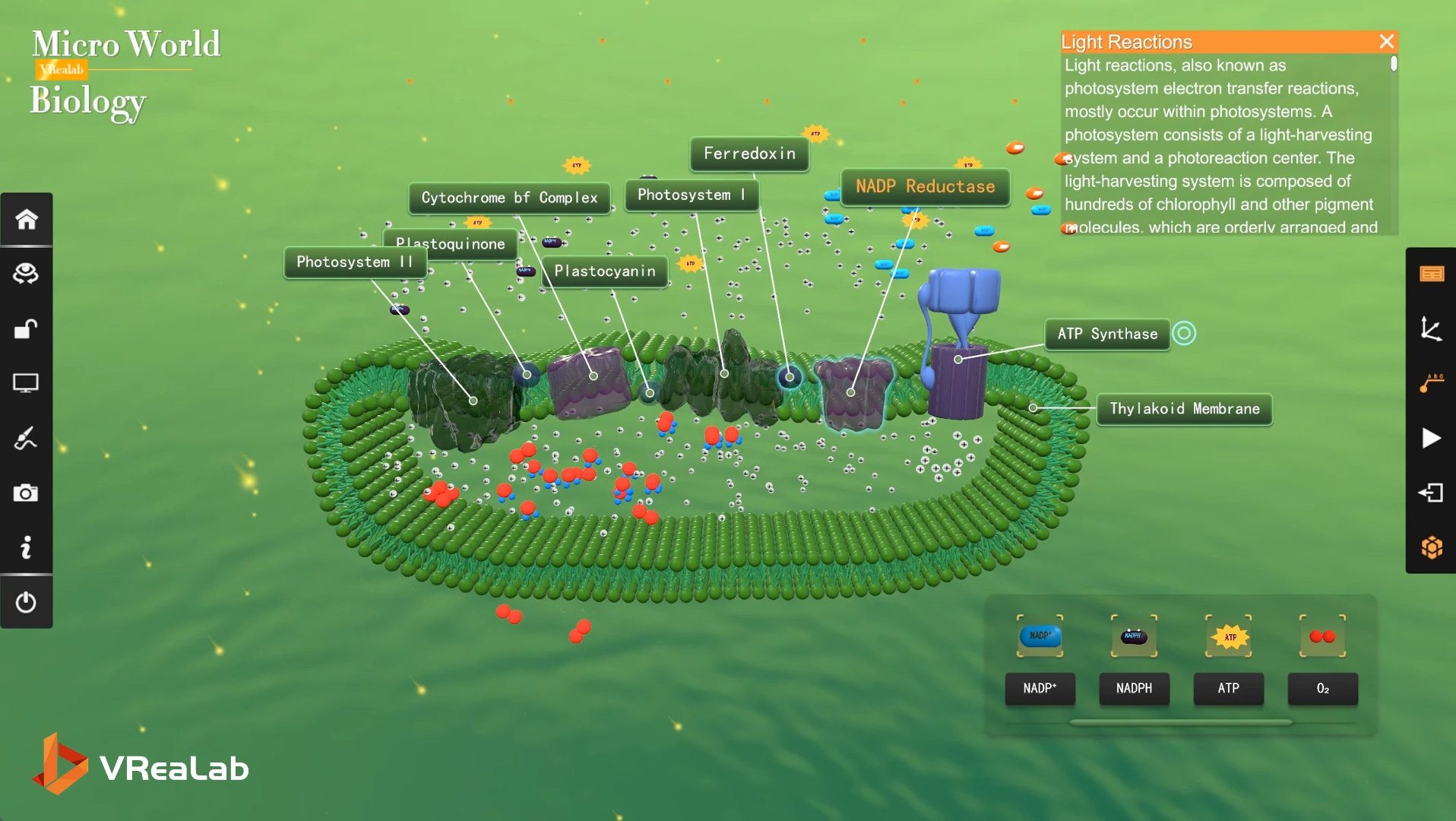
The same integrative logic applies to the chloroplast module. When students explore this plant cell organelle in the VR Biology Lab, they observe the conversion of light energy into chemical energy — a process that sits at the intersection of physics (light absorption), chemistry (electron transport and ATP synthesis), and biology (photosynthesis and the carbon cycle). By presenting these dimensions together in a single immersive experience, the system helps students build the kind of integrated scientific understanding that standardized, silo-based curricula struggle to deliver.
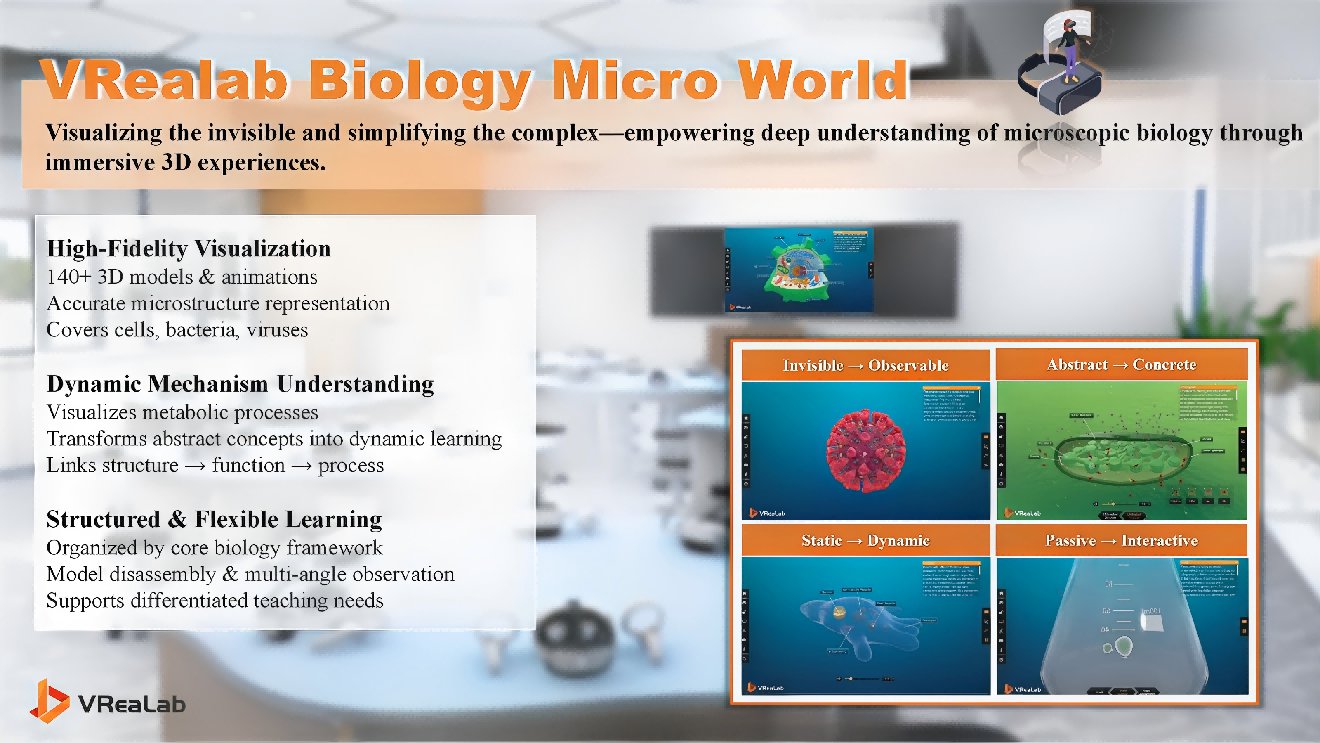
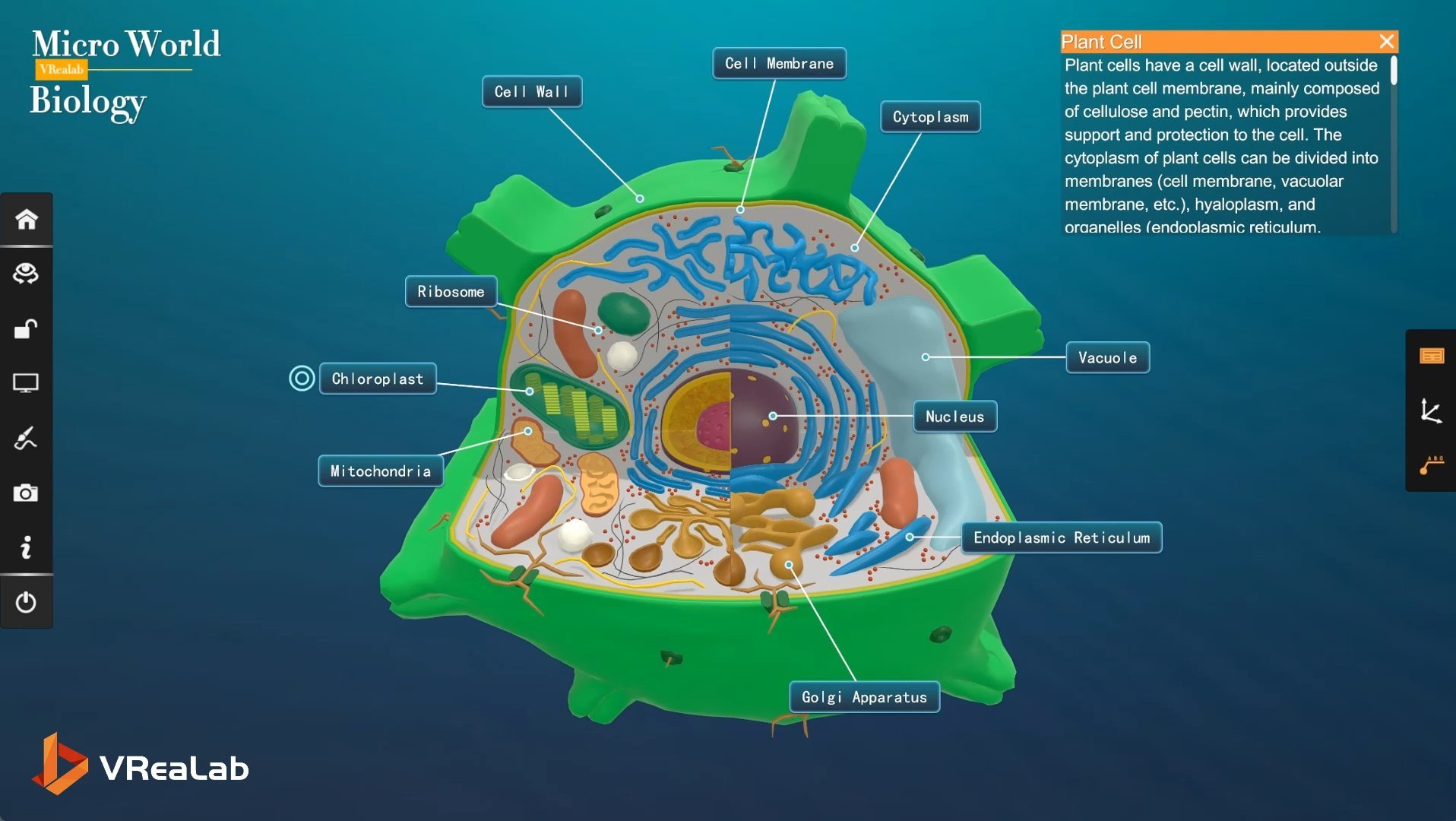
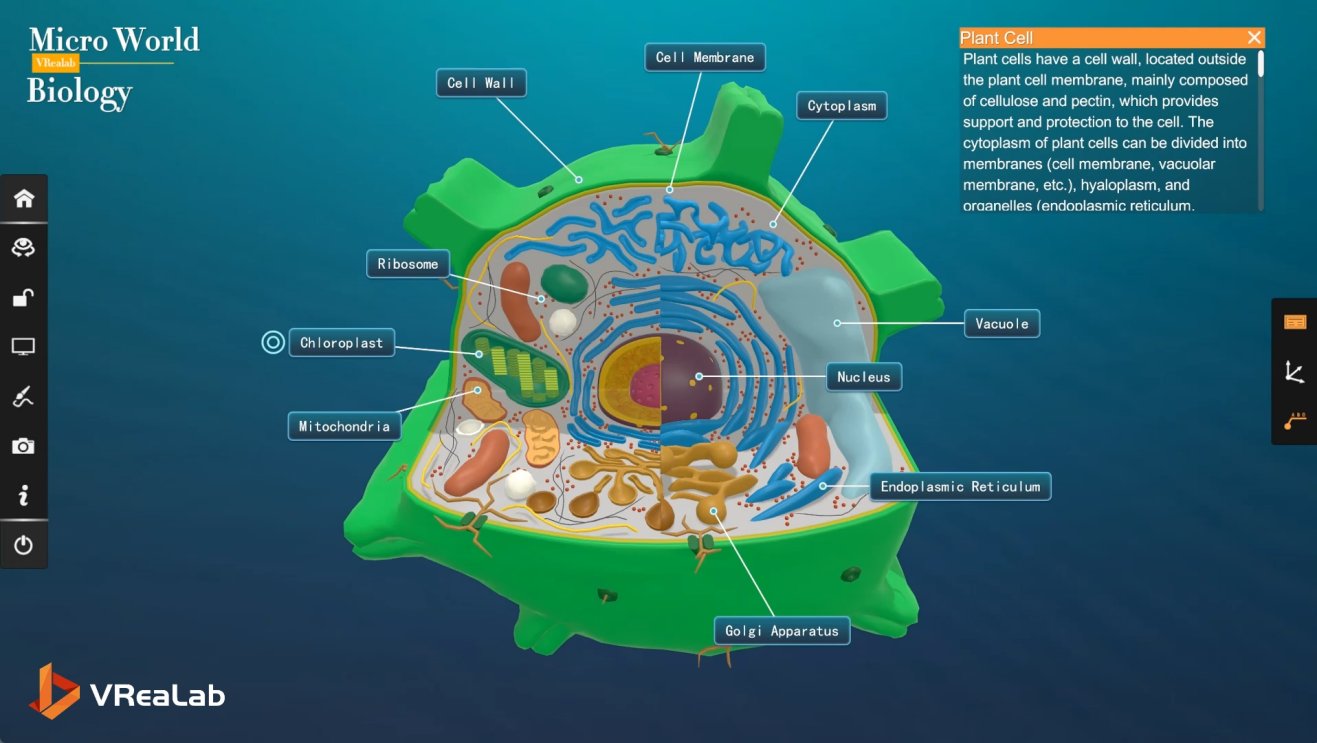
What makes this interdisciplinary approach possible is the system's comprehensive microscopic coverage. The VR Biology Lab covers cells, bacteria, viruses, and biomolecular structures, providing the raw material for cross-disciplinary investigation. Its dynamic biological processes feature presents cellular activities and metabolic processes through real-time 3D visualization and animation, so students can observe how molecular events give rise to cellular behaviors. Multi-scale and multi-angle exploration supports structural decomposition, zooming, and multi-perspective observation, enabling students to move freely between the molecular and cellular levels as they investigate a topic.
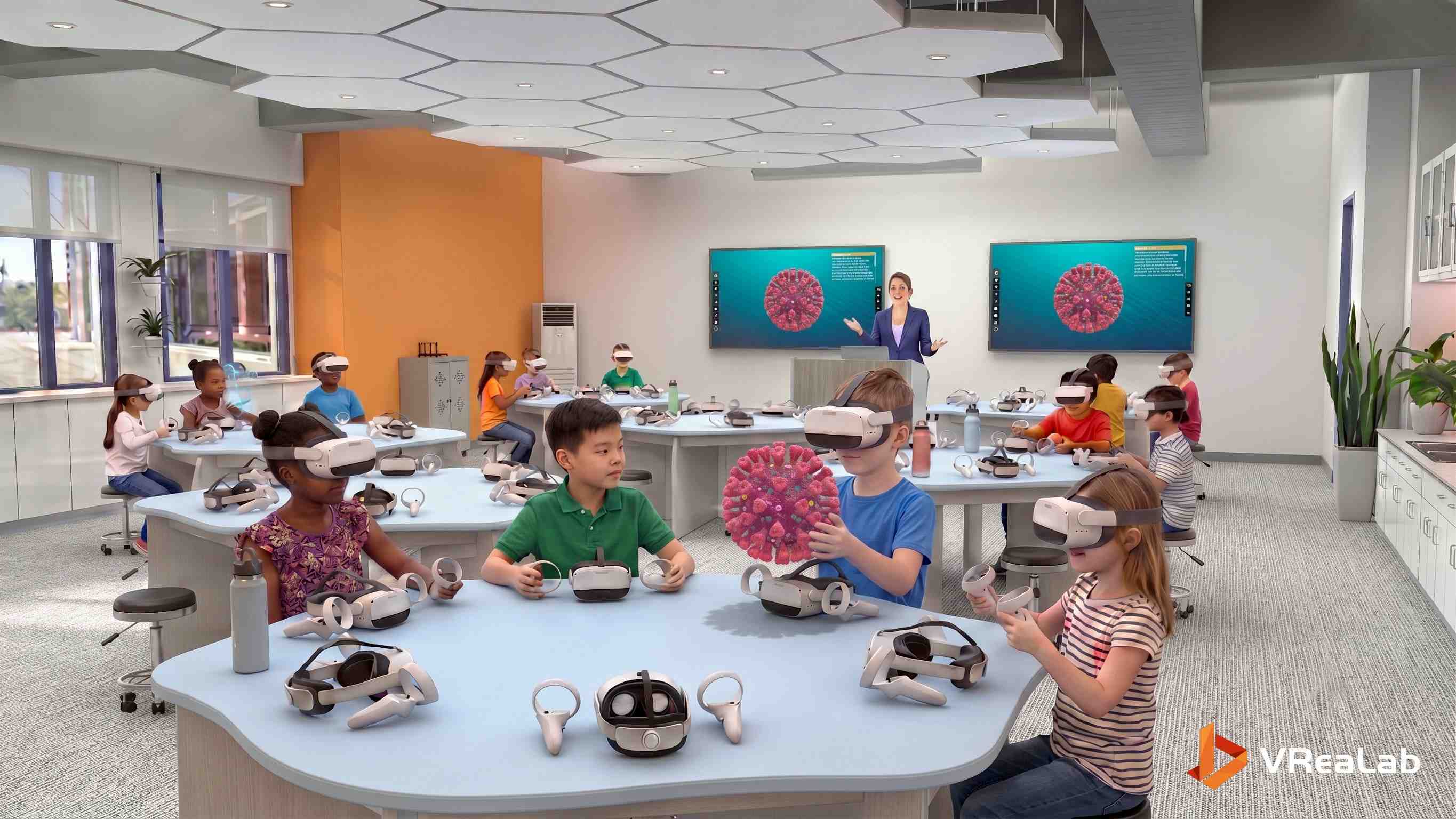
The result is a learning experience that mirrors how science actually works. Real scientists do not think in disciplinary boxes — they follow phenomena wherever they lead, across chemistry, physics, biology, and beyond. By giving students the tools to do the same — in a virtual cell biology lab that connects molecules to membranes, and a Molecular Biology Virtual Lab that links DNA to disease — VReaLab Biology Micro World prepares them not just to pass exams but to think like scientists. The VR Biology Lab is, at its core, a tool for breaking the boundaries that limit traditional science education and replacing them with the integrated understanding that genuine scientific literacy demands.
Source: Word document uploaded by user