How the Middle School VR Science Lab Transforms Everyday Teaching
Many educators are excited about the potential of virtual reality in science education, yet hesitate when it comes to practical implementation. Will VR lessons align with the curriculum? Is the technology too complex for regular classroom use? The Middle School VR Science Lab is designed to address every one of these concerns.
Many educators are excited about the potential of virtual reality in science education, yet hesitate when it comes to practical implementation. Will VR lessons align with the curriculum? Is the technology too complex for regular classroom use? Does it require specialized training that overburdened teachers simply do not have time for? These are legitimate concerns — and the Middle School VR Science Lab is designed to address every one of them.
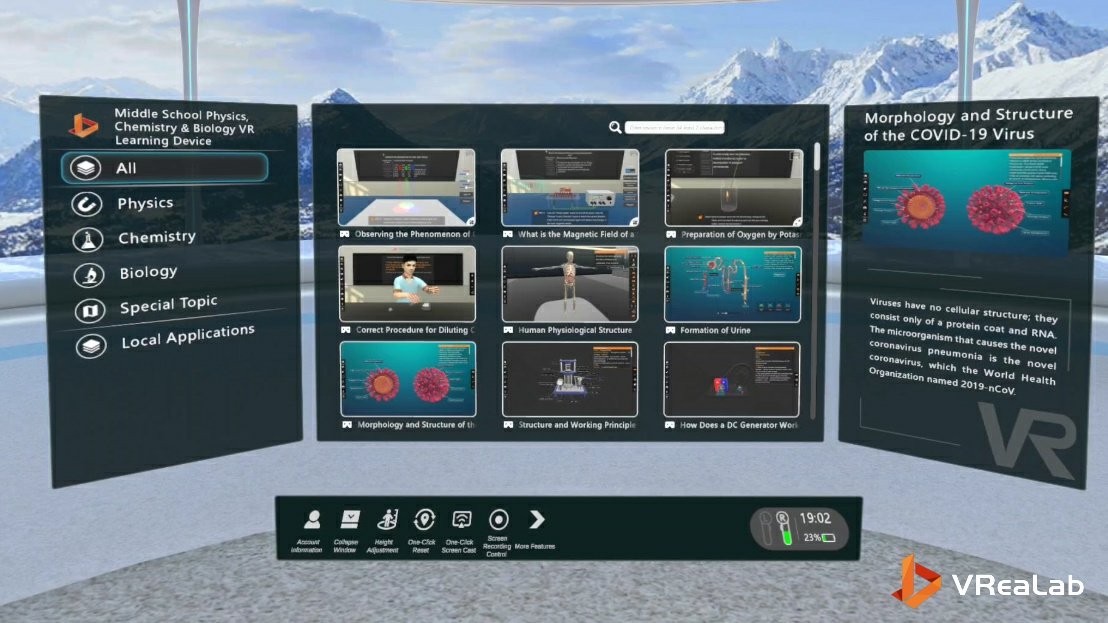
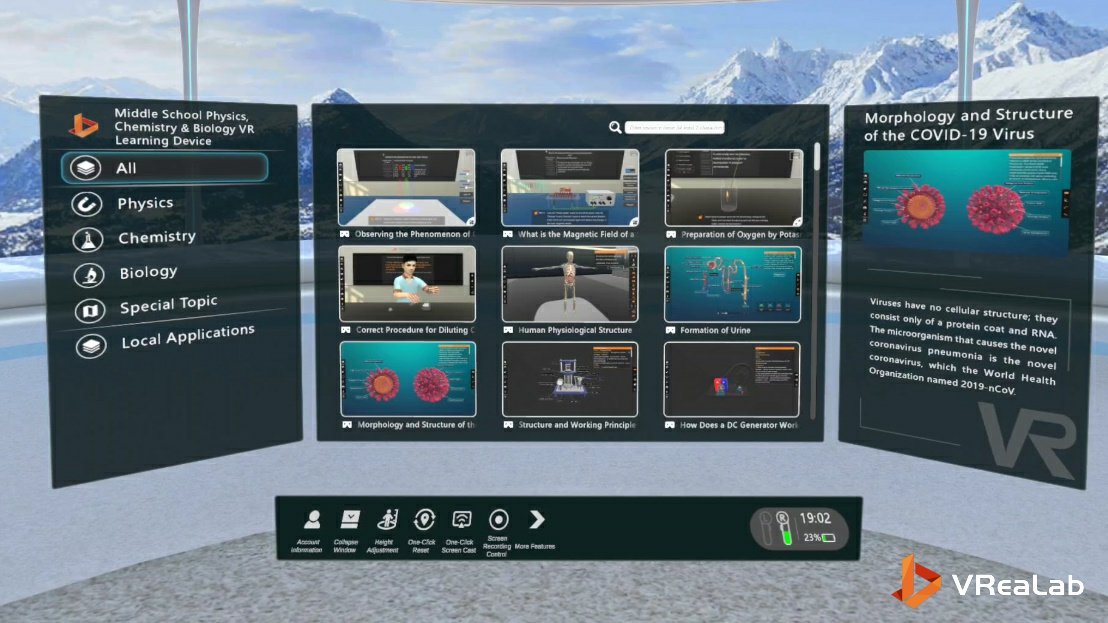
First and foremost, the Middle School Physics, Chemistry & Biology VR Learning Device is not a generic technology platform retrofitted for education. It is a digital curriculum specifically developed for junior secondary schools, spanning physics, chemistry, and biology. Every experiment, every simulation, every interactive module maps directly to the concepts students are required to learn. Teachers do not need to adapt their lesson plans around the technology — the technology is built around their lesson plans.
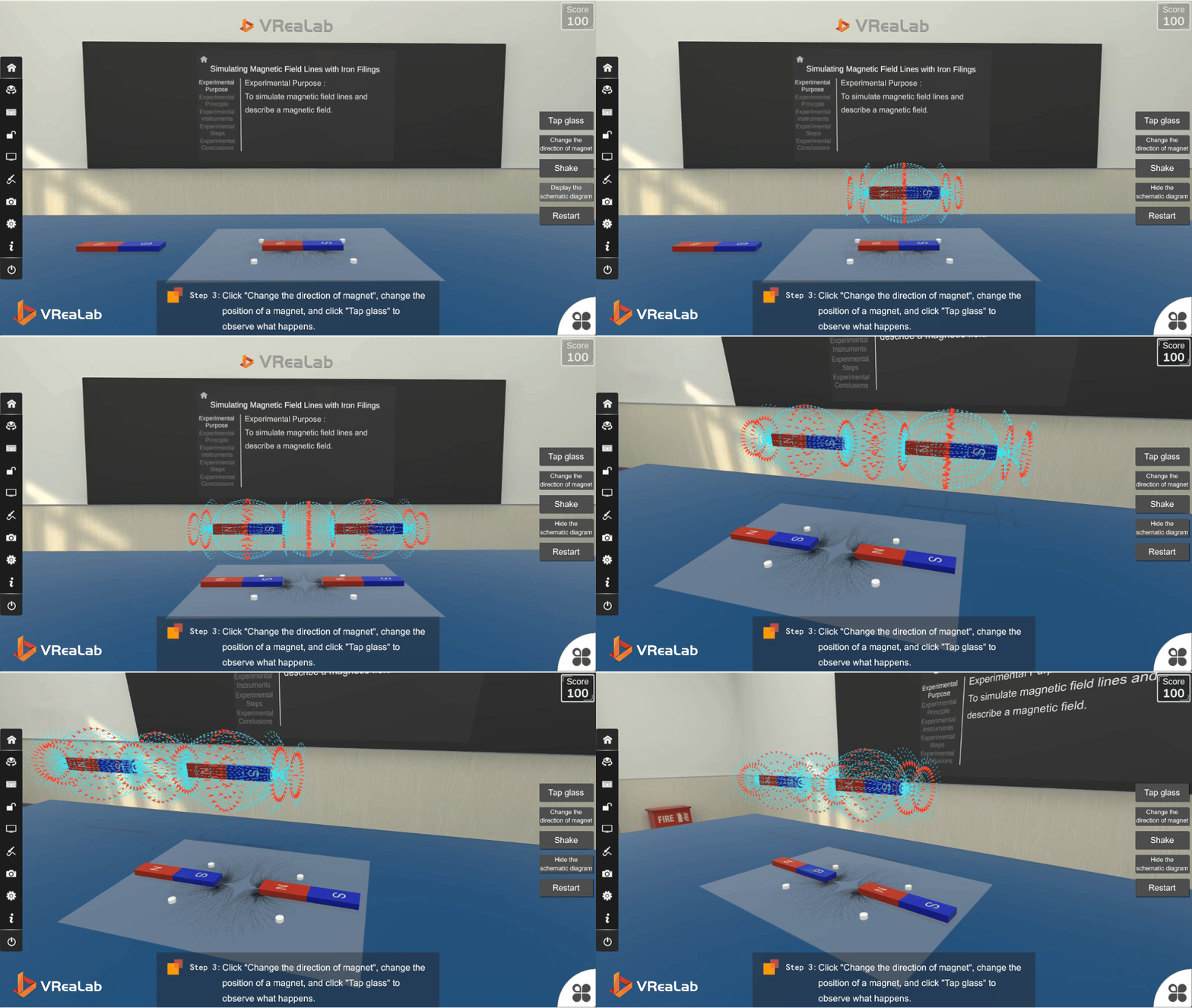
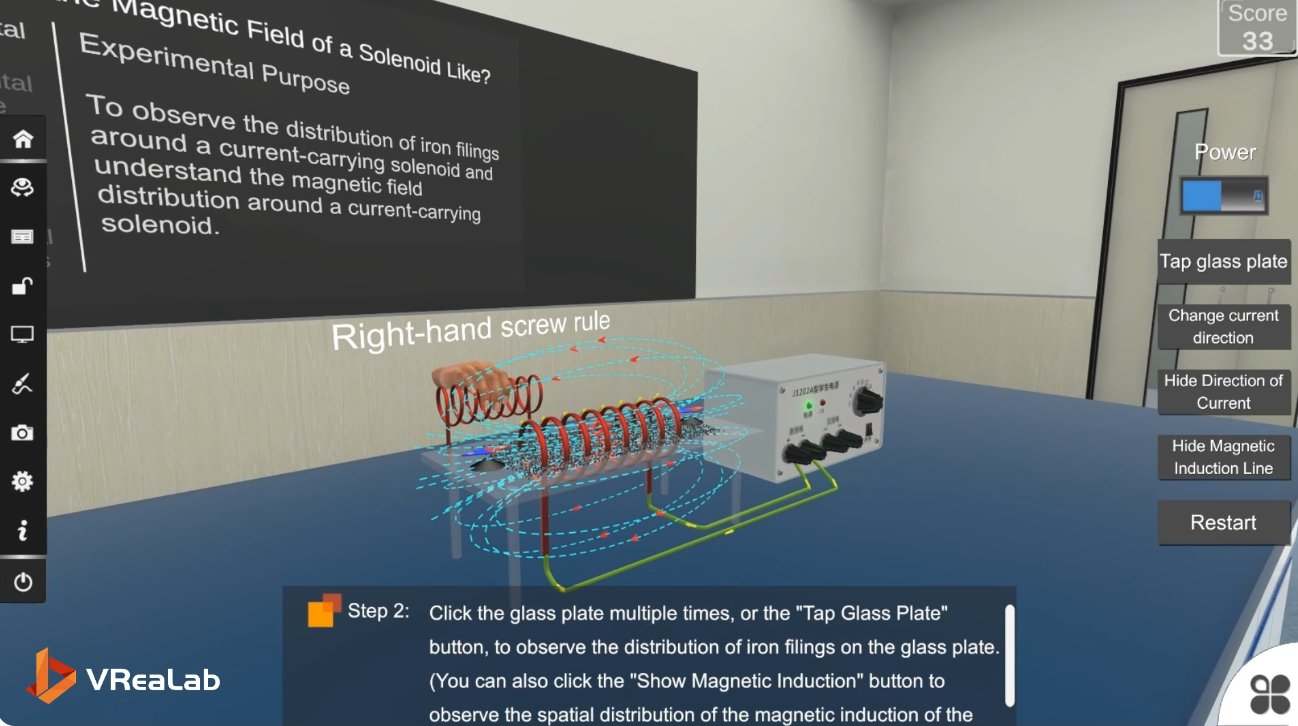
Consider how this works in practice across the three disciplines. In the VR Physics Lab, the experiment on the magnetic field of a solenoid is not a free-form sandbox — it is a structured, curriculum-mapped activity. Students build circuits, manipulate virtual compasses, and observe how electric current generates magnetic fields, all within a guided framework that leads them from observation to understanding. The key advantage is that VR simulations use three-dimensional visualization to make invisible magnetic field lines intuitively visible, allowing students to master the spatial complexities of electromagnetism through dynamic interaction rather than passive listening.
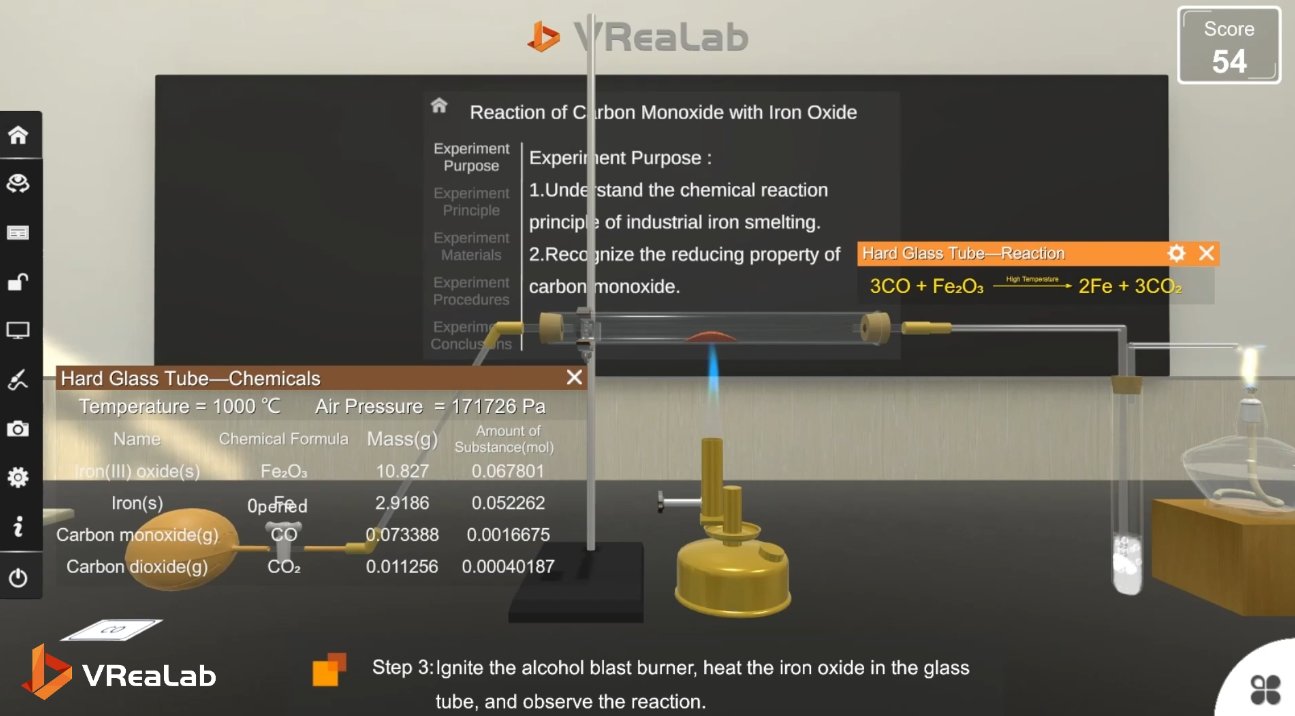
In the VR Chemistry Lab, the same curriculum alignment applies. The redox reaction between carbon monoxide and iron oxide is a standard topic in middle school chemistry — yet it is virtually impossible to demonstrate safely in a physical lab. The VR Chemistry Lab provides a fully stocked, perfectly safe environment where students explore this reaction and observe how gases and solids interact at the molecular level. The zero-risk setting means students can experiment freely, making mistakes and learning from them without any danger — an approach that transforms safety constraints from a limitation into a pedagogical advantage.
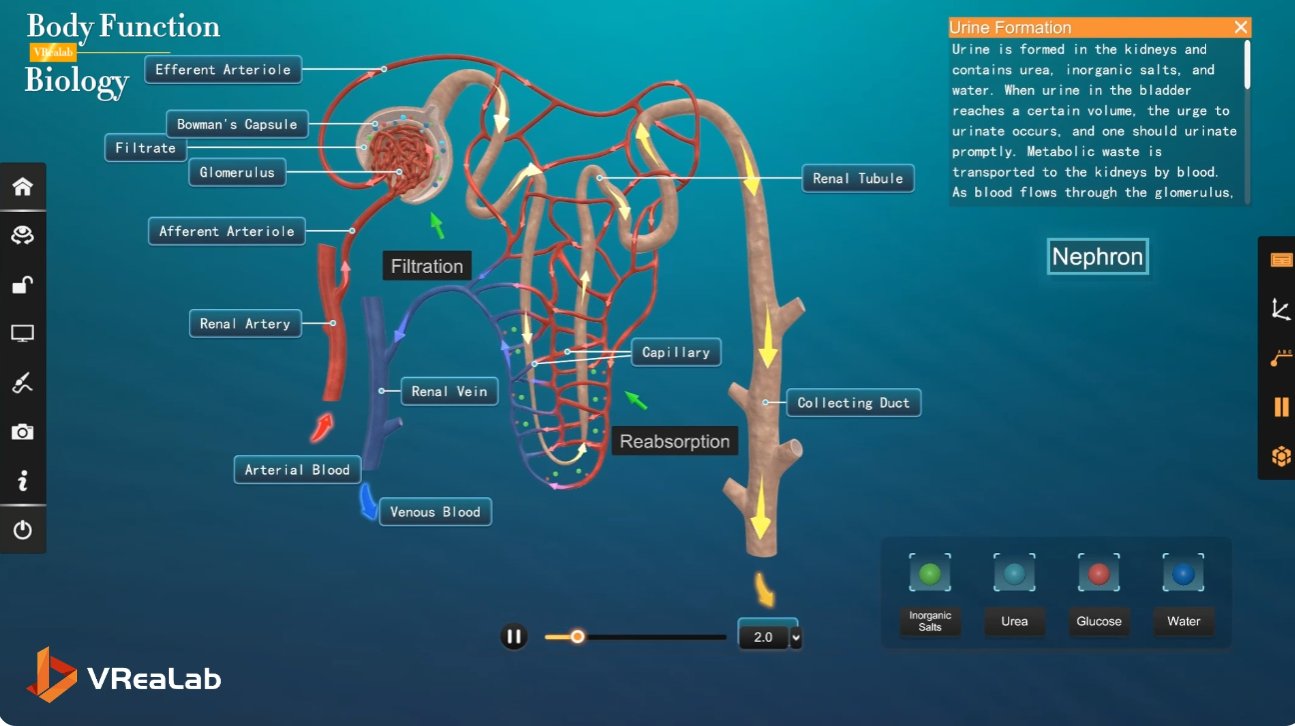
The VR Biology Lab follows the same principle. The formation of urine is a required topic that challenges teachers because the underlying nephron structures and microscopic processes cannot be observed in a conventional classroom. The VR Biology Lab makes these structures visible and interactive, helping students understand the structural basis and microscopic principles of urine formation from the perspective of the nephron itself. The abstract becomes concrete, and the hidden becomes explorable.
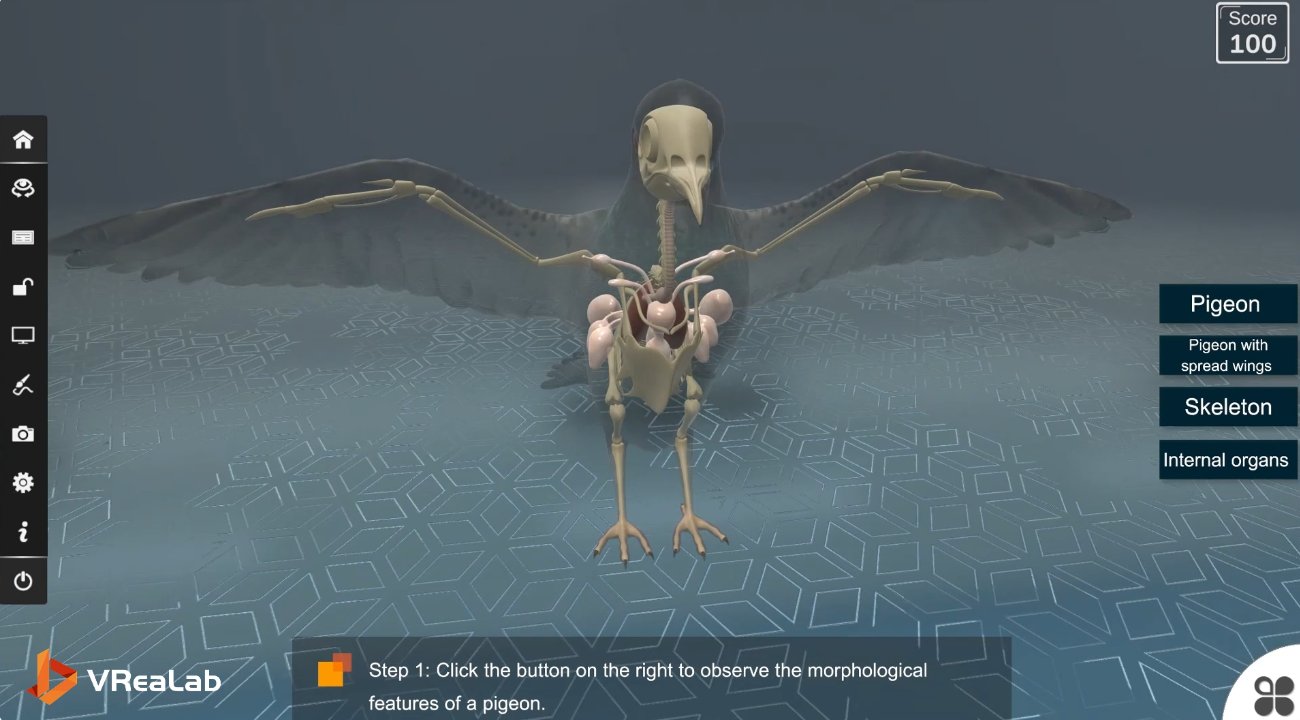
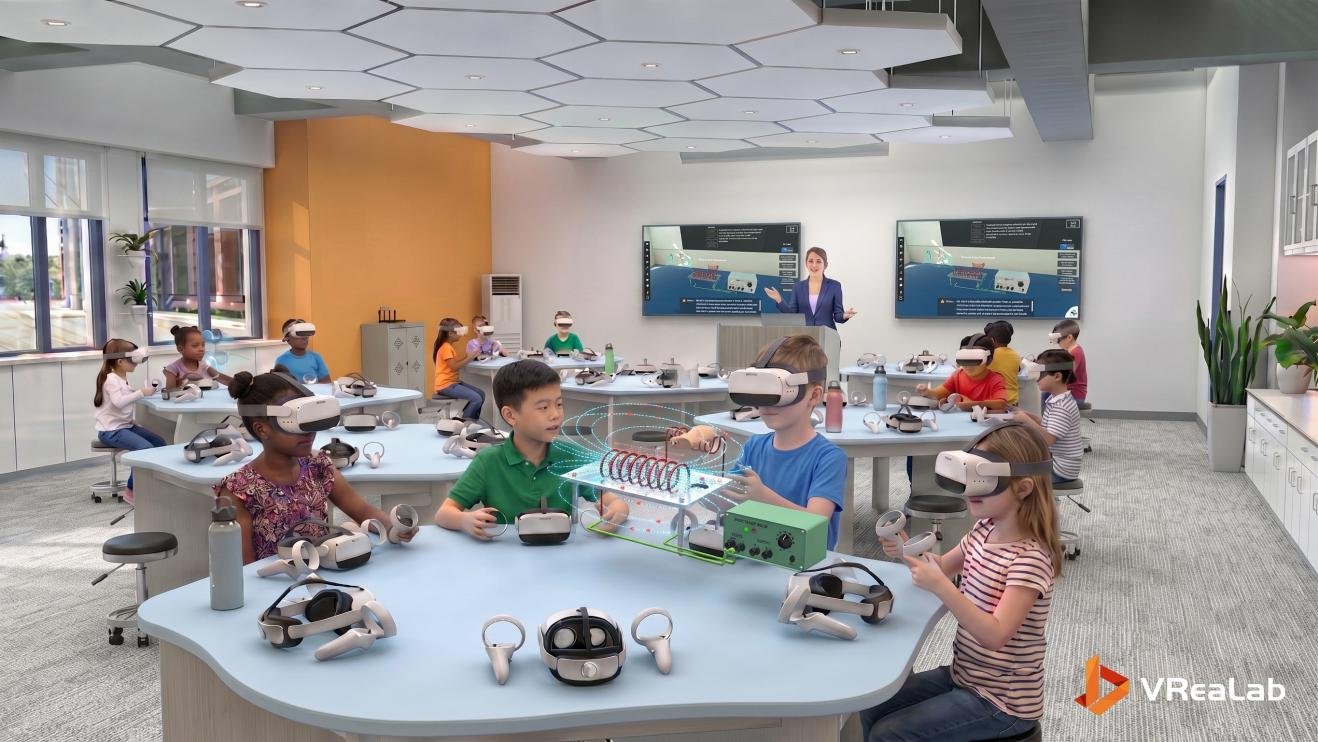
Beyond curriculum alignment, the Middle School VR Science Lab is designed for classroom practicality. It supports multiple teaching modes: whole-class instruction via screen casting, small-group cooperative inquiry with VR headsets, or individual exploration. Teachers can manage the classroom and access resources with one click, requiring no technical background. Models, animations, experiments, and assessments are all included — no need to search for scattered materials.
The result is a VR system that does not disrupt the classroom but enhances it. The VR Physics Lab, VR Chemistry Lab, and VR Biology Lab work together as a unified curriculum platform, ensuring that immersive science education is not a special event but a daily reality. For teachers and schools that want to integrate VR without compromising on academic rigor or instructional coherence, the Middle School VR Science Lab sets the standard.
Source: Word document uploaded by user