From Passive Listening to Active Discovery: The Middle School VR Science Lab Empowers Student-Centered Learning
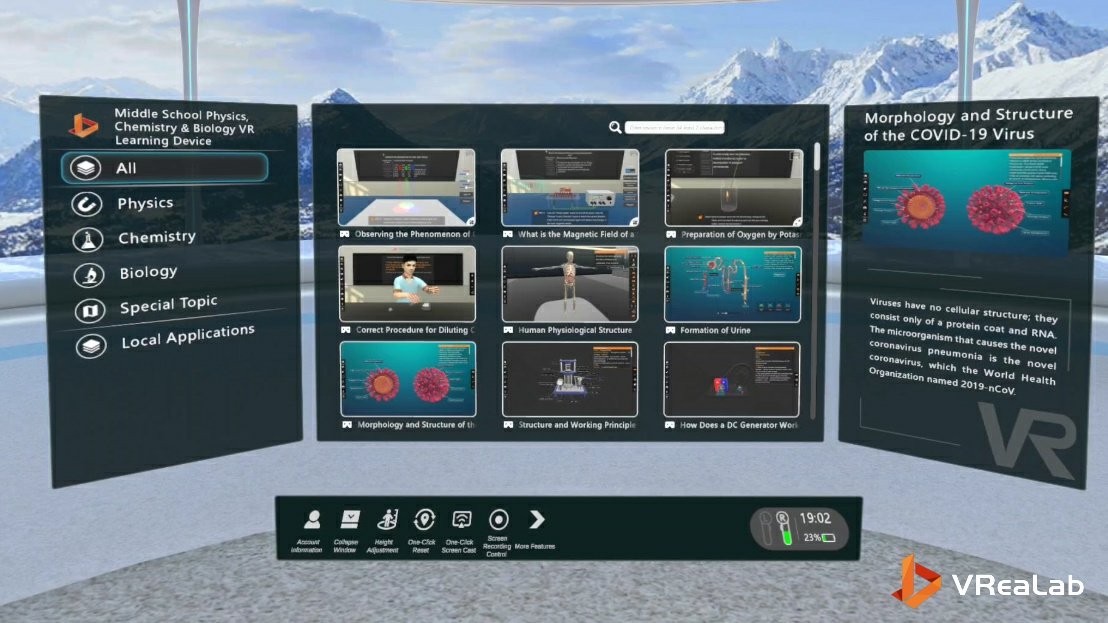
The most effective science education has always been about doing, not just watching. Yet the reality of middle school science classrooms often falls short — limited equipment, safety constraints, and invisible phenomena mean students spend far more time listening than doing. The Middle School VR Science Lab is built to reverse this ratio.
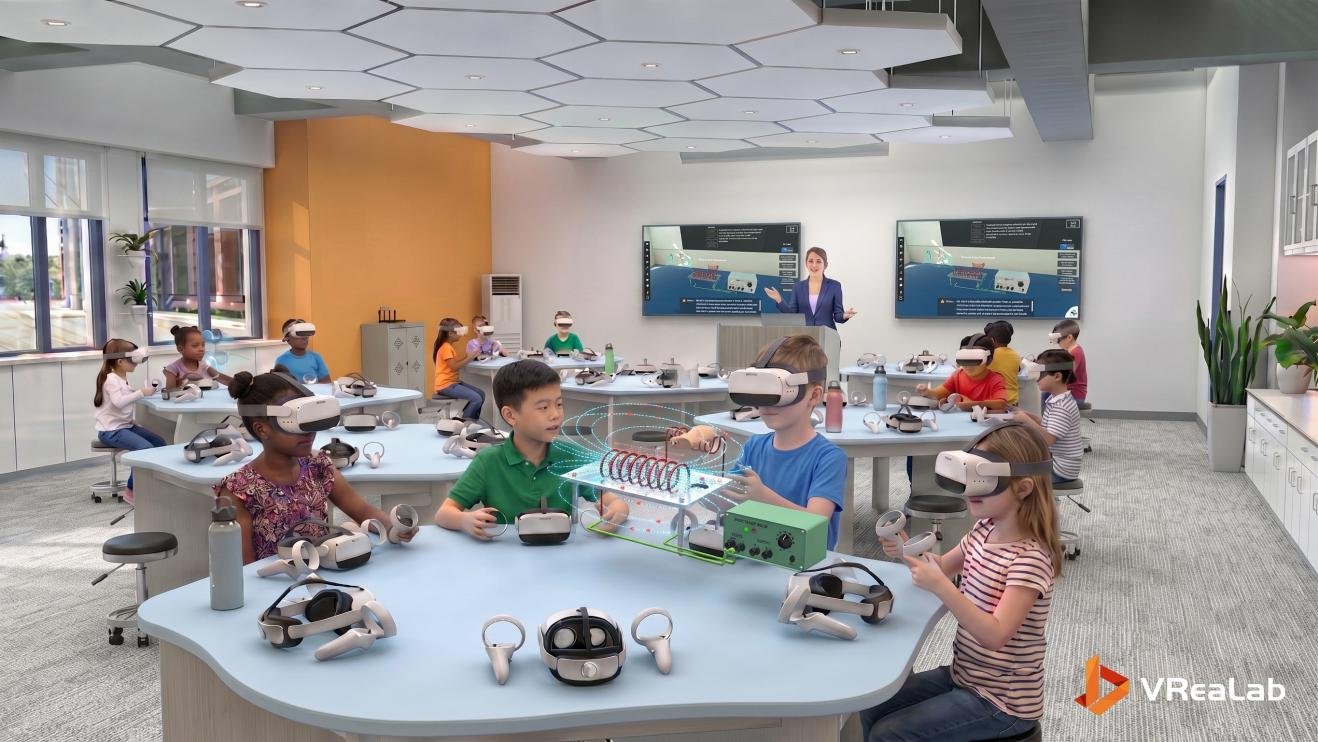
The most effective science education has always been about doing, not just watching. When students manipulate materials, observe outcomes firsthand, and draw conclusions from their own experiments, they build understanding that runs far deeper than anything a lecture can deliver. Yet the reality of middle school science classrooms often falls short of this ideal. Limited equipment, safety constraints, and the inherent invisibility of core phenomena mean that students spend far more time listening than doing. The Middle School VR Science Lab is built to reverse this ratio — to put students at the center of every lesson as active participants, not passive recipients.
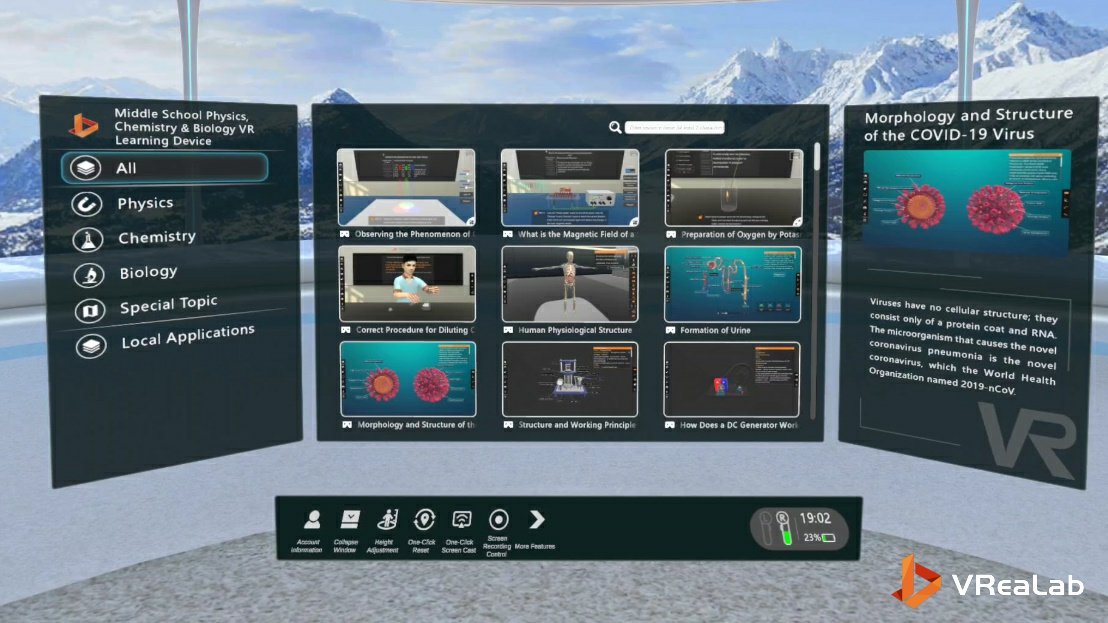
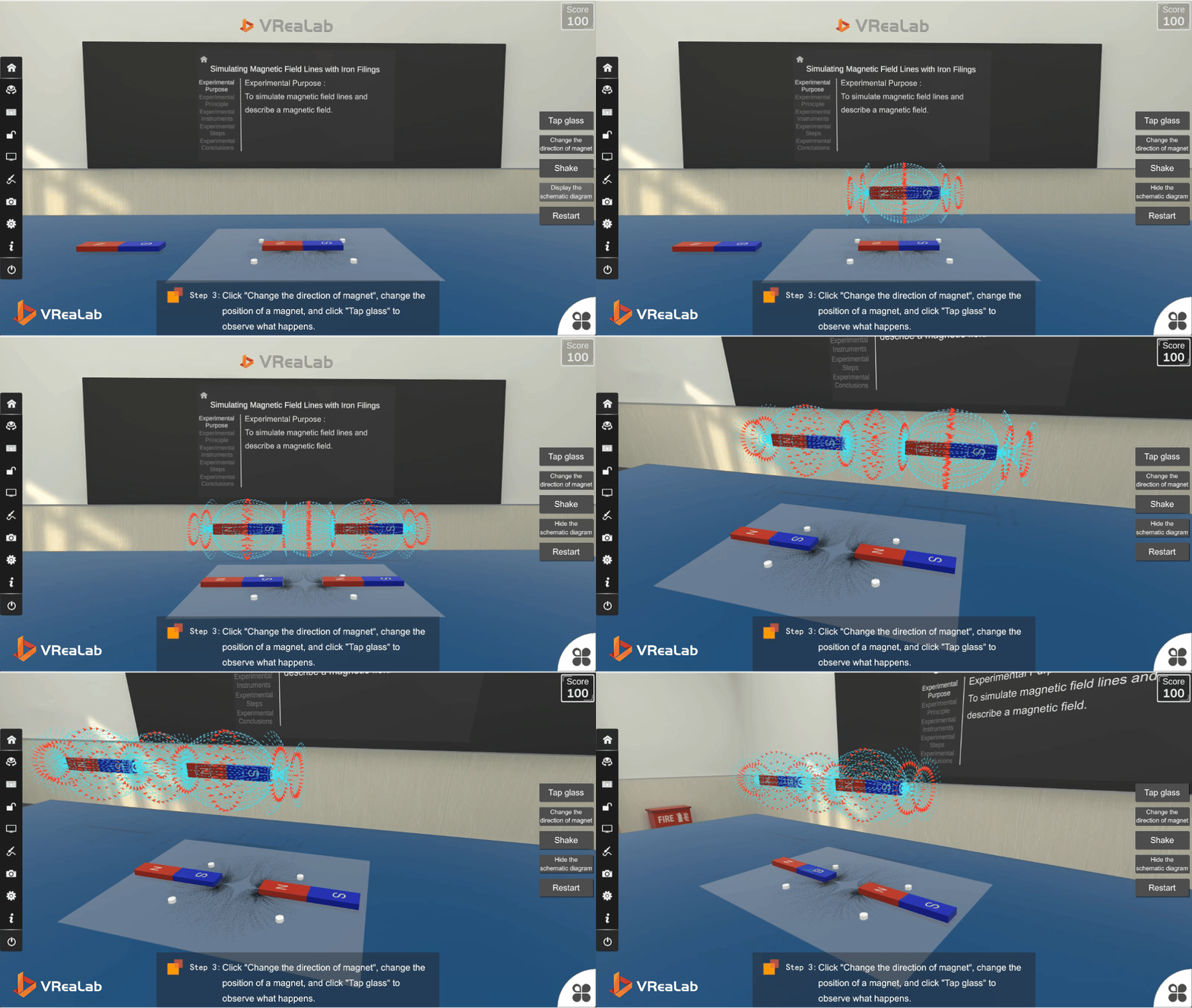
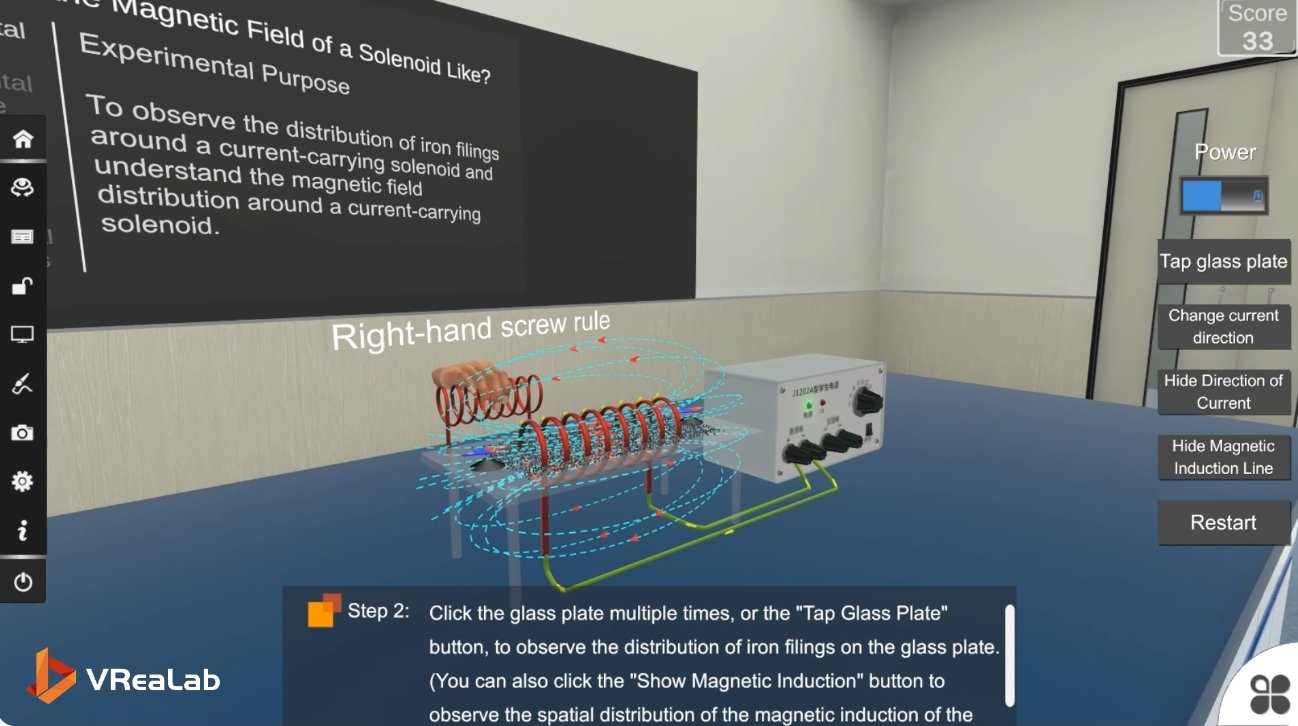
The shift begins the moment students put on a VR headset. Instead of reading about magnetic fields, they enter the VR Physics Lab and create them. The solenoid experiment becomes a hands-on investigation: students build circuits, drag virtual compasses into position, and watch three-dimensional magnetic field lines materialize around the coil in real time. They can change the direction of current, adjust the number of coil turns, and immediately observe how the field responds. This is not simulation for its own sake — it is genuine inquiry. Students ask questions, test hypotheses, and discover principles through their own actions. The VR Physics Lab transforms electromagnetism from an abstract topic to be memorized into an interactive phenomenon to be explored.
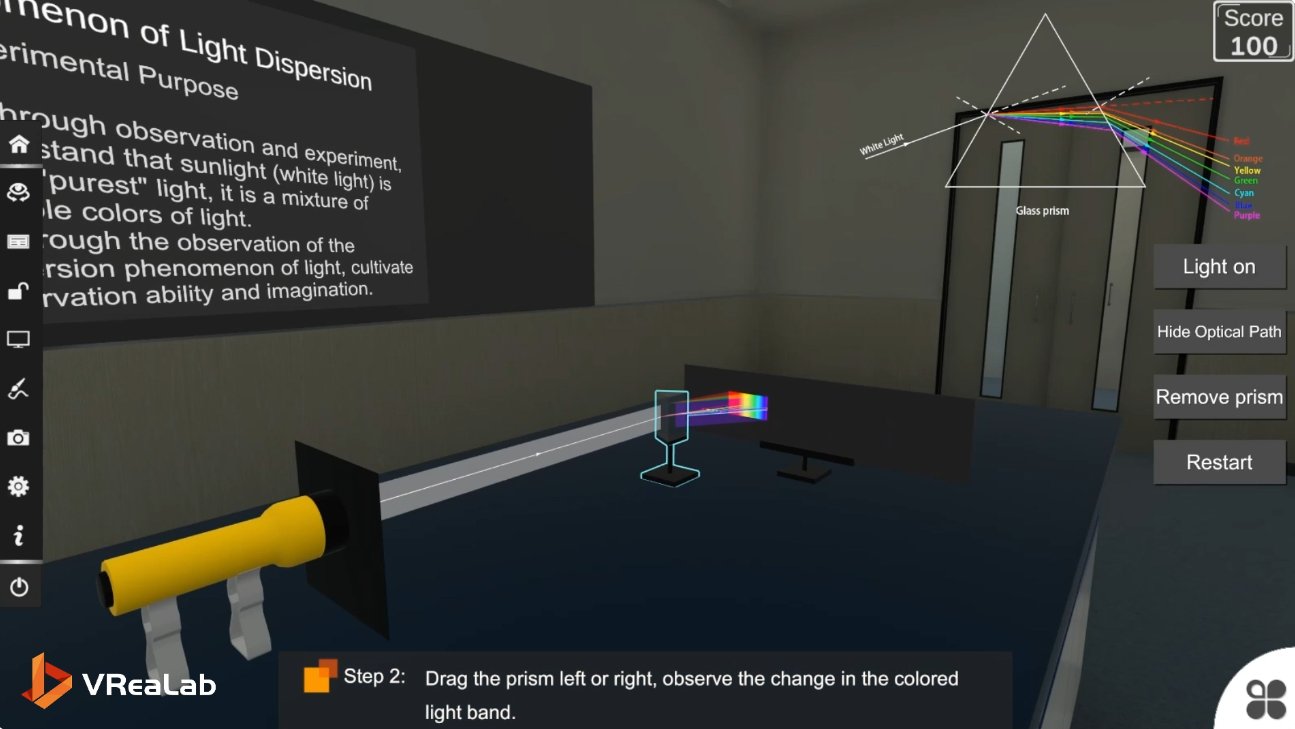
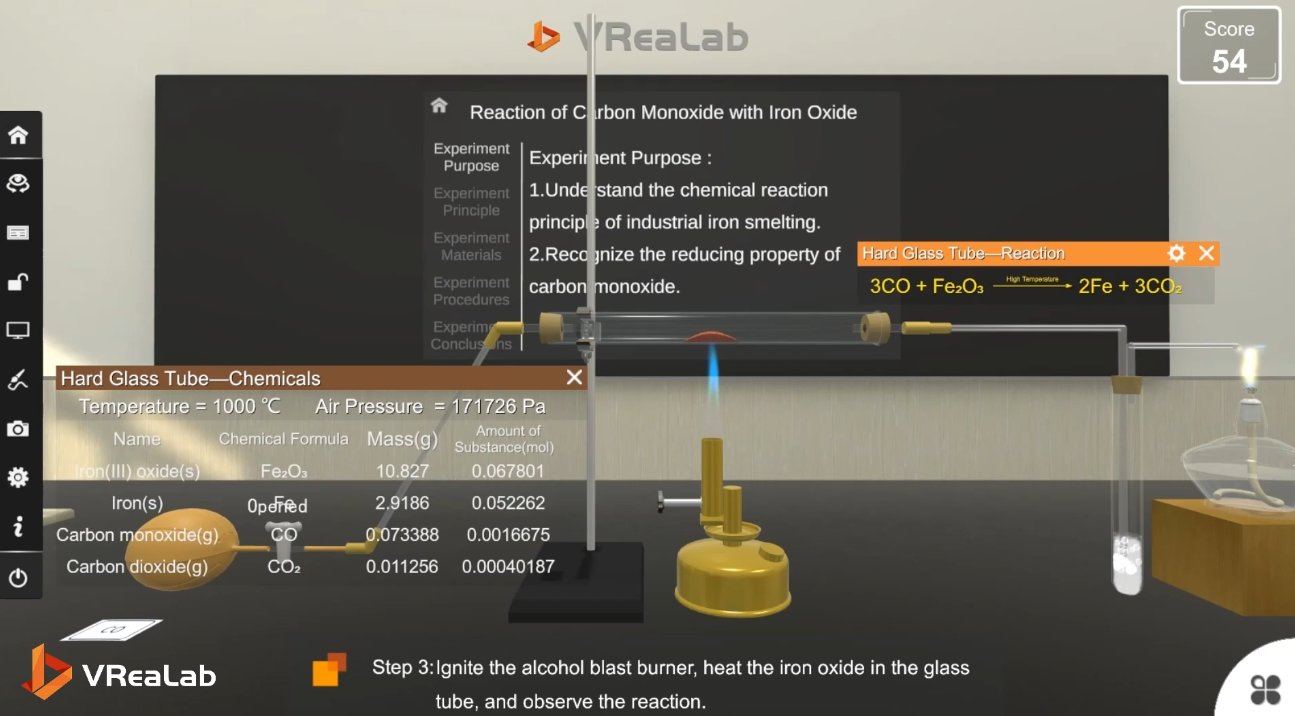
The VR Chemistry Lab amplifies this student-centered approach by removing the greatest barrier to hands-on chemistry: danger. In a physical lab, safety protocols necessarily limit what students can do. They watch the teacher perform hazardous demonstrations from a distance, or they conduct only the safest — and often the least instructive — experiments themselves. The VR Chemistry Lab eliminates this trade-off. Students perform the reaction of carbon monoxide with iron oxide with their own hands, observing the redox process at the molecular level, manipulating conditions, and even making mistakes — all in a perfectly safe, zero-risk environment. When a procedure goes wrong, the system clearly presents the incorrect outcome, and the student immediately understands why. Trial and error, the oldest and most powerful learning method, becomes not just possible but encouraged.
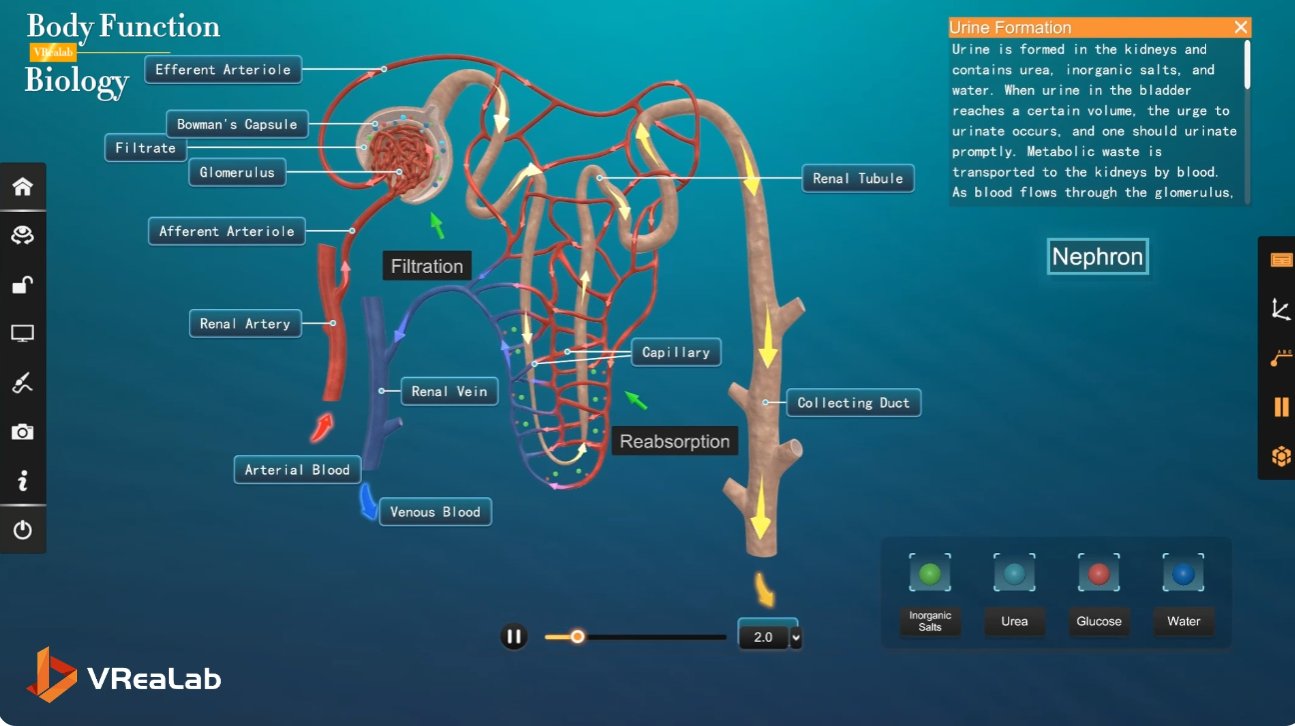
In the VR Biology Lab, the same philosophy of active discovery transforms how students engage with life science. The formation of urine — a process governed by nephron structures operating at the microscopic scale — is traditionally taught through diagrams and verbal descriptions. Students memorize the steps without ever experiencing the logic behind them. The VR Biology Lab changes this completely. Students enter the nephron, observe the structural basis of filtration from the inside, and interact with the microscopic processes that produce urine.
What unites the VR Physics Lab, VR Chemistry Lab, and VR Biology Lab is a shared commitment to student agency. In each environment, the student is not a spectator but a scientist — observing, hypothesizing, experimenting, and concluding. The Middle School VR Science Lab does not replace the teacher; it empowers both teacher and student by providing the tools that make genuine inquiry possible in every lesson, not just during occasional lab sessions.
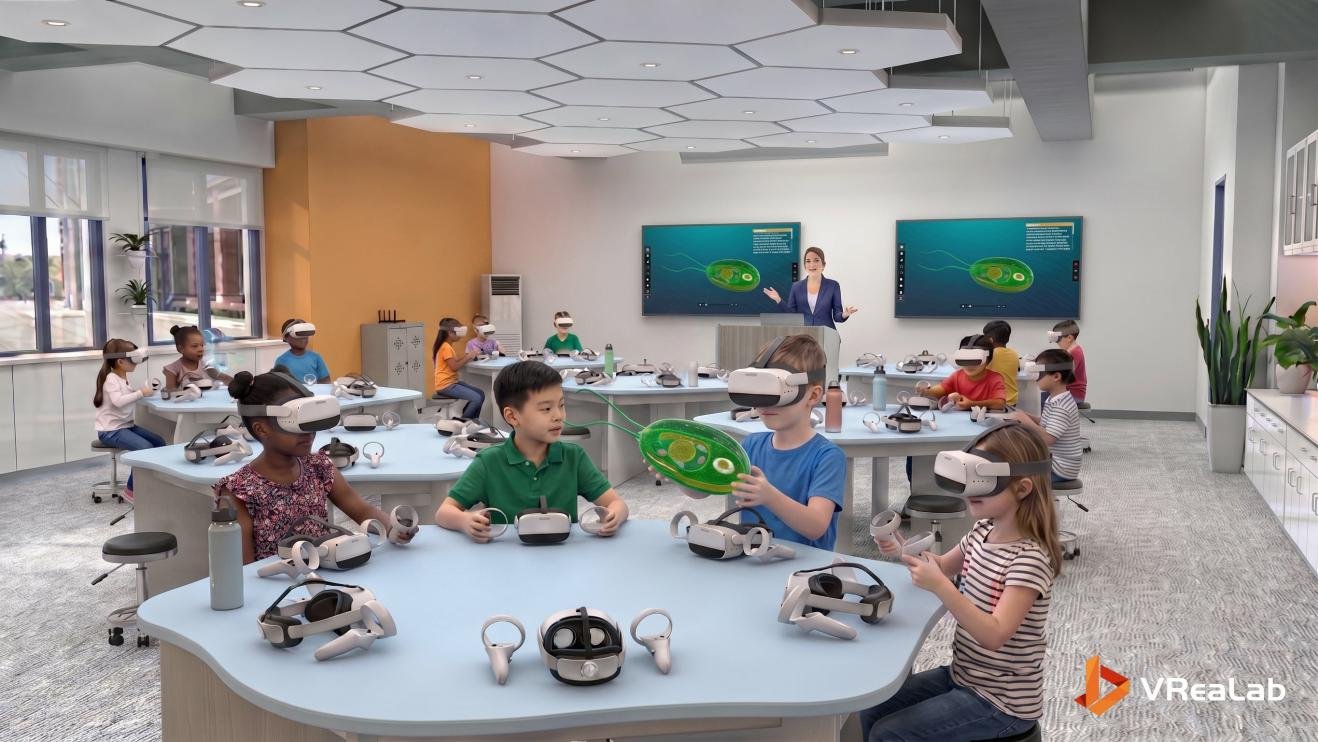
The pedagogical shift is profound. When students learn through active discovery, they do not merely remember facts — they understand principles. They develop the scientific thinking skills that lie at the heart of STEM education: observation, analysis, inference, and communication. The Middle School VR Science Lab makes this shift practical and scalable, ensuring that every middle school student has the opportunity to learn science by doing science — the way it was always meant to be learned.
Source: Word document uploaded by user