Bringing the Lab to Every Child: the Primary Science VR Learning Device
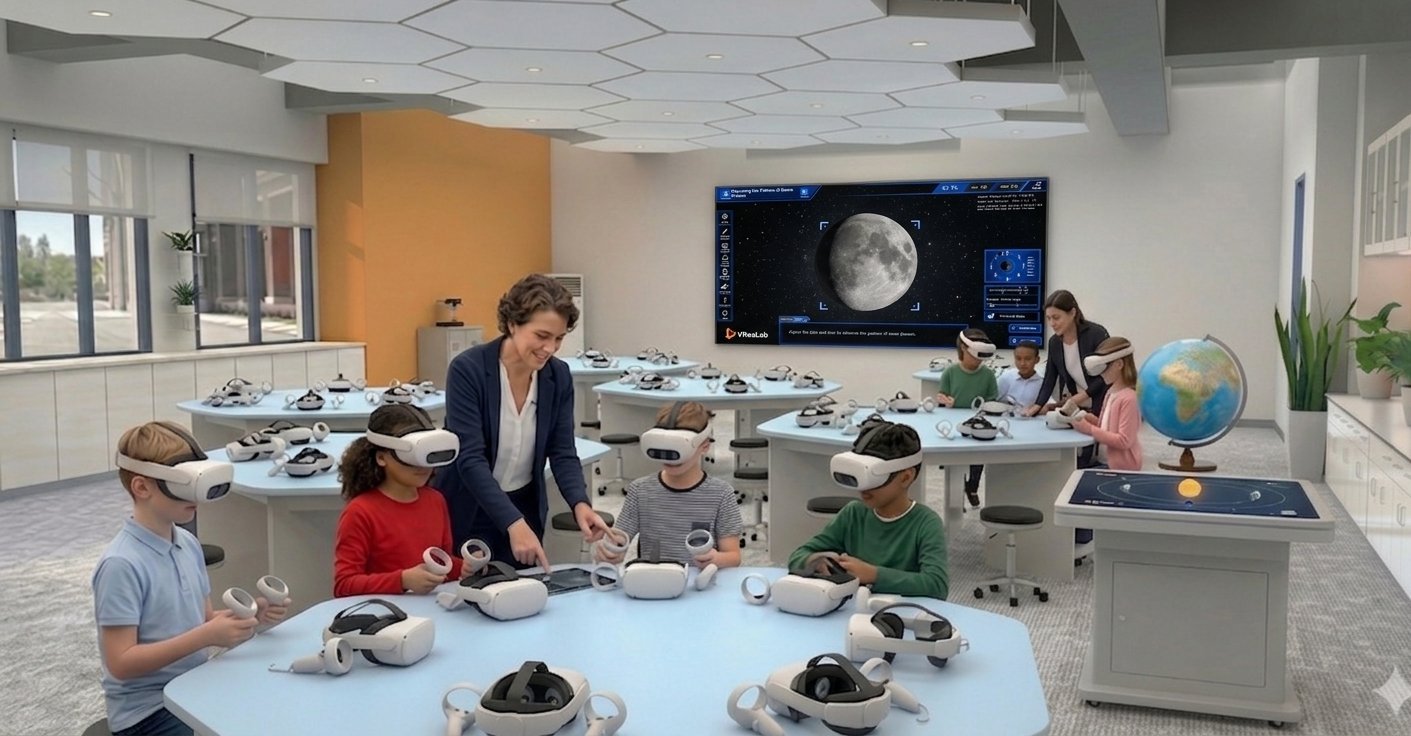
In elementary classrooms around the world, science teachers face a persistent challenge: how do you explain the invisible? The Primary Science VR Learning Device from VReaLab offers a compelling answer — transforming abstract scientific concepts into vivid, interactive 3D experiences.
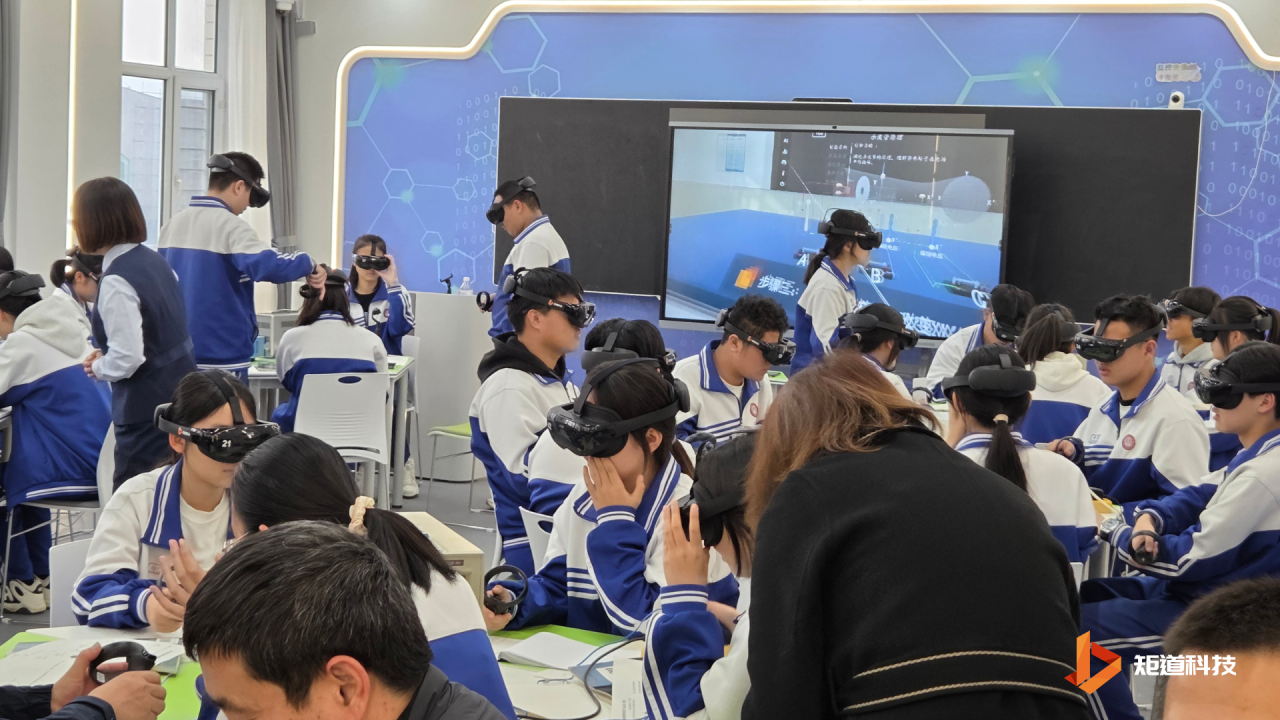
In elementary classrooms around the world, science teachers face a persistent challenge: how do you explain the invisible? How do you help a ten-year-old understand what a cell looks like, why the moon changes shape, or how water flows through a faucet — when all you have is a textbook and a chalkboard? The Primary Science VR Learning Device from VReaLab offers a compelling answer. As a purpose-built VR Science Lab designed specifically for young learners, this immersive platform transforms abstract scientific concepts into vivid, interactive 3D experiences — turning every science lesson into a journey of discovery.
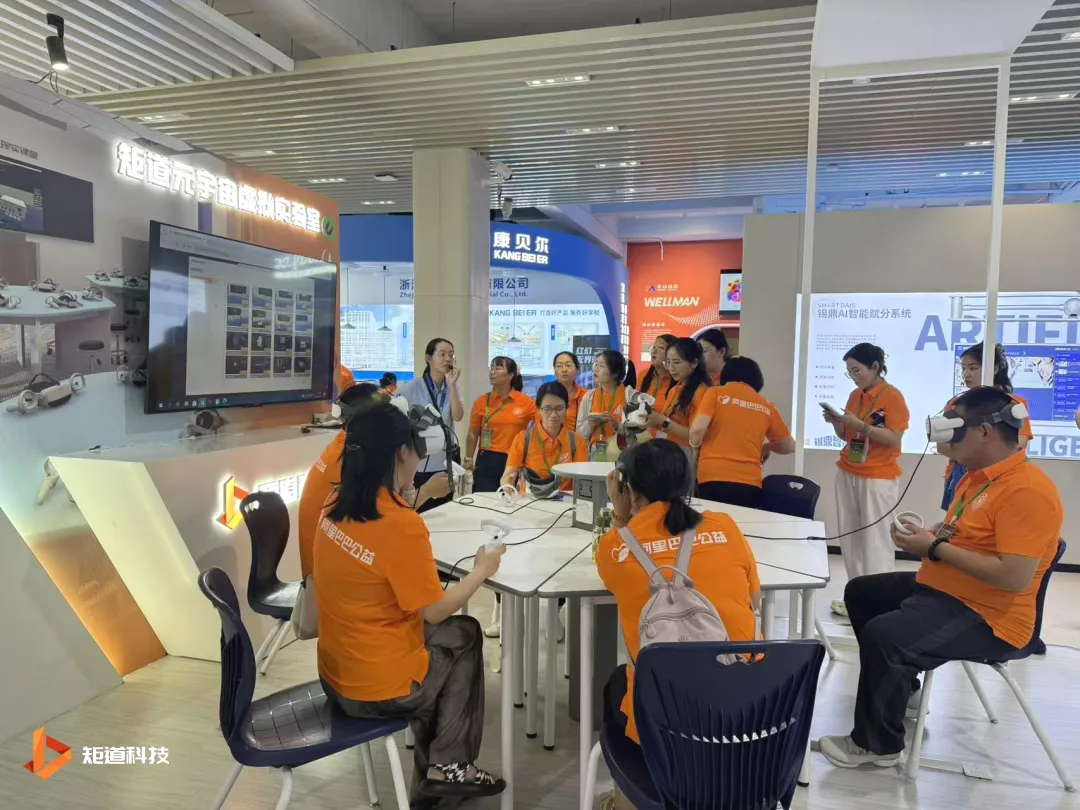
At its core, the Primary Science VR Learning Device is more than just hardware and software — it is a complete Science Virtual Lab ecosystem tailored to primary school curricula. It empowers teachers to bring microscopic worlds, distant planets, and everyday engineering marvels directly into the classroom, creating a learning environment where every student can see, explore, and understand. Rooted in the principles of STEM Education, the platform bridges the gap between theoretical knowledge and hands-on discovery, preparing the next generation of thinkers, makers, and problem-solvers.
What VR Changes in Science Learning
Traditional science instruction often relies on static images and verbal descriptions to convey dynamic, three-dimensional phenomena. The Primary Science VR Learning Device changes this paradigm entirely. By functioning as a fully immersive VR Science Lab, it makes science visible, accessible, hands-on, and personally relevant for every young learner. Four core capabilities define this transformation:
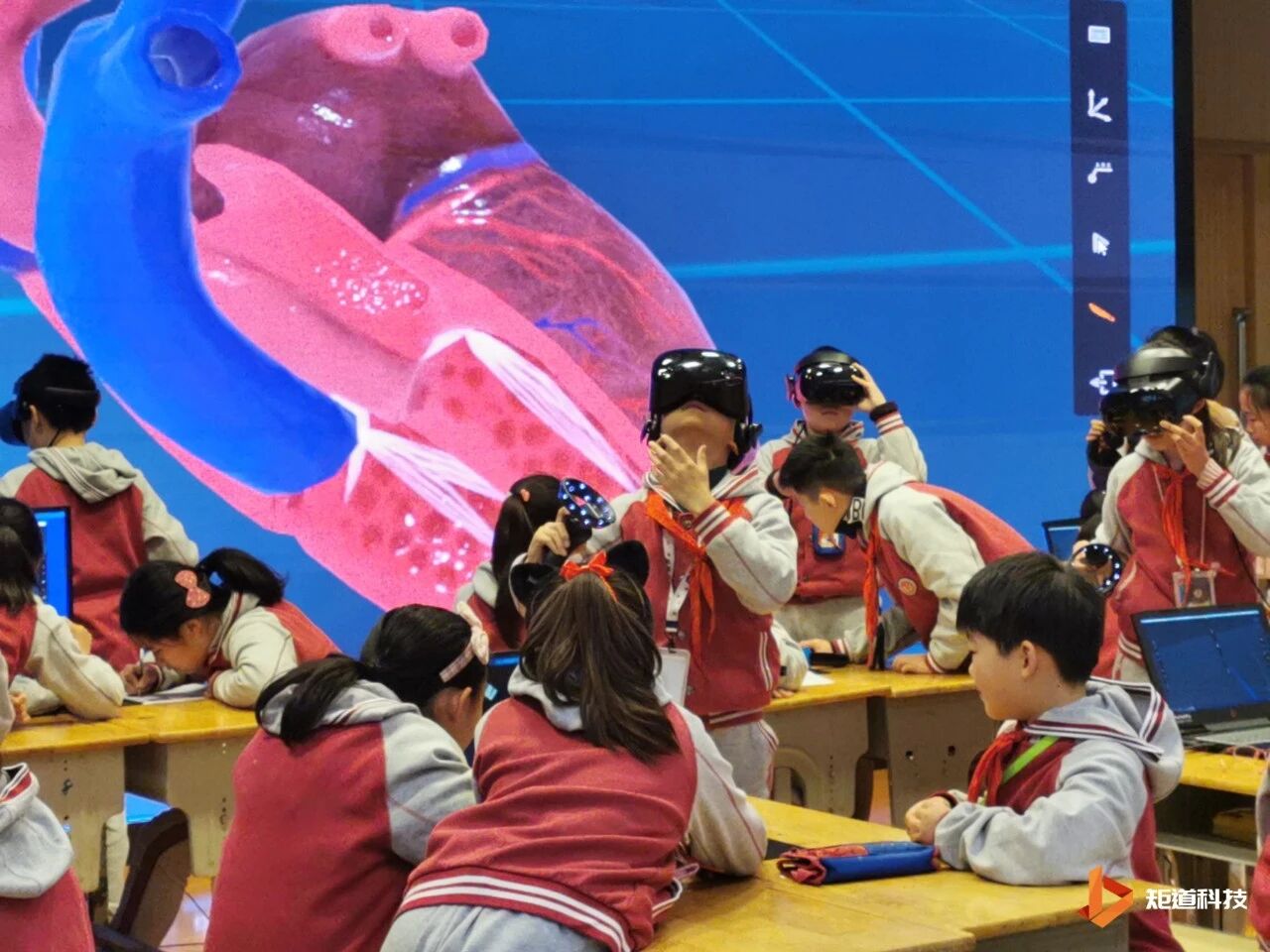
Visualize the Invisible. Microscopic worlds come to life in stunning 3D. Students no longer need to imagine what a plant cell looks like — they can walk inside one. Abstract concepts like molecular structure, air currents, and cellular organization become tangible, visual experiences that make complex ideas clear and engaging.
Explore the Impossible. The classroom walls dissolve. Students travel to outer space to observe lunar phases from a cosmic perspective, journey to the Earth's core to understand geological forces, and visit extreme environments — all without leaving their seats. The VR Science Lab removes the physical and financial barriers that have traditionally limited elementary science exploration.
Practice Safely. High-risk experiments and engineering activities become safe and repeatable. Students can dissect virtual models, manipulate hot-air experiments, and disassemble complex machinery — all within a risk-free environment that encourages fearless inquiry and iterative learning.
Connect Science with STEM. Scientific principles are linked directly to real-world engineering challenges and everyday applications. This approach embodies the interdisciplinary spirit of STEM Education, showing students that science is not an isolated subject but a powerful tool for understanding and shaping the world around them.
Four Thematic Modules: A Comprehensive Science Virtual Lab
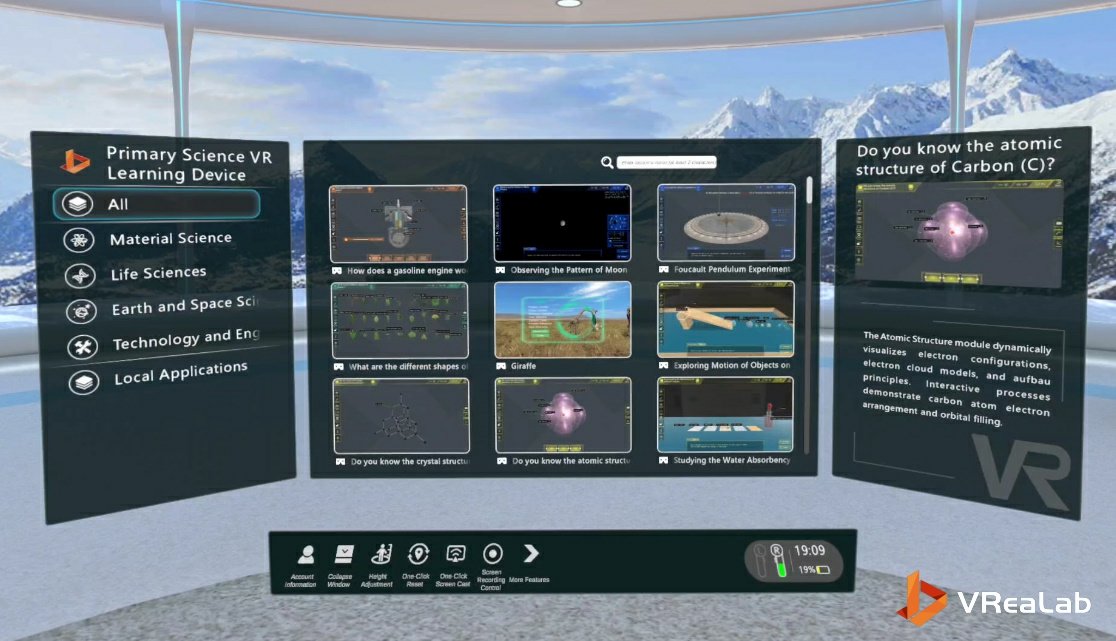
The Primary Science VR Learning Device is organized around four thematic pillars that span the full breadth of elementary science education. Together, they form a Science Virtual Lab that covers material science, life sciences, Earth and space sciences, and technology & engineering — ensuring that every corner of the curriculum is enriched by immersive, interactive learning.
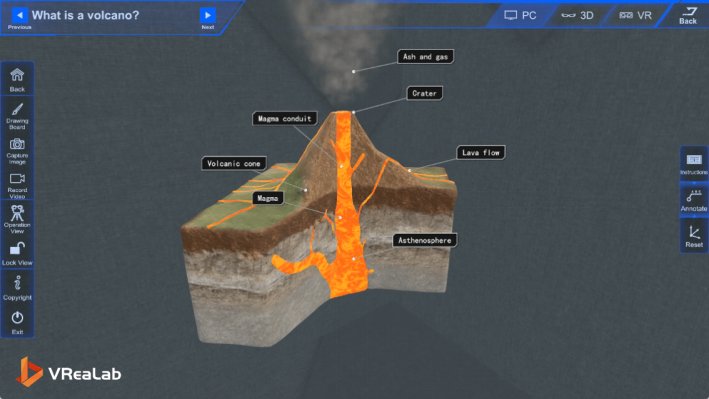
Material Science: Understanding Matter, Energy, and Forces
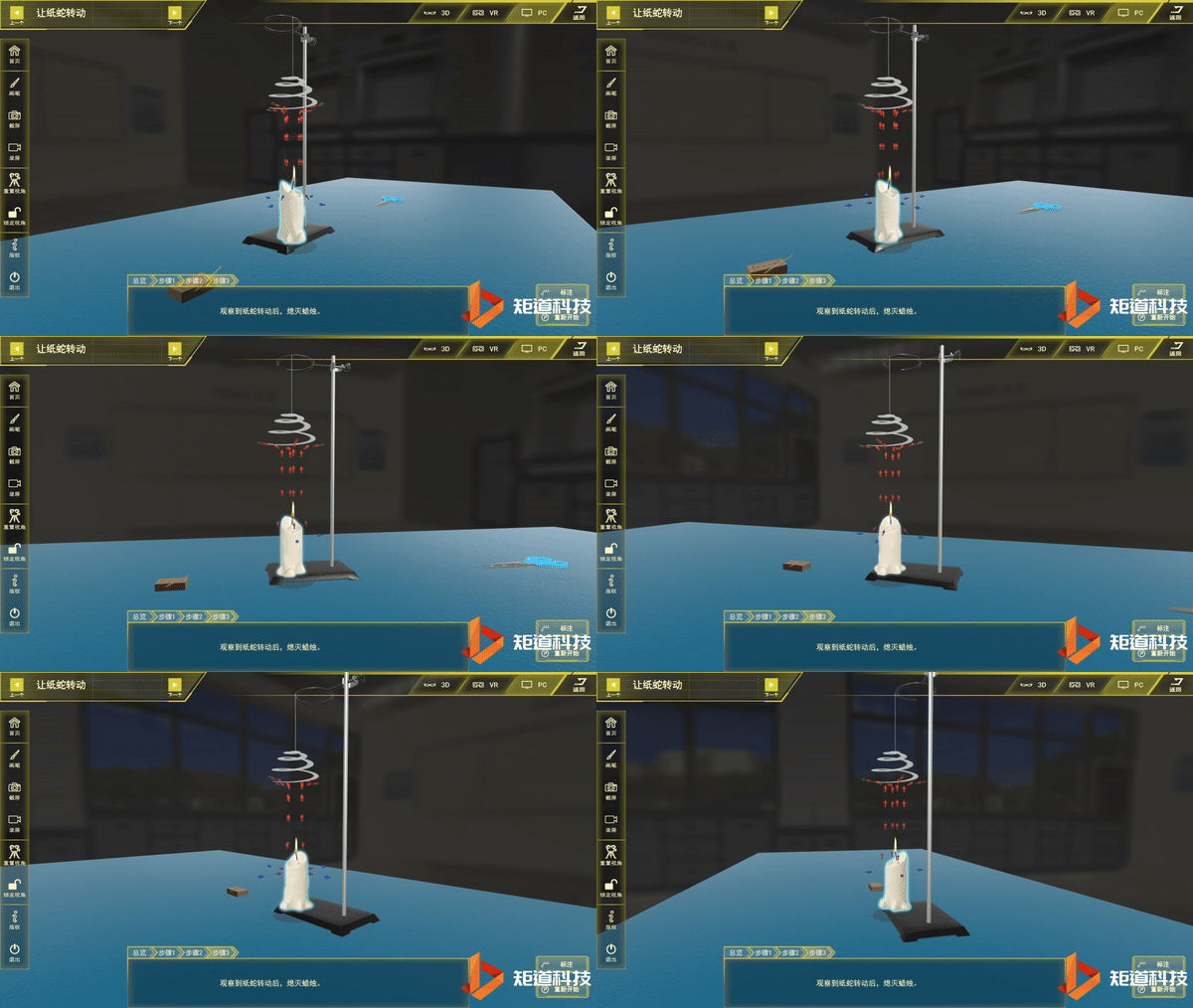
In the "Make the Paper Snake Rotate" module, students observe how hot air currents from a candle cause a paper snake to spin — visualized through rich 3D animation. The key advantage of this VR Science Lab approach is that invisible airflows are rendered clearly visible while maintaining 100% classroom safety, boosting students' scientific thinking and observational skills in ways that a traditional demonstration simply cannot match.
Life Sciences: Exploring the Wonders of Living Things
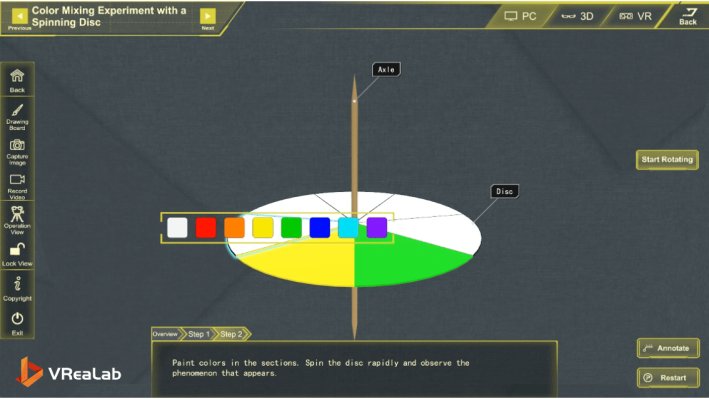
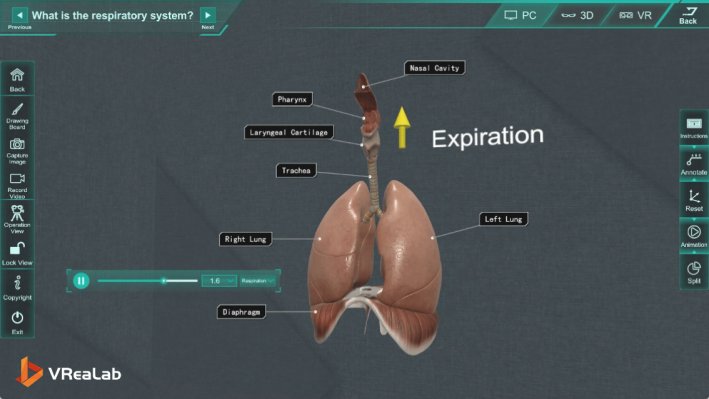
The "What is the Basic Unit of Life?" module immerses students in a virtual environment where they can identify and explore the intricate structures of plant and animal cells. This Science Virtual Lab experience provides an intuitive, close-up view of cellular anatomy that dramatically increases student engagement and enhances scientific literacy — turning a topic that was once abstract and distant into something personal and wonder-filled.
Earth & Space Sciences: Discovering Our Planet and the Universe
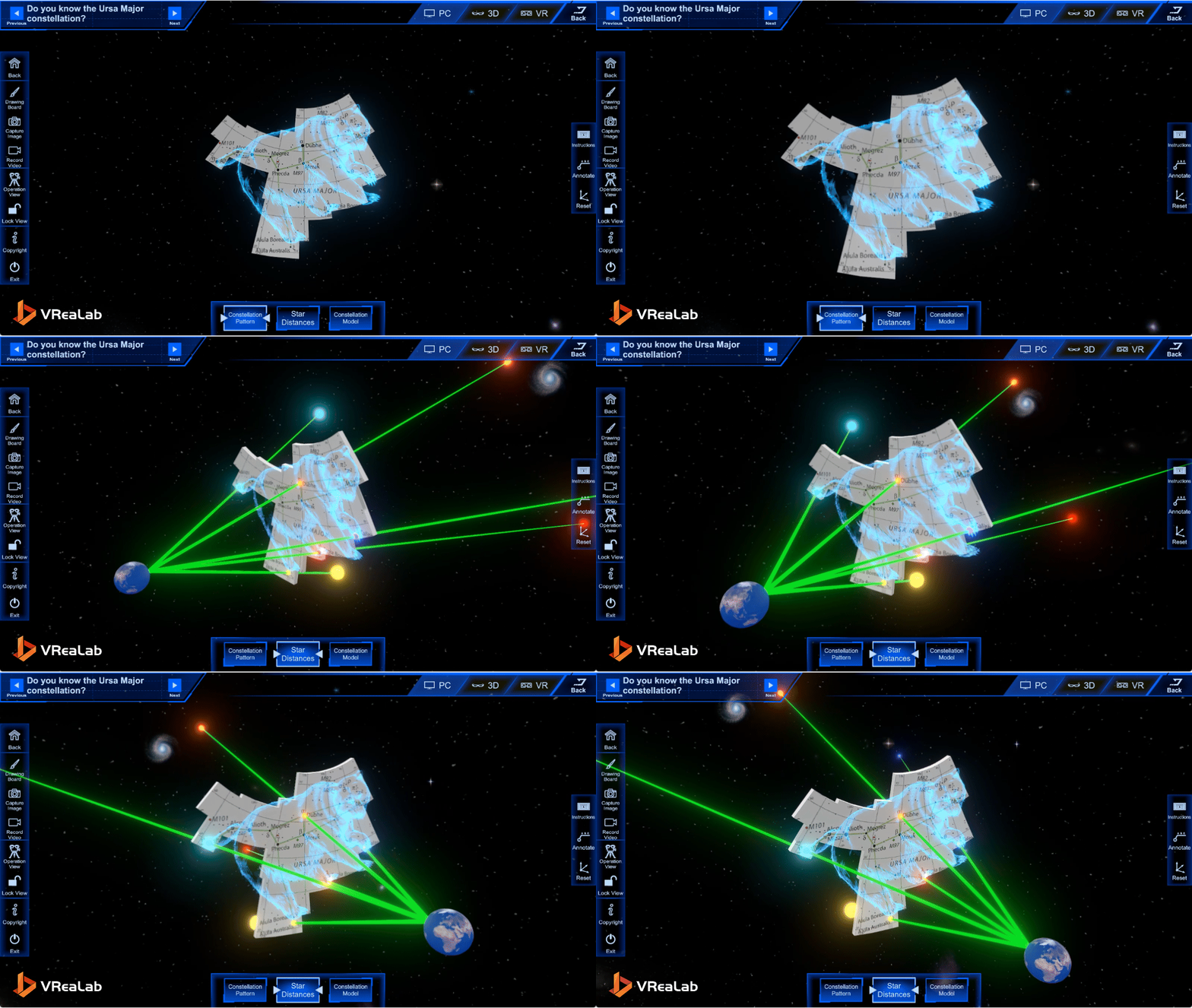
In "Observing the Pattern of Moon Phases," students explore lunar phases by visualizing the real-time orbital positions of the Sun, Earth, and Moon in three-dimensional space. The VR Science Lab features dynamic tracking and high interactivity, enabling students to manipulate celestial bodies and observe the resulting phase changes from any angle. This approach significantly enhances spatial imagination and autonomous inquiry skills — core competencies in any rigorous STEM Education program.
Technology & Engineering: Applying Science to Create Solutions
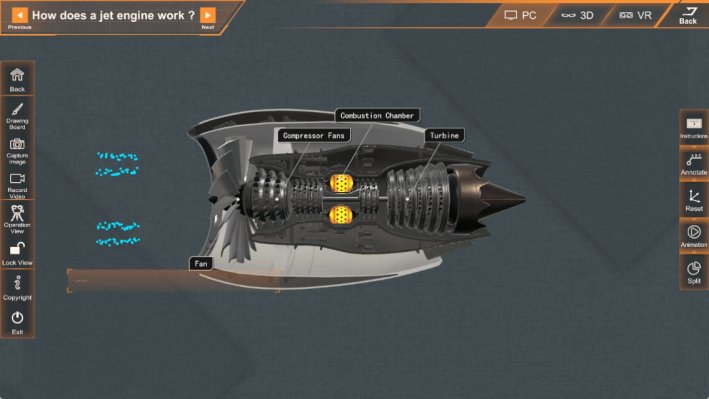
The "How Does Water Flow Out of a Faucet?" module lets students interactively disassemble and reassemble a faucet to understand internal water flow and valve control mechanisms. By connecting everyday mechanics to fundamental science, this module sparks curiosity while saving teachers valuable lesson preparation time — a perfect example of how a Science Virtual Lab bridges classroom learning with the real, engineered world that children encounter every day.
Redefining STEM: The XR-STEM Educational Universe
Beyond the individual modules, VReaLab envisions the Primary Science VR Learning Device as the gateway to a broader XR-STEM universe — an interconnected ecosystem where Earth and space science meets technology, engineering, and data literacy. This vision aligns perfectly with the goals of modern STEM Education: to inspire children to solve complex problems, build critical thinking skills, and approach the unknown with curiosity and confidence.
The platform also embraces a philosophy of "Boundless Inquiry" — the idea that children's natural curiosity should never be constrained by the limits of traditional teaching tools. By transforming abstract life science concepts into interactive 3D adventures, the VR Science Lab makes the study of plants, animals, and human organs an unforgettable experience. Nature inspires; technology empowers. Together, they create a Science Virtual Lab where every question leads to a new discovery.
Why This Matters: The Future of Elementary Science Education
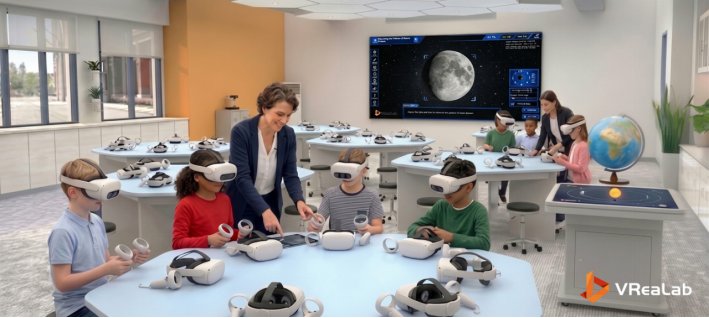
The introduction of the Primary Science VR Learning Device represents far more than a technological upgrade to the classroom — it signals a fundamental shift in how we think about science education at the elementary level. Research consistently shows that students learn best when they can interact with content directly, when abstract ideas are made concrete, and when learning feels like exploration rather than memorization. A VR Science Lab delivers on all three fronts simultaneously.
For educators, the device reduces preparation time while dramatically expanding what is possible in a 45-minute lesson. For students — especially those who struggle with traditional text-based instruction — the Science Virtual Lab opens doors that were previously closed. Visual learners, kinesthetic learners, and students with diverse learning needs all benefit from a platform that presents information through multiple sensory channels. For school administrators and policymakers, investing in VR science technology aligns directly with national and international priorities around STEM Education and 21st-century skill development.
Perhaps most importantly, the Primary Science VR Learning Device helps solve a persistent equity problem in science education. Not every school has access to well-equipped laboratories, not every community can fund field trips to science museums, and not every child has a parent who can explain the phases of the moon. But with a VR Science Lab in the classroom, every student — regardless of background — gains access to the same rich, immersive, high-quality science experiences. This is STEM Education at its most democratic and impactful: ensuring that the next generation of scientists, engineers, and innovators emerges from every community, not just the most privileged ones.
Conclusion
The Primary Science VR Learning Device from VReaLab is not just a product — it is a promise. A promise that science education can be vivid, engaging, and truly accessible to every child. Whether exploring the structure of a cell, tracking the orbit of the moon, or understanding the engineering behind a household faucet, students using this Science Virtual Lab are not merely learning science — they are living it. As schools around the world embrace the tools of VR Science Lab technology, they take a decisive step toward a future where STEM Education is defined not by what students can memorize, but by what they can imagine, create, and discover.
Source: Word document uploaded by user