Journey Inside the Human Body: VReaLab Biology Body Structure
The human body is the most complex, fascinating machine ever known — yet for most students, it remains frustratingly abstract. VReaLab Biology Body Structure changes all of this by providing a fully interactive 3D anatomy of the human body.
The human body is the most complex, fascinating machine ever known — yet for most students, it remains frustratingly abstract. Textbooks offer flat diagrams of organs that seem disconnected from one another. Classroom posters label parts but cannot show how they function together in real time. Dissection labs, where available, are expensive, time-consuming, and ethically limited. VReaLab Biology Body Structure changes all of this. By providing a fully interactive 3D anatomy of the human body, this VR/3D platform enables students to explore human anatomy in depth, developing an intuitive understanding of structure and function through immersive, hands-on learning.
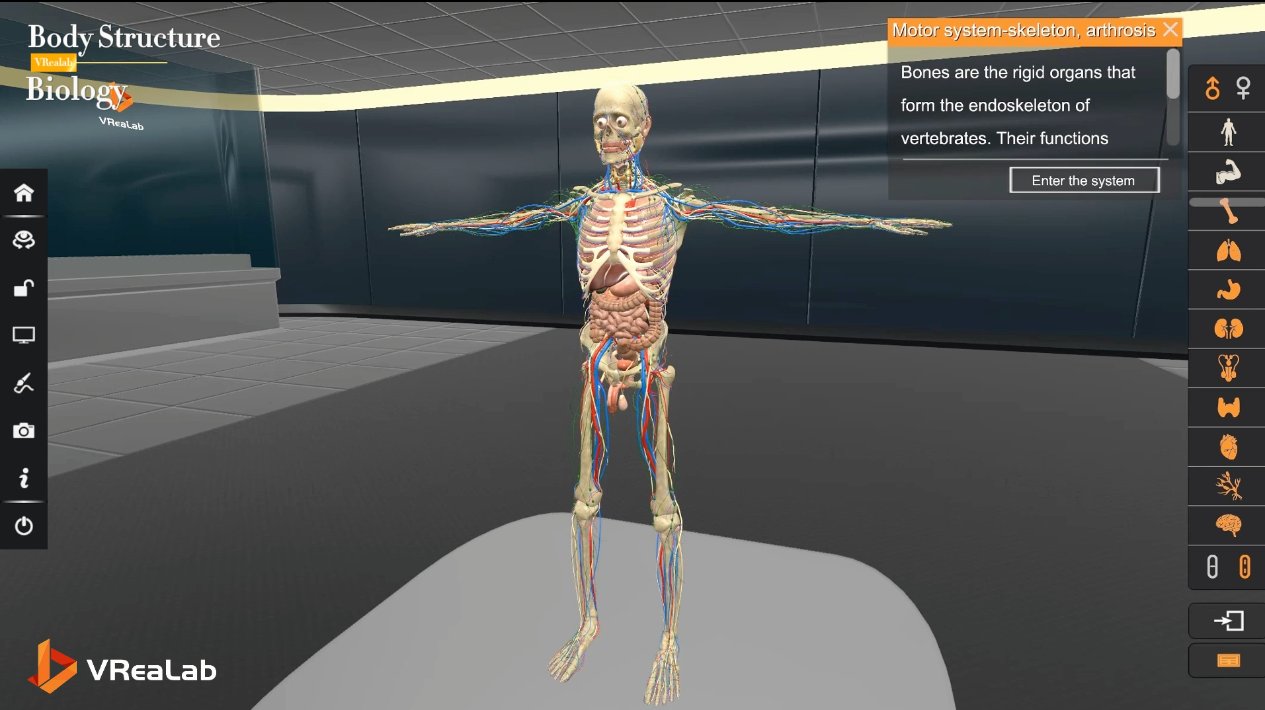
Designed as a comprehensive Human Body Systems 3D Model, the VReaLab platform covers nine major body systems with complete structural representation and detailed organ visualization. From the rhythmic beating of the heart to the intricate signaling of nerve cells, every aspect of human biology is brought to life through dynamic 3D animations. This is biology interactive learning at its finest — where students do not merely read about the body, but step inside it, manipulate it, and truly understand it.
What VR/3D Changes in Biology Body Structure Learning
Traditional biology education has long struggled with a fundamental limitation: the gap between what students can see in a textbook and what actually happens inside a living human body. VReaLab addresses this gap through four transformative capabilities that redefine what a Human Body Systems 3D Model can do for the classroom.
Comprehensive Anatomical Coverage. The platform spans nine major human body systems — including the circulatory, respiratory, digestive, musculoskeletal, and nervous systems — offering complete structural representation and detailed organ visualization. This 3D anatomy of the human body goes far beyond what any textbook or physical model can provide, allowing students to see how every organ fits within the broader context of the body.
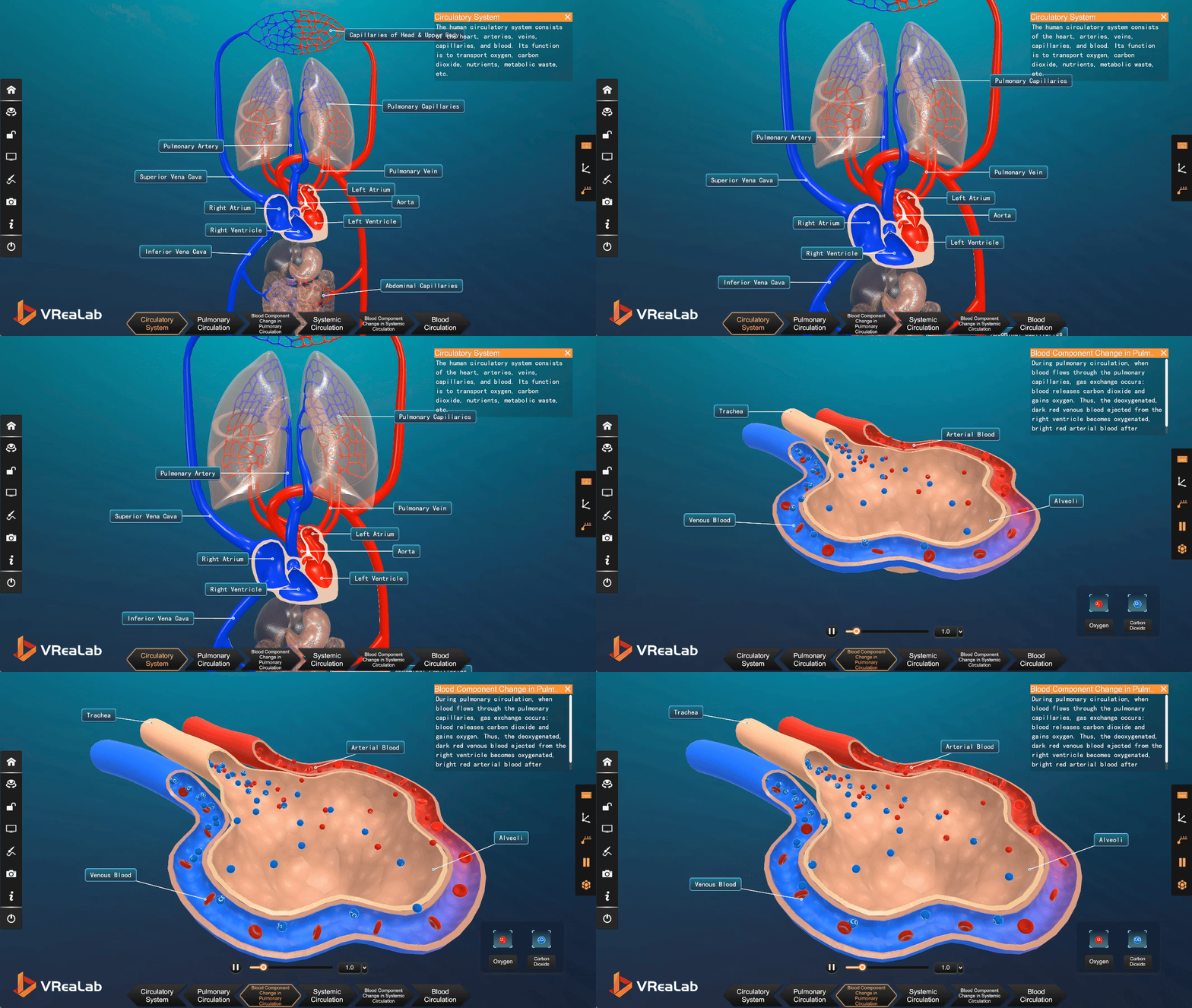
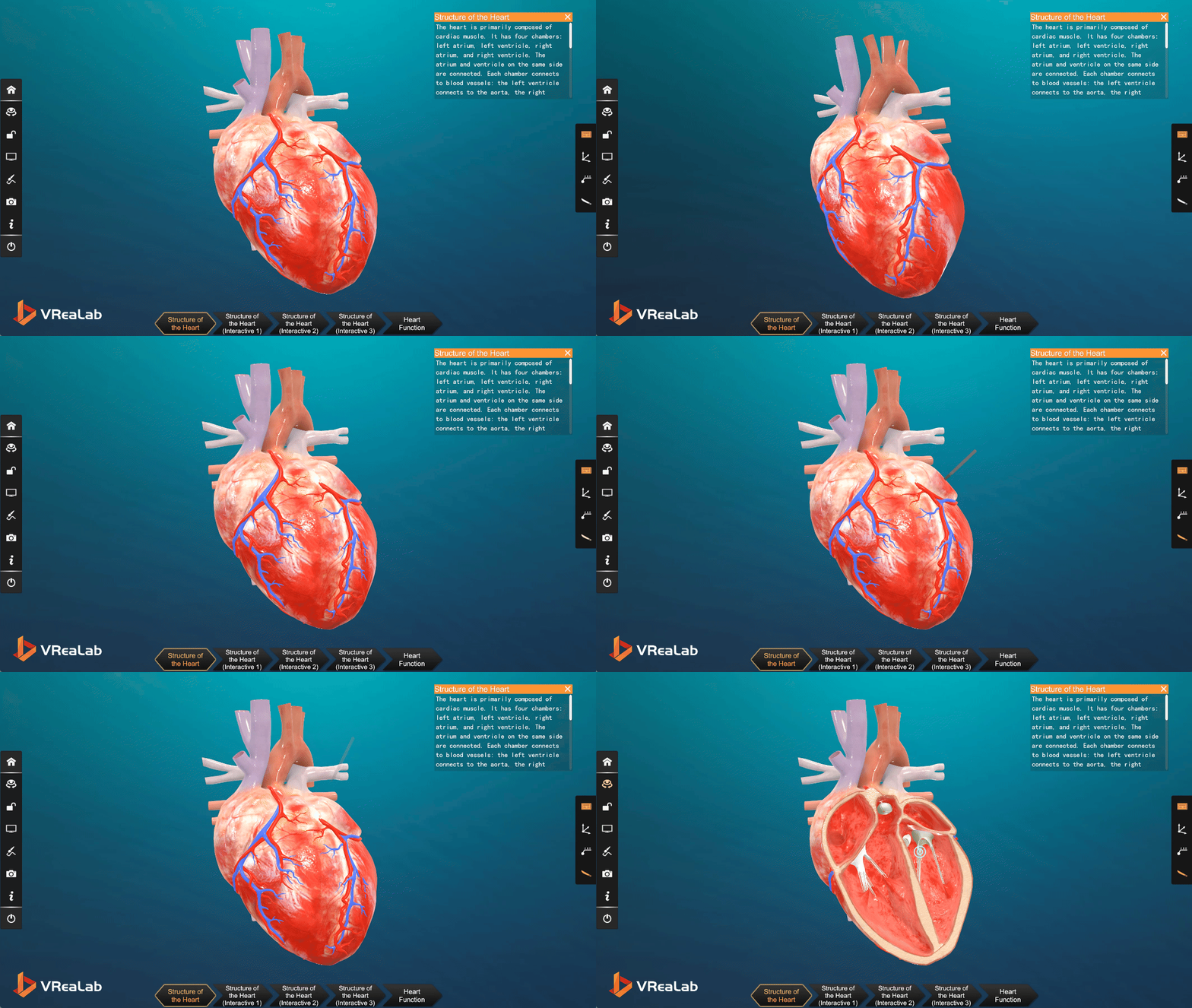
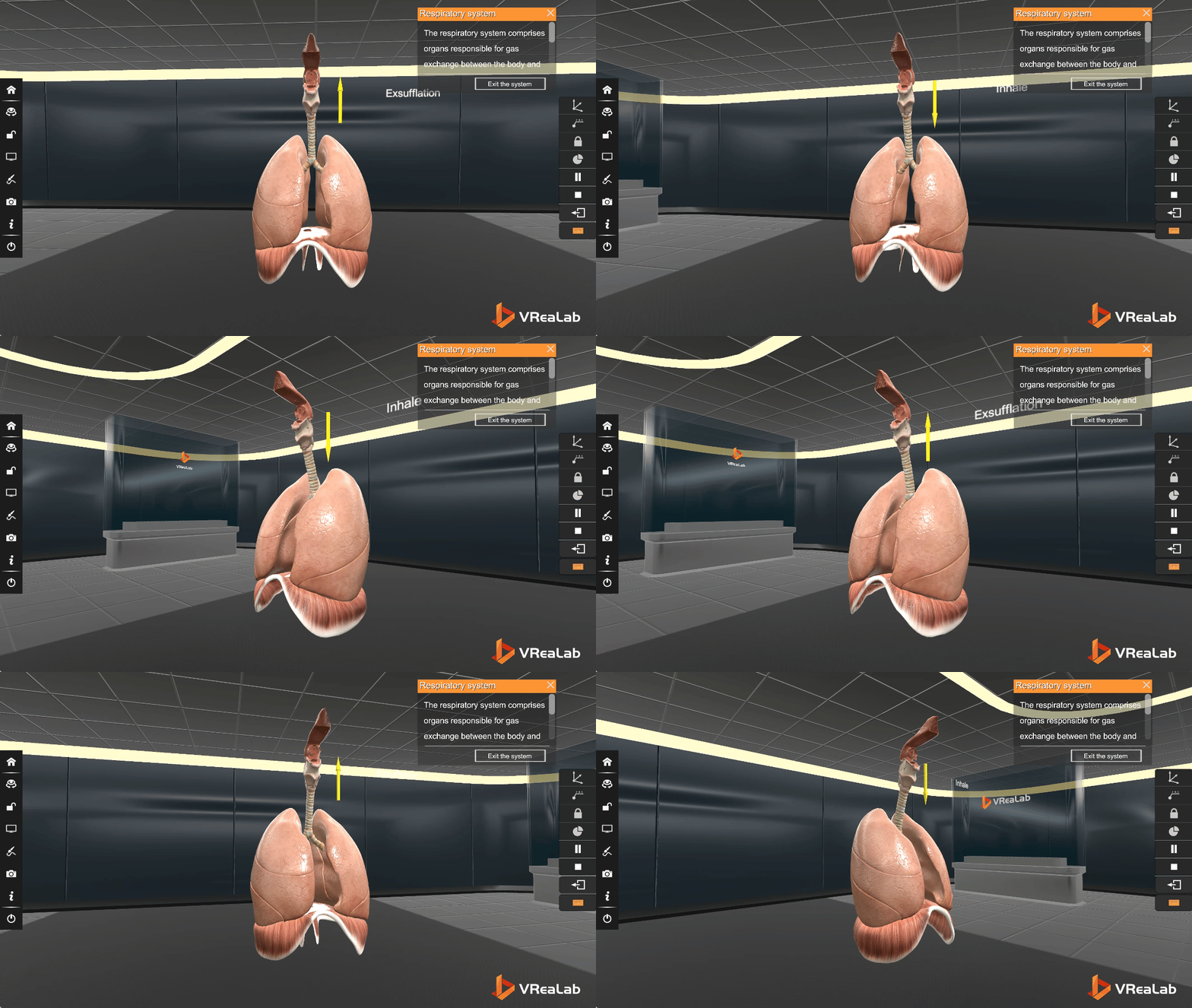
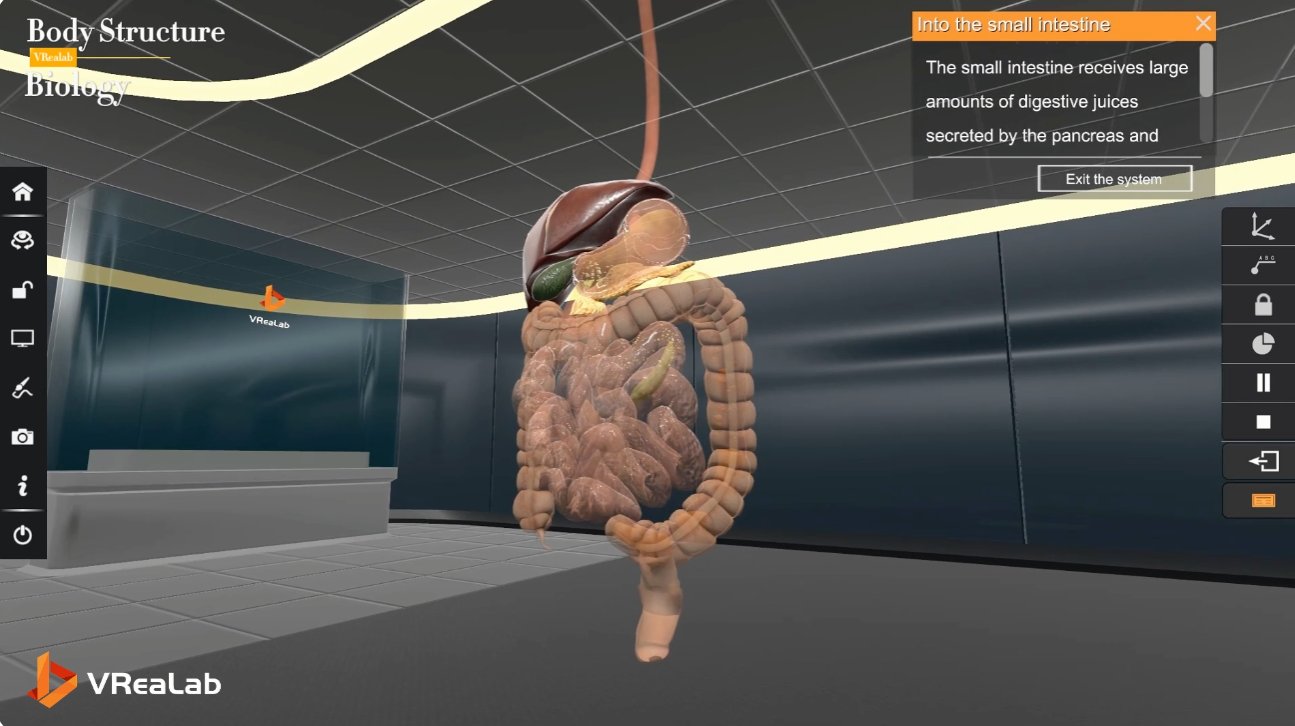
Dynamic Mechanism Understanding. Key physiological activities such as breathing, digestion, and cardiac function are presented through dynamic 3D animations. Students can watch the heart pump blood in real time, trace the path of food through the digestive tract, and observe gas exchange in the lungs — transforming static knowledge into living understanding through biology interactive learning experiences.
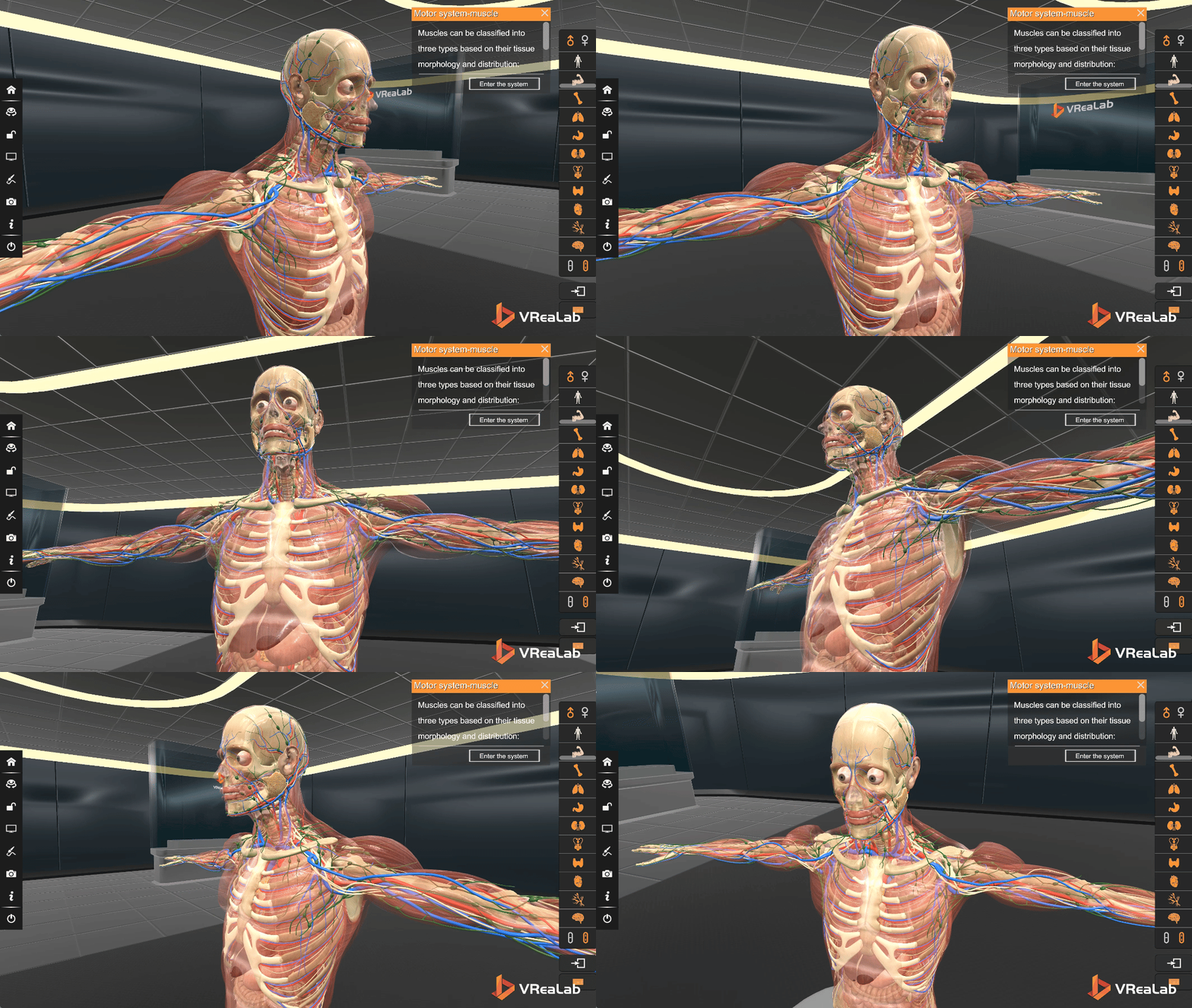
Immersive & Interactive Learning. The system supports organ transparency adjustment, multi-layer structural observation, and system selection, enabling students to peel back layers of the body like pages in a book. Want to see the relationship between the ribcage and the lungs? Make the bones transparent. Curious about how blood vessels weave through every organ? Highlight the circulatory system. This level of interactivity makes the VReaLab platform the ultimate 3D anatomy of the human body for curious young minds.
Accessible & Understandable Concept Bridging. Built-in selection, labeling, drawing, and scene control functions support hands-on inquiry and exploration. Teachers can guide students through structured investigations, while students can freely explore on their own. Every interaction reinforces the connection between structure and function — the central principle that makes biology interactive learning so deeply effective.
Three Thematic Pillars: From Cells to Systems
The VReaLab Biology Body Structure curriculum is organized across three progressive themes, forming a complete biology interactive learning pathway that takes students from the microscopic to the macroscopic. As a unified Human Body Systems 3D Model, the platform ensures that every level of biological organization is explored in vivid, interactive detail.
Human Body Systems: How Organs Work Together
Students explore how different organs collaborate to support essential bodily functions, including circulation, respiration, digestion, movement, and coordination. In the Digestive System module, learners follow food as it travels through the mouth, esophagus, stomach, and intestines — observing mechanical and chemical breakdown, nutrient absorption, and energy conversion in real time. The key advantage is gaining a whole-body perspective: students visualize how organs and systems work together to support life, building the kind of integrated understanding that is the hallmark of authentic 3D anatomy of the human body education.
Human Organs: Structure, Function, and Interconnection
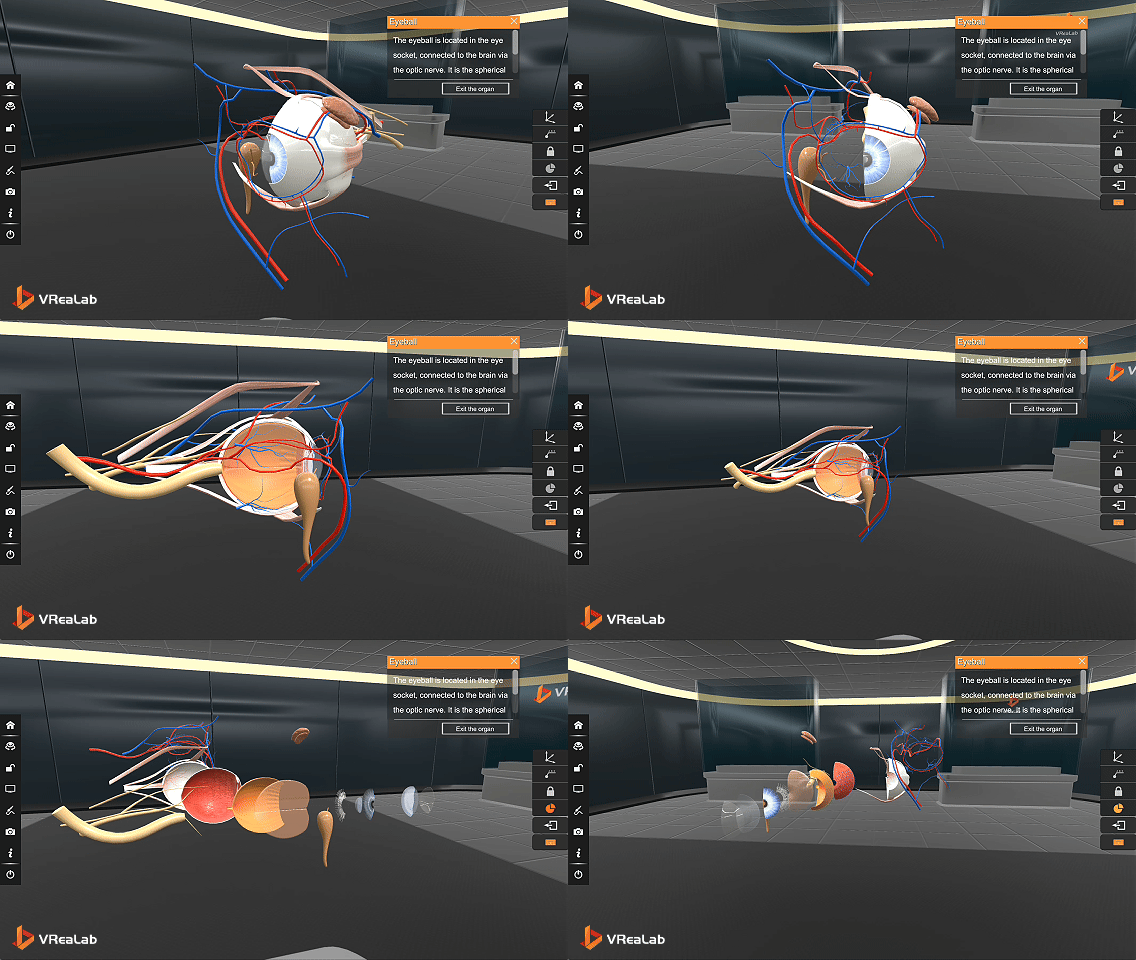
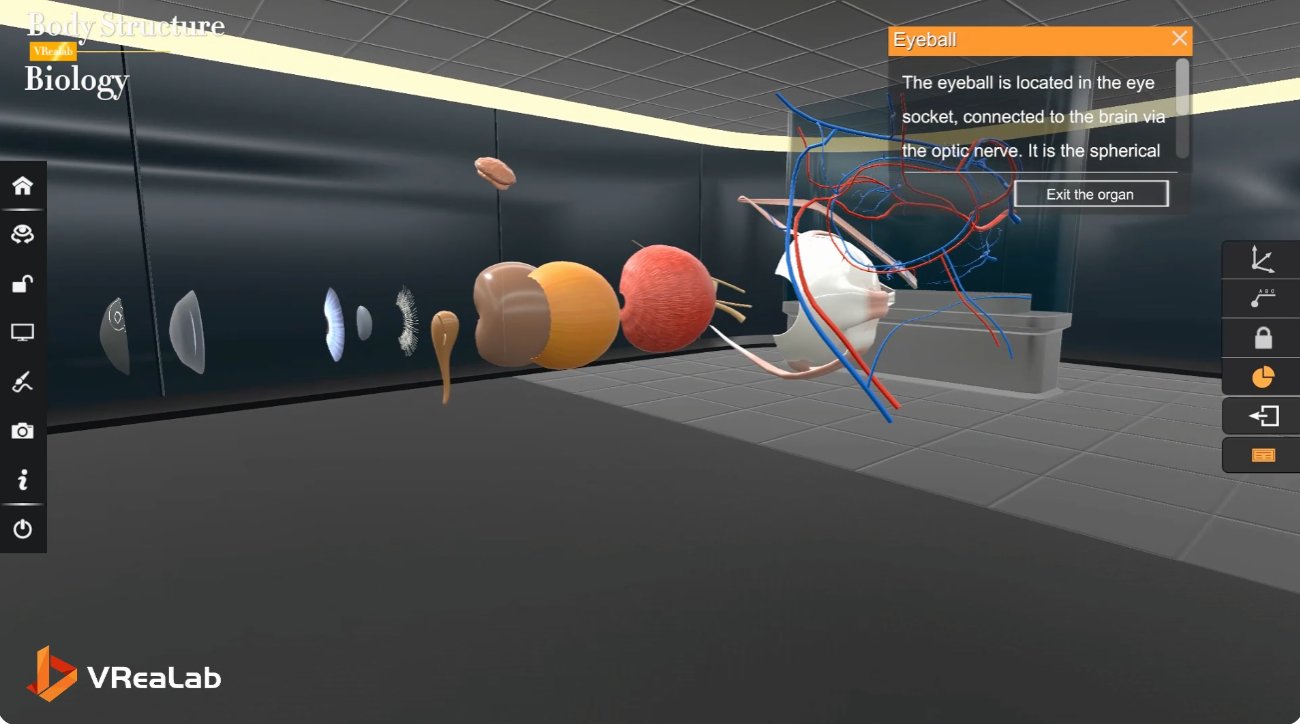
This theme zooms in on major organs — the heart, lungs, brain, stomach, and liver — revealing their internal structures and explaining their roles in maintaining life. In the Structure of the Eyeball module, students discover how the cornea, lens, retina, and optic nerve work in concert to produce vision. By exploring major organs in immersive 3D, learners gain an intuitive grasp of the relationship between organ structure and function — a connection that biology interactive learning makes not just understandable, but unforgettable. This is precisely where a Human Body Systems 3D Model shines: turning flat textbook illustrations into explorable, multi-angle 3D experiences.
Human Tissues and Cells: The Building Blocks of Life
At the most fundamental level, students discover how cells form tissues, how tissues form organs, and how these structures support overall body function. The Nerve Cells module brings microscopic cell structures into clear 3D view, showing how neurons transmit signals across synapses to support communication throughout the body. This progression — from cells to tissues to organs to systems — provides a complete biology interactive learning journey that helps students build a coherent mental model of the 3D anatomy of the human body, from the smallest building block to the most complex system.
Redefining Biology Education: From Passive Lessons to Active Exploration
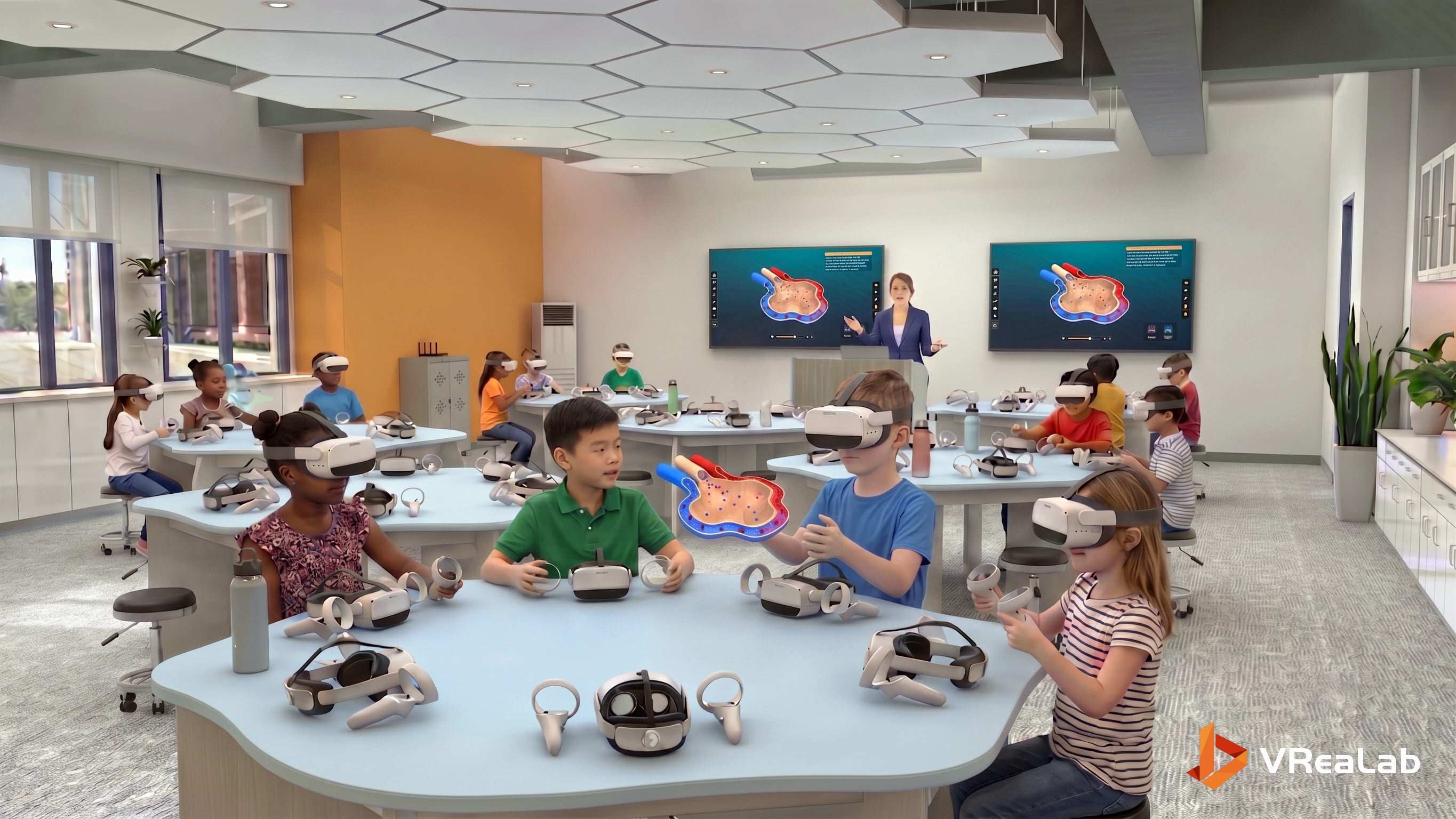
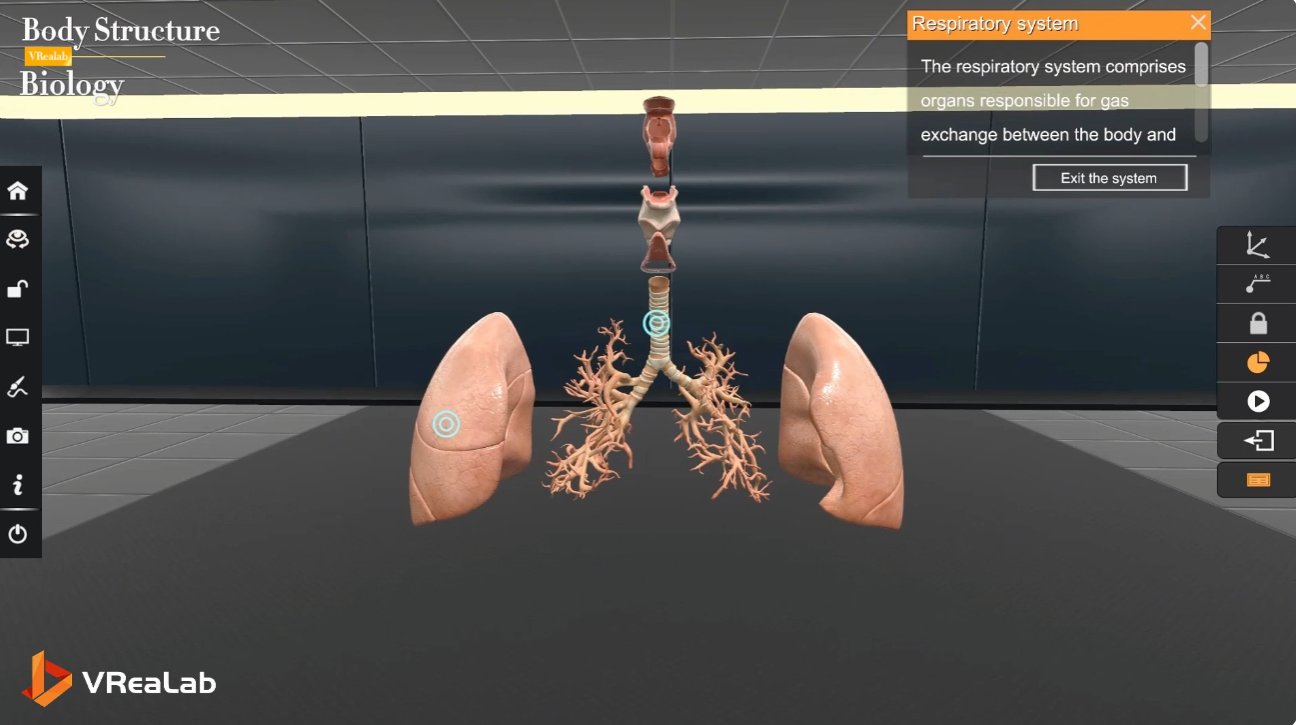
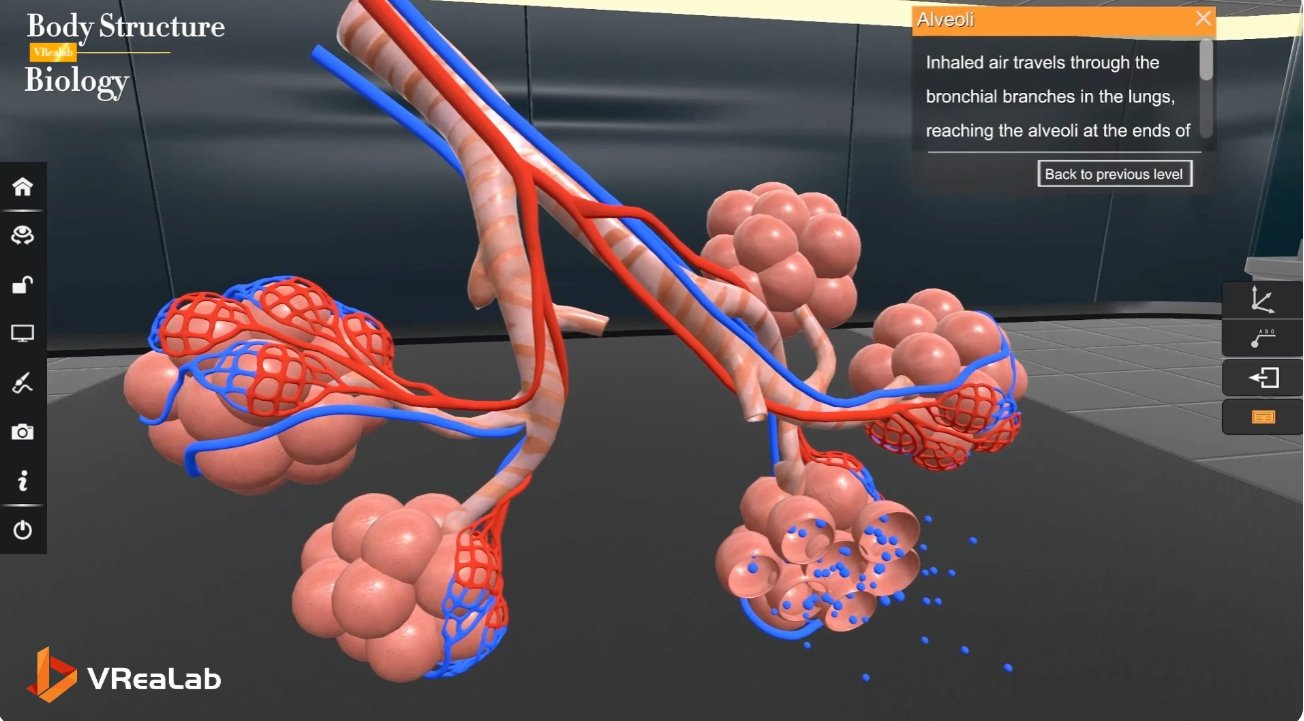
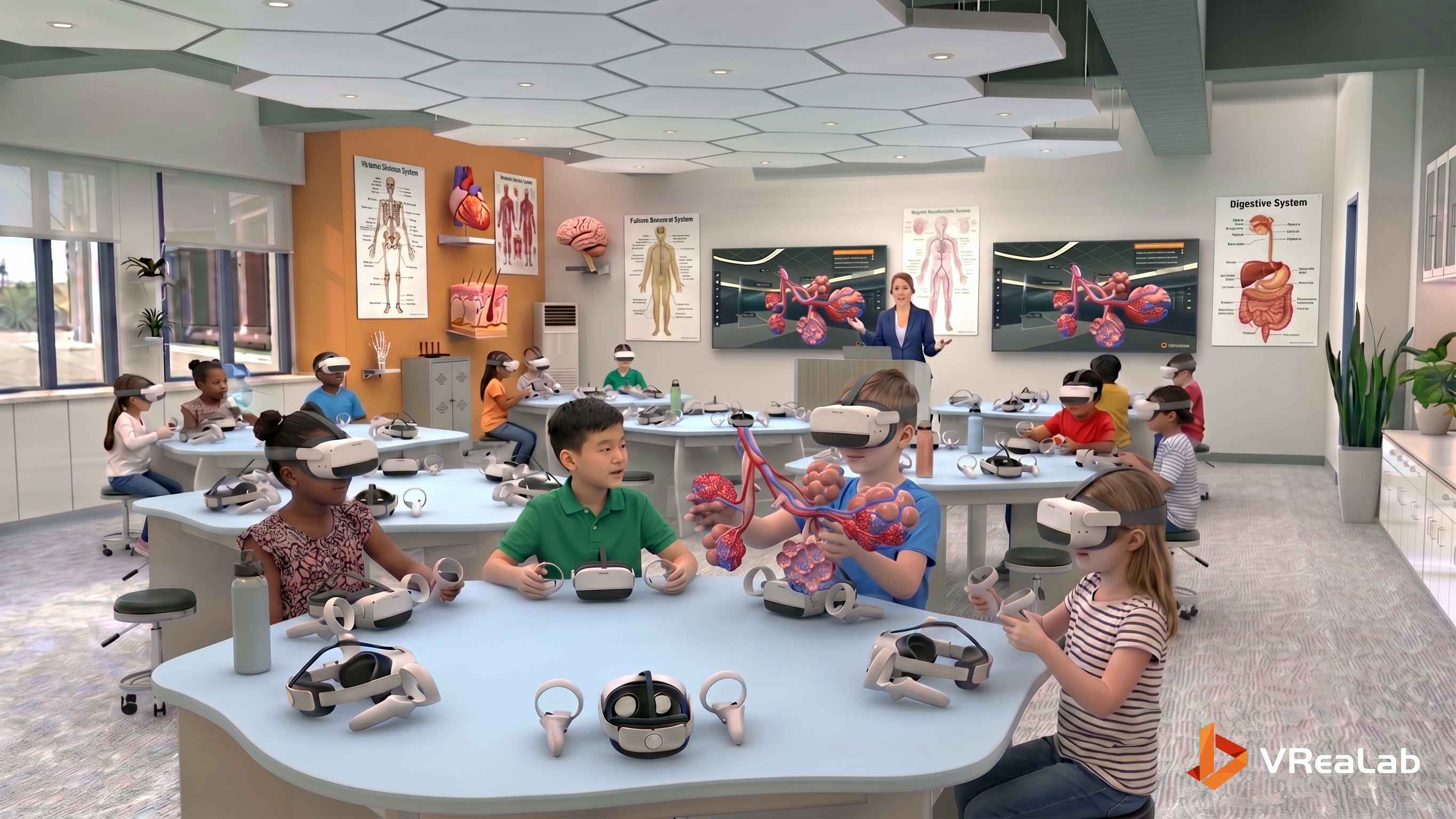
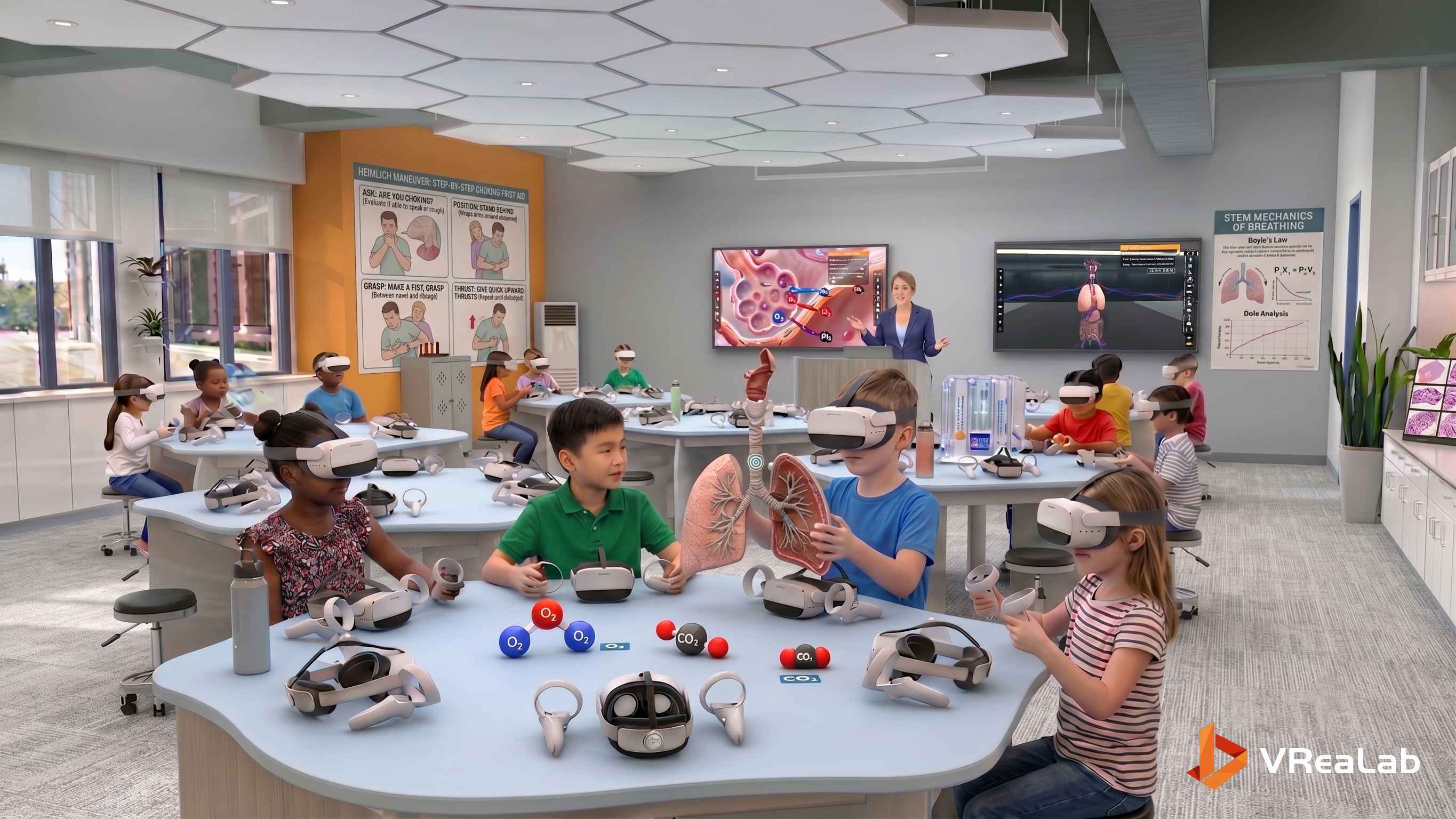
One of the most compelling demonstrations of VReaLab's power is the Respiratory System module. In this immersive VR/3D classroom, students step beyond the textbook and dive directly into the human body. Equipped with VR/3D headsets, young learners can interact with highly detailed holographic models of the respiratory system right at their desks — tracing the path of air from the nasal cavity, down the trachea, through the branching bronchi, and into the delicate alveoli where gas exchange occurs.
But VReaLab goes even further. The platform also features a unique VR/3D Respiratory Health and Heimlich Rescue Practice module, where students learn crucial life-saving skills in a safe, controlled virtual environment. By actively manipulating holographic lung models and molecular structures, students gain a deep, hands-on understanding of the respiratory system while developing practical health literacy. This is the essence of biology interactive learning — knowledge that is not just memorized for an exam, but internalized for life.
The Educational Value: Why This Matters
The introduction of VReaLab Biology Body Structure represents a paradigm shift in how we teach human anatomy. For decades, biology educators have relied on a limited toolkit: static diagrams, plastic models, and occasional dissection labs. Each of these tools has value, but none of them can convey the dynamic, interconnected nature of the human body. A Human Body Systems 3D Model, by contrast, captures precisely what the others miss — motion, relationship, and the unfolding of physiological processes over time.
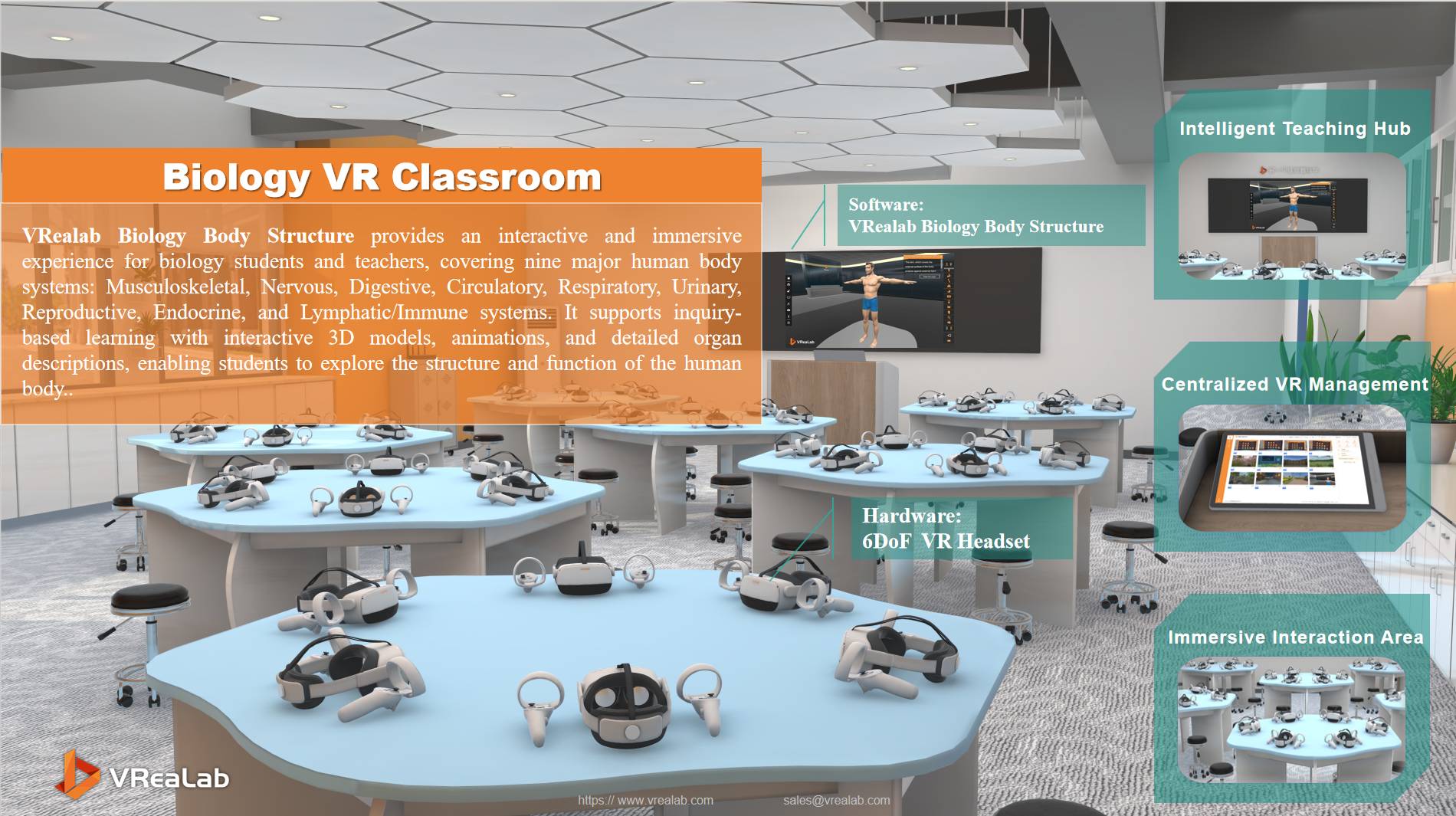
The benefits extend across every stakeholder. For students, the 3D anatomy of the human body becomes tangible and personal — not a collection of Latin names to memorize, but a living map of their own physical existence. For teachers, the platform reduces preparation time while dramatically expanding what can be taught in a single lesson. For schools, the biology interactive learning platform provides a scalable, reusable, and always-available resource that never wears out or needs replenishment.
Equity in science education is another critical dimension. Not every school can afford a fully equipped biology laboratory, and not every community has access to cadaver dissection programs or advanced anatomical models. VReaLab democratizes access to high-quality anatomy education, ensuring that every student — regardless of socioeconomic background — can experience a complete 3D anatomy of the human body. The platform's Human Body Systems 3D Model is available to all, turning biology interactive learning from a privilege into a right.
Conclusion
VReaLab Biology Body Structure is more than an educational tool — it is a gateway to understanding the most personal subject any student will ever study: their own body. By combining comprehensive anatomical coverage with dynamic 3D animations, immersive interactivity, and accessible inquiry tools, the platform delivers a Human Body Systems 3D Model that transforms biology education from passive memorization into active discovery. Whether exploring the digestive system's coordinated dance, peering into the microscopic world of nerve cells, or practicing life-saving Heimlich maneuvers, students engaged in biology interactive learning are not just studying the human body — they are experiencing it. And that experience, more than any textbook could ever provide, is what turns curiosity into knowledge and knowledge into lasting understanding.
Source: Word document uploaded by user