Award-Winning Lesson: Dual-Track Blended Learning for Human Respiration in Middle School Biology
How a Nanjing middle school teacher won a city-level education award by combining VR Biology Lab with hands-on experiments. This dual-track model uses the virtual eye to reveal what's invisible and real hands-on experience to build scientific intuition — proving that virtual and physical learning complement rather than replace each other.
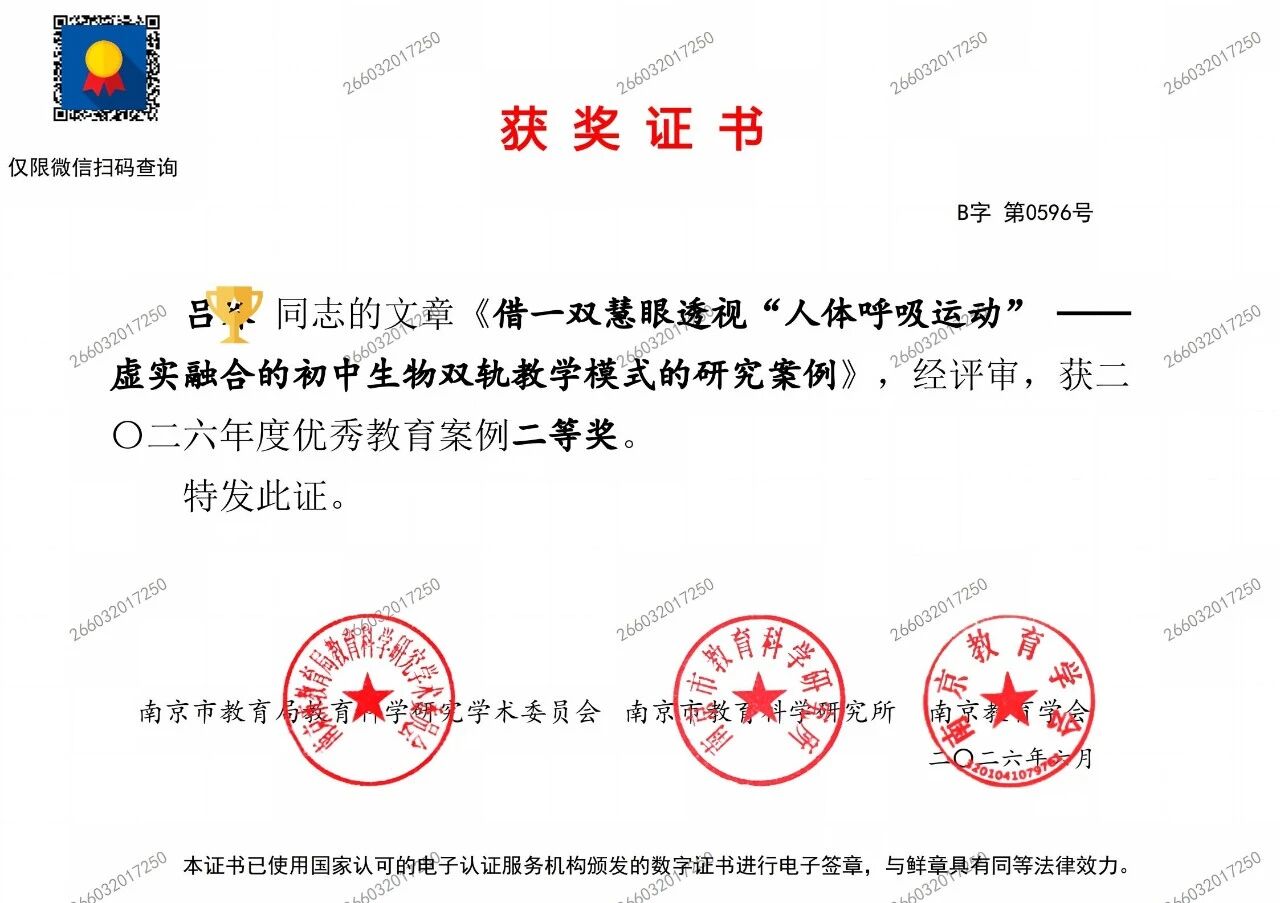
In the 2026 Nanjing Excellent Education Cases and Educational Narratives Selection, Teacher Lv from Nanjing Zhonghua Middle School was awarded Second Prize for Outstanding Educational Case. Her research paper, titled "Lending a Pair of Insightful Eyes: A Case Study of Dual-Track Blended Teaching in Middle School Biology Through Virtual-Real Integration of Human Respiratory Movement," was recognized in a selection jointly organized by the Nanjing Education Bureau's Academic Committee for Educational Research, the Nanjing Institute of Educational Science, and the Nanjing Education Society — an authoritative and influential annual event in Nanjing's educational research community.
Blended Dual-Track Teaching: VR + Biology
In recent years, Teacher Lv has grounded her research in actual teaching practice, turning real problems from daily classrooms into educational cases that can be discussed, documented, and replicated. The dual-track blended teaching model for middle school biology is a vivid illustration of the principle: "Every regular class is worth studying."
Track 1 — The Virtual "Eye."
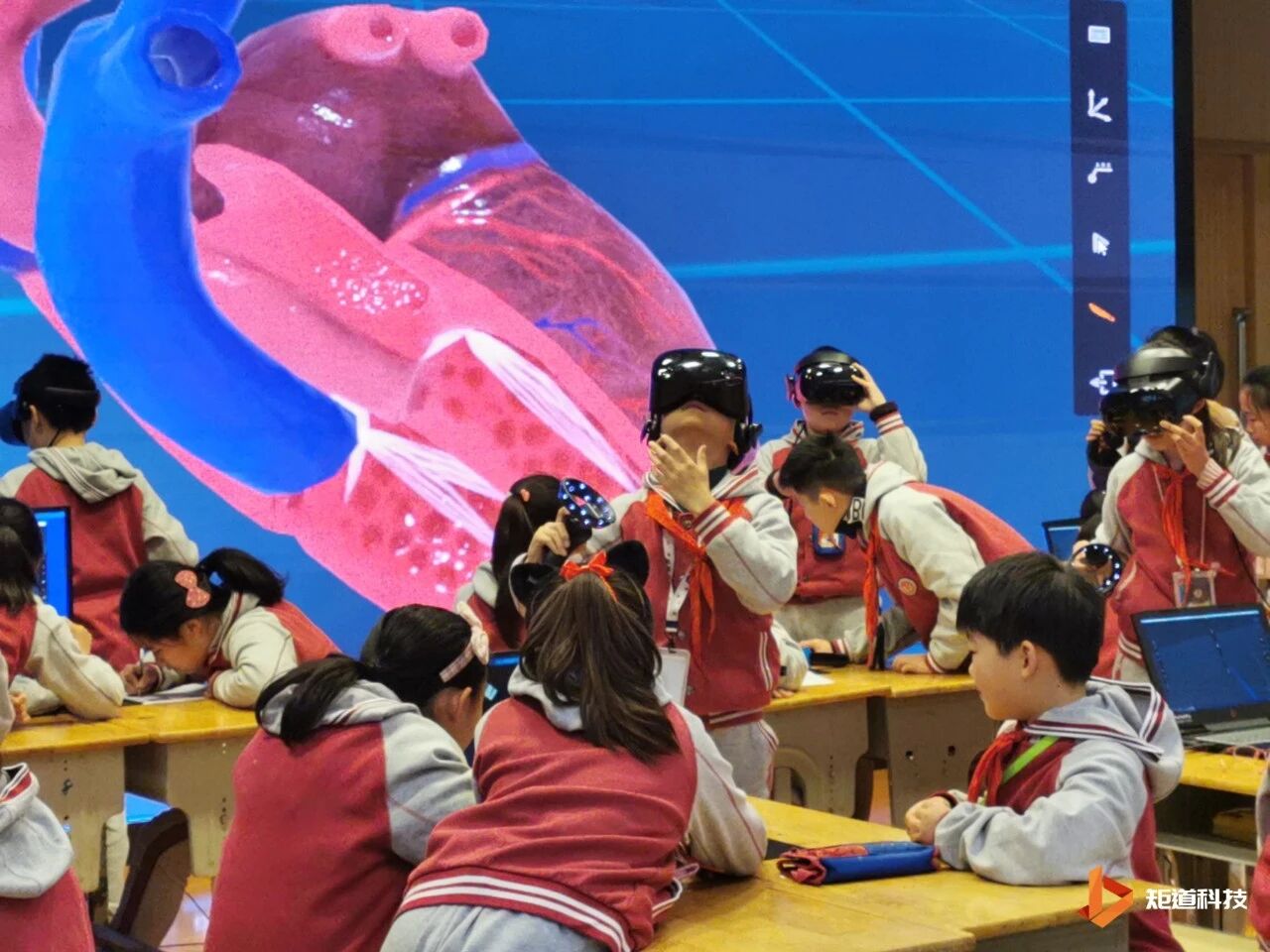
Through the respiratory system and simulated breathing mechanics in the VR Biology Lab, students can freely rotate and zoom their perspective, slow down the breathing movement, pause it, and replay it repeatedly. They see how the diaphragm descends, how the ribs lift, how the thoracic volume changes, and how the intrapulmonary pressure shifts accordingly. What used to require mental imagination becomes a manipulable exploration process. Students are no longer passive recipients of conclusions — they become researchers who can "try it, see it, and compare it" for themselves.
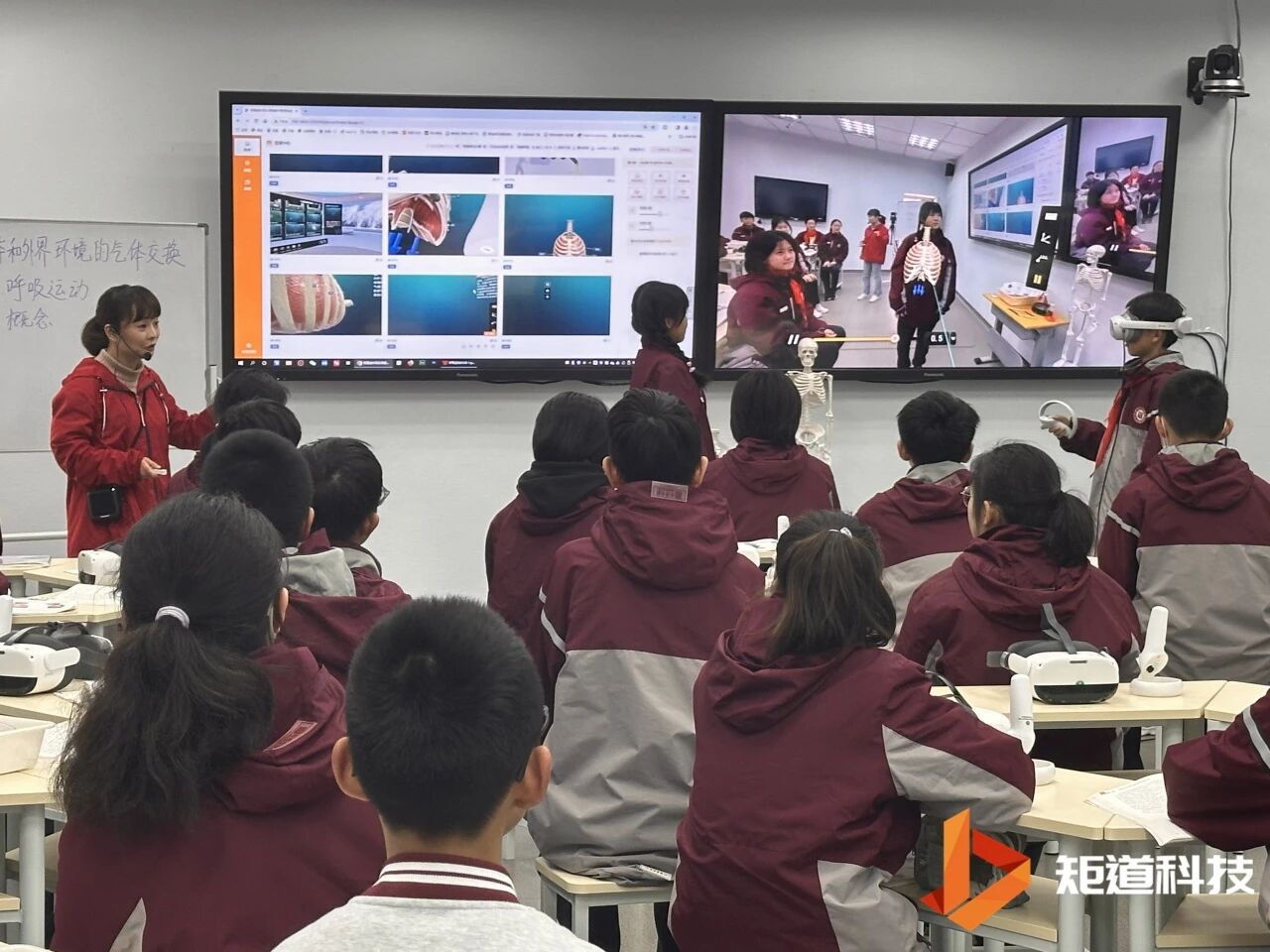
Track 2 — The Real "Hands."
However vivid the virtual world may be, it cannot replace the body's direct perception of the world. The case also preserves real experiment and experience components: feeling the rise and fall of the chest during a deep breath, using a simple device to simulate the breathing model — letting the dynamic images on screen and the body's own experiences verify each other.
The two tracks aren't simply "played in sequence." They advance crosswise, mutually confirming each other: first the virtual scenario exposes cognitive conflicts, then students seek evidence through real operations, and finally they return to the virtual model to complete generalization and transfer. In this way, students build a complete thinking path of "phenomenon → evidence → conclusion," rather than relying on mechanical memorization of text.
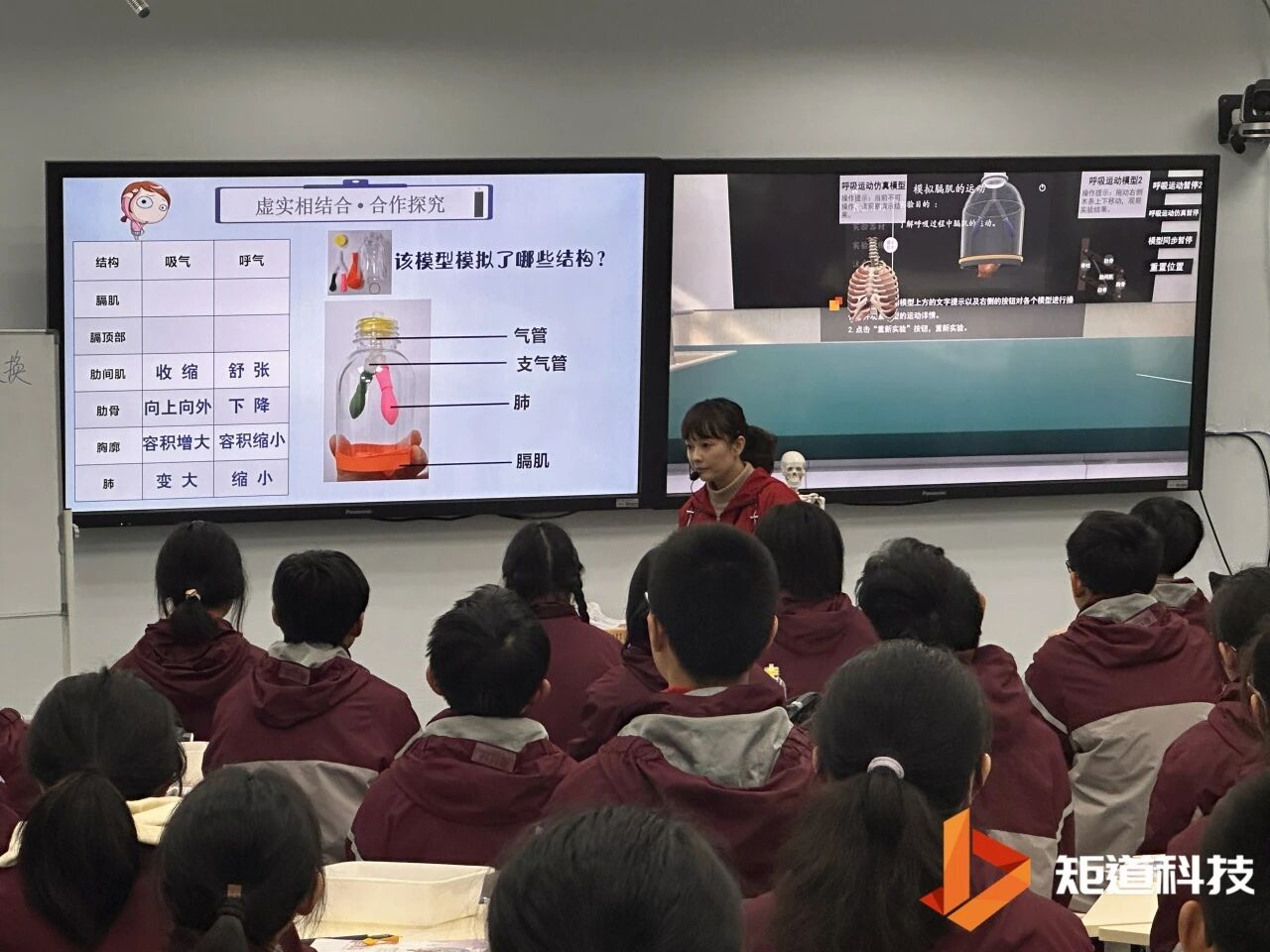
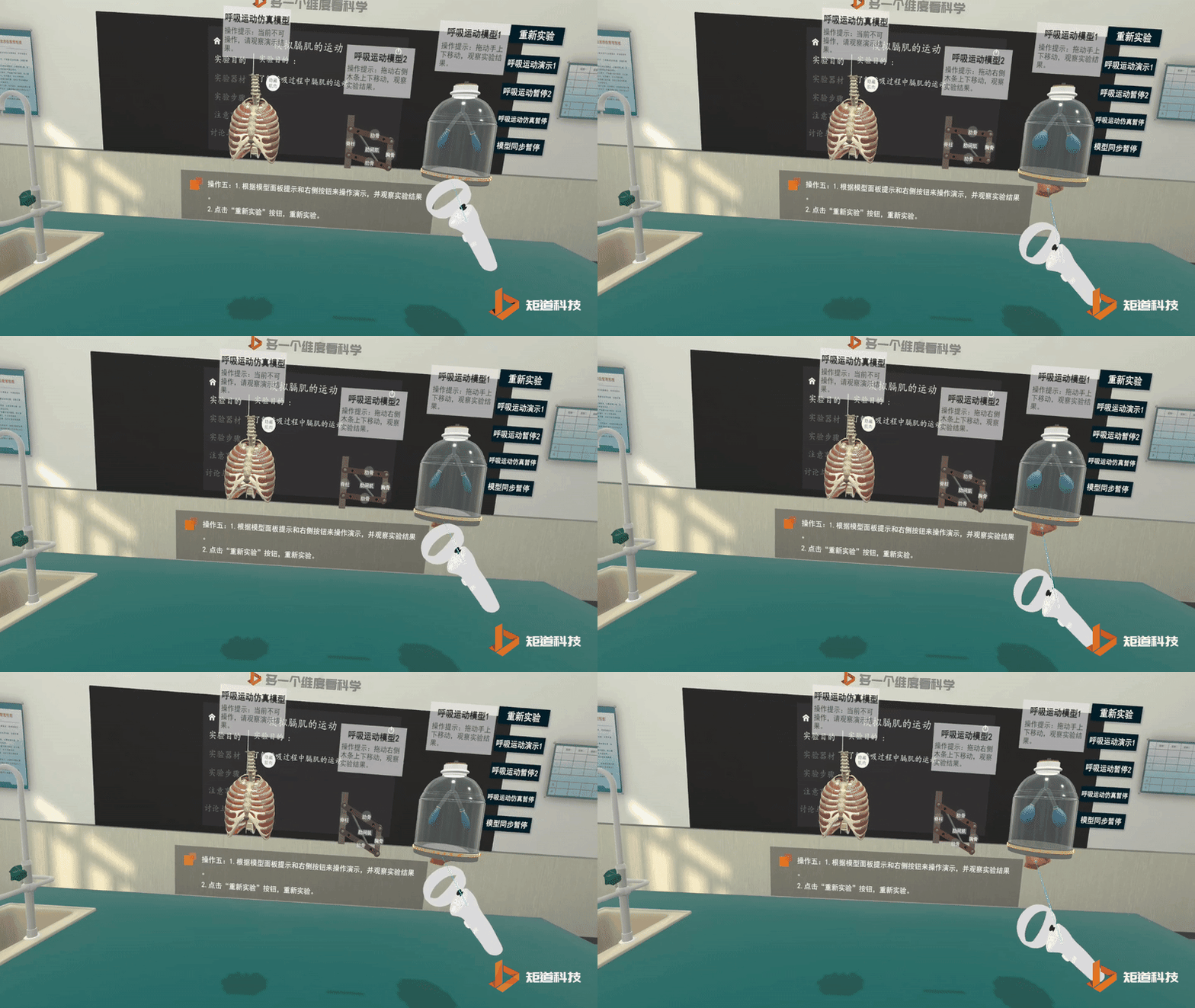
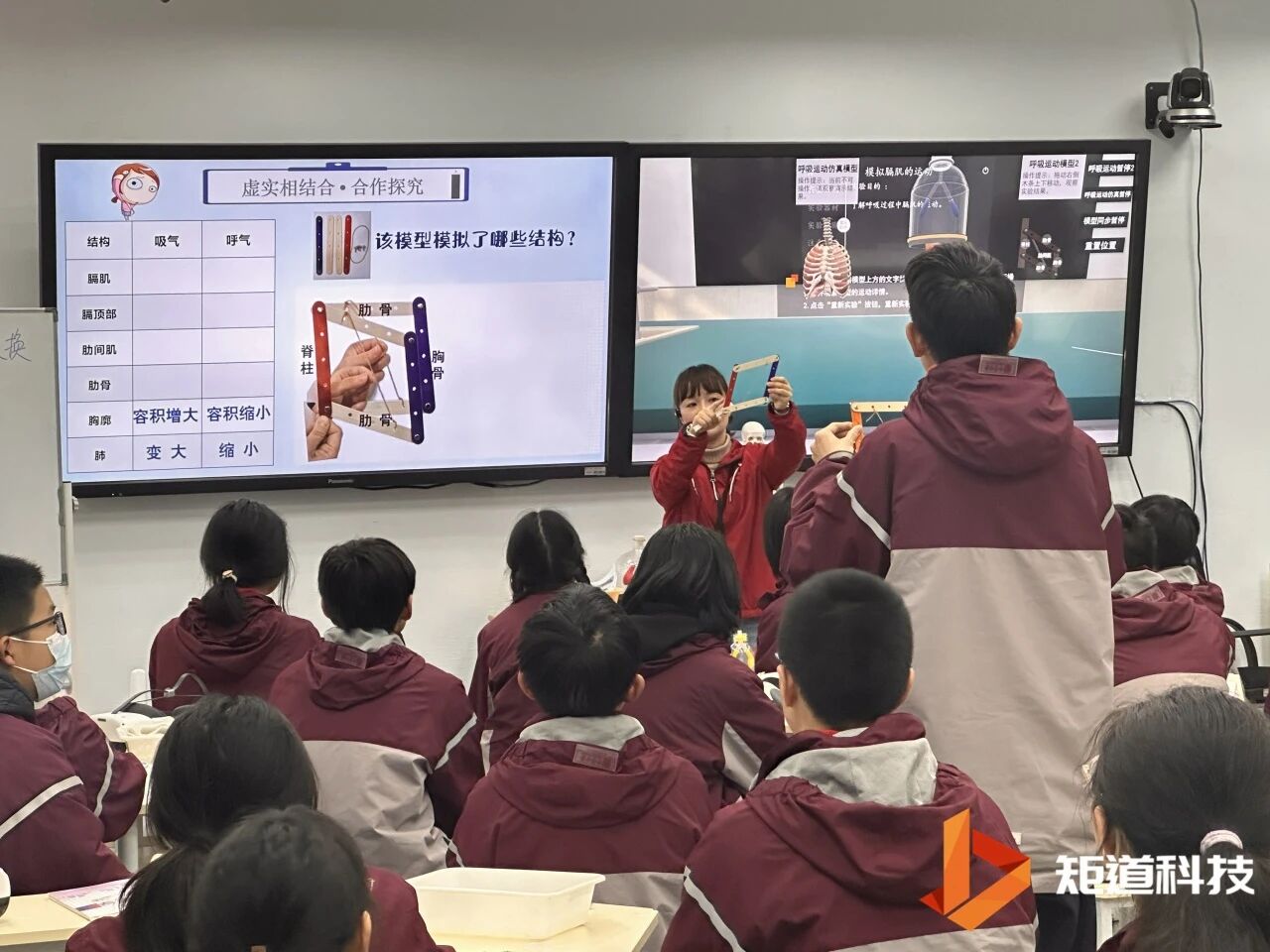
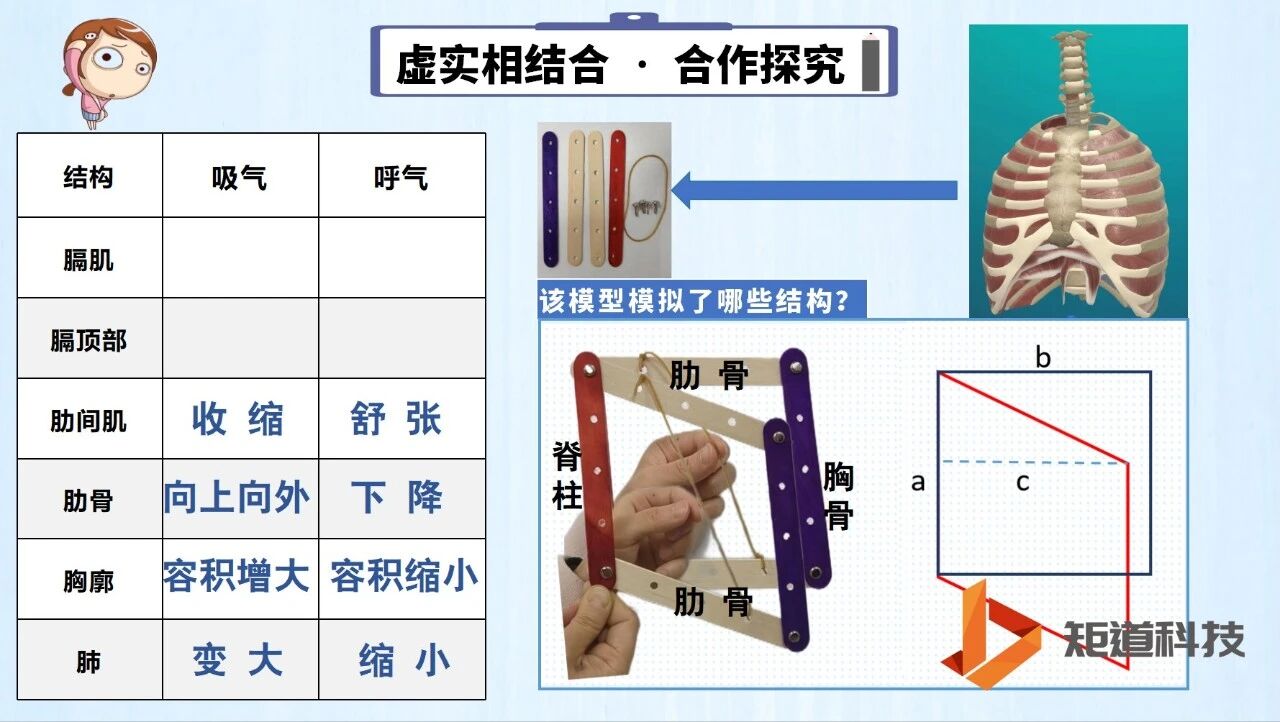
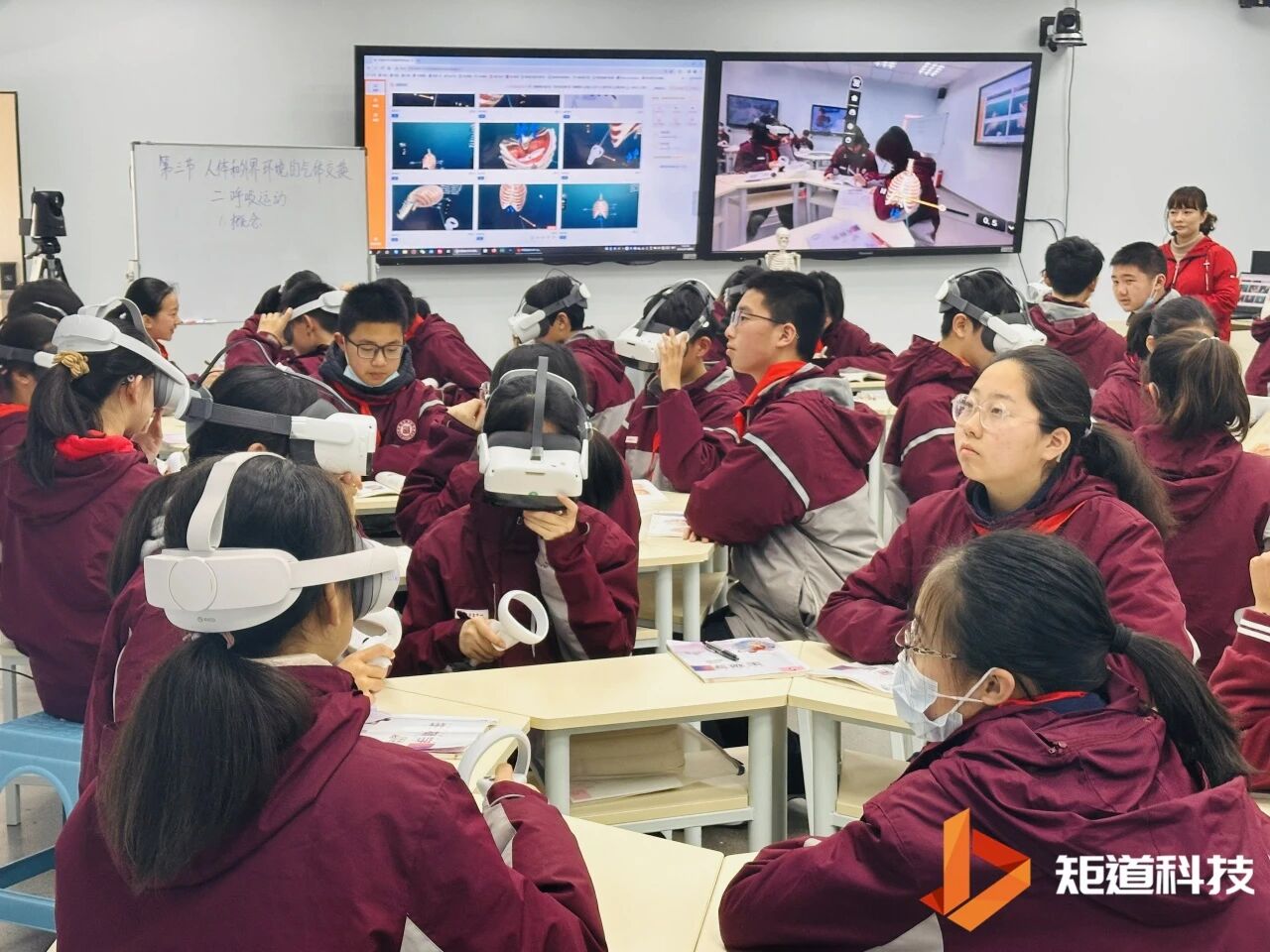
In her teaching practice of Human Respiratory Movement, Teacher Lv integrated the VR classroom solution to achieve transformations in teaching type, teaching methods, instructional approaches, classroom form, and learning space — vividly demonstrating the nature, patterns, and internal relationships of biological phenomena.
Part 1: More Engaging Classroom Context
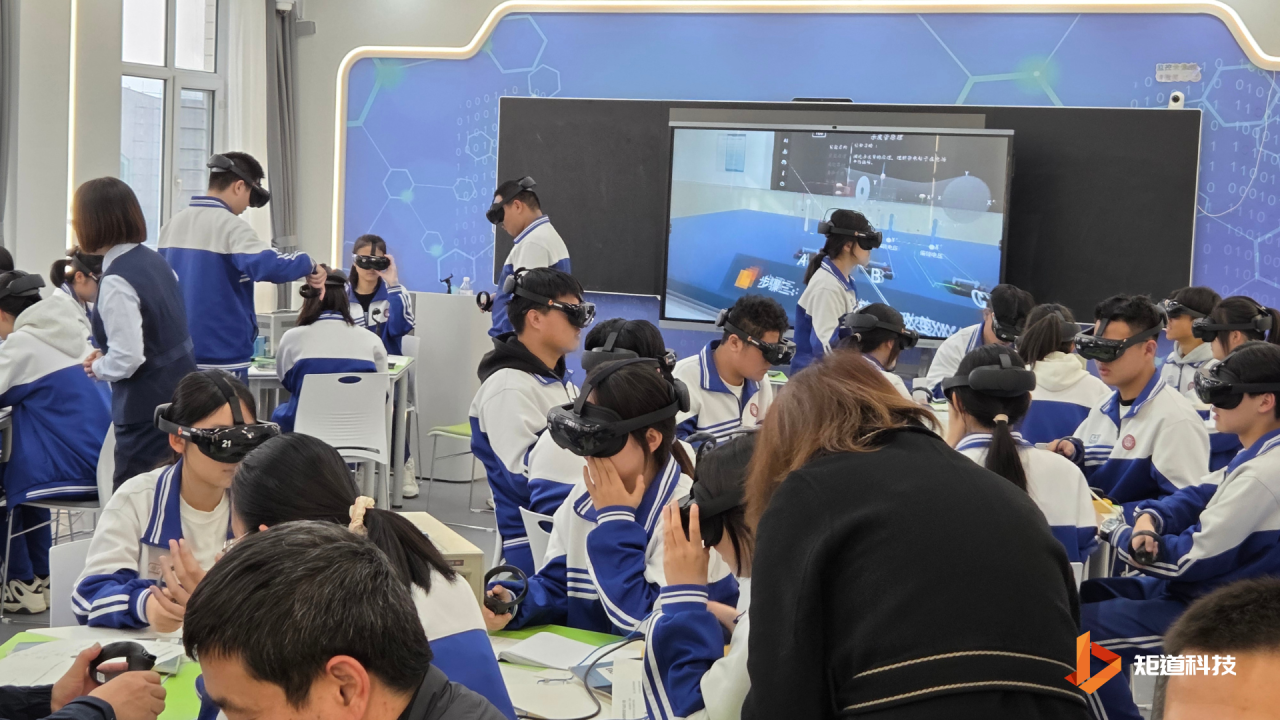
The teacher builds a multi-dimensional immersive classroom using both VR and real-world scenarios, transforming abstract concepts in "breathing movement" that are difficult to directly observe into visible, tangible, interactive objects of inquiry. This helps students intuitively understand life phenomena and shifts the classroom atmosphere from "listening" to "participating."
Part 2: Broader Practical Space
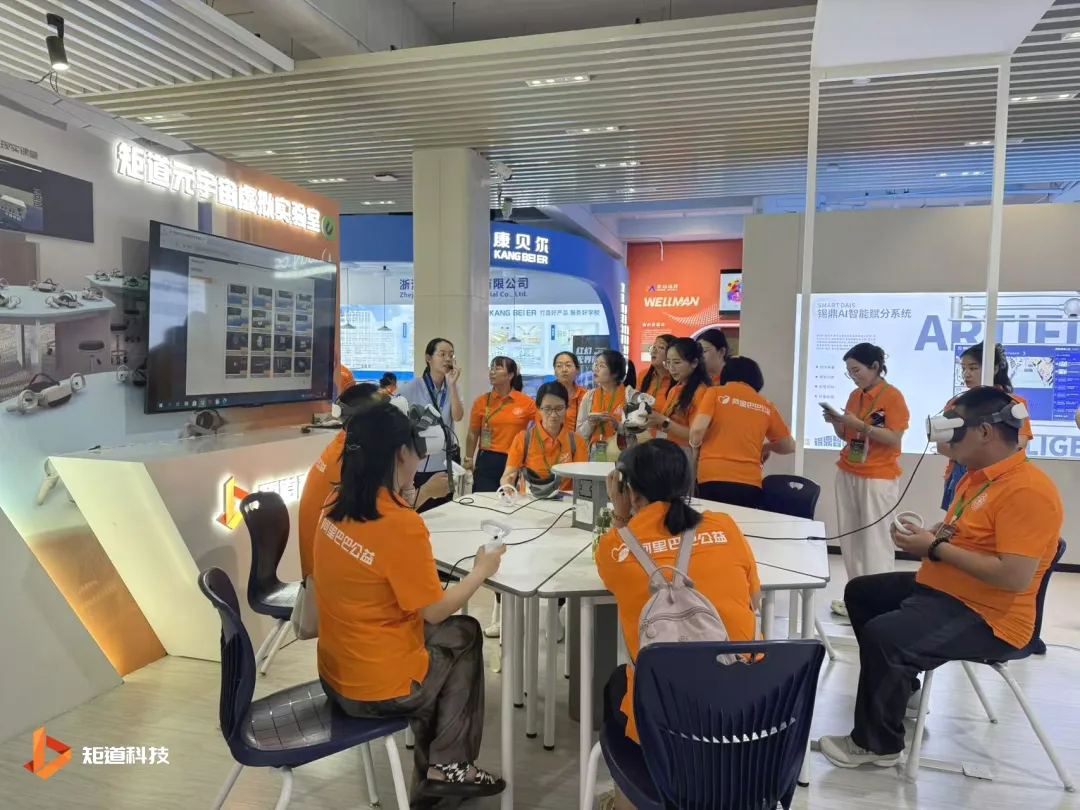
The VR context opens up a broader practical space for the classroom. In the Middle School VR Science Lab, students can operate repeatedly and experiment boldly, turning "invisible" physiological processes into objects of independent exploration. Through hands-on practice, they develop observational and operational skills, and their thinking moves from memorization toward reasoning and creativity.
Part 3: More Solid Learning Outcomes
The blended classroom delivers more solid learning outcomes. Compared with traditional lecture-based approaches, students maintain higher focus and engagement through interaction in the immersive classroom, gaining deeper understanding and smoother knowledge transfer. Higher-order thinking and creative thinking develop simultaneously.
Teacher Lv's exploration is not an isolated "showcase lesson" — it's a replicable teaching sample. What "virtual-real integration" and "dual-track parallelism" respond to is a universal question in today's digital transformation of basic education: when technology enters the classroom, is it meant to replace, or to complement?
This case gives the answer: virtual technology excels at solving observational problems — things you can't see, can't touch, can't do — while real inquiry cultivates experimental skills and scientific attitudes. Each fulfills its own role, and together they form a powerful learning synergy.