Visualizing the Invisible: VR Courses for Learning "Chemistry Material Structure" in High School Chemistry
The high school chemistry elective module 'Chemistry Material Structure' bridges the gap between microscopic particles and macroscopic material properties — yet has long been mired in a dual predicament for teaching and learning. VR courses offer a new pathway out of this impasse.
The high school chemistry elective module 'Chemistry Material Structure' (Compulsory Elective 2) is a core component of the Gaokao selective examination system. Bridging the gap between microscopic particles and macroscopic material properties, it serves as a vital vehicle for cultivating students' core competencies in chemistry. Yet this topic has long been mired in a dual predicament for both teaching and learning: teachers lack intuitive instructional materials and, when faced with microscopic concepts such as electron clouds and chemical bonds, are forced to rely on static board work that fails to convey the underlying principles; students, constrained by their spatial imagination abilities, struggle with abstract theories, resulting in significantly diminished learning efficiency.
The 'Chemistry Material Structure' VR courses within VR Chemistry Lab offers a new pathway out of this impasse. Integrating over 90 VR courses aligned with teaching needs, it transforms the invisible microscopic world into observable, interactive, and visual VR instructional scenarios.
Chemistry VR Courses: Making Microscopic Knowledge "Visible and Comprehensible"
1. Electron Clouds and Atomic Orbitals: From Abstract Models to Dynamic Visualization
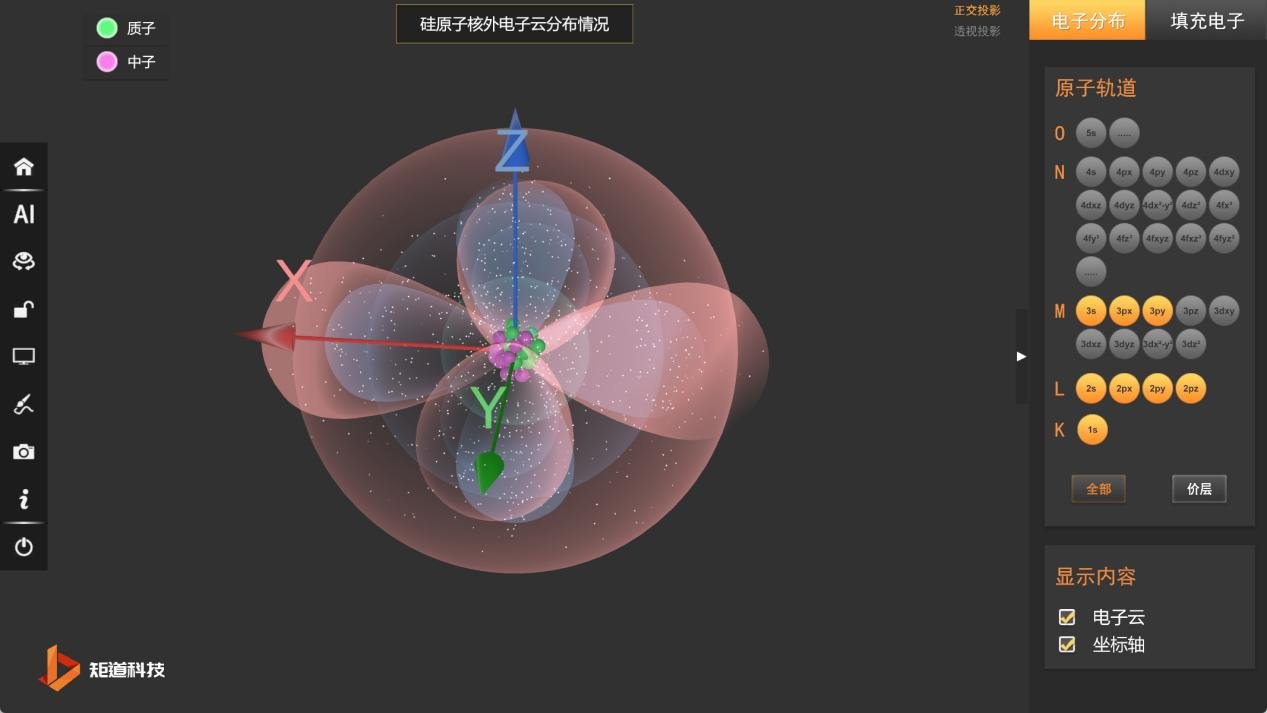
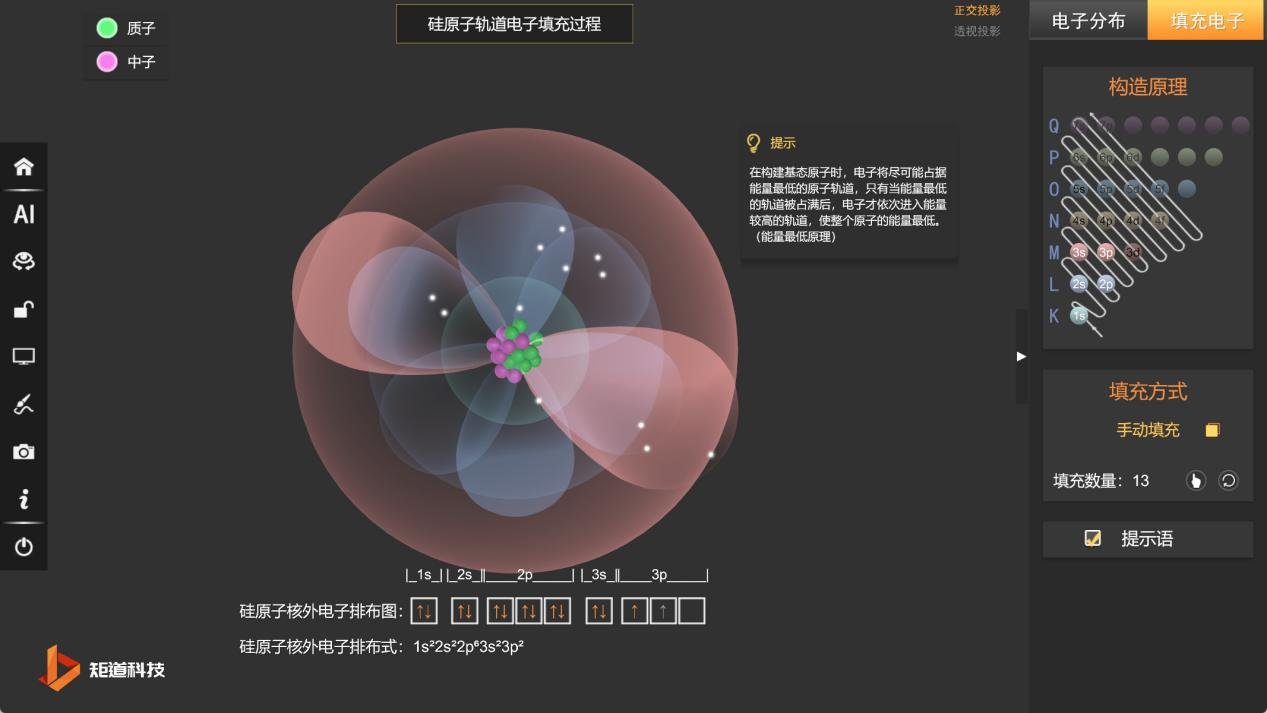
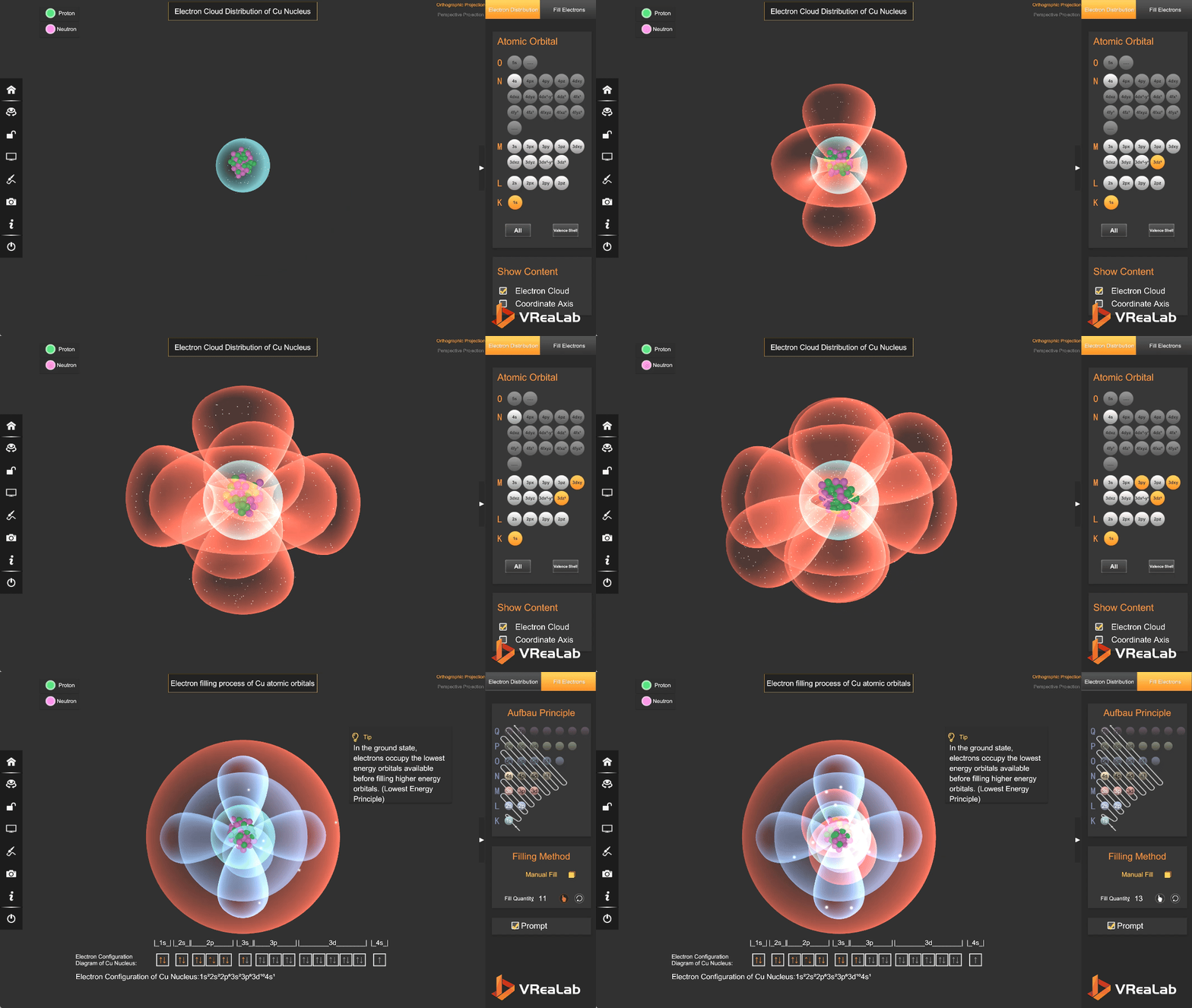
The module covers complete simulation of atomic structure for elements 1 through 40. Students can switch perspectives between transparent and orthographic projection views, clearly observing the shapes of electron clouds at different energy levels — such as the 'dumbbell shape' of 2p orbitals and the 'petal shape' of 3d orbitals. Furthermore, using the 'manual electron filling' function, learners can simulate the process of extranuclear electron configuration. The system provides real-time prompts regarding electron spin directions and the Pauli Exclusion Principle, rendering the abstract uncertainty of electron motion intuitively perceptible — completely eliminating the need for rote memorization.
2. Interparticle Interactions: From Static Diagrams to Process Illustration
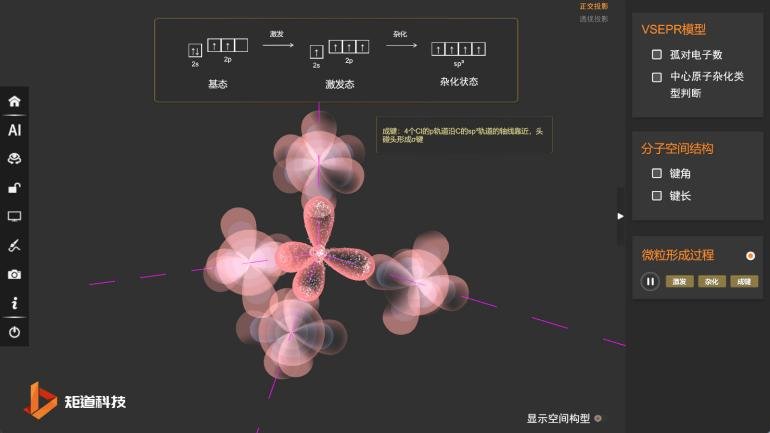
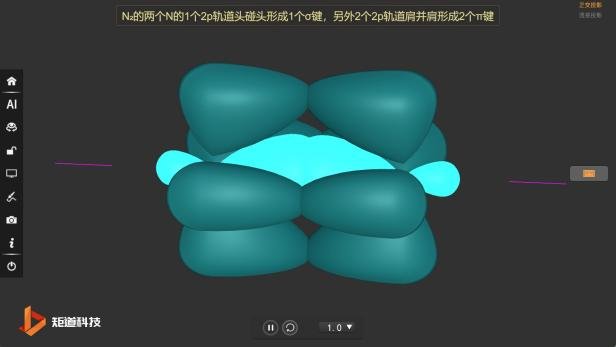
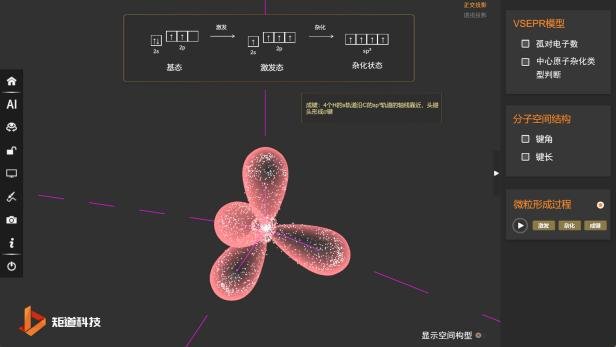
The VR courses faithfully reconstruct the complete process of interparticle interactions. In the covalent bonding module, students can clearly see how a N₂ molecule forms through 'head-to-head' overlap creating one σ bond and 'side-by-side' overlap creating two π bonds. Moreover, the 'recombination-to-bonding' process of hybrid orbitals is visualized, making the logic behind 'sp³ hybridization corresponding to a tetrahedral configuration' immediately apparent.
3. Crystal Structures and Properties: From Two-Dimensional Calculations to Three-Dimensional Exploration
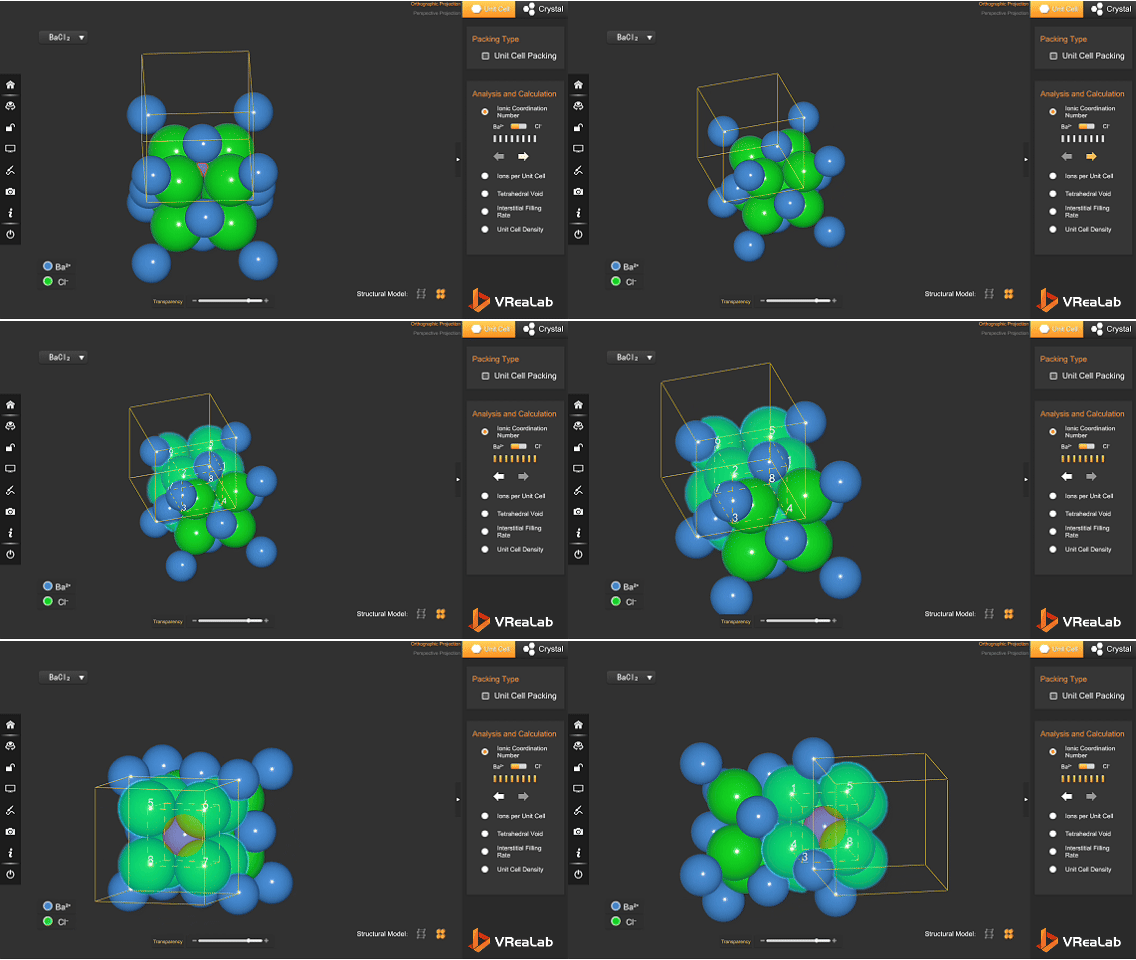
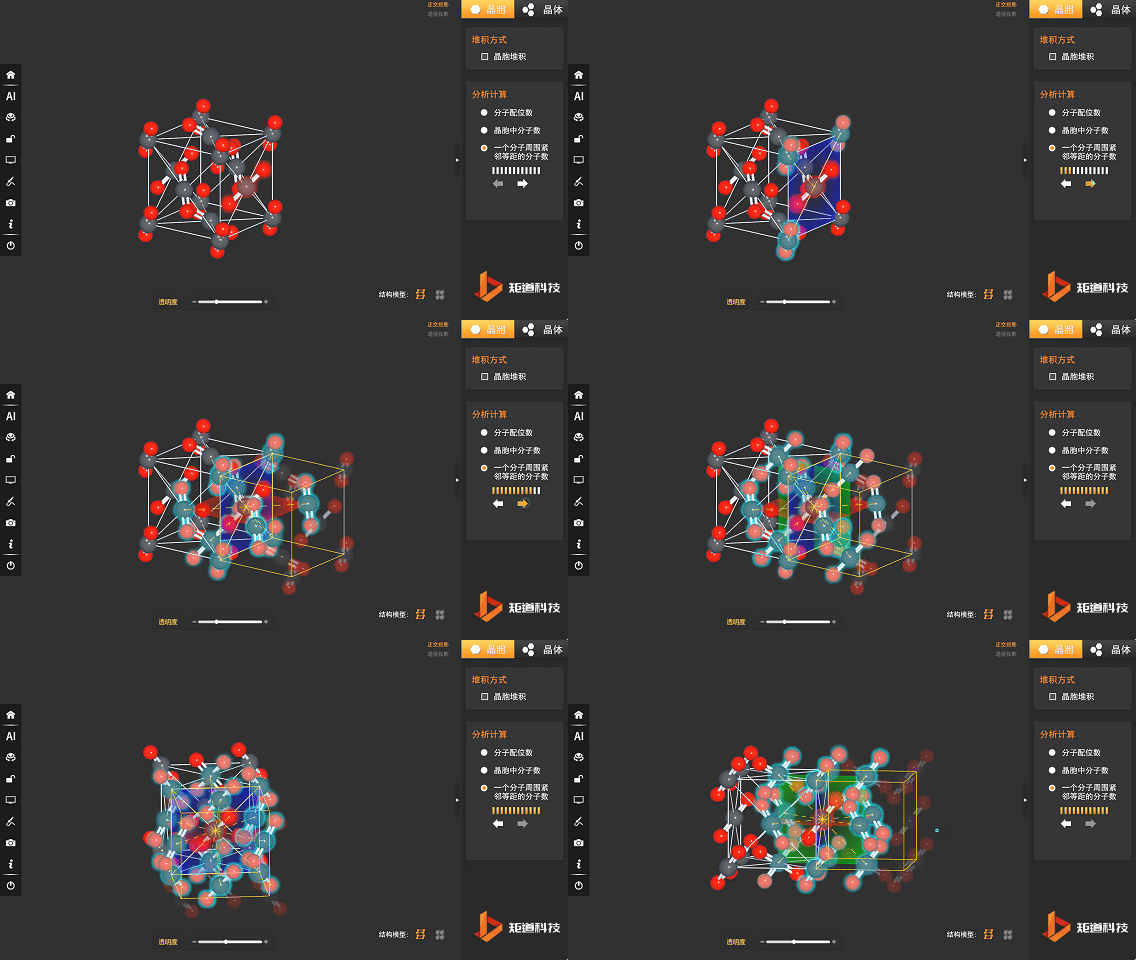
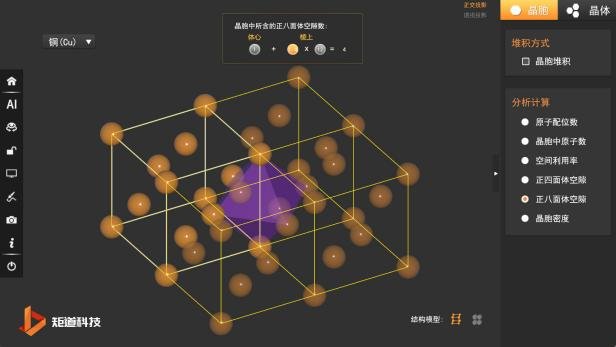
The VR courses supports 360° observation of crystal packing details. Students can adjust model transparency to directly visualize the face-centered cubic packing of dry ice (CO₂) and the close-packing arrangements in metallic copper. The analysis and calculation function enables real-time annotation of coordination numbers and the number of octahedral voids within the unit cell. Students can also independently derive the relationships between 'unit cell edge length and atomic radius' as well as 'density and Avogadro's number,' transforming abstract crystal calculations into an actionable inquiry process that markedly enhances spatial reasoning abilities.
Conclusion
The VR Chemistry Lab not only resolves the core pain point of 'Chemistry Material Structure' — the difficulty of presenting microscopic knowledge — but also reshapes the teaching model: teachers transition from 'knowledge transmitters' to 'inquiry facilitators,' capable of designing tiered inquiry tasks within VR scenarios; students shift from 'passive recipients' to 'active explorers,' deepening their conceptual understanding through interaction.
As VR courses are integrated into regular classroom instruction, every student can have access to a 'professional and safe virtual laboratory.' Through exploring the microscopic world, they experience the fascination of chemistry while effectively building core competencies such as 'macroscopic identification and microscopic analysis' and 'evidence-based reasoning and model cognition.'
Source: Word document uploaded by user