
Breaking Through Abstract Principles: How VR Courses Transform High School Biology Learning
In the study of abstract biological principles, traditional teaching methods are often constrained by two-dimensional texts, static images, and simplified models. VR courses address this challenge through immersive experience, multi-dimensional interaction, and dynamic visualization.
In the study of abstract biological principles, traditional teaching methods are often constrained by two-dimensional texts, static images, and simplified models. These limitations make it difficult for learners to intuitively perceive microscopic processes, dynamic changes, or the internal logic of complex systems. As a result, understanding remains at the level of rote memorization, without ever establishing deep conceptual cognition.
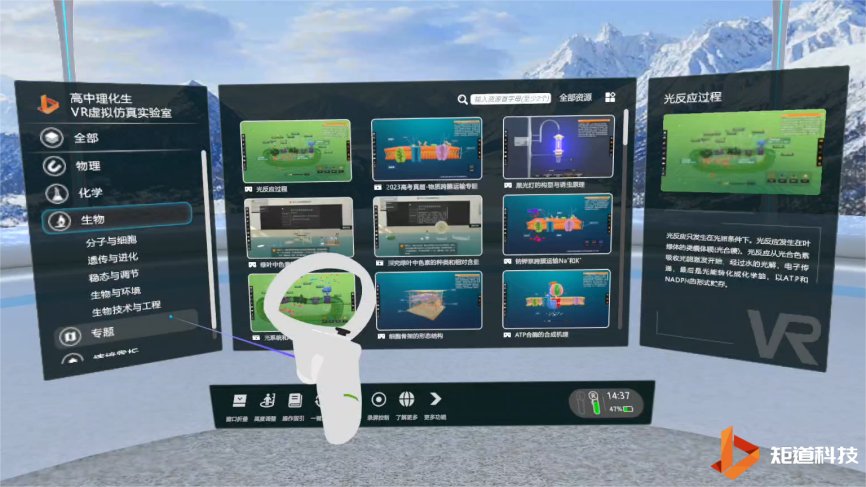
The VR courses in High School Physics, Chemistry & Biology VR Learning Device address this fundamental challenge through three core advantages: immersive experience, multi-dimensional interaction, and dynamic visualization. Take the topic of 'Light Reactions and the Electron Transport Chain' as an example. This process involves the capture of light energy by photosynthetic pigments on the thylakoid membrane, the directional transfer of electrons between protein complexes, the establishment of an H⁺ gradient, and ATP synthesis. In traditional instruction, relying solely on diagrams and textual descriptions, learners struggle to visualize how electrons flow along specific pathways, how H⁺ ions are pumped against their concentration gradient into the thylakoid lumen, and—perhaps most critically—how the logic of energy conversion within the chemiosmotic mechanism actually works.
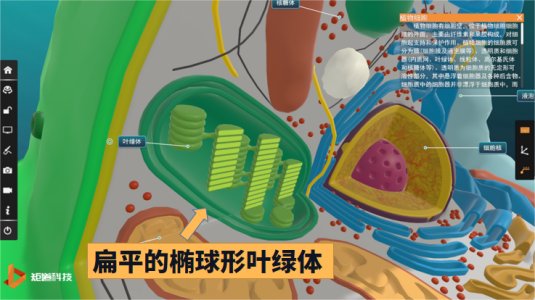
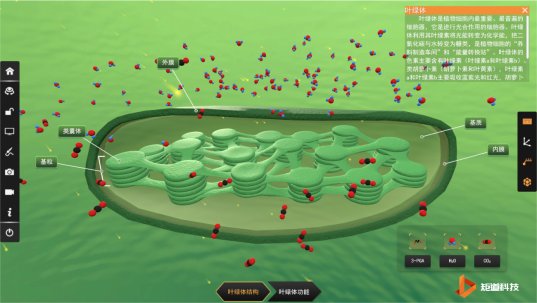
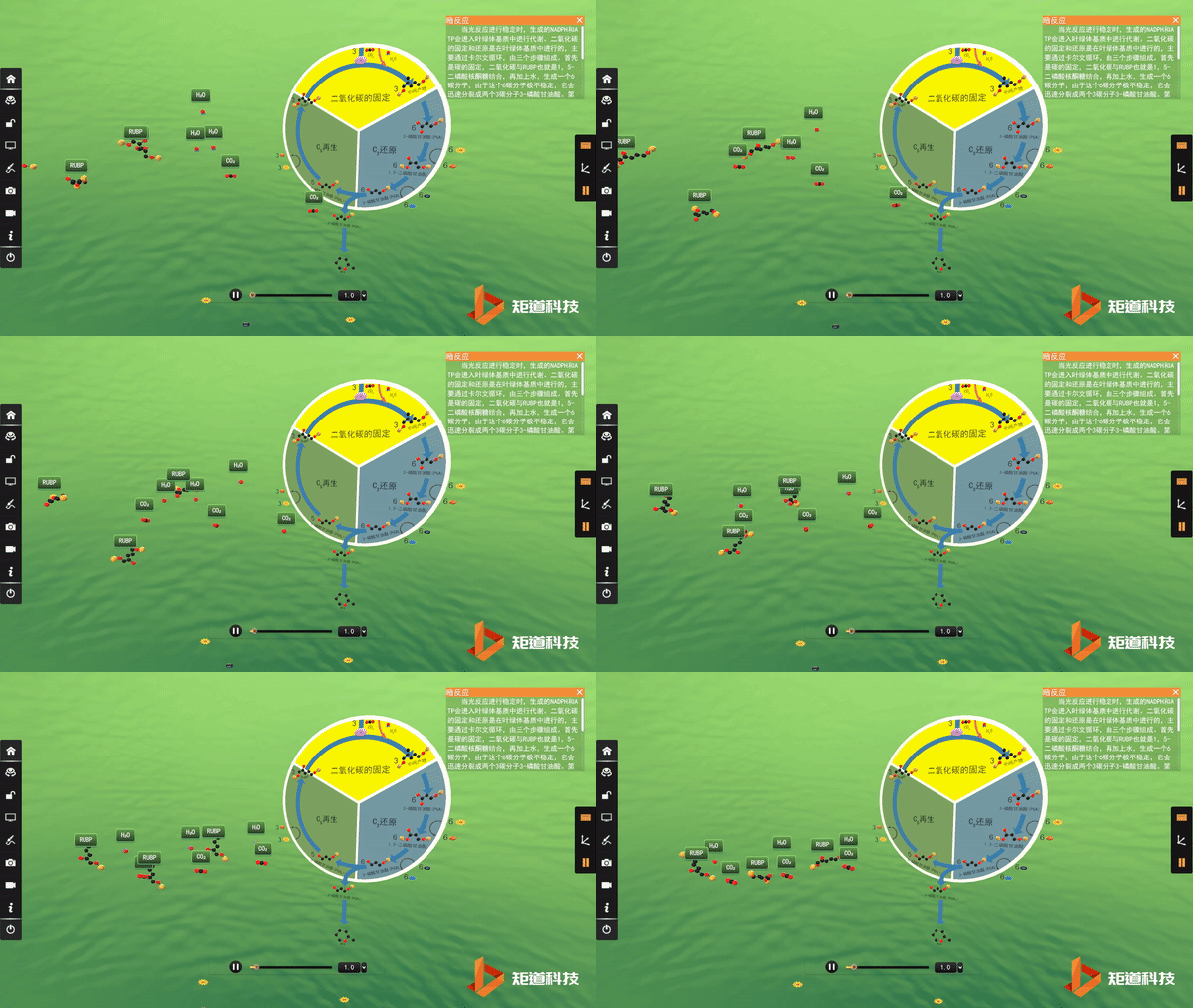
High school biology VR digital course constructs a 1:1 scale, fully restored chloroplast micro-environment. Wearing VR headsets for education, learners can 'stand' on the surface of the thylakoid membrane. They can clearly observe the spatially organized arrangement of photosynthetic pigment molecules and, more importantly, adopt a 'follow-camera' perspective to track high-energy electrons as they travel from Photosystem II through plastoquinone, the cytochrome b₆f complex, and other protein complexes. The energy changes during electron transfer are vividly presented through visual effects such as fluorescent flickering and color gradients. Meanwhile, the pumping of H⁺ ions into the thylakoid lumen is synchronously displayed through particle flow animations, transforming the abstract concept of 'transport against a concentration gradient' into a tangible, dynamic process.
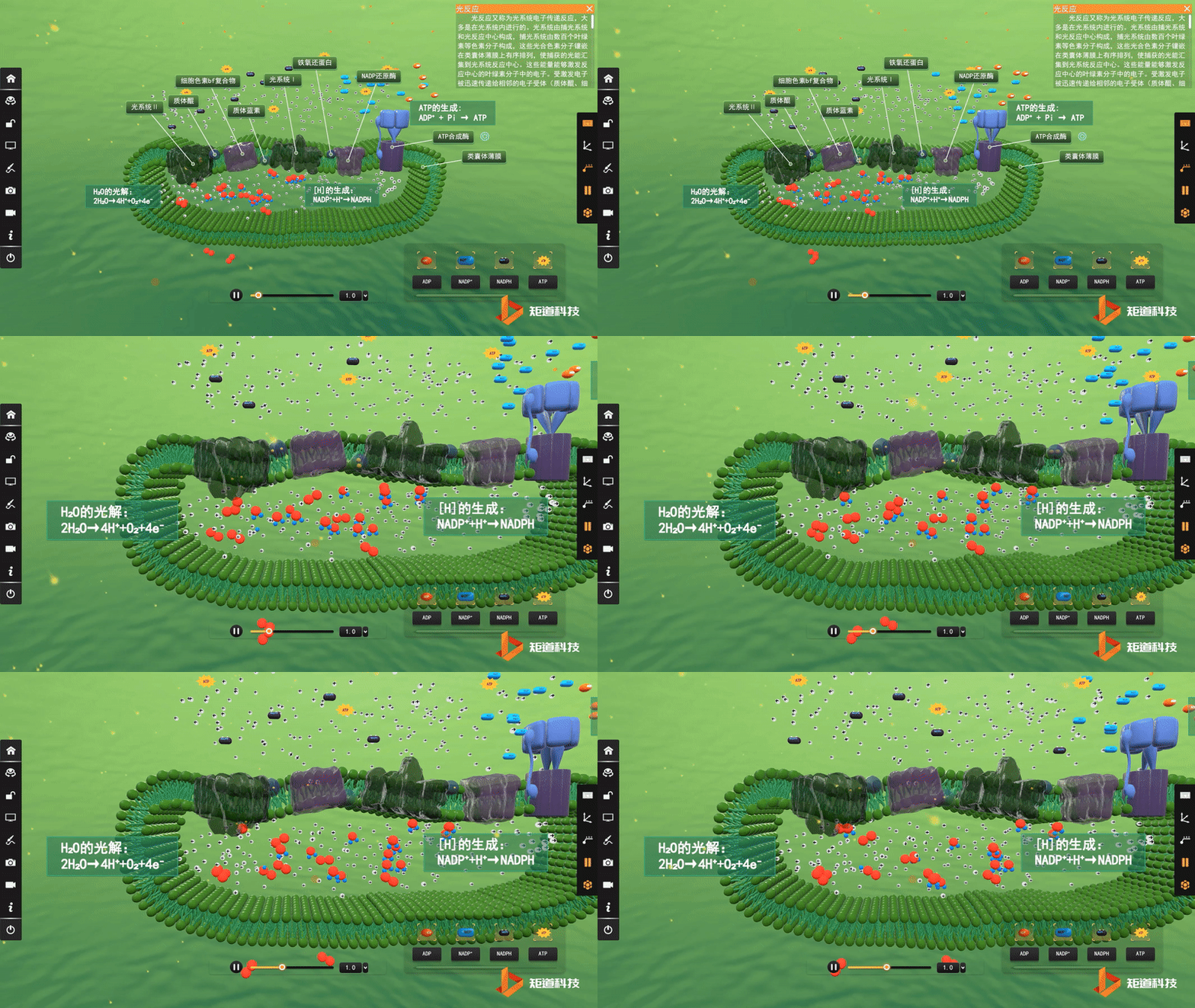
Light Reactions in Photosynthesis: Key Topics for Gaokao (College Entrance Examination)
Functional Division of Photosystems: Photosystem II is responsible for the photolysis of water (producing O₂, H⁺, and electrons); Photosystem I primarily mediates the generation of NADPH.
Electron Transport Pathway: Plastoquinone → Cytochrome b₆f complex → Plastocyanin → Photosystem I → Ferredoxin → NADPH. Electrons move from higher to lower electric potential, releasing energy; within Photosystem II and I, uphill electron transfer is driven by light energy—an endergonic process.
Establishment of the H⁺ Gradient: The energy released during electron transfer drives H⁺ ions from the stroma into the thylakoid lumen. Additional contributions come from water photolysis (producing H⁺ on the lumen side) and NADPH generation on the stromal side (consuming H⁺), further intensifying the gradient and powering ATP synthesis.
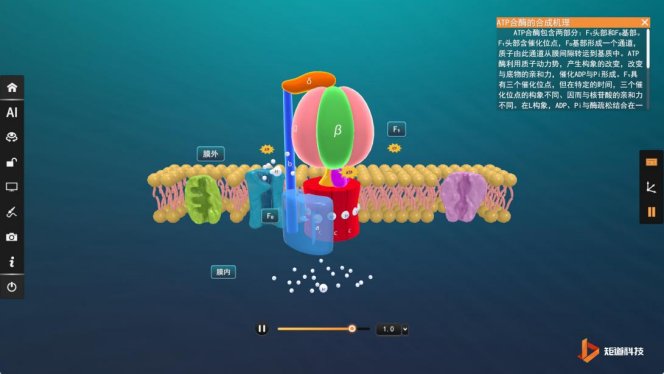
ATP Synthesis Mechanism: The thylakoid membrane is impermeable to H⁺ ions, which can only exit through ATP synthase down their concentration gradient. The energy of this flow is harnessed for ATP synthesis.
This 'enter, observe, and manipulate' VR classroom model—blending the virtual with the real—transforms abstract principles into visible, tangible, and interactive experiences. It addresses the core shortcomings of traditional instruction: difficulty perceiving spatial scale, difficulty tracking dynamic processes, and difficulty connecting cause and effect. At the same time, it stimulates learners' intrinsic curiosity and helps them build a complete logical knowledge framework within an immersive environment. In doing so, it achieves a genuine shift from 'passive memorization' to 'active understanding'—an approach particularly suited to teaching abstract concepts involving microscopic mechanisms, dynamic processes, and complex systems in subjects such as physics, chemistry, and biology.
Source: Word document uploaded by user

