Visualizing the Invisible Across Physics, Chemistry, and Biology
Middle school science students grapple with magnetic fields they cannot see, molecular reactions they cannot touch, and biological processes hidden deep within the body. The Middle School VR Science Lab makes the invisible visible across all three disciplines, turning memorization into genuine understanding.
Middle school science education sits at a critical crossroads. Students are asked to understand magnetic fields they cannot see, chemical reactions that unfold at the molecular scale, and biological processes hidden deep within the human body. For generations, teachers have relied on textbook illustrations, two-dimensional diagrams, and verbal explanations to bridge the gap between abstract concepts and student comprehension. Too often, the result is memorization without understanding — facts retained long enough for an exam, then forgotten.
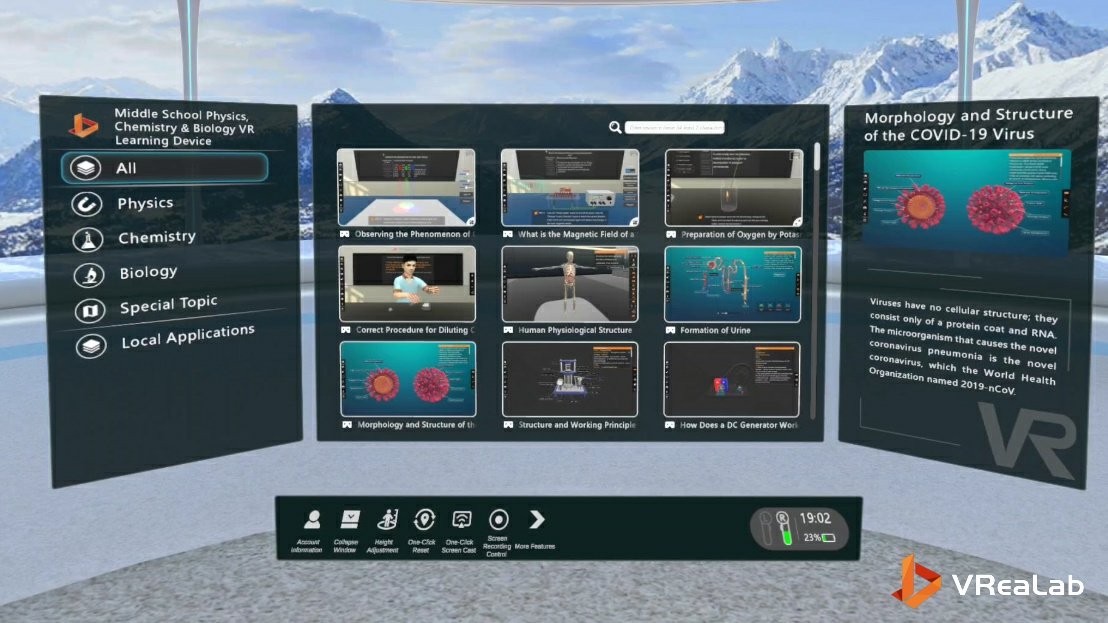
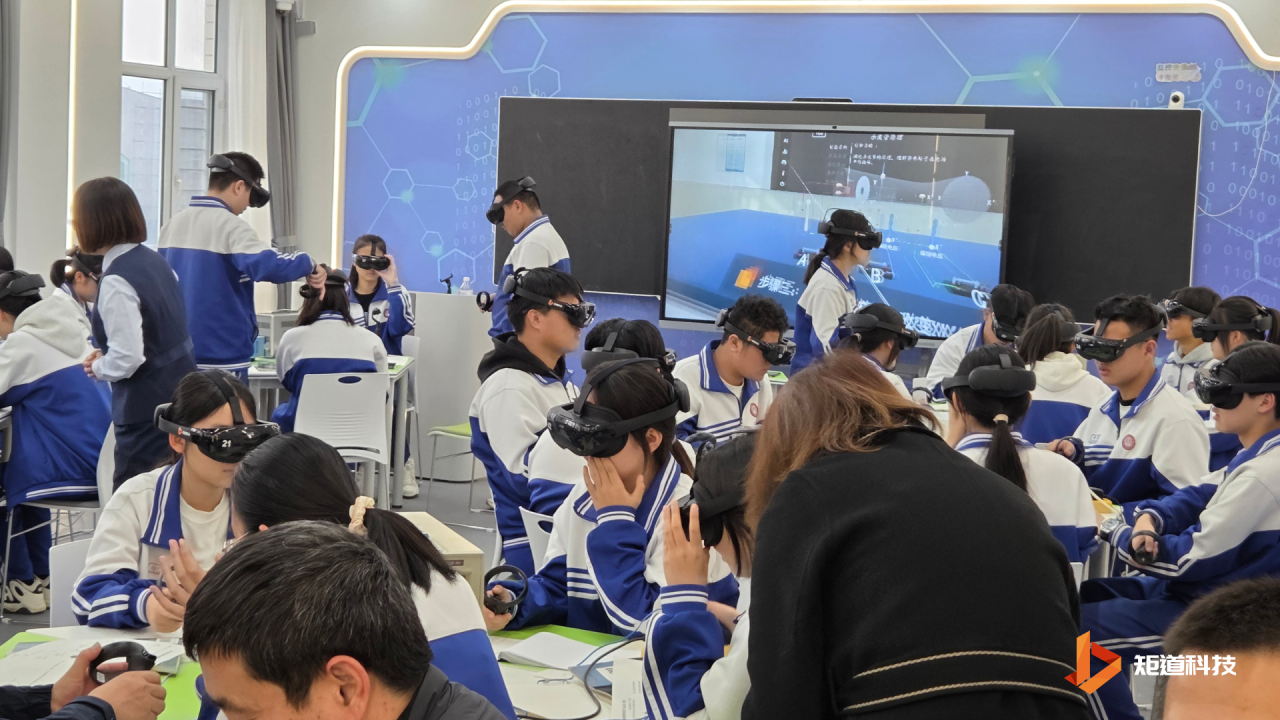
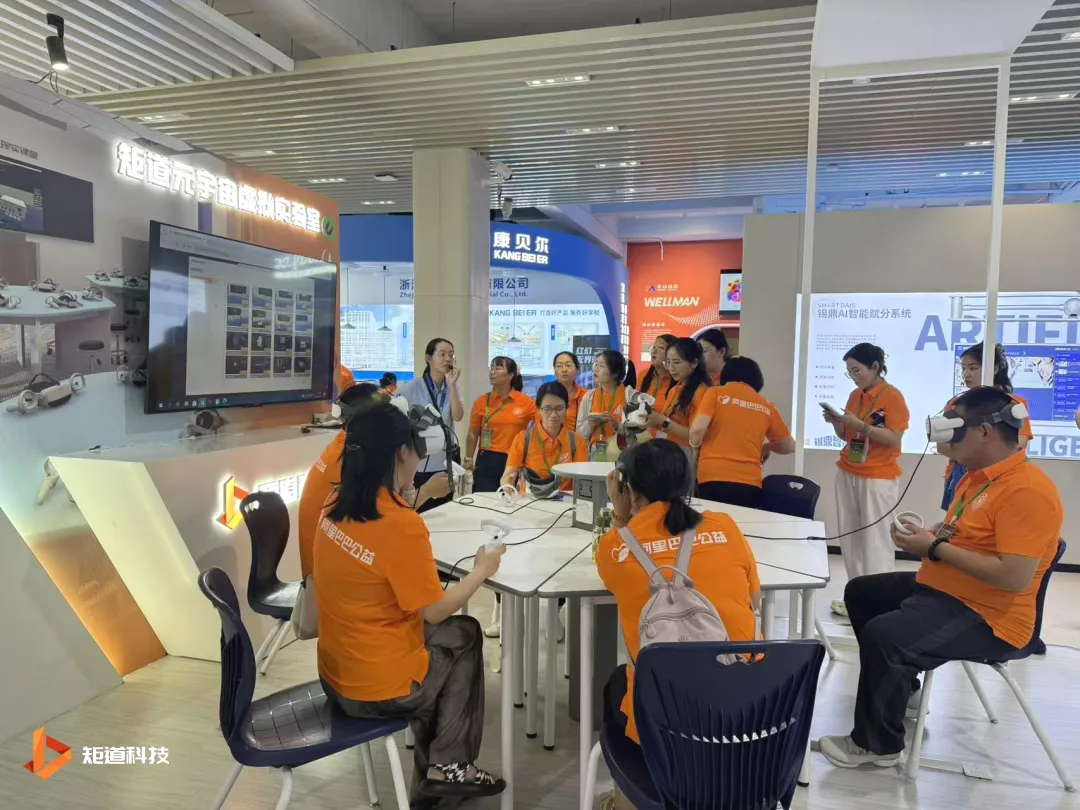
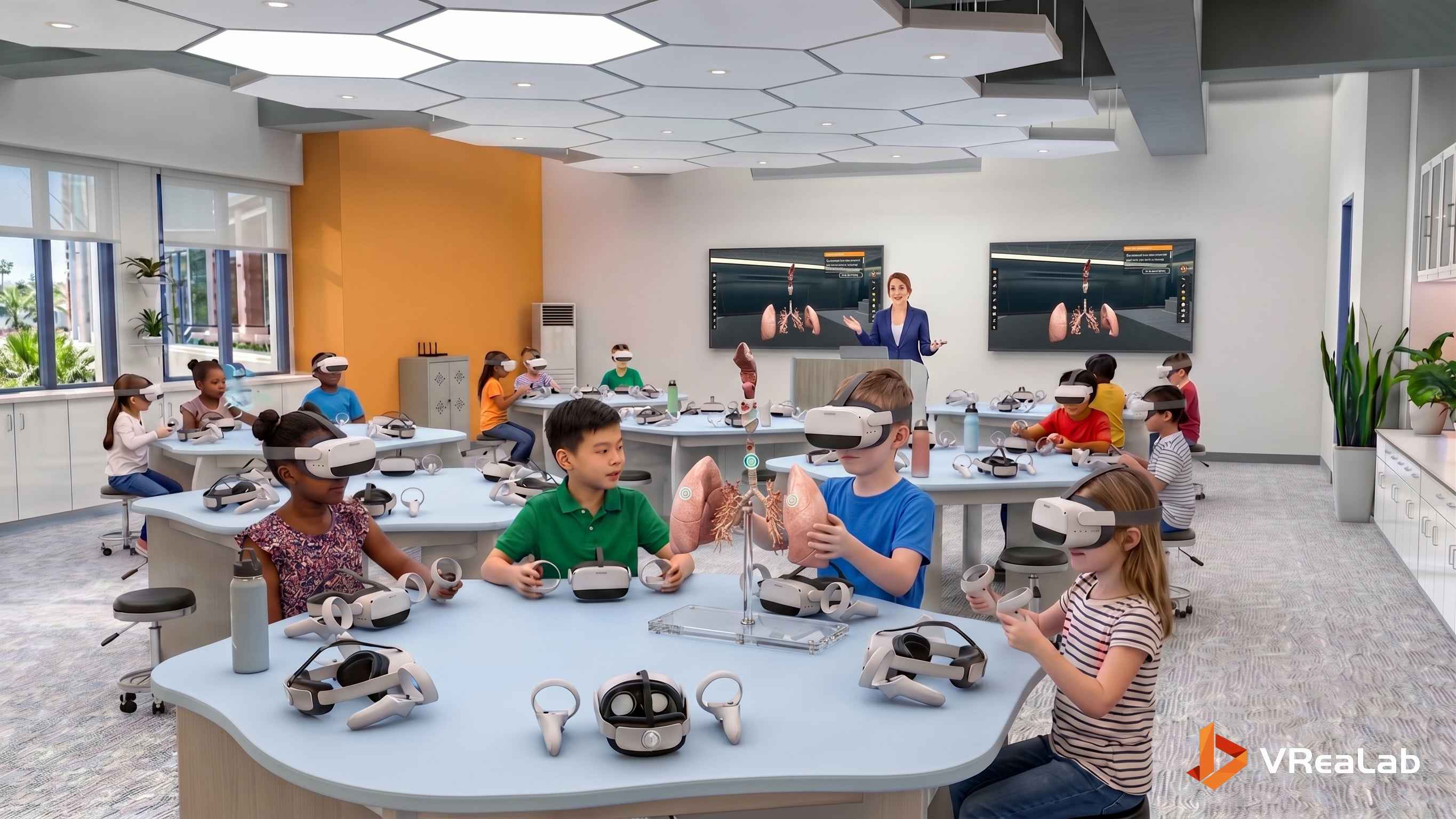
The Middle School Physics, Chemistry & Biology VR Learning Device offers a fundamentally different path. Designed as a curriculum-aligned VR system for junior secondary STEM education, it spans all three core science disciplines — physics, chemistry, and biology — within a single integrated platform. Rather than treating VR as a novelty or a supplementary demonstration tool, the Middle School VR Science Lab embeds immersive, interactive experiences directly into the everyday curriculum, making science visible, accessible, hands-on, and relevant for every young learner.
Physics: Stepping Inside the Magnetic Field
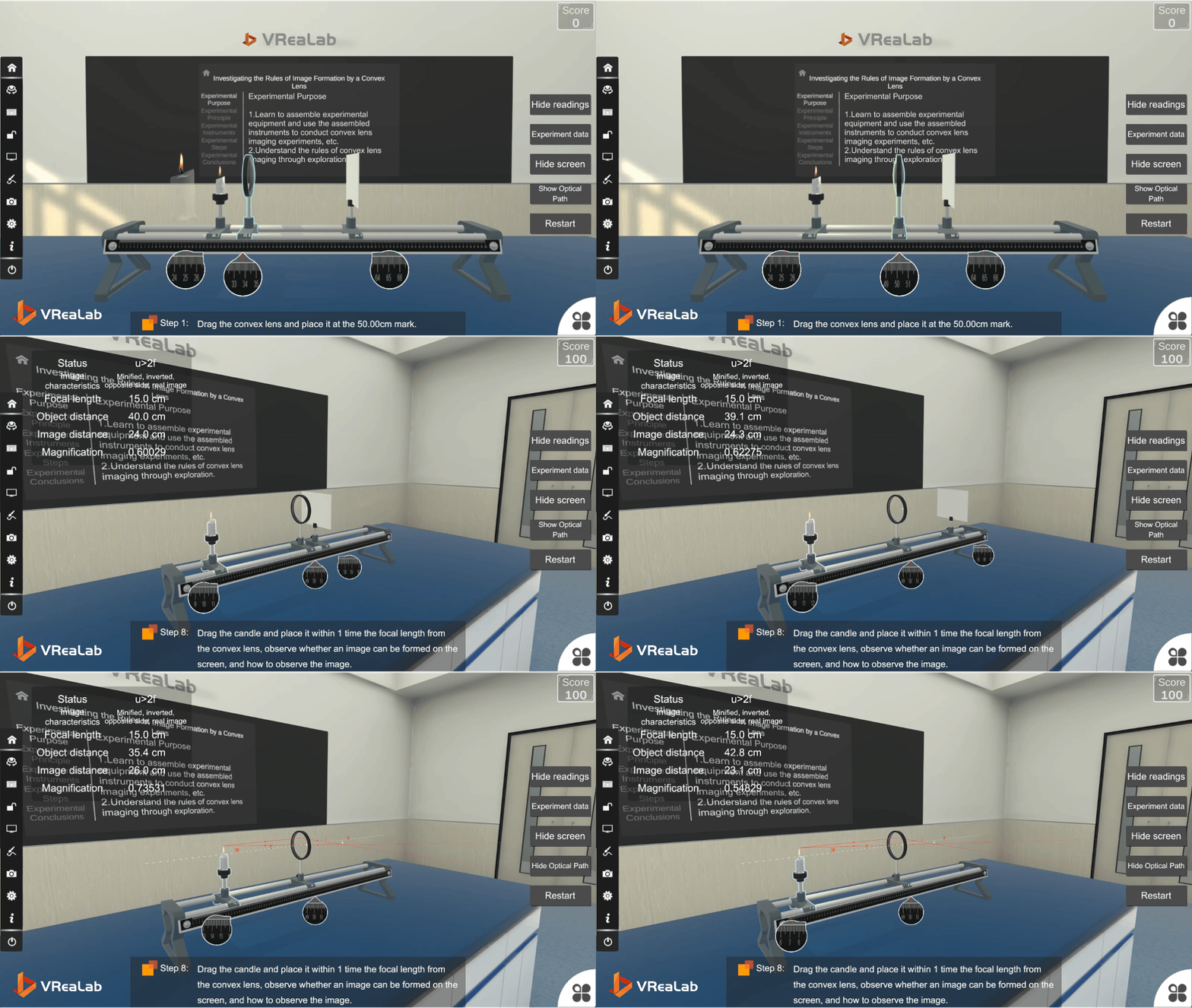
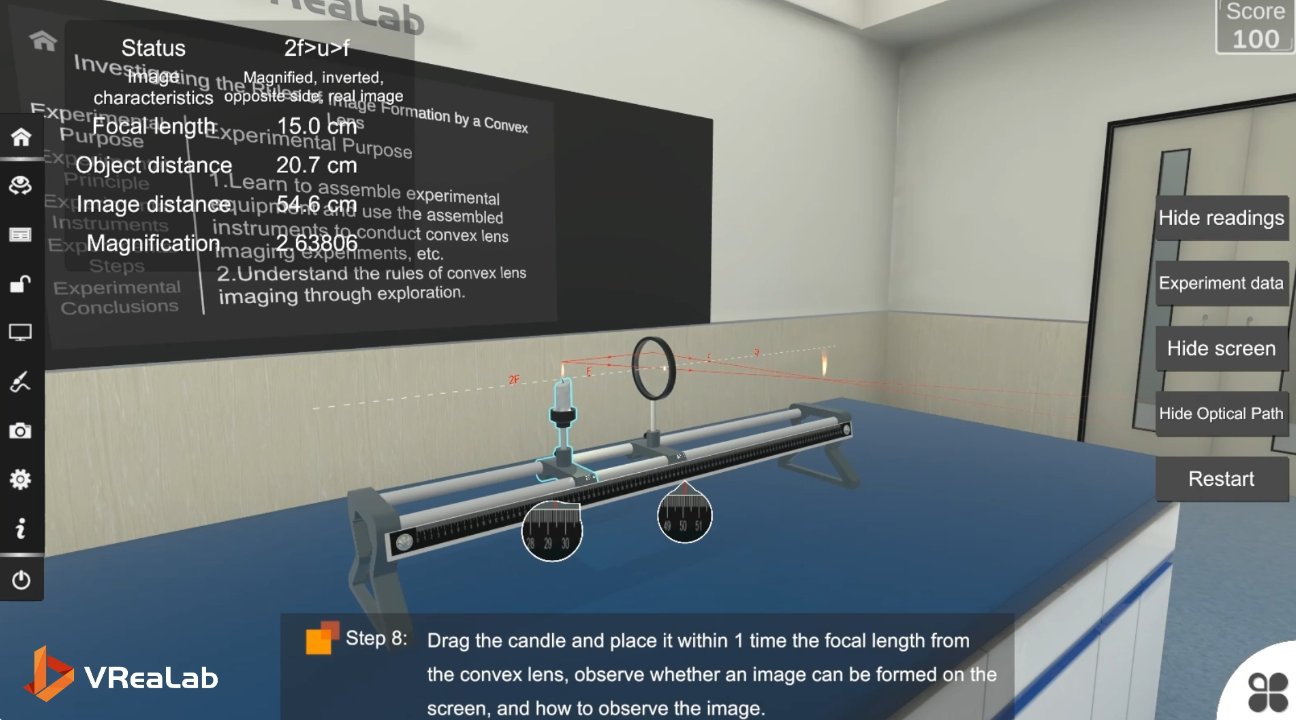
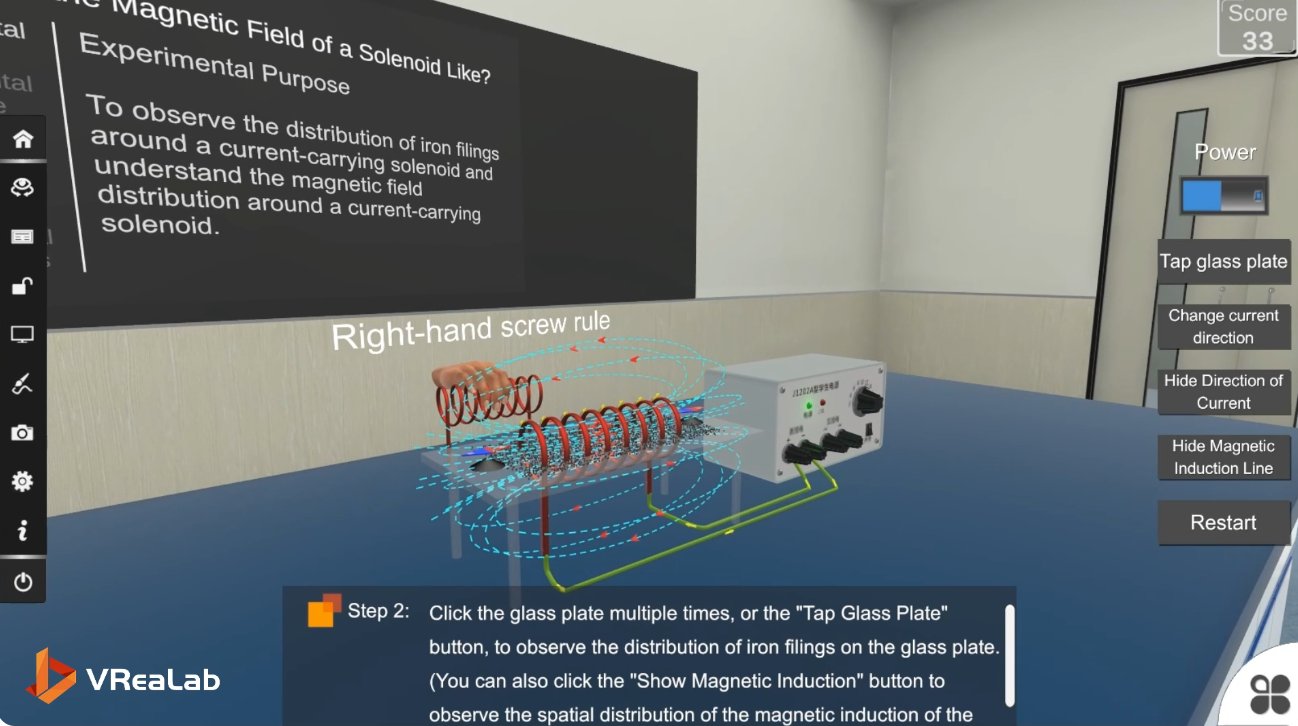
In the VR Physics Lab, the invisible becomes visible. Consider the classic experiment on the magnetic field of a solenoid. In a traditional classroom, students might sprinkle iron filings on a board and observe a flat, two-dimensional pattern. In the VR Physics Lab, they step inside the experiment itself. They build circuits with their own hands, manipulate virtual compasses in three-dimensional space, and watch magnetic field lines emerge around the solenoid in real time. The spatial complexities of electromagnetism — so difficult to convey through lectures and diagrams — become intuitively understandable through dynamic, hands-on interaction.
Chemistry: Safe Exploration of Hazardous Reactions
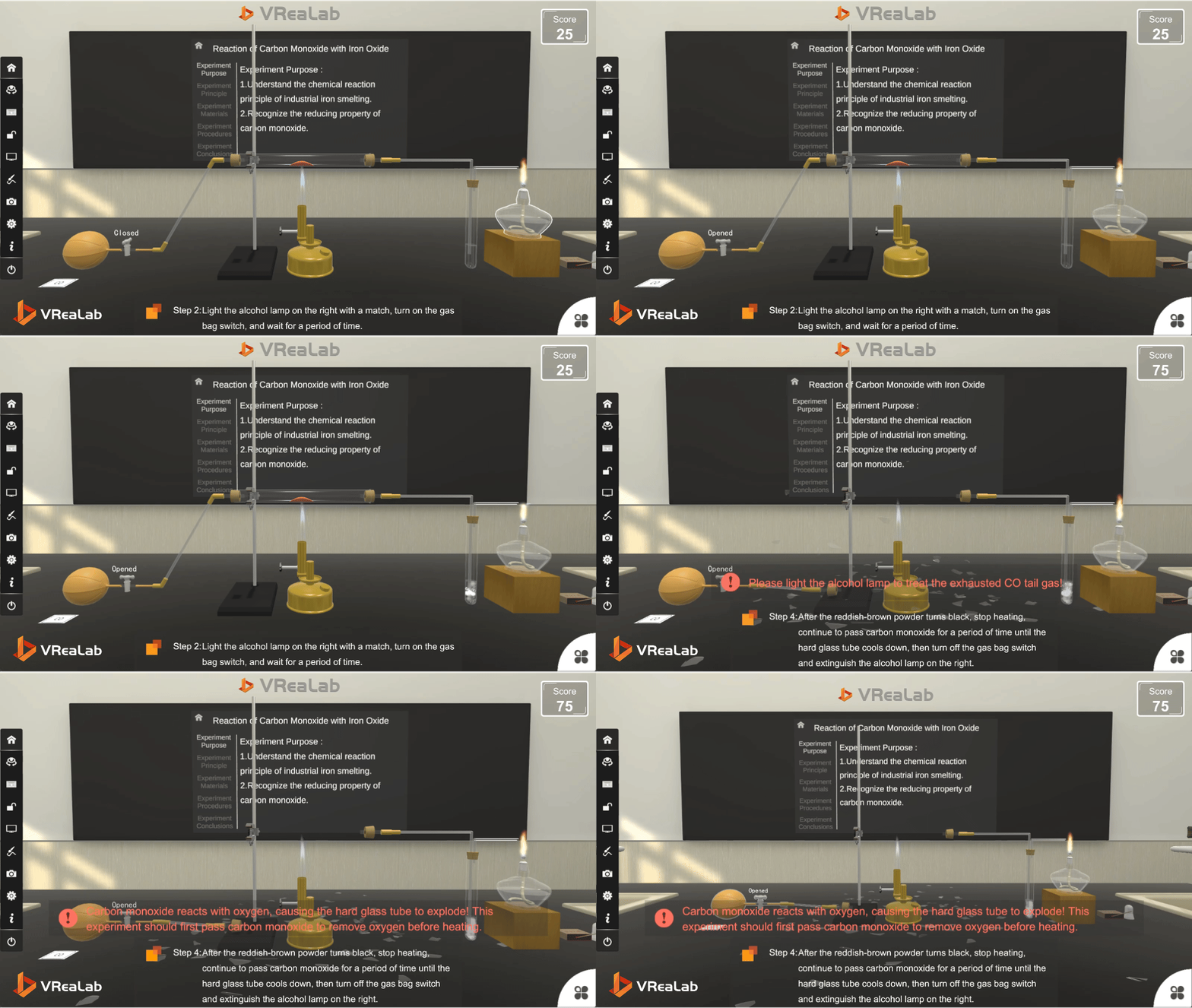
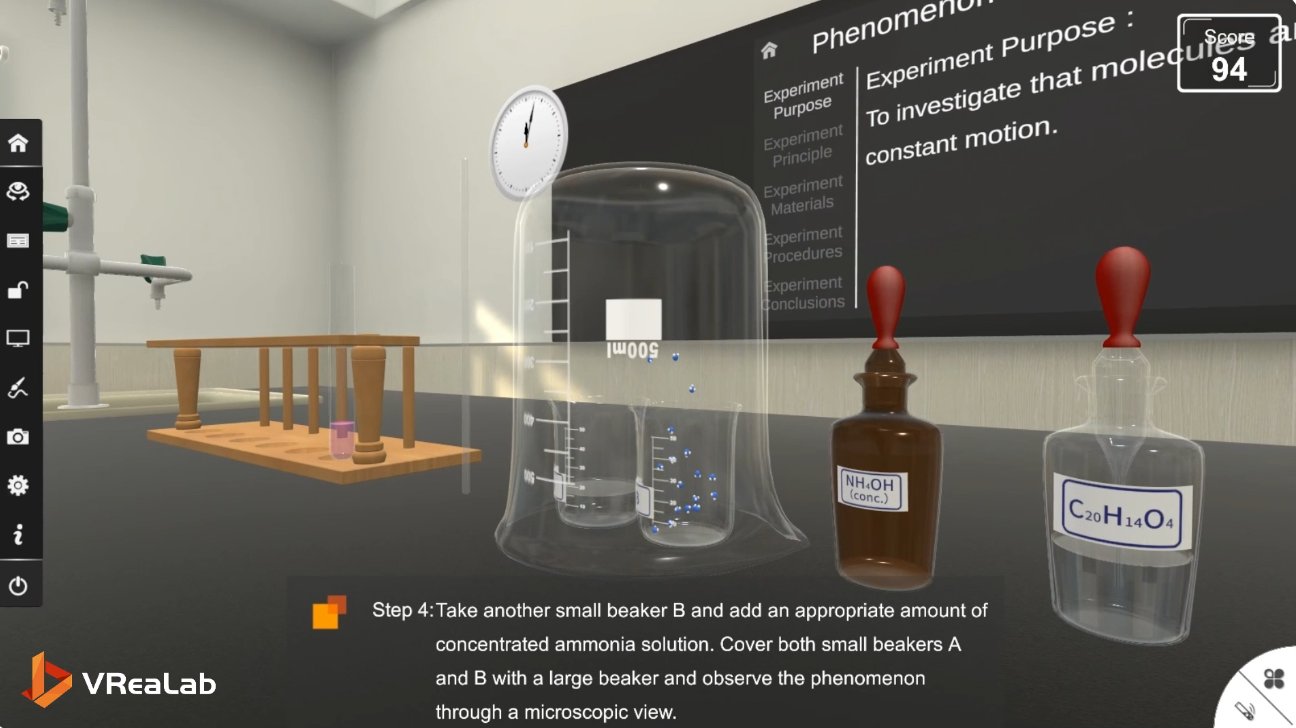
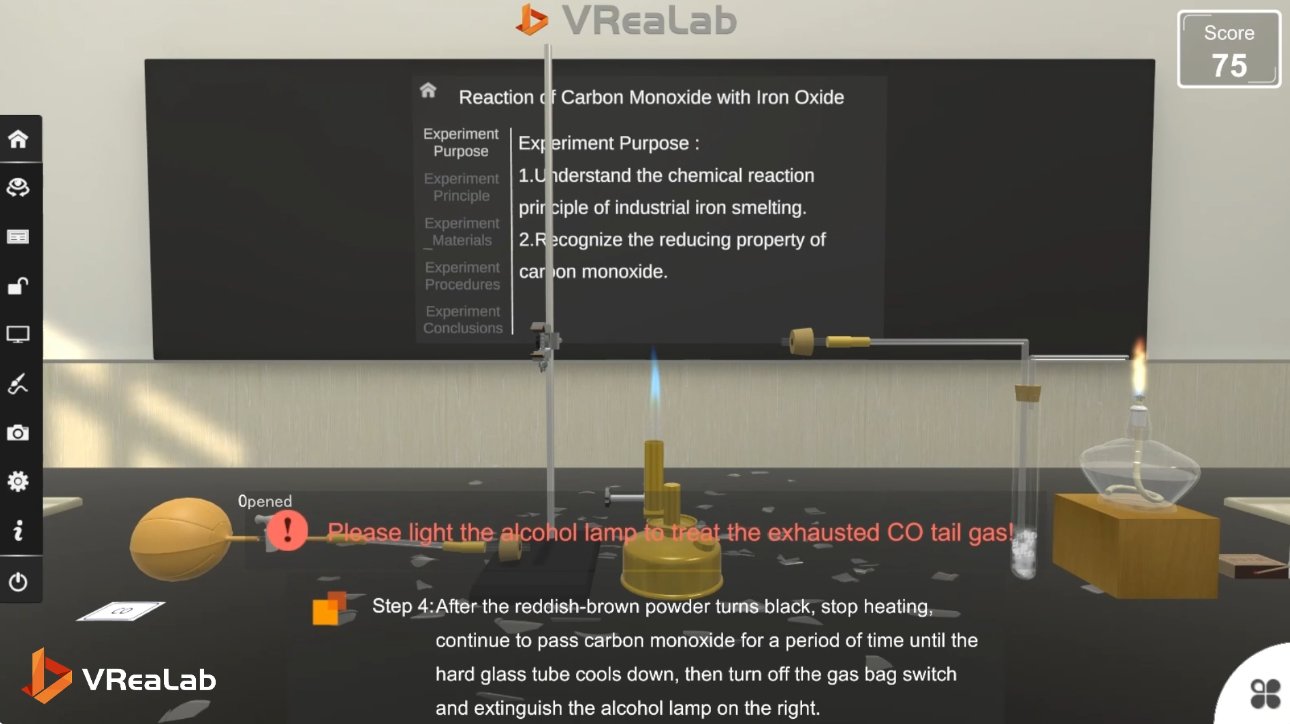
The VR Chemistry Lab addresses a different but equally pressing challenge: safety. Some of the most educationally powerful experiments in chemistry involve toxic gases, explosive reactions, or extreme temperatures that make them impossible to conduct in a school setting. The reaction of carbon monoxide with iron oxide, for example, is a canonical redox experiment — yet carbon monoxide is a deadly, colorless, odorless gas. The VR Chemistry Lab removes this barrier entirely. Students can boldly perform highly toxic and explosive procedures in an absolutely safe, zero-risk virtual environment. They observe how gases and solids interact at the molecular level, and every incorrect operation is clearly presented by the system, transforming mistakes into valuable learning opportunities.
Biology: Journey Into the Microscopic Body
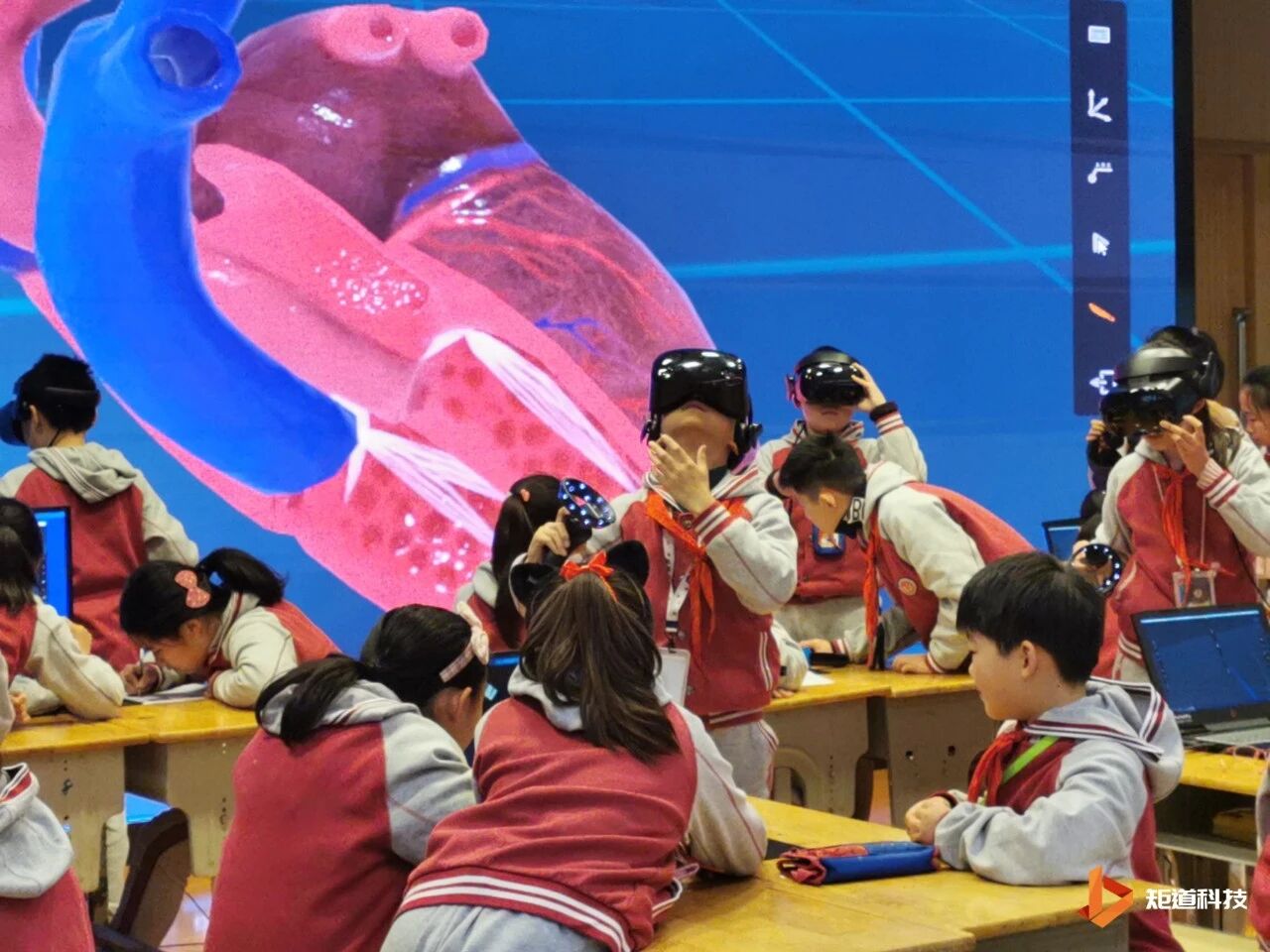
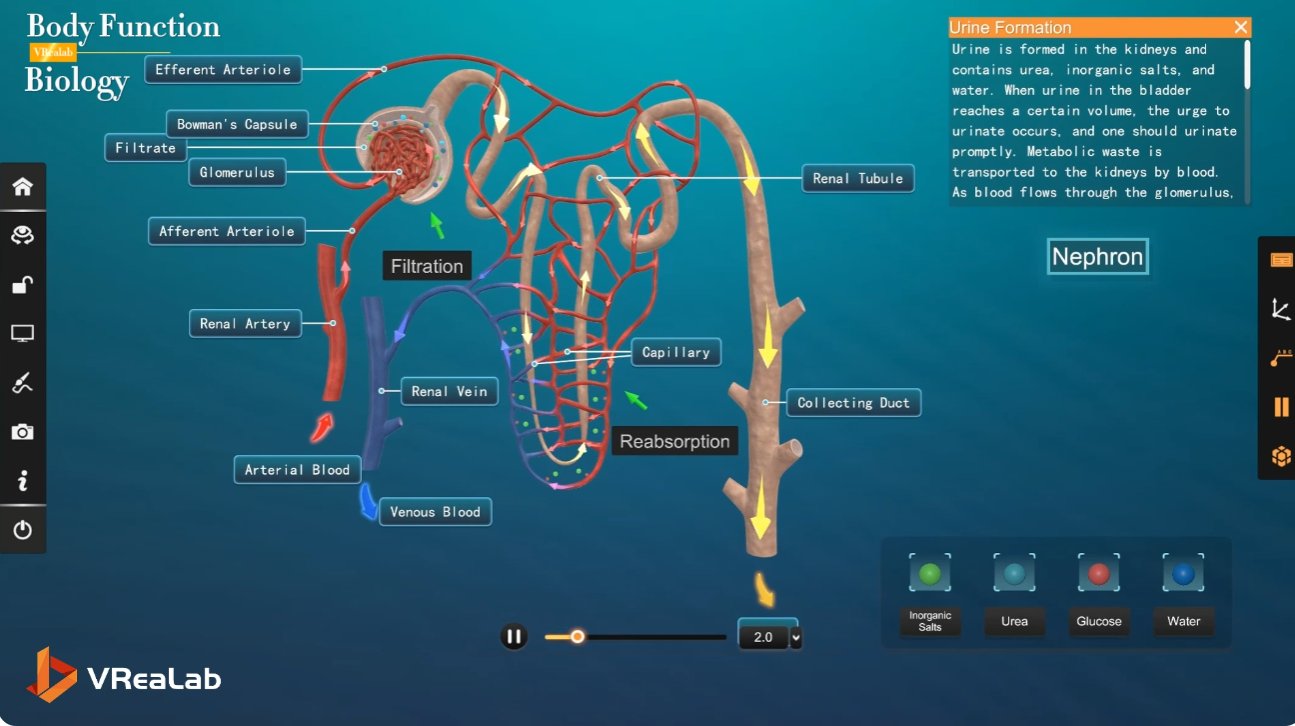
The VR Biology Lab bridges the gap between what students can observe at the macro level and what they need to understand at the cellular and molecular level. The formation of urine, for instance, is a process rooted in nephron structures and microscopic filtration mechanisms. No conventional classroom dissection can reveal these inner workings. In the VR Biology Lab, students explore the structural basis of urine formation from the perspective of the nephron itself. They observe how blood is filtered and urine is formed through interactive, multi-dimensional visualization. What was once a static diagram becomes a vivid, explorable landscape.
One Platform, Three Sciences, Endless Exploration
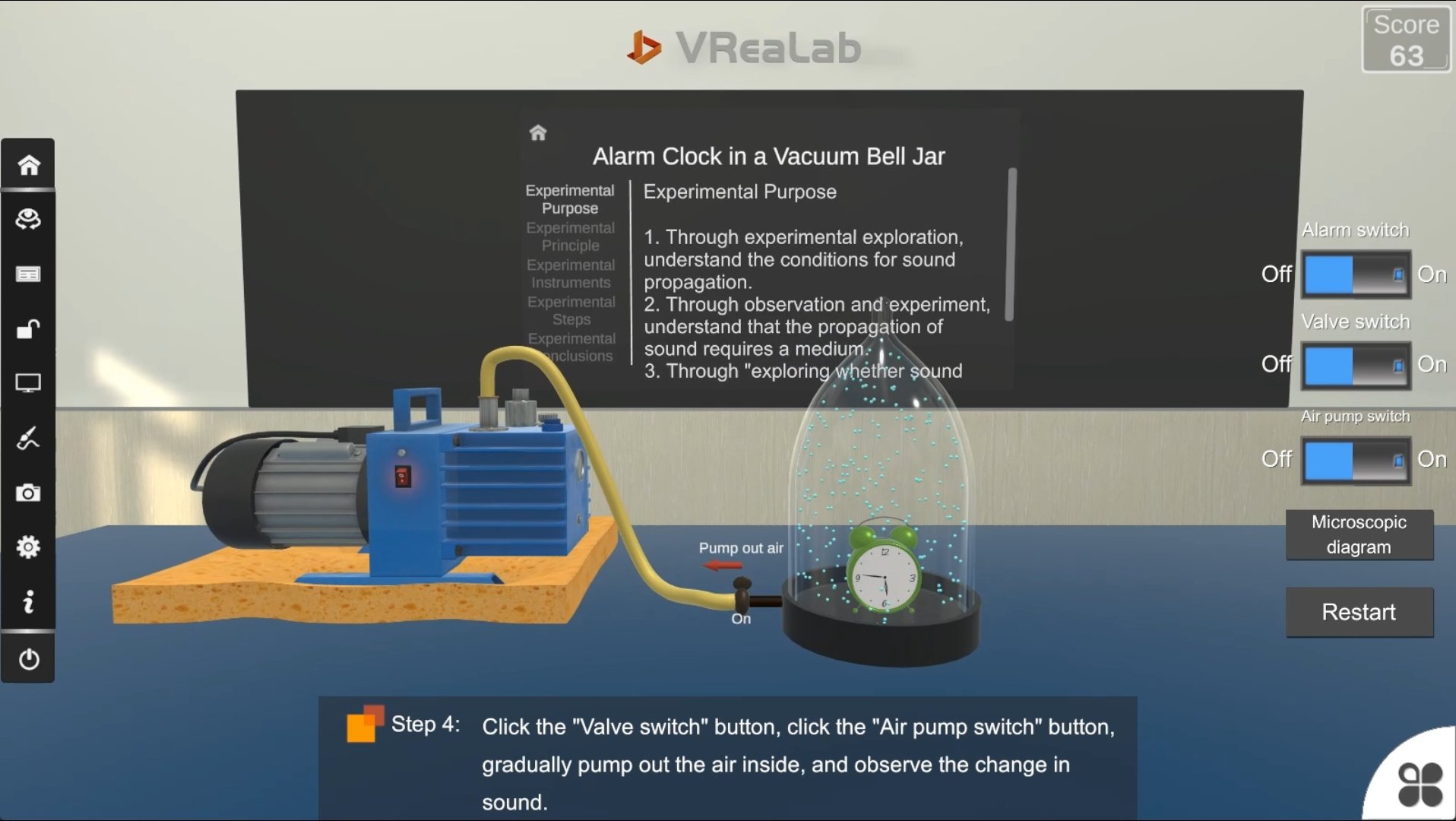
Across all three disciplines, the Middle School VR Science Lab delivers a consistent promise: it visualizes the invisible, enables exploration of the impossible, provides safe practice for the hazardous, and seamlessly connects interactive virtual experience with core scientific theories. For schools seeking to make every science lesson a genuine experience rather than a lecture, this integrated platform represents the future of middle school STEM education.