Refraction of Light: Virtual Experiments Make the Light Path Visible
A chopstick appears broken in water; a coin seems raised beneath the surface—these are phenomena of light refraction. A virtual Physics lab transforms the challenge of quantitative exploration into an engaging, data-driven learning experience.
A chopstick inserted into water appears "broken"; a coin at the bottom of a glass seems "lifted"—these are all phenomena of the refraction of light. Yet the real teaching challenge lies not in the phenomena themselves, but in the quantitative exploration of refraction laws: the light path is incomplete, angles are hard to measure, and after one class period, many groups cannot gather enough data, forcing teachers to simply state the pattern directly. The Middle School VR Science Lab offers a powerful solution to this problem.
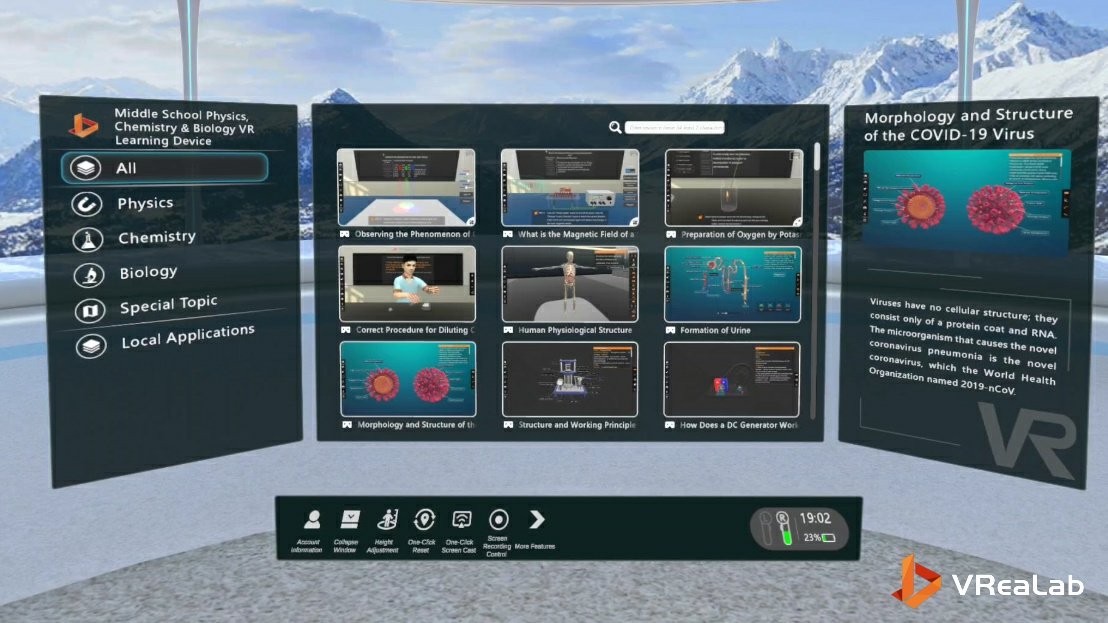
This teaching design takes "Refraction of Light" as an example, leveraging JuDao's physics virtual laboratory empowered by AI and VR to reconstruct a scientific inquiry lesson on light refraction. It enables students to "learn by doing" like scientists, personally exploring the secrets of light refraction in a virtual Physics lab environment.
Teaching Design
I. Teaching Objectives
(1) Knowledge and Skills
1. Understand the phenomenon of light refraction and recognize that when light travels obliquely from one medium to another, its direction changes.
2. Can explain the meaning of incident ray, refracted ray, normal line, angle of incidence, and angle of refraction, and identify each component in a ray diagram.
3. Comprehend the laws of light refraction: three lines coplanar, on opposite sides of the normal, the angle in air is larger, direction unchanged at normal incidence, and the light path is reversible.
(2) Process and Methods
1. Experience the complete inquiry process of "phenomenon—hypothesis—experiment—induction" and begin to appreciate the general methods of scientific inquiry.
2. Learn to compare and induce physical laws from data by continuously changing the incident angle and collecting multiple sets of data through virtual simulation experiments.
3. Learn to select appropriate experimental methods based on inquiry objectives through the combined use of real and virtual simulation experiments.
(3) Affective Attitudes and Values
1. Sense that refraction phenomena are all around, appreciate the connection between physics and daily life, and cultivate interest in learning physics.
2. Develop a scientific attitude of speaking with evidence and being rigorous and truth-seeking in group inquiry, and experience the joy of cooperative learning.
3. Recognize the auxiliary role of digital-intelligent technologies such as virtual experiments in learning, and establish awareness of the rational use of information technology.
II. Teaching Key Points and Difficulties
1. Key points: Laws of light refraction (three lines coplanar, opposite sides of normal, larger angle in air, direction unchanged at normal incidence).
2. Difficulties: Inducing laws independently from multiple sets of data; understanding the relationship between angle magnitude and the medium.
III. Teaching Methods
Primarily experimental inquiry method, supplemented by lecture, group cooperation, and discussion.
IV. Teaching Preparation
Experimental equipment: transparent water tank, laser pointer, clean water, cups, chopsticks.
JuDao Physics Virtual Laboratory software: "Refraction of Light" experiment — a comprehensive virtual Physics lab platform for middle school education.
V. Teaching Process
Segment 1: Introduction with Real Experiment
The teacher inserts a chopstick obliquely into a transparent cup filled with water. Viewed from the side, the chopstick appears "broken" at the water surface.
The teacher asks: What exactly happens to light when it reaches the water surface?
This small, relatable experiment creates cognitive conflict—students discover that "seeing is not always believing"—and they enter the new lesson with questions in mind.

Segment 2: Raising Questions and Making Hypotheses
Question: When light travels obliquely from air into water, will its direction change? How?
Students make free hypotheses, and the teacher writes them on the board.
Segment 3: Verification with Real Experiment
The teacher shines a laser pointer obliquely into a transparent water tank. Students can see the approximate path of light entering the water: the direction indeed bends.

The teacher asks: The light path shows only a short bright segment—what are the angles of incidence and refraction? What is the pattern?
Measuring angles with real equipment is time-consuming and prone to error. With this question in mind, students move on to exploration in the virtual Physics lab, where measurements are precise and data collection is instantaneous.
Segment 4: Virtual Experiment Exploration
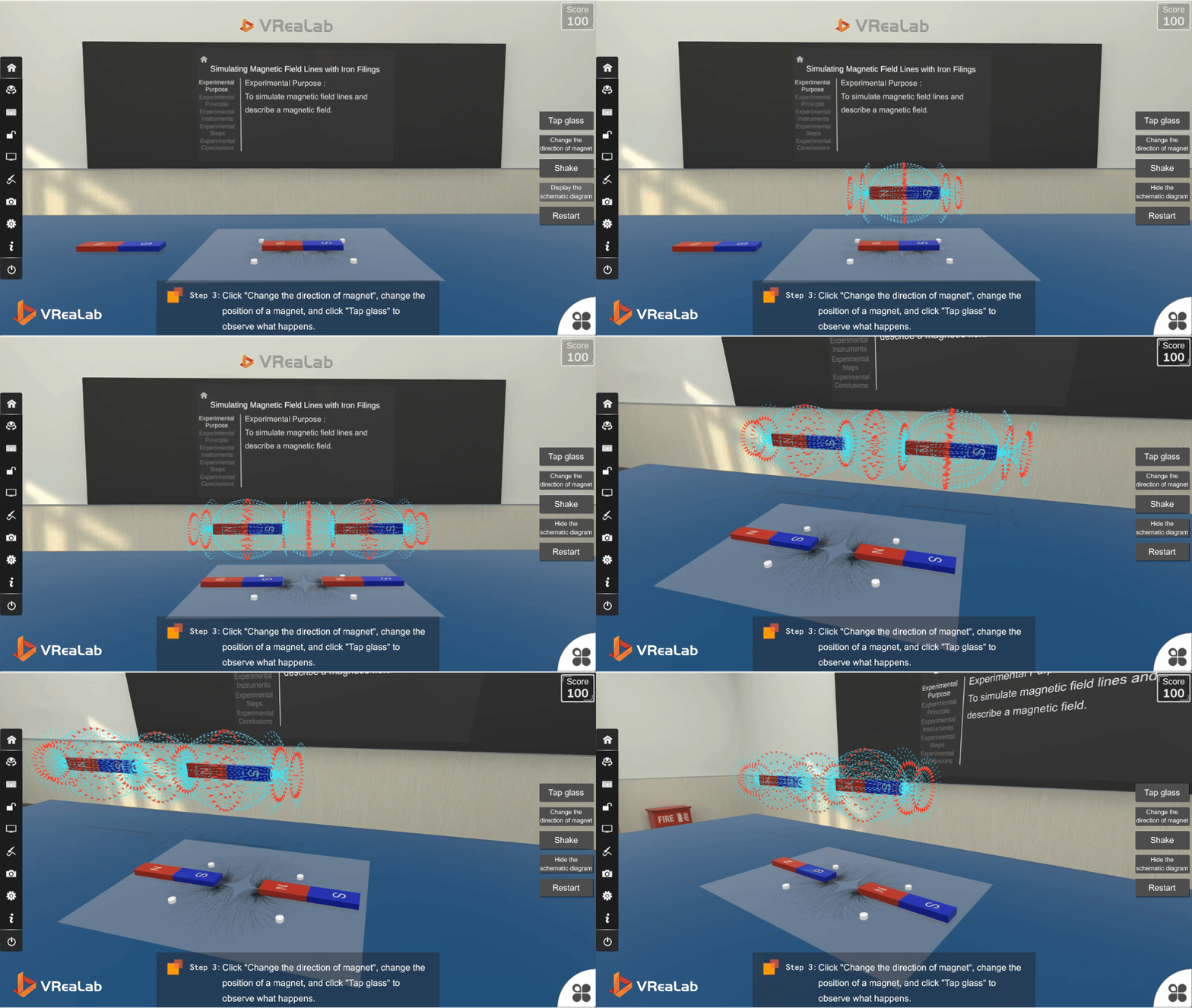
Task 1: Observe the relationship of the three rays. In the simulation environment, turn on the light path—the incident ray, normal line, and refracted ray appear simultaneously on screen. Students record the positional relationship of the three lines: Are they in the same plane? On which side of the normal are they located?

Task 2: Collect data. Adjust the incident angle, and the refraction angle displays automatically with each change. Each group records four to five sets of data in a table, comparing: How does the refraction angle change with the incident angle? Which angle is larger?

Task 3: Reverse the light path. Let light travel obliquely from water into air, then observe the angular relationship. Is the pattern reversed? This sets the stage for "reversibility of the light path."

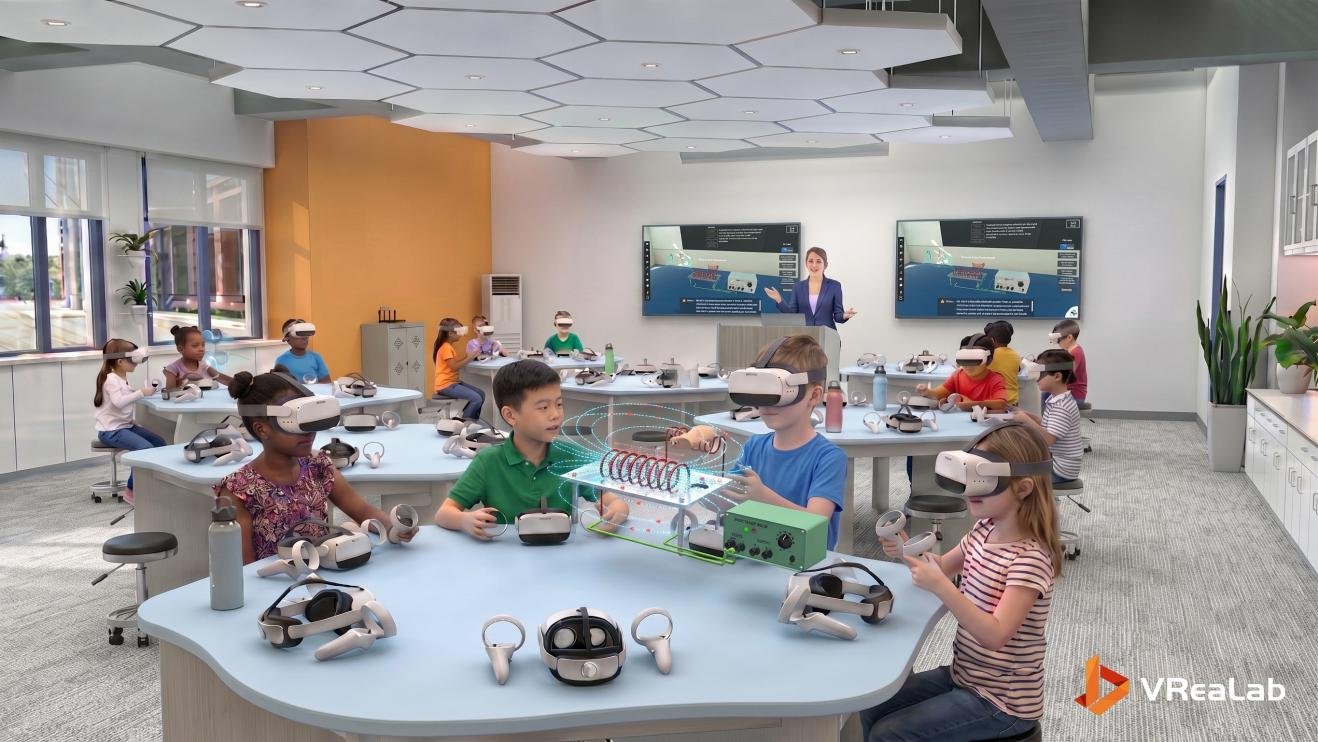
Students operate in groups on their own devices, with each student completing at least one full round of measurements. The teacher circulates, focusing on whether each group's data tables are complete and accurate.
Segment 5: Inducing the Laws
Students first summarize in their own words, then the teacher formalizes the statement against the data tables: three lines coplanar, on opposite sides of the normal; the angle in air is larger; direction unchanged at normal incidence; light path is reversible.

Segment 6: Applying What Was Learned
Returning to the introductory phenomenon: Why does the chopstick "break" in water? Students explain using the newly derived laws. Then another question is posed: When spearing a fish in the water with a fork, in which direction should you aim relative to the fish you see? This is left as after-class reflection.
Segment 7: Summary
First, one or two students share what they learned in one sentence, then the teacher organizes the knowledge:
1. Refraction phenomenon: When light travels obliquely from one medium to another, its direction bends; at normal incidence, direction is unchanged.
2. Refraction laws: Three lines coplanar, opposite sides of normal; larger angle in air; reversible light path.
3. Method review: The path taken this lesson—raising questions from phenomena, making hypotheses, testing them with experiments and data, and finally inducing the laws.

Virtual Experiments Empower "Learning by Doing"
In reality, a clear light path often requires media such as milk or smoke to reveal even a short segment, or relies on laser pointers for demonstration. With a virtual simulation laboratory, the entire light path is visible: incident ray, refracted ray, and reflected ray are all presented on screen simultaneously. Students can see everything at a glance—"three lines coplanar" no longer requires imagination, and angle measurement is more precise and efficient.
Students operate personally, recording and comparing data to discover patterns. This is the vivid embodiment of the "learning by doing" philosophy made possible by the Middle School VR Science Lab approach.