Why VR Digital Courses Transform Middle School Biology: Teaching Advantages for Human Physiology and Health
Human body biology fascinates middle school students — but hidden organs and overlapping systems make it hard to teach. Discover four key teaching advantages of VR digital courses for human physiology and health.
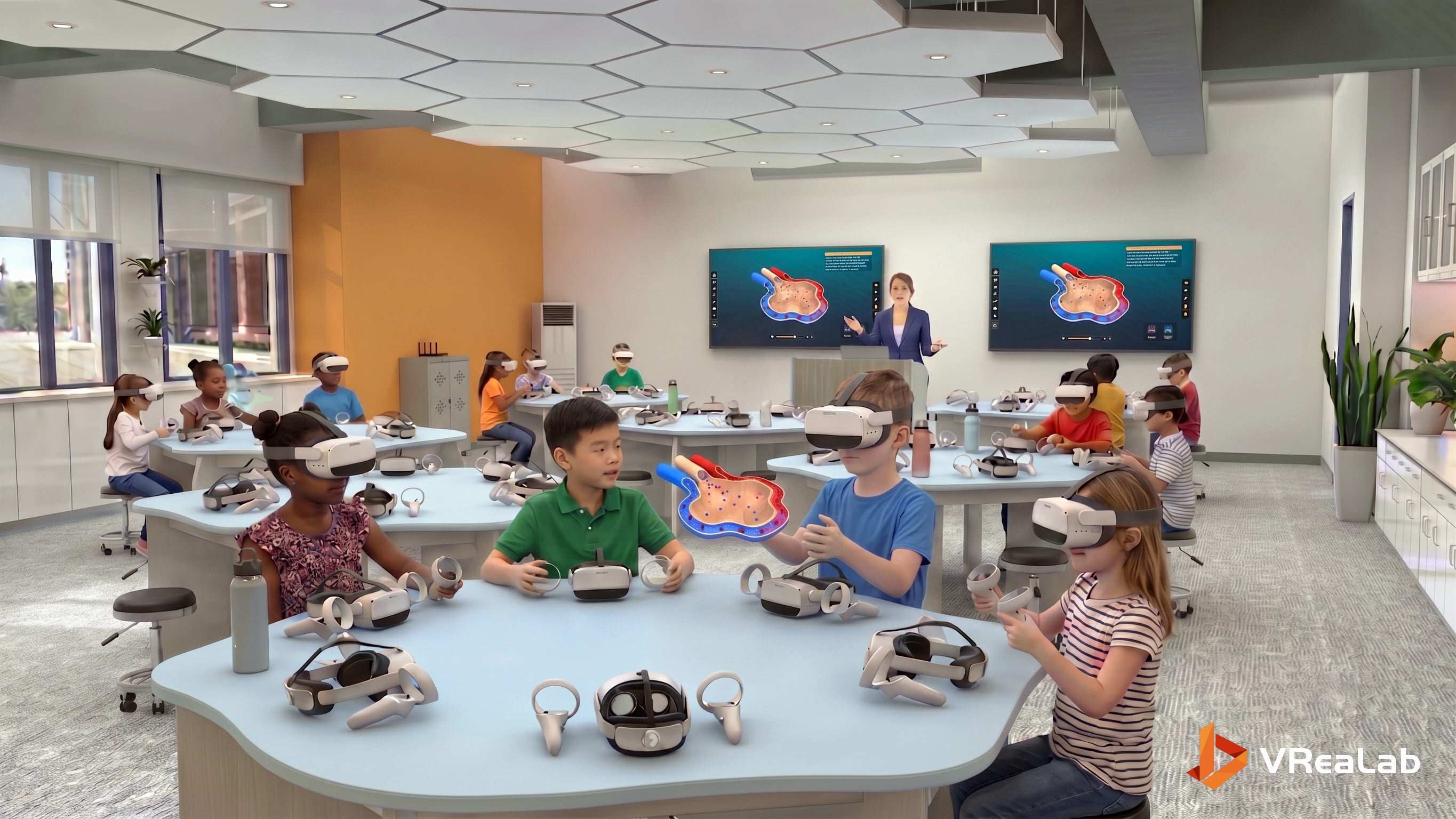
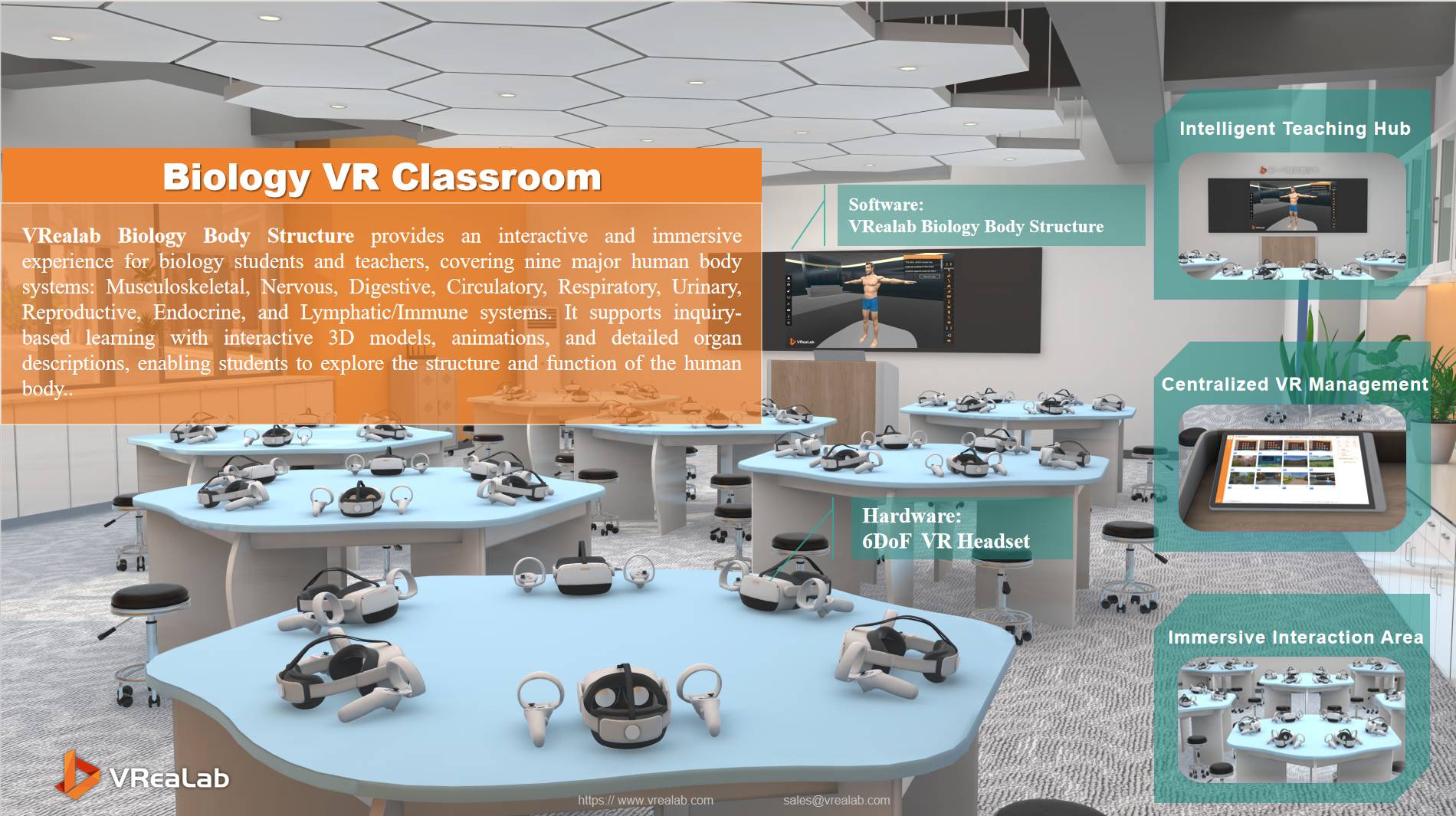
Few topics in middle school biology excite students more than the human body, and few frustrate them more. The organs are hidden, the systems overlap, and a flat textbook page never quite explains why a heart beats or how the lungs know when to take the next breath. With VR digital courses designed for middle school biology, the teaching gap closes fast, and the advantages show up in every part of the human physiology and health unit.
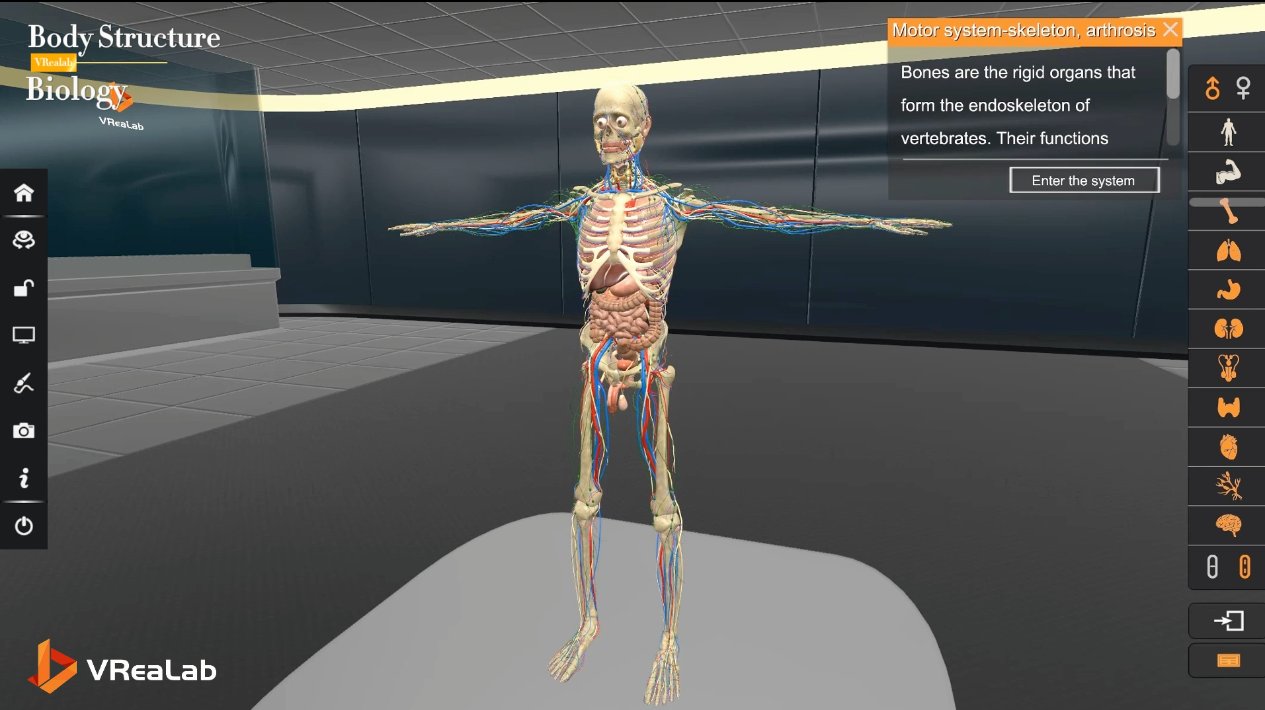
Advantage 1: A Full-Body 3D Anatomy on a Single Screen
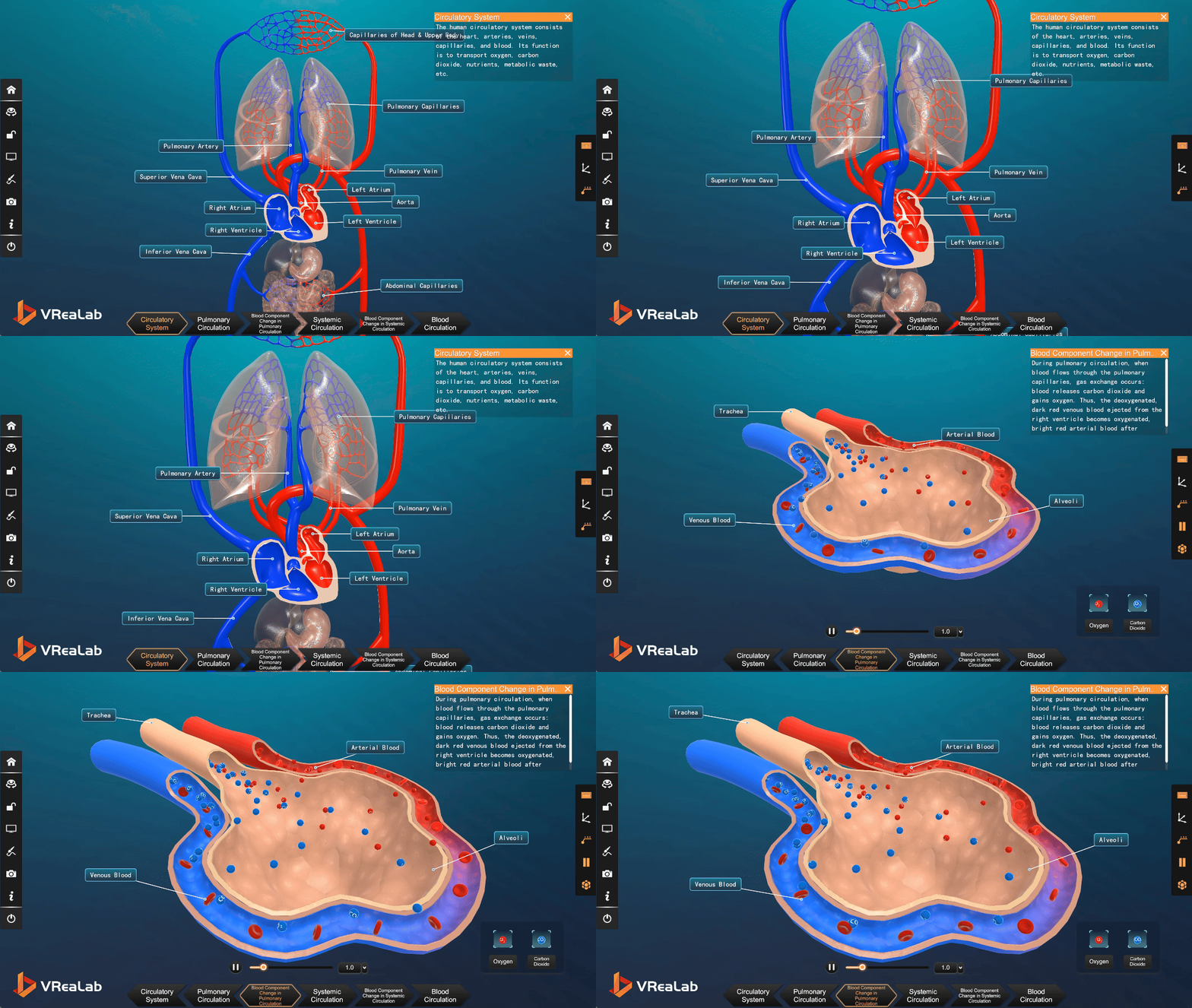
The first teaching advantage is coverage. A well-built VR/3D biology module gives students a complete 3D anatomy of the human body they can stand beside and walk around. Every system sits in the same scene, so students see organs in relation to one another rather than memorized in isolation.

A complete Human Body Systems 3D Model also keeps the teacher's lesson flow intact. Instead of jumping between disconnected charts, the class can stay inside one scene, ask questions, and let the model respond. That continuity matters a great deal in physiology, where the same structure often plays different roles in different systems.
Advantage 2: Dynamic Mechanism Understanding for Physiology Lessons
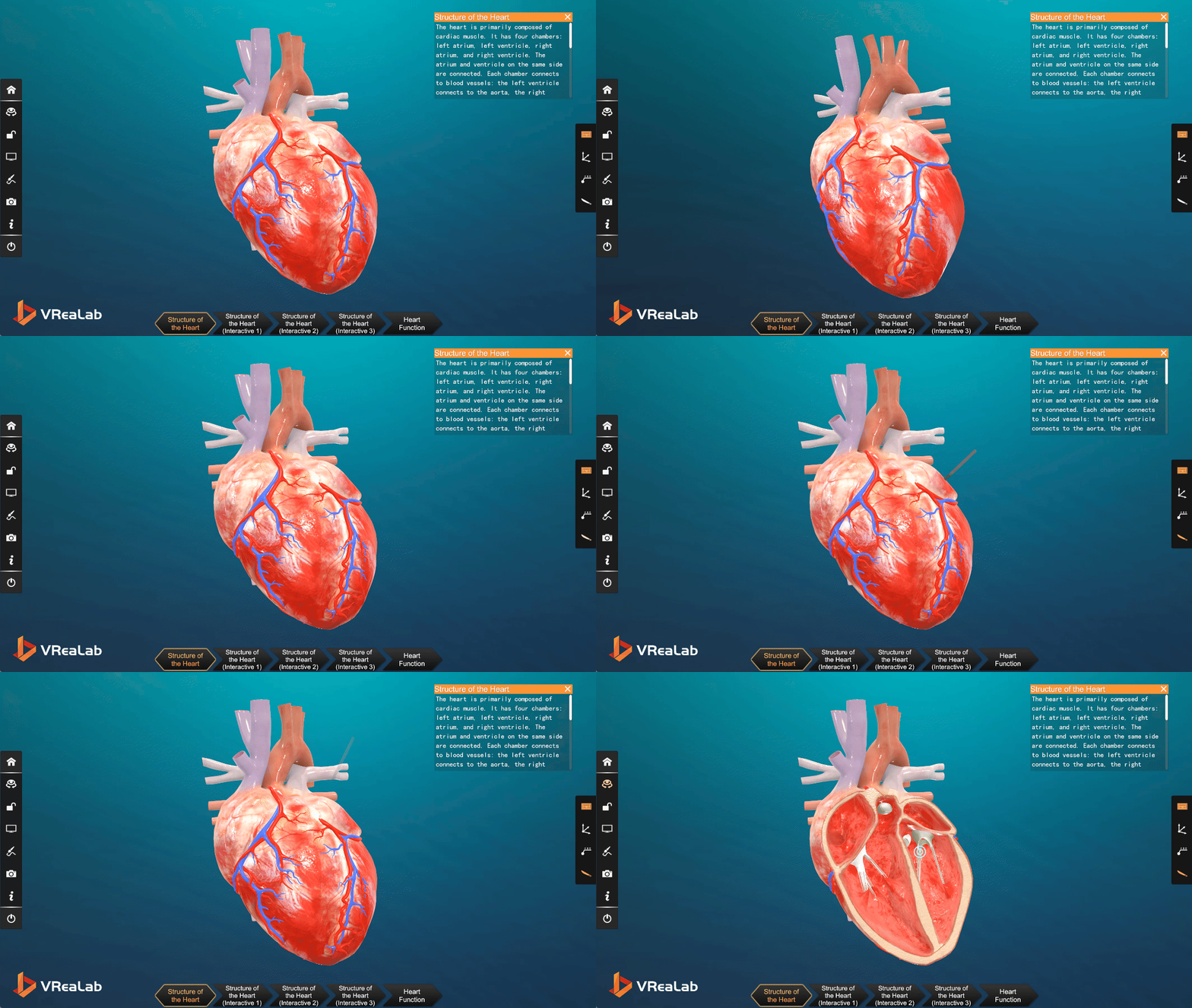
The second advantage is movement. Anatomy is not a still life; it is a running process. The heart pumps, the diaphragm contracts, the alveoli inflate and deflate, and food travels through a seven-meter digestive tract. A static diagram can only show where an organ sits. VR biology interactive learning shows what the organ is actually doing while the lesson is happening.
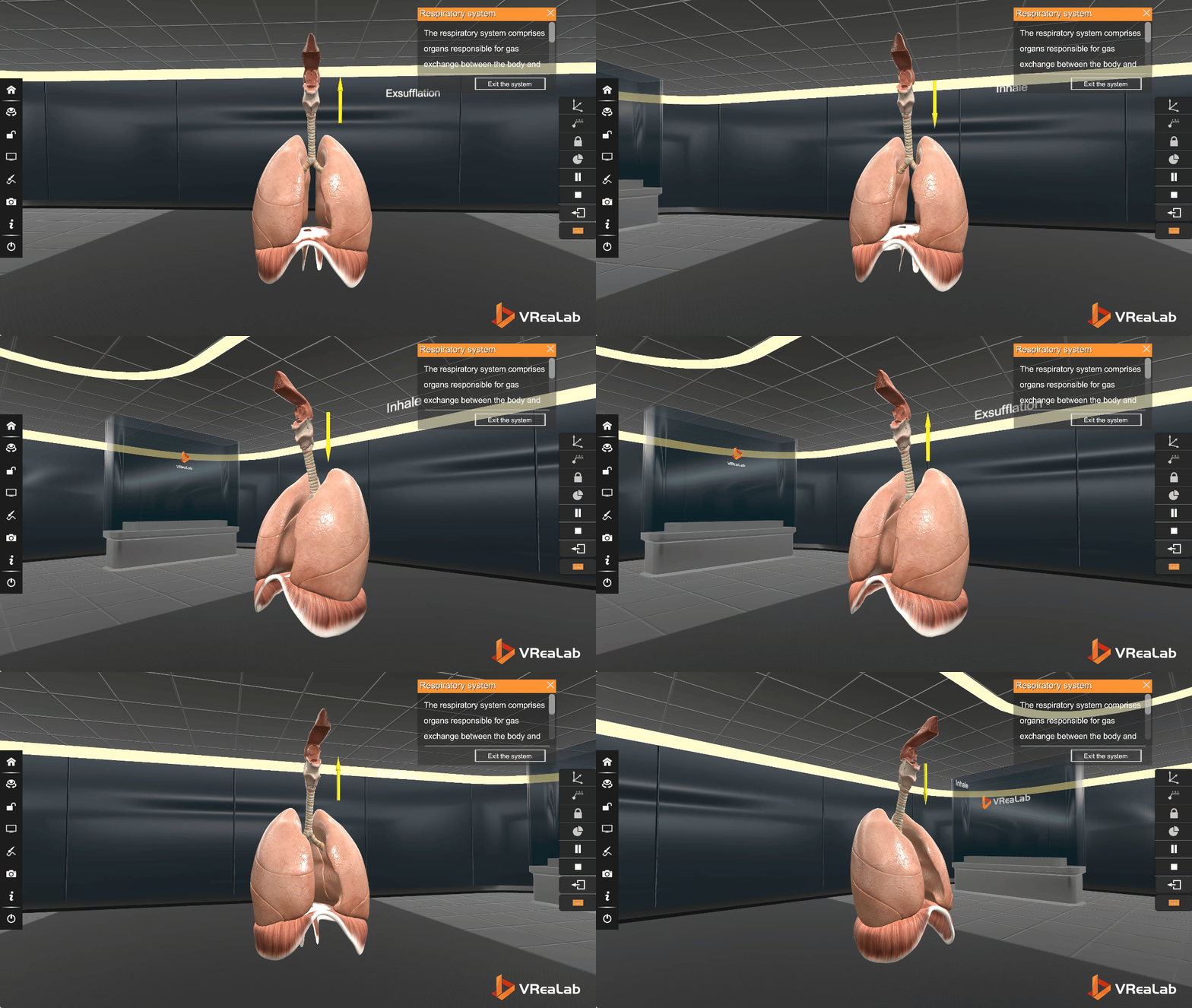
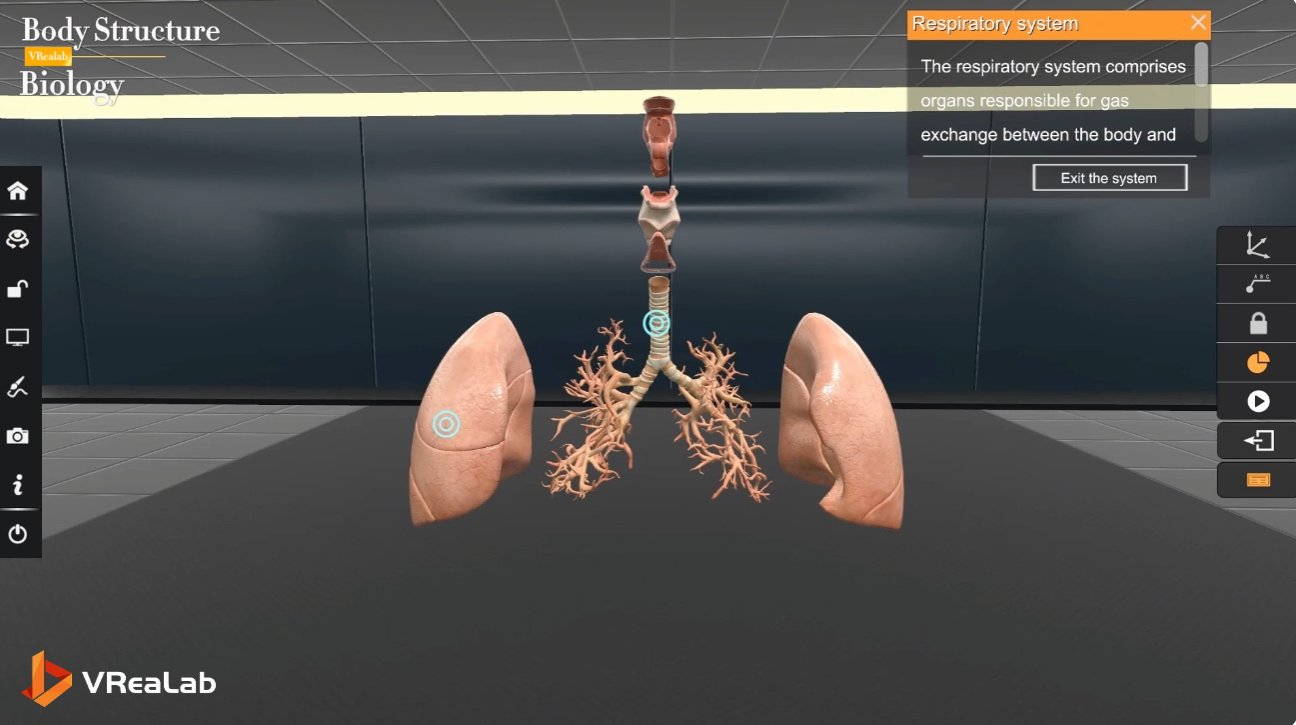
In the respiratory module, students see the trachea, the branching bronchi, and the lungs in a single scene, then move closer to watch how air reaches the alveoli.
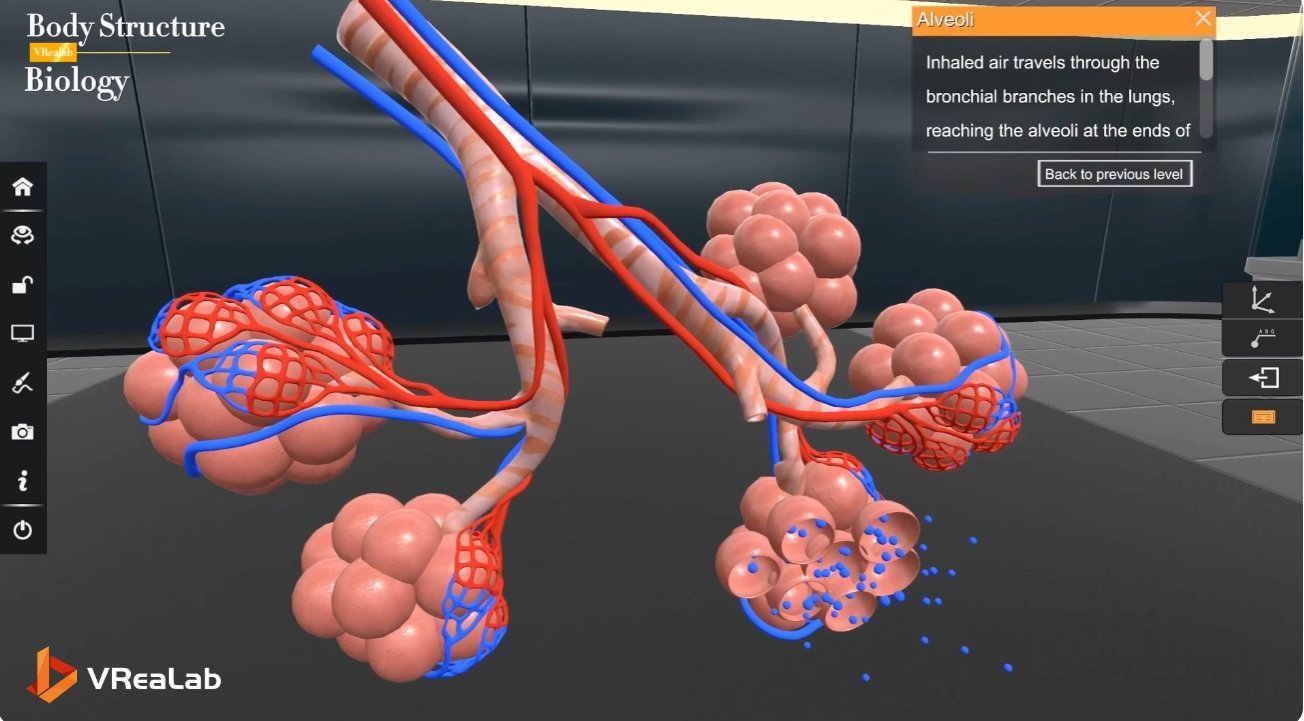
A closer look at the alveoli turns the phrase "gas exchange" into a visible event. Students watch oxygen and carbon dioxide cross the alveolar membrane — the moment when the term finally makes sense to a thirteen-year-old.
Advantage 3: Immersive and Interactive Exploration of Organ Structure
The third advantage is the freedom to look inside an organ without cutting one open. Layer and transparency controls let students strip away the rib cage, isolate the eyeball, or pull the digestive tract out and follow it from stomach to small intestine.
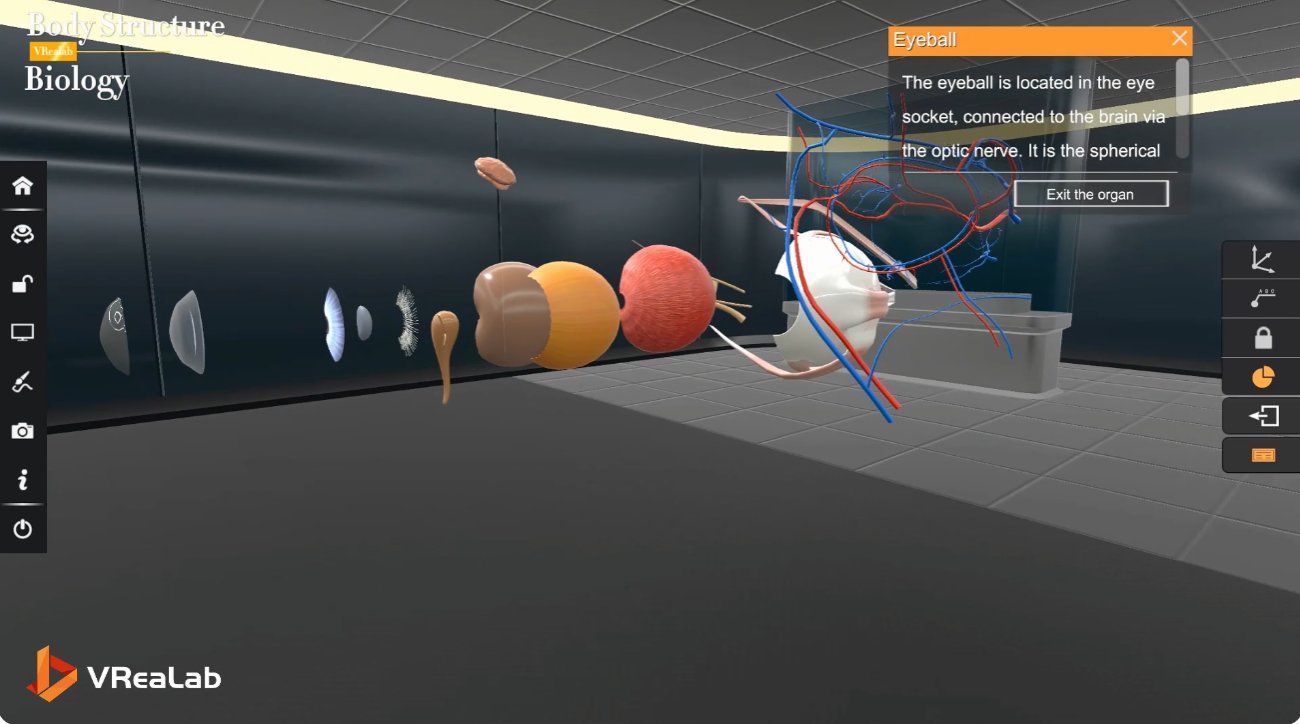
This kind of multi-layer observation is exactly what a flat poster cannot do and what a real dissection lab can do only with cost, time, and ethical constraints. For middle school classrooms the VR version is often more useful than the real thing, because the model can be reset, replayed, and shared with the whole class.
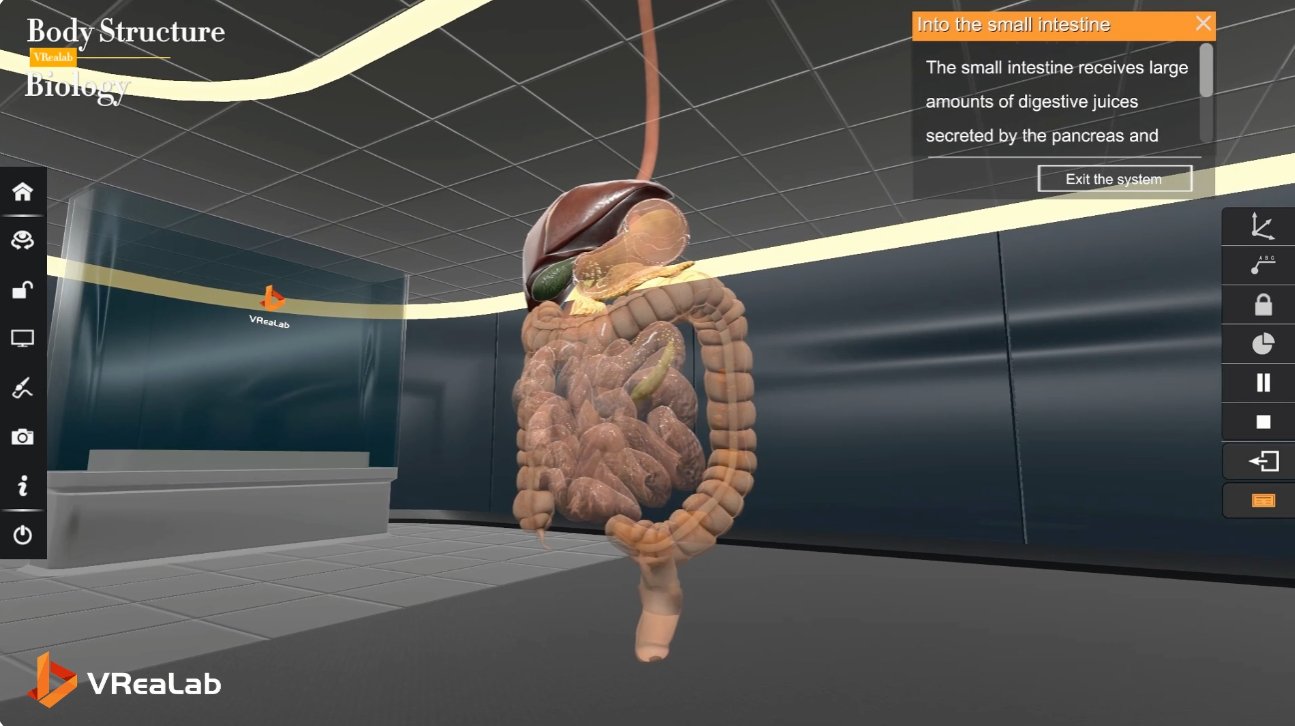
Advantage 4: Health Literacy Built into the Curriculum
The fourth advantage, and the one most relevant to a Human Physiology and Health unit, is that VR does not stop at structure and function. The respiratory module includes a paired unit on respiratory health and Heimlich rescue practice. In a controlled virtual environment, students learn the safe positioning of hands, the correct pressure point, and the rhythm of abdominal thrusts. They practice repeatedly without any risk to a real person.
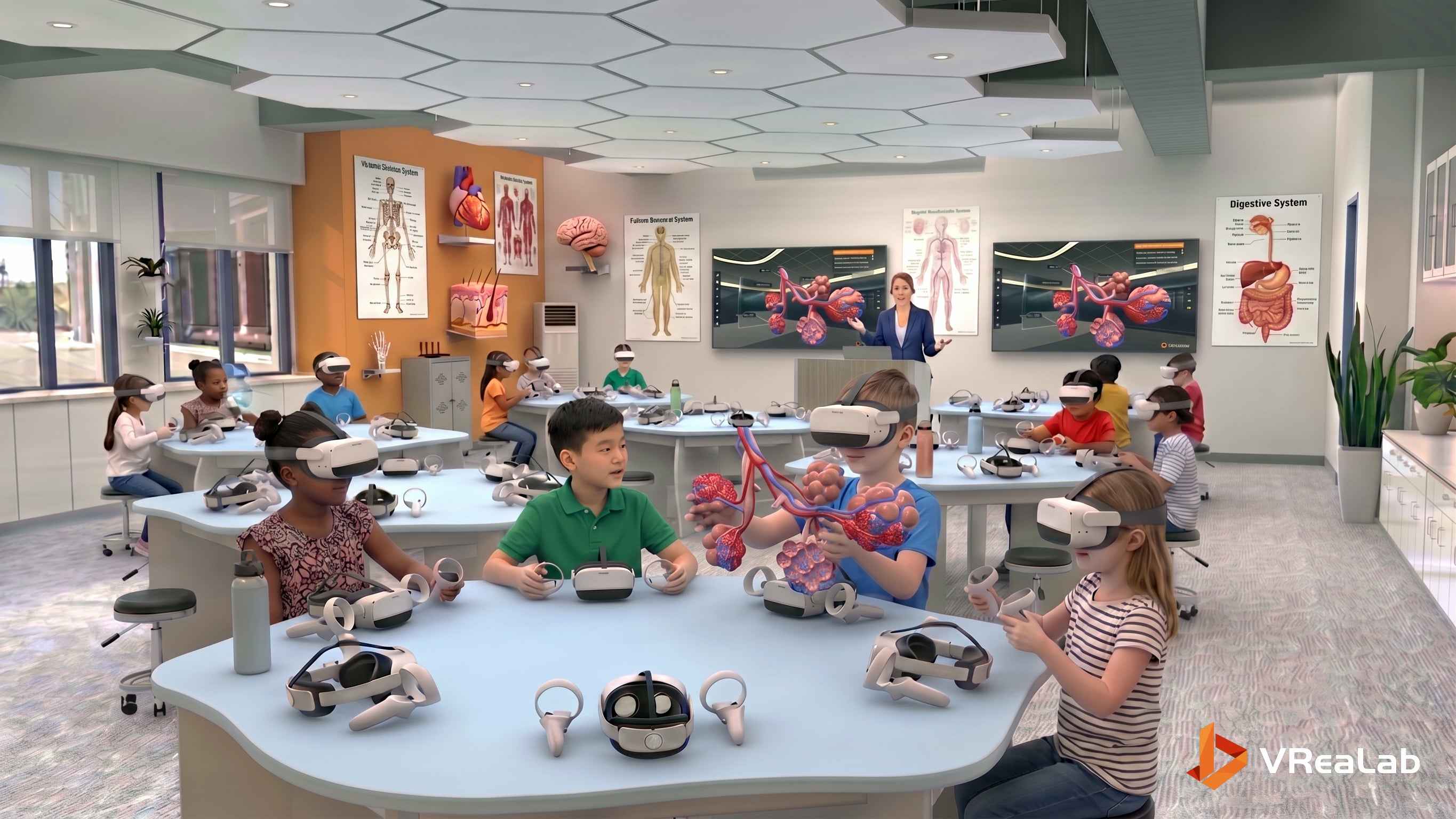
This is the kind of skill the old biology classroom could not teach safely, and it is why VR-based health literacy fits so naturally into the new curriculum standards. Knowledge that is practiced, not just memorized, is knowledge that students keep.
Conclusion: A Teaching Layer That Physiology and Health Both Need
The teaching advantages of a VR digital course in middle school biology are easy to summarize. It puts a complete 3D anatomy of the human body in front of students. It turns static diagrams into running processes. It supports multi-layer exploration no printed page can match. And it folds health-literacy skills like Heimlich rescue into the same lesson.
Built on a unified Human Body Systems 3D Model and powered by biology interactive learning, this kind of course does not replace the teacher; it gives the teacher a much better classroom to teach in.