Simplifying Teaching Preparation — Enabling Regular VR Classroom Adoption
Many teachers worry that VR classroom operations are complex and lesson preparation costs are high. The JuDao Human Physiology VR Digital Course, however, is specifically designed for regular classroom use.
The latest national curriculum standards and the 2023 Curriculum Reform Plan explicitly call for exploring "new teaching and learning models integrating information technology." The JuDao Human Physiology VR Digital Course, built around three core pillars — visualization, immersion, and interactivity — provides teachers with a brand-new teaching tool set and instructional approach. It effectively addresses long-standing teaching pain points and helps build an efficient, multidimensional, and deep-learning human physiology classroom under the new curriculum standards.

Solving the Pain of Abstract Teaching — Making Physiology Tangible and Perceptible
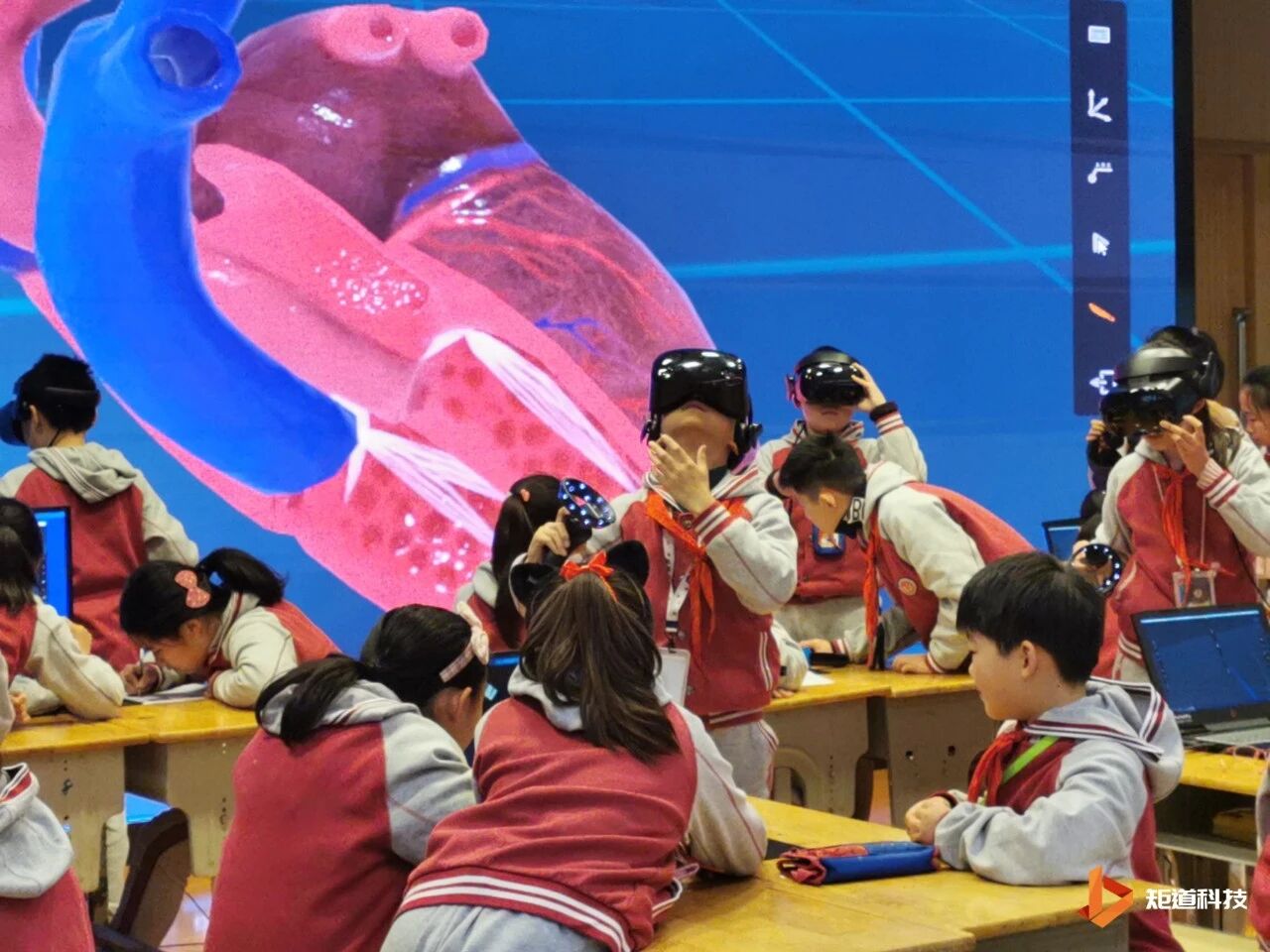
The core challenge in teaching human physiology is that students cannot intuitively perceive physiological processes happening inside the body. They can only rely on text-based imagination to understand abstract concepts such as breathing mechanics, gas exchange, and blood circulation, leading to comprehension difficulties and poor knowledge retention. JuDao's VR classroom transforms these abstract processes into observable and experiential visual scenarios through dynamic simulation and immersive presentation, ensuring that teachers' explanations are no longer "empty words."

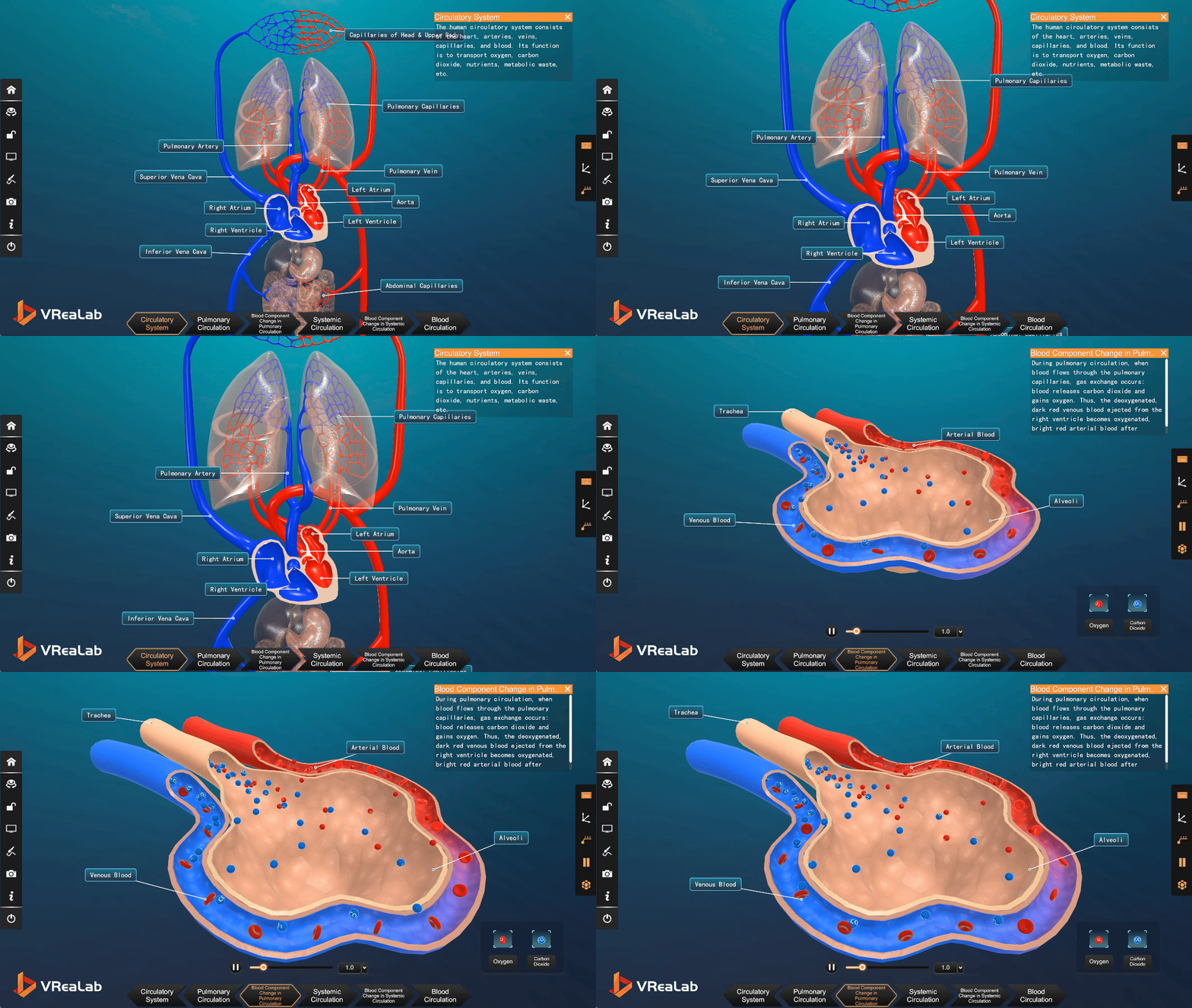
When teaching Gas Exchange in the Lungs, teachers can cast the complete structure of the respiratory system onto a screen via the VR digital course, allowing students to clearly see the hierarchical relationship among the nasal cavity, trachea, and lungs. When exploring the principles of breathing mechanics, the VR course dynamically presents the contraction and relaxation of the diaphragm and intercostal muscles along with the corresponding changes in thoracic cage and lung volume, enabling students to intuitively grasp the core principle that "during inhalation, the thoracic cavity expands and the lungs inflate; during exhalation, the thoracic cavity shrinks and the lungs recoil." When explaining alveolar-capillary gas exchange, the course can zoom in to display the thin-walled structure of the alveoli and their close apposition with capillaries, allowing students to understand at a glance the structural basis and mechanism of gas exchange. Leveraging the visualization power of the VR classroom, teachers no longer need to belabor explanations — students quickly grasp key and difficult concepts, dramatically improving classroom teaching efficiency.

Enriching Teaching Activities — Implementing Inquiry-Based and Collaborative Learning
The new curriculum standards emphasize a student-centered approach and prioritize cultivating students' scientific inquiry and collaborative learning abilities. The JuDao VR Digital Course provides rich resource support for teachers to design inquiry-based teaching activities, seamlessly integrating into every stage of the teaching process: context introduction, new-knowledge exploration, classroom assessment, and extended learning.

During the context introduction stage, teachers can play dynamic videos of human respiratory movements in the VR classroom, or let students quickly experience a virtual walkthrough "inside the lungs," instantly capturing their attention, stimulating learning interest, and naturally introducing the lesson topic. During new-knowledge exploration, teachers can design collaborative group inquiry tasks — for example, having students work in groups to operate the breathing simulation model, dragging model components to observe changes in the thoracic cavity and lungs, then discussing and summarizing the principles of breathing mechanics. Or students can collaboratively disassemble the heart structure to explore the pumping mechanism, cultivating both cooperative skills and inquiry abilities through hands-on interaction and discussion. During classroom assessment, the course's visual assessment function transforms traditional paper exercises into interactive question-and-answer tasks: students consolidate knowledge through active manipulation while teachers monitor learning progress in real time, achieving assessment-driven learning. During the extended learning stage, the VR digital course can guide students to explore the connection between the respiratory and circulatory systems, building a holistic understanding of the human body and fostering a life-science mindset where structure and function are understood as complementary.


Simplifying Teaching Preparation — Enabling Regular VR Classroom Adoption
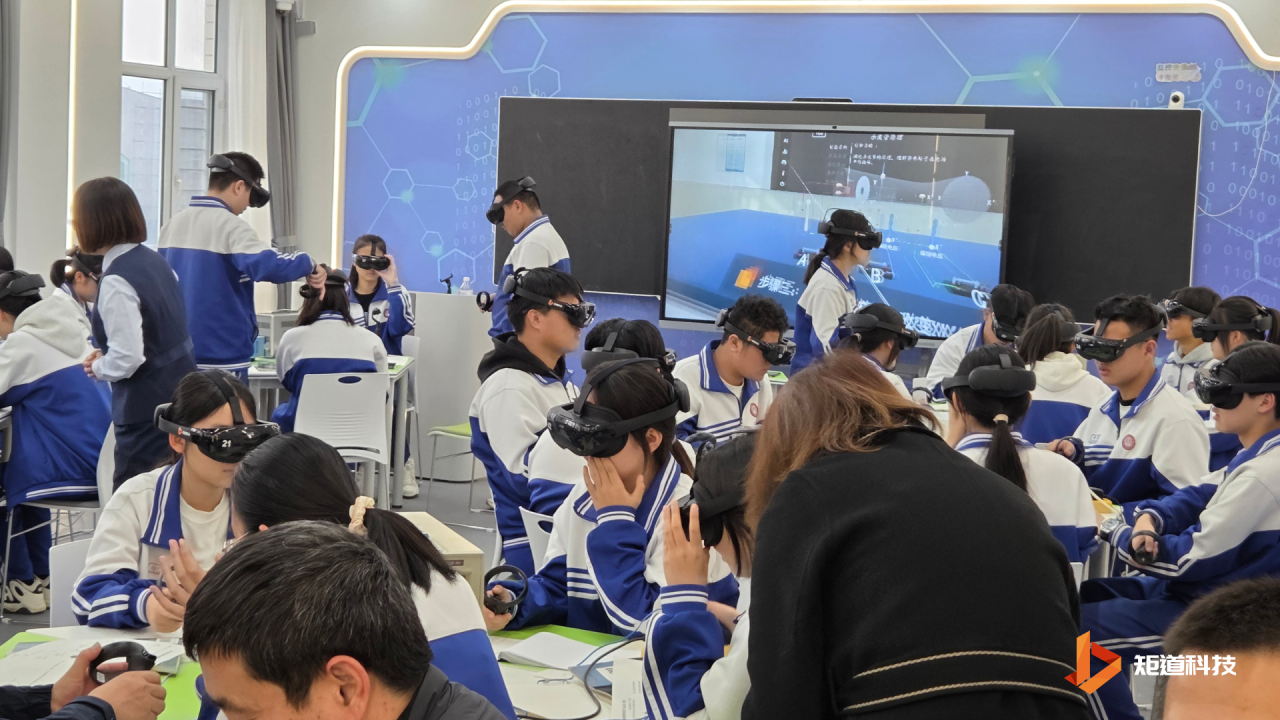
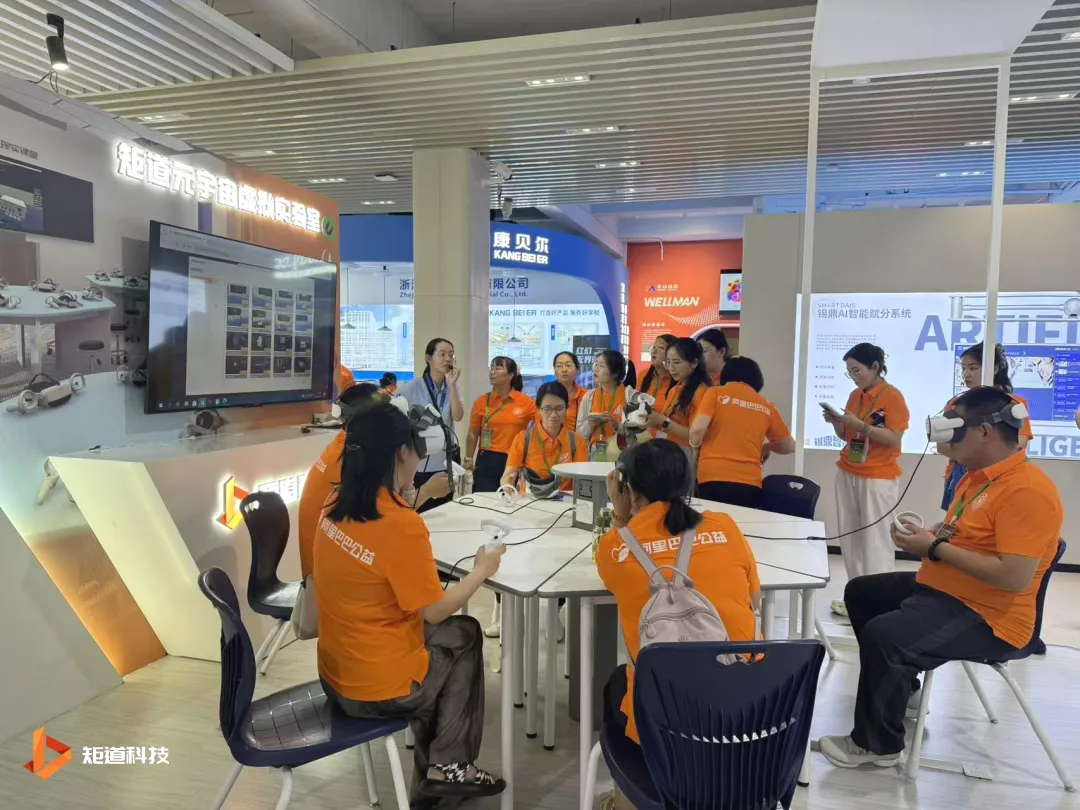
Many teachers worry that VR classroom operations are complex and lesson preparation costs are high. The JuDao Human Physiology VR Digital Course, however, is specifically designed for regular classroom use. Paired with the JuDao VR broadcast-and-control system, teachers can manage the classroom and control teaching resources with a single click — no complicated device operations required — seamlessly integrating VR instruction into everyday lessons.

The course provides systematic teaching resources covering all necessary content — models, animations, experiments, assessments, and more. Teachers do not need to spend extra time collecting and organizing materials; they can directly build their teaching plans around the course resources, significantly reducing lesson preparation burden. At the same time, the course supports multiple teaching modes including screen-casting for whole-class instruction and student-device experience for group exploration, flexibly adapting to both full-class collective teaching and small-group collaborative inquiry. This transforms VR classrooms from a "formalistic ornament" into a regular teaching tool that genuinely enhances instructional quality.
The JuDao Human Physiology VR Digital Course is more than a digital teaching resource — it is a "teaching-research powerhouse" that helps teachers solve human physiology teaching pain points, meet new curriculum standards, and innovate instructional models. Using technology as a bridge, it connects abstract physiological knowledge with students' cognitive needs, making teaching easier and more efficient, and making learning more active and in-depth. Together, we are building a new biology classroom under the new curriculum standards — one that combines engagement, inquiry, and core-competency cultivation!