Electric Current Made Visible: Physics Simulation Lab Unlocks Middle School Ohm's Law Inquiry
Current, voltage, and resistance are three core concepts in middle school electricity, yet they remain among the most abstract. A virtual Physics lab transforms these invisible phenomena into observable, interactive experiences.
Current, voltage, and resistance are three core concepts in middle school electricity—and three of the most abstract. Invisible and intangible, students can only perceive them indirectly through ammeters and voltmeters. The Ohm's Law experiment, which explores the relationship between current, voltage, and resistance, requires continuously adjusting a sliding rheostat and collecting multiple sets of data. After one class period, many groups fall short on data, and the pattern is simply "given" by the teacher. How can electricity inquiry lessons truly become exploratory? The physics simulation lab offers a new solution.
Making Current Visible: Abstract Concepts Become Tangible
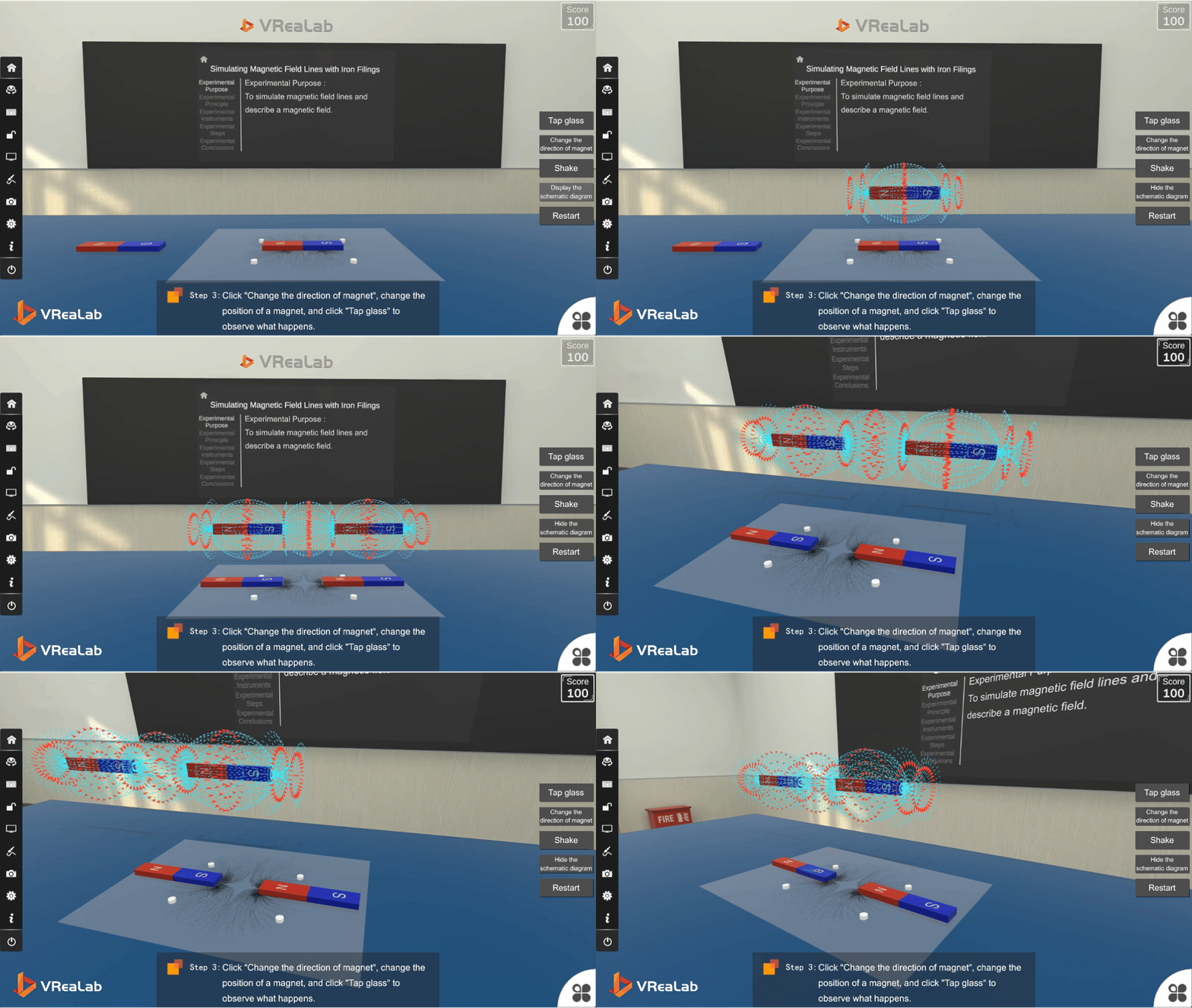
In the 3D environment of a physics simulation lab, electric current is no longer a "black box." Take JuDao's 3D virtual simulation laboratory as an example: close the switch, and electrons in the wire immediately move in a directed flow, with the current path clearly displayed through dynamic lighting effects. Adjust the sliding rheostat, and the bulb brightness changes accordingly while ammeter and voltmeter readings refresh synchronously. Students can instantly see the causal chain: "as resistance decreases, current increases, and the bulb brightens." What once required repeated explanation becomes an observable, operable and intuitive phenomenon, clearing the cognitive hurdles for quantitative inquiry. A well-designed virtual Physics lab turns abstract electrical concepts into something students can actually see and manipulate.

Zero-Risk Trial and Error: From Fear of Mistakes to Confident Exploration
Physical circuit experiments have two major pain points: wrong connections can damage components, and tight class schedules leave no room for do-overs. Physics laboratory software reduces the cost of trial and error to nearly zero. Students can boldly try short-circuiting the power supply and observe the simulated consequences of overcurrent and overheating. They can also intentionally connect the voltmeter across the sliding rheostat incorrectly, then troubleshoot and correct it on their own. Inside the physics lab software, mistakes can be reconnected and restarted at any time, with zero wear on equipment. Through repeated cycles of "making mistakes—troubleshooting—correcting," students develop a far deeper understanding of circuit structure than from a single successful connection, and proper operational awareness naturally grows through the error-correction process. The Middle School VR Science Lab transforms every misstep into a learning opportunity.

Real-Time Data Collection: From Verification to Discovery
The key to exploring Ohm's Law lies in inducing patterns from multiple data sets—yet traditional classrooms often rely on "insufficient data supplemented by stated rules." The physics simulation lab enables students to quickly complete multiple rounds of experiments: replace fixed resistors, adjust the sliding rheostat, and each set of current and voltage values is recorded in real time, automatically generating U-I graphs where proportional and inverse proportional relationships become clear at a glance. In a 3D virtual simulation lab, one class period can accomplish the experimental volume of two or three traditional lessons. Students personally induce the conclusion that "when voltage is constant, current is inversely proportional to resistance," truly implementing inquiry-based learning. With a virtual Physics lab, every student becomes a discoverer rather than just a memorizer.

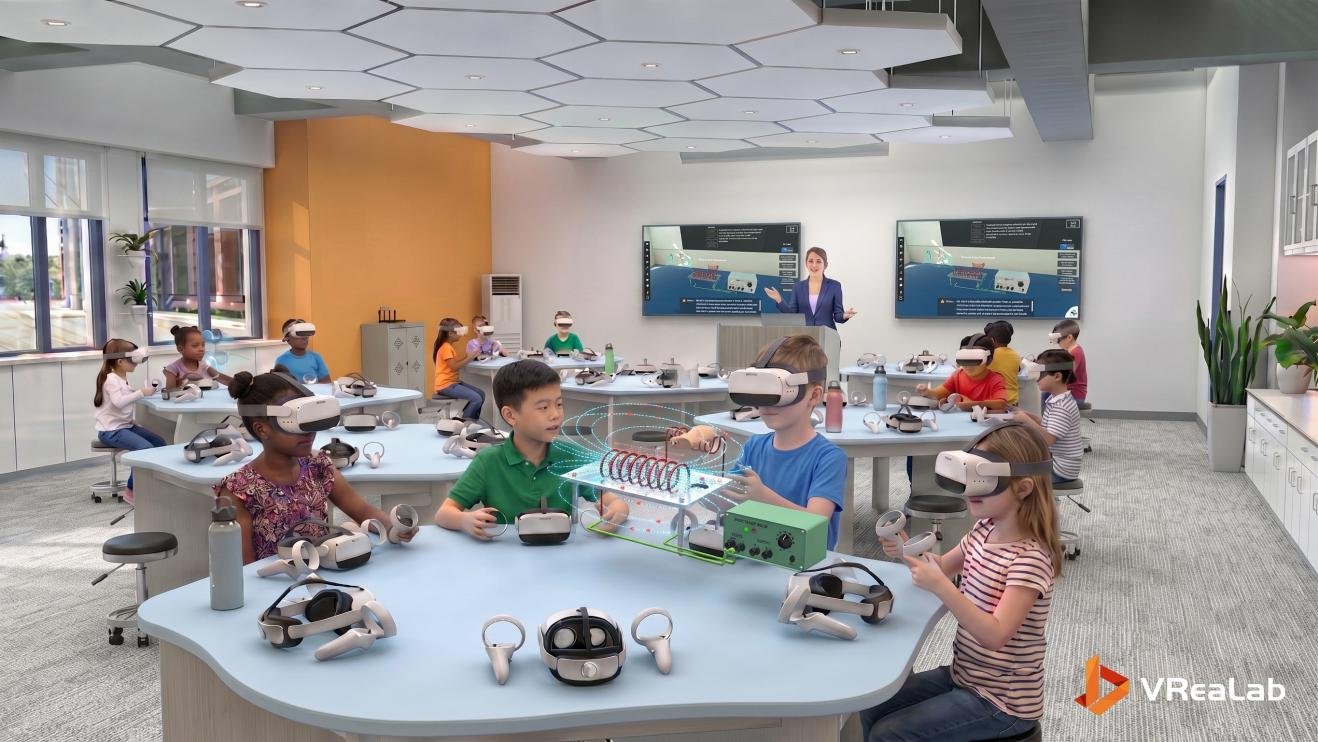
From "invisible" to "visible," from "afraid of mistakes" to "confident to explore," from "memorizing rules" to "discovering patterns"—physics laboratory software is reshaping middle school electricity classrooms. Virtual simulation does not replace real hands-on operation; instead, it complements reality: students first build cognition and master skills in a virtual environment, then enter the lab to operate confidently, with both classroom capacity and depth of inquiry improved simultaneously. The physics simulation lab, empowered by the Middle School VR Science Lab approach, ensures that every electricity inquiry lesson has evidence to rely on and a visible path to follow.