Virtual Simulation Experiments: Breaking the Limits of Inquiry, Deepening Understanding of Structure and Properties
Molecular structure determines properties — covalent bonds and molecular geometry together influence the chemical and physical properties of substances.
Molecular structure determines properties — covalent bonds and molecular geometry together influence the chemical and physical properties of substances. Traditional inquiry-based learning is constrained by experimental conditions and safety hazards. Virtual laboratories can effectively overcome these limitations, making them a powerful tool for highlighting the relationship between structure and properties, and for enriching the inquiry experience.
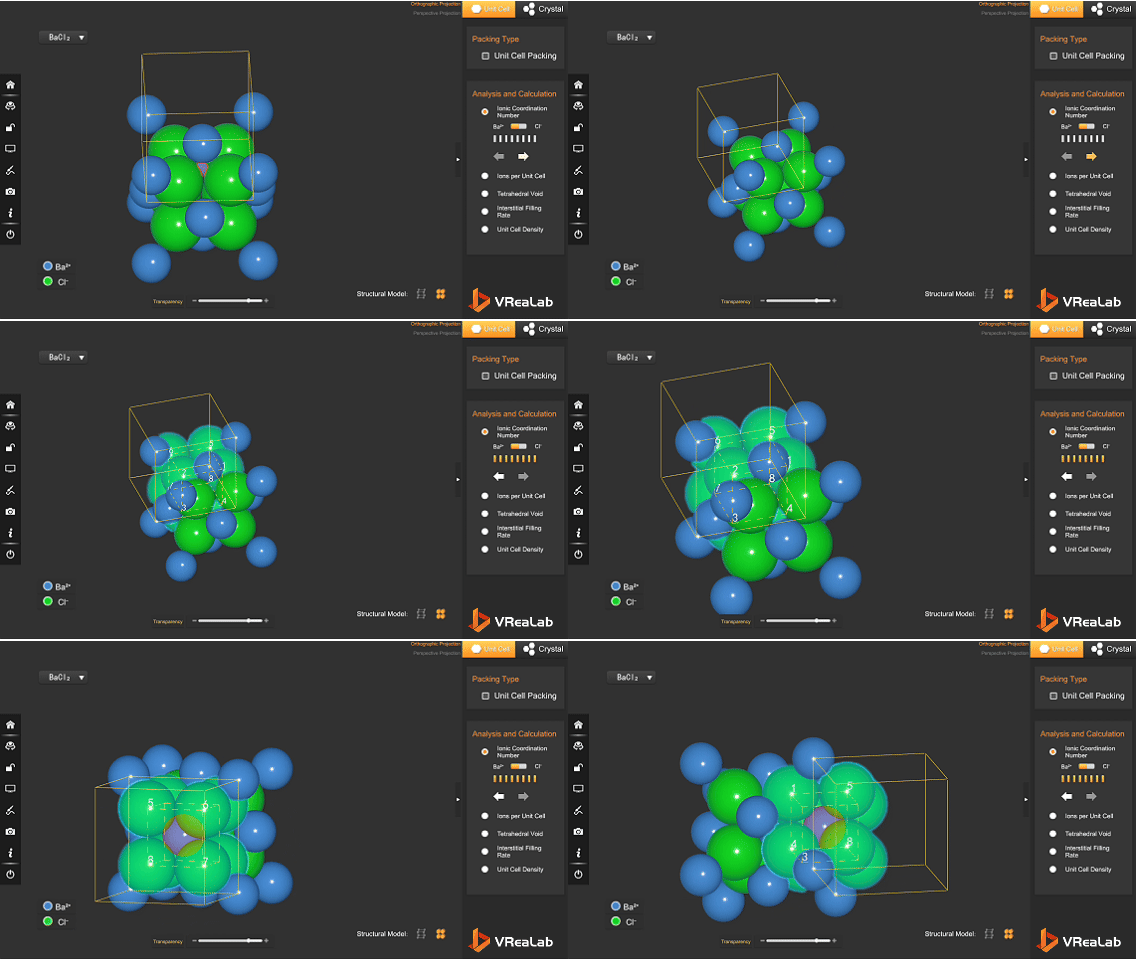
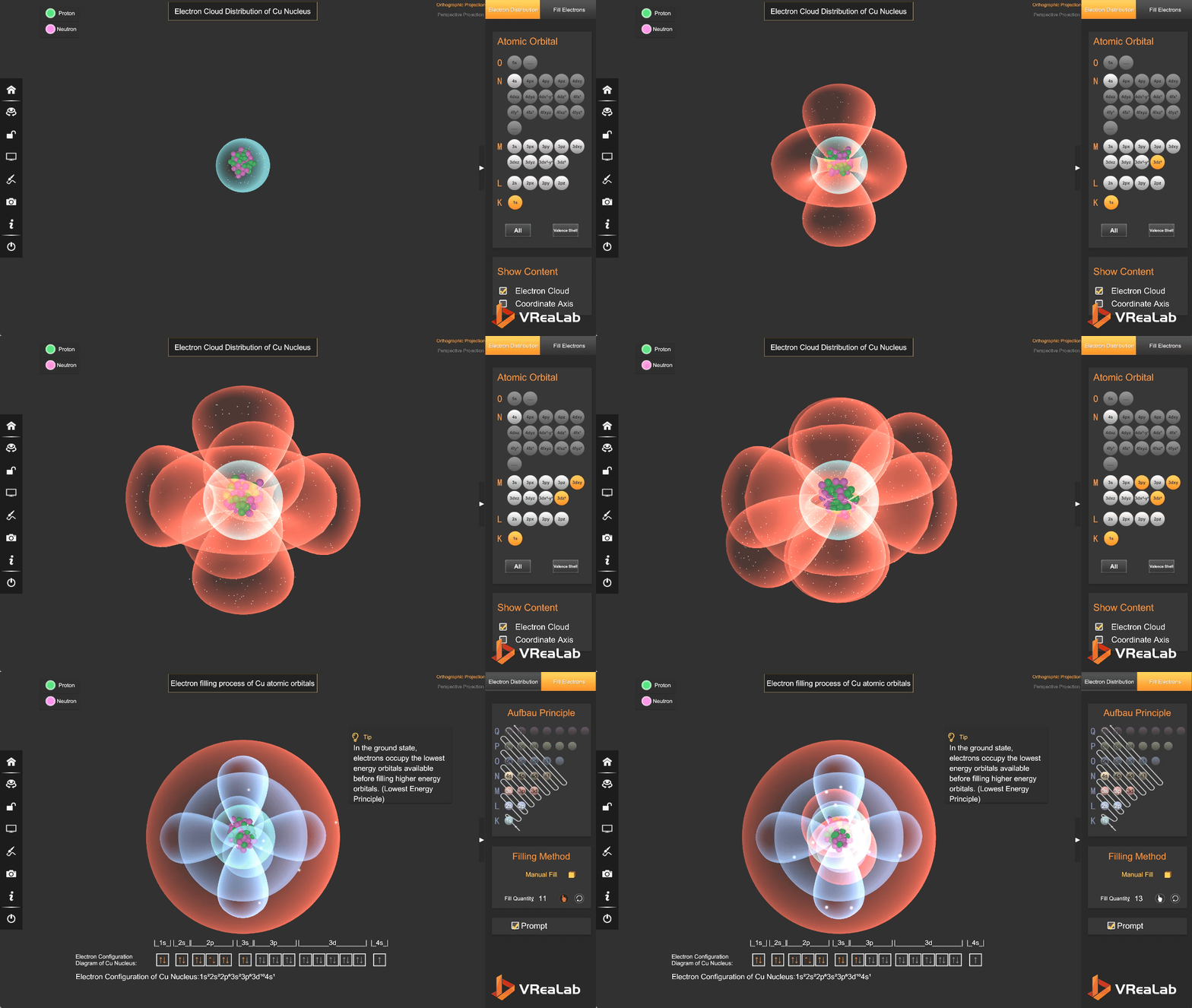
First: Visualizing microscopic processes to break through cognitive barriers. Virtual simulation can reproduce microscopic processes such as covalent bond formation, electron cloud overlap, and orbital hybridization through dynamic animation, eliminating cognitive obstacles. For example, when exploring the formation of the CH₄ molecule and its relationship to properties, students can clearly observe through the virtual laboratory the formation of sp³ hybrid orbitals in the carbon atom, their overlap with the s electron cloud of hydrogen atoms, and the dynamic formation of the regular tetrahedral geometry.

Second: Interactive operation to strengthen the inquiry experience. Learners combine microscopic structural analysis with macroscopic experimental verification, observing changes in structure and properties in real time. This achieves a closed-loop learning cycle of "theory → verification → conclusion," stimulating active inquiry in a way that traditional experiments simply cannot replicate.
For instance, when exploring the properties of ammonia gas, students use the microstructural visualization of virtual simulation to understand the molecular structure of NH₃, then combine it with the experiment of dissolving ammonia in water to verify the principle of "like dissolves like."
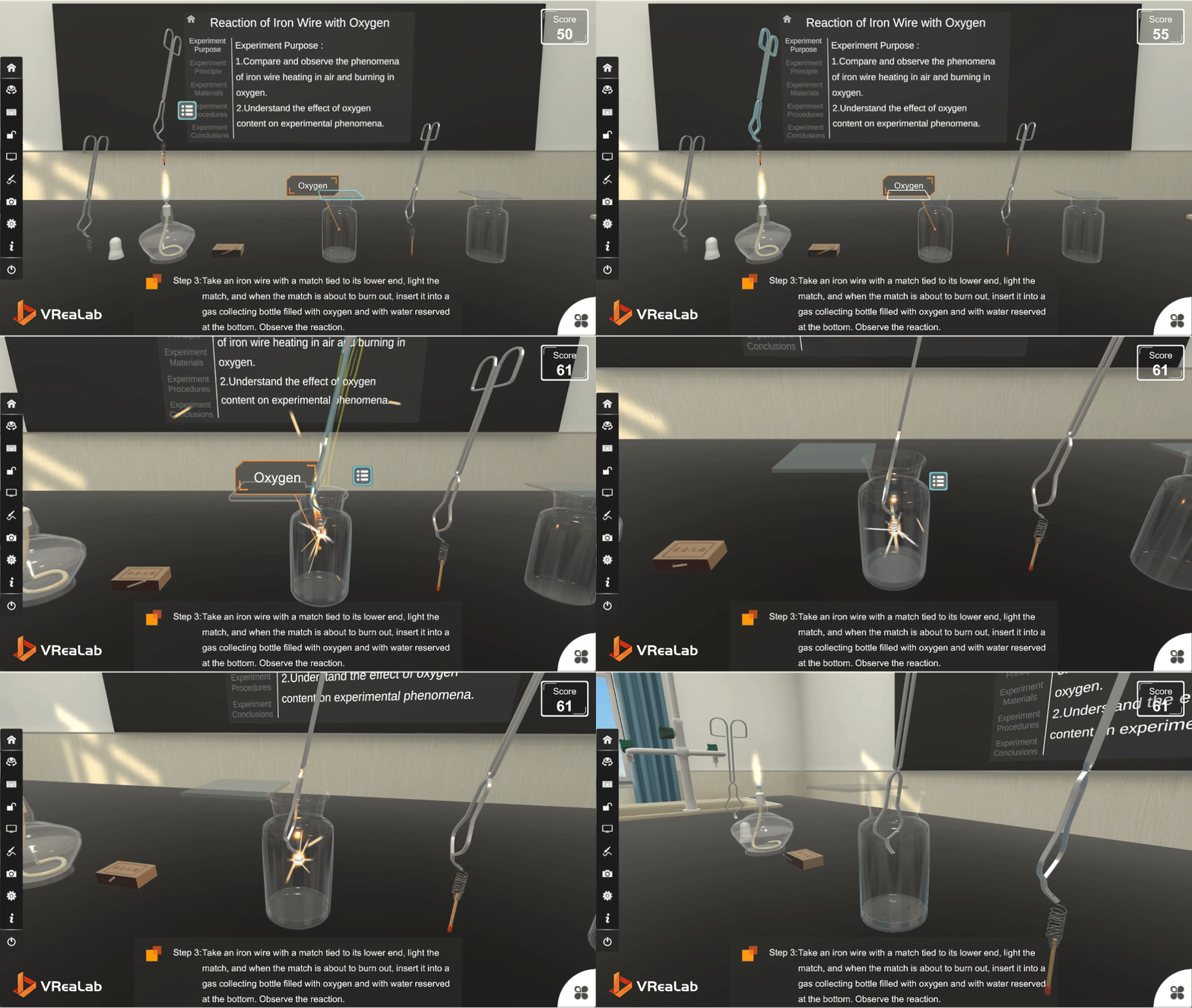
Third: Safe, efficient, and expanding the scope of inquiry. Virtual simulation experiments can model toxic substance experiments and high-risk laboratory operations without any contact with hazardous reagents. Experiments can be repeated indefinitely and parameters adjusted flexibly, dramatically improving inquiry efficiency and transcending the limitations of traditional laboratories.
With its clear advantages of visualization, interactivity, safety, and efficiency, the virtual laboratory thoroughly overcomes the many constraints of traditional experimentation. It transforms abstract knowledge into concrete experience, makes the inquiry process safe, and elevates the efficiency of teaching practice.