Seeing the Unseen: How VReaLab Transforms Chemistry Material Structure Education
Of all the challenges in high school chemistry education, none is more persistent than the problem of scale. The structures that determine how matter behaves — electron clouds, molecular geometries, crystal lattices — exist at scales far below anything the human eye can perceive.
Of all the challenges in high school chemistry education, none is more persistent than the problem of scale. The structures that determine how matter behaves — electron clouds, molecular geometries, crystal lattices — exist at scales far below anything the human eye can perceive. Teachers describe them with words and flat diagrams. Students memorize them for exams. But genuine understanding, the kind that builds lasting scientific competence, remains frustratingly out of reach.
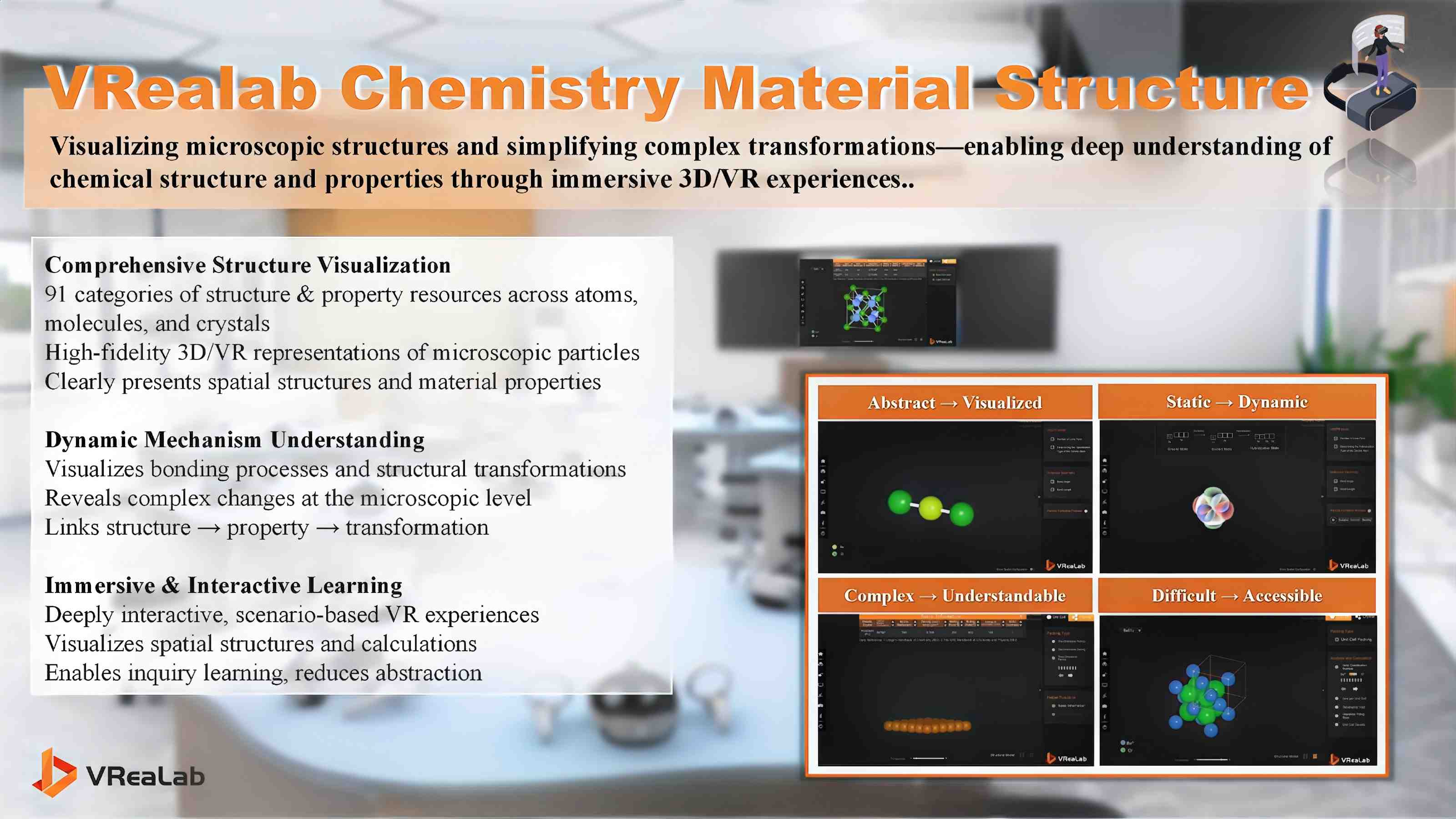
VReaLab Chemistry Material Structure is built to close this gap. By converting the invisible microscopic world into clear, high-fidelity VR and 3D imagery, it makes spatial structures and material properties explicitly visible. It is not a supplementary tool or a novelty — it is a comprehensive digital curriculum spanning atomic structure, molecular structure, and crystal structure, designed to transform how students learn the most abstract topics in chemistry.
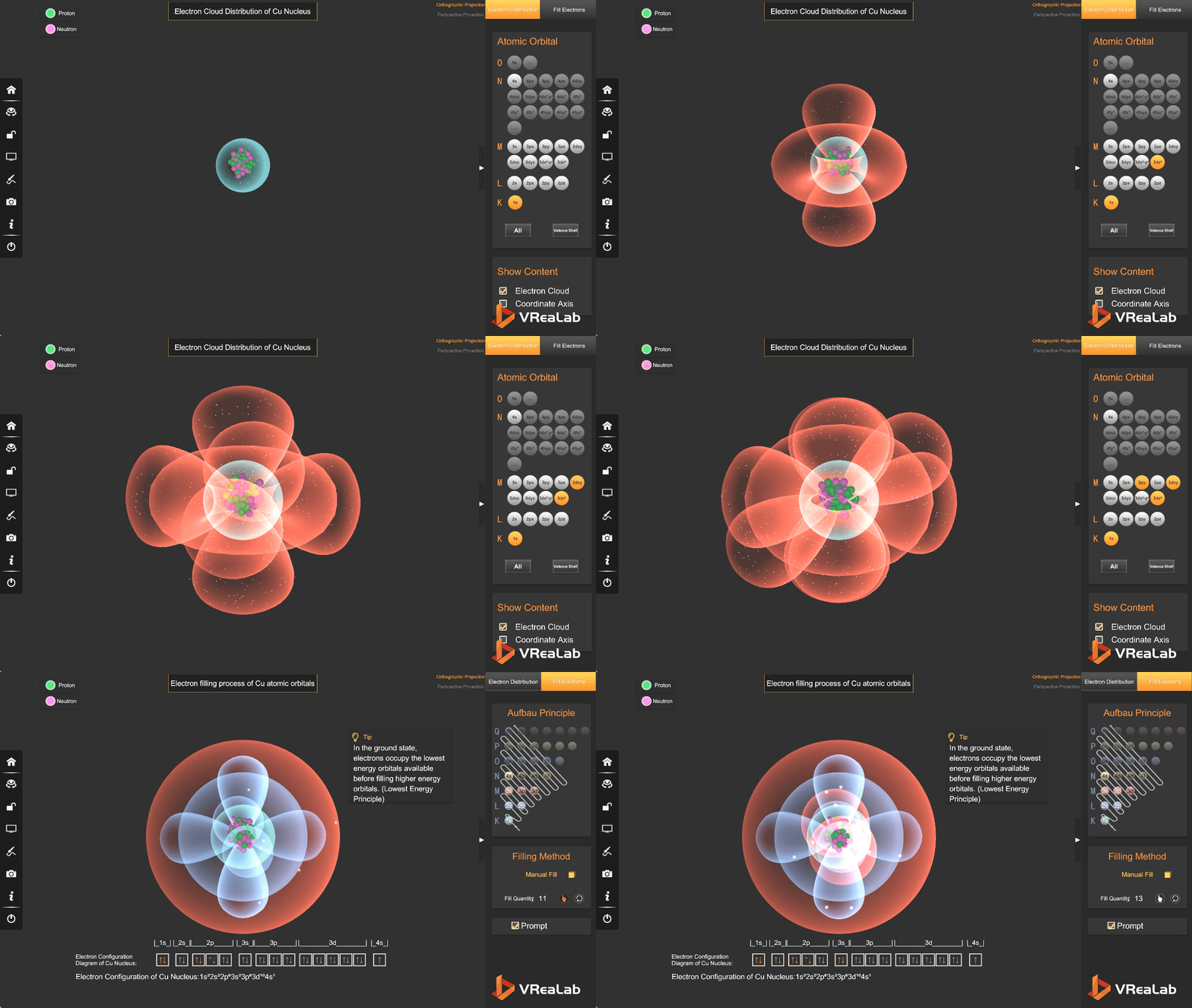
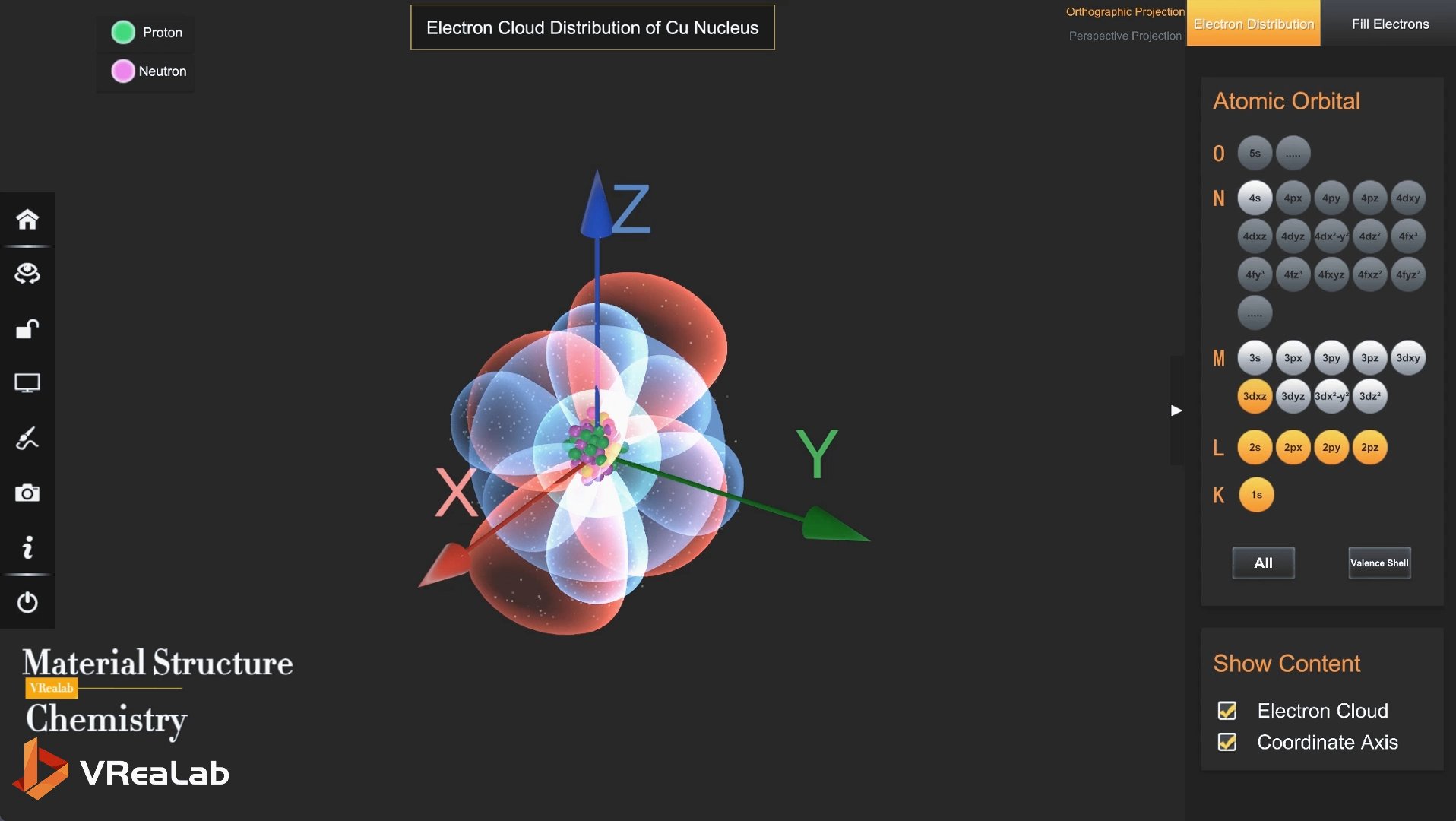
The system is organized around three core themes. The first covers atomic structure and properties, visualizing electron clouds and atomic orbitals to intuitively explain the periodic law of elements. The second explores molecular structure and properties, using VSEPR theory and hybrid orbital models to reveal three-dimensional spatial configurations and molecular polarity. The third dissects crystal structures, breaking down complex unit cell models and particle distribution calculations into tangible, process-oriented workflows. Together, these three themes form a complete VR Chemistry Lab experience that spans the entire structural chemistry curriculum.
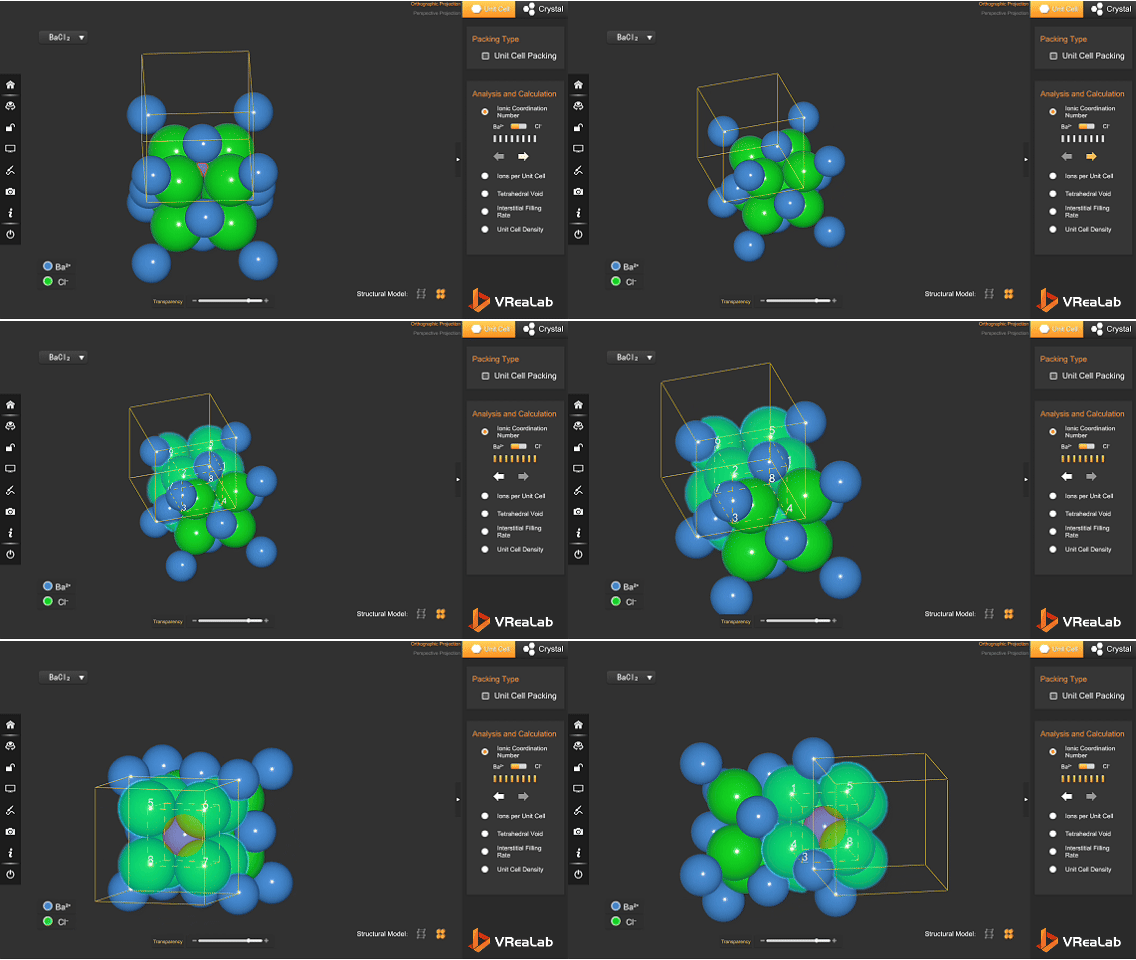
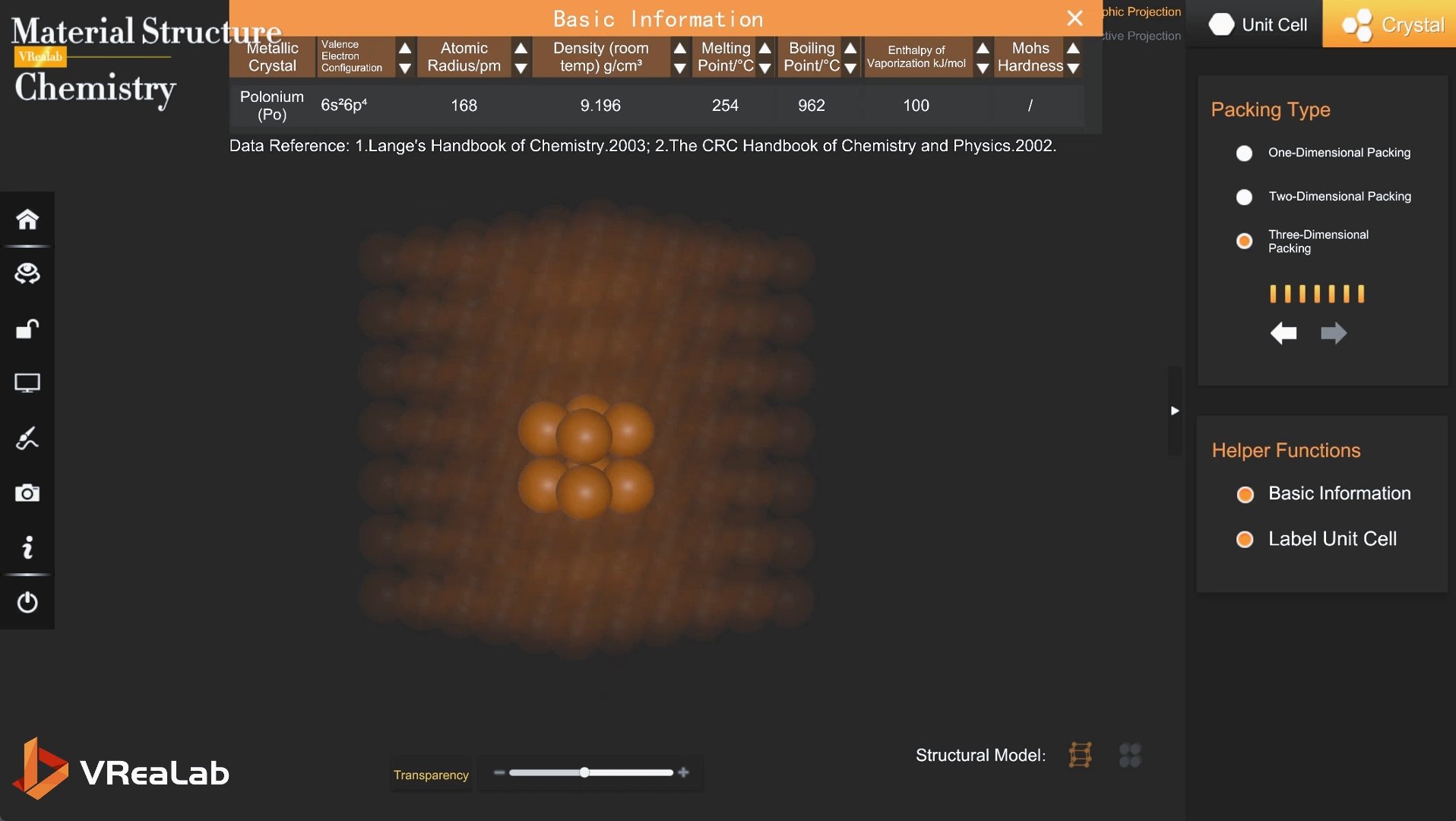
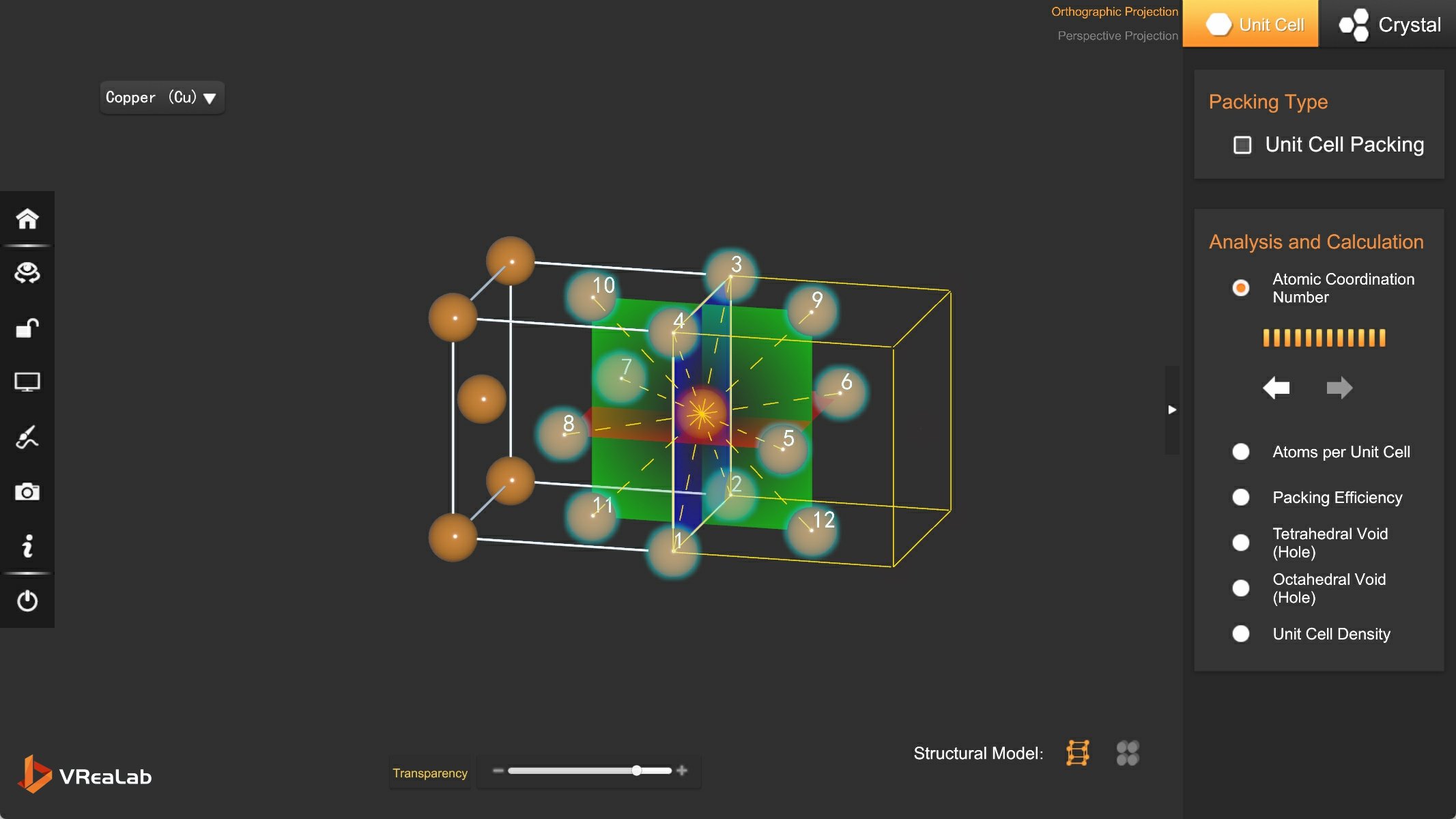
What makes this approach so powerful is the shift from static knowledge to dynamic process. In traditional teaching, a crystal structure is a picture in a textbook — a flat representation of a three-dimensional lattice that students must mentally reconstruct. In the VR Chemistry Lab, that same structure becomes a living model that students can rotate, zoom into, and explore from any angle. They can examine a face-centered cubic close-packing arrangement, manipulate interactive calculators for coordination number, atom count, packing efficiency, voids, and density, and watch how each parameter responds to structural changes. This kind of Crystal Structure Visualization transforms abstract formulas into concrete, observable relationships, drastically lowering the cognitive barrier that has always made crystallography one of the most difficult topics in the curriculum.
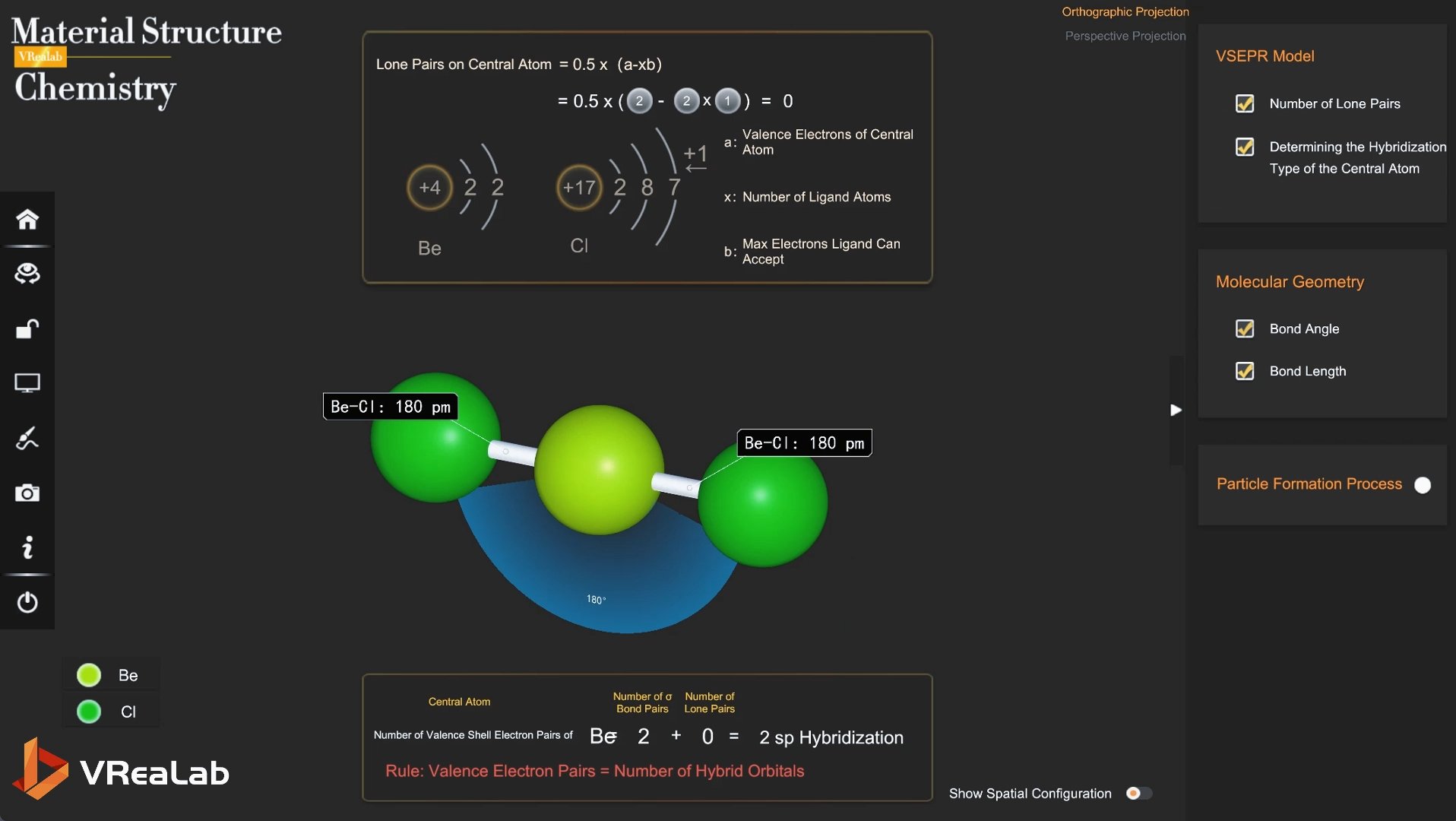
The same principle applies across molecular and atomic structures. When students study BeCl2, for example, they do not merely read about covalent bond formation and VSEPR predictions. They watch the bonding process unfold dynamically, interact with a VSEPR calculator, and observe bond parameters — length, angle, and molecular geometry — as they assemble in real time. The result is a 3D Chemistry Structure that students experience rather than memorize, one where the logical chain from structure to property to transformation becomes intuitively clear.
Beyond individual topics, the system fosters the core chemistry competencies that modern curricula demand: macroscopic identification, microscopic analysis, evidential reasoning, and model cognition. By bridging the gap between what students can see and what they are asked to understand, VReaLab Chemistry Material Structure turns the hardest part of chemistry into the most engaging. Crystal Structure Visualization, dynamic bonding processes, and interactive 3D Chemistry Structure models work together to ensure that no student has to learn structural chemistry blind — they can see it, explore it, and truly understand it.
Source: Word document uploaded by user