JuDao VR Chemistry Lab: Sulfur — The Element You Can Smell
From the acrid smoke of firecrackers to the distinctive scent of struck matches and the faint odor of hot springs, sulfur is perhaps the only element identifiable by nose alone. In the VR Chemistry Lab, students safely explore its fascinating dual nature.
From the acrid smoke of firecrackers to the distinctive scent of struck matches and the faint odor of hot springs — all of these come from sulfur. It is perhaps the only element in chemistry that can be precisely identified not by sight, but by smell alone. From ancient alchemy furnaces to modern industry, sulfur has walked the line between dangerous and indispensable, writing a chemical story entirely its own.

The Polymorphic Nature of Sulfur
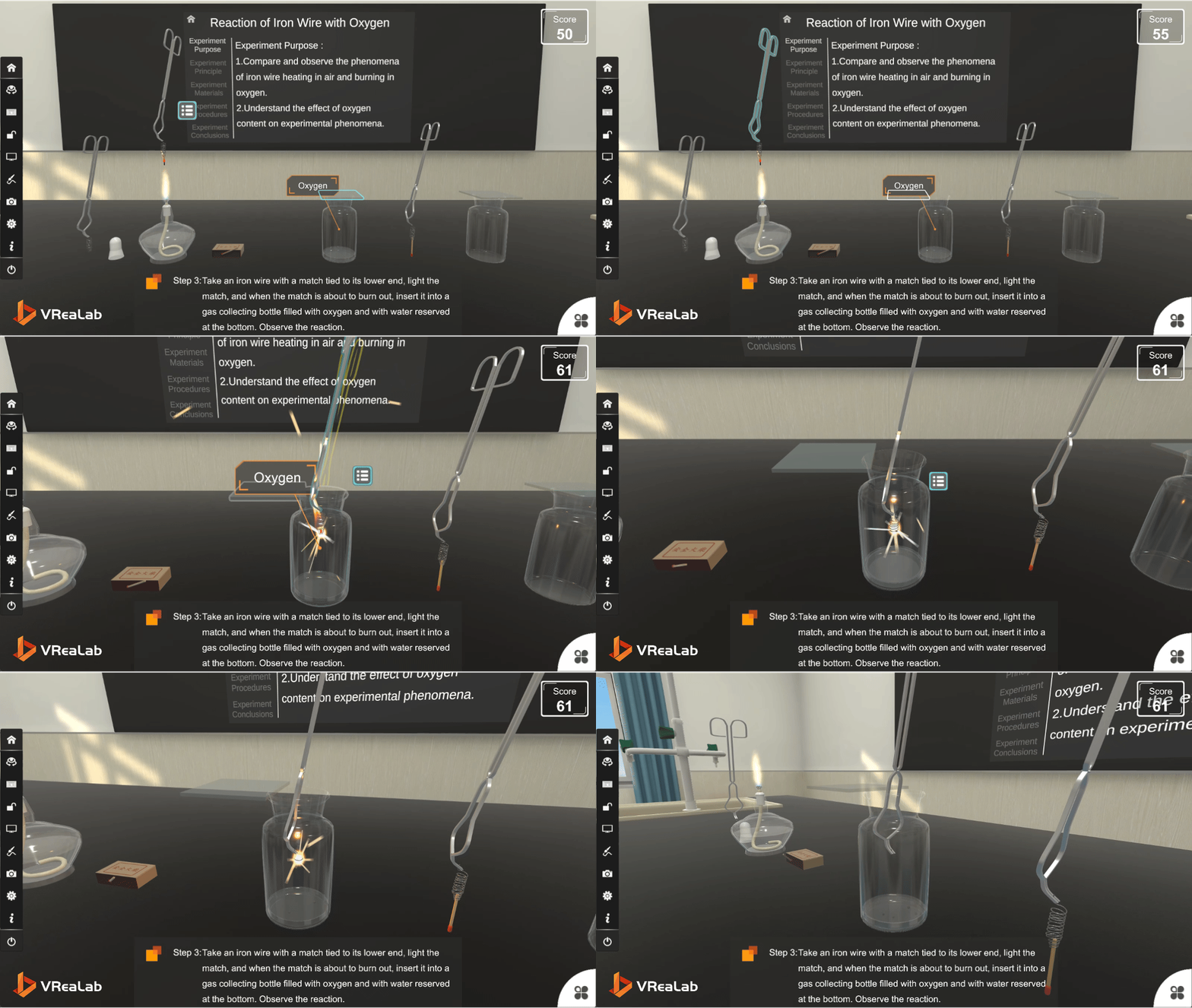
At room temperature, sulfur is a pale yellow, brittle, soft crystal. Its most classic reaction is combustion. In air, it produces only a faint pale blue flame; thrust into pure oxygen, the flame instantly turns a brilliant blue-violet, generating sulfur dioxide with its characteristic pungent odor. Yet this experiment is rarely performed by students in traditional classrooms — sulfur dioxide is toxic and highly irritating, and even a fume hood demonstration makes it difficult for everyone to observe the details clearly. In the VR Chemistry Lab, virtual simulation experiments eliminate all risk, allowing students to repeat the procedure and clearly compare the flame differences between the two environments.

Sulfur dioxide exhibits remarkable properties. Most distinctive is its reversible bleaching effect: when bubbled into magenta solution, the red color rapidly fades, only to return upon heating. This property has been used to bleach paper and straw hats, yet it has also been exploited by unscrupulous vendors to bleach food products.

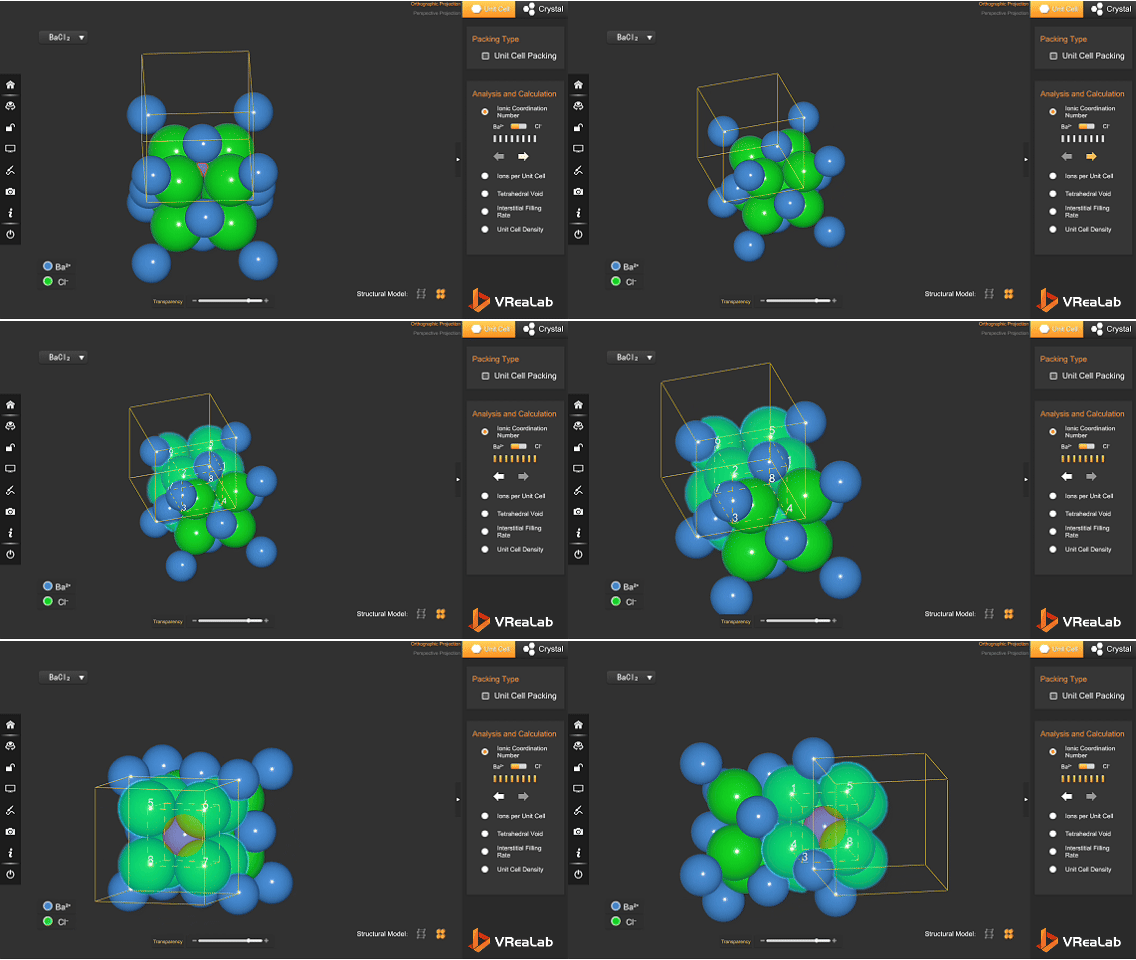
At the same time, owing to its high solubility, sulfur dioxide is also the primary culprit behind acid rain. After transforming into sulfuric acid in the atmosphere, it falls with precipitation, corroding buildings and acidifying soil. Traditional experiments carry leakage risks throughout; virtual simulation experiments can safely reproduce every reaction, allowing clear observation of solution color changes. Understanding these transformations at the molecular level — from gas to acid, from crystal structure to chemical bond — is where Crystal Structure Visualization adds critical depth, revealing how the atomic arrangement of sulfur allotropes gives rise to such diverse chemical behavior.

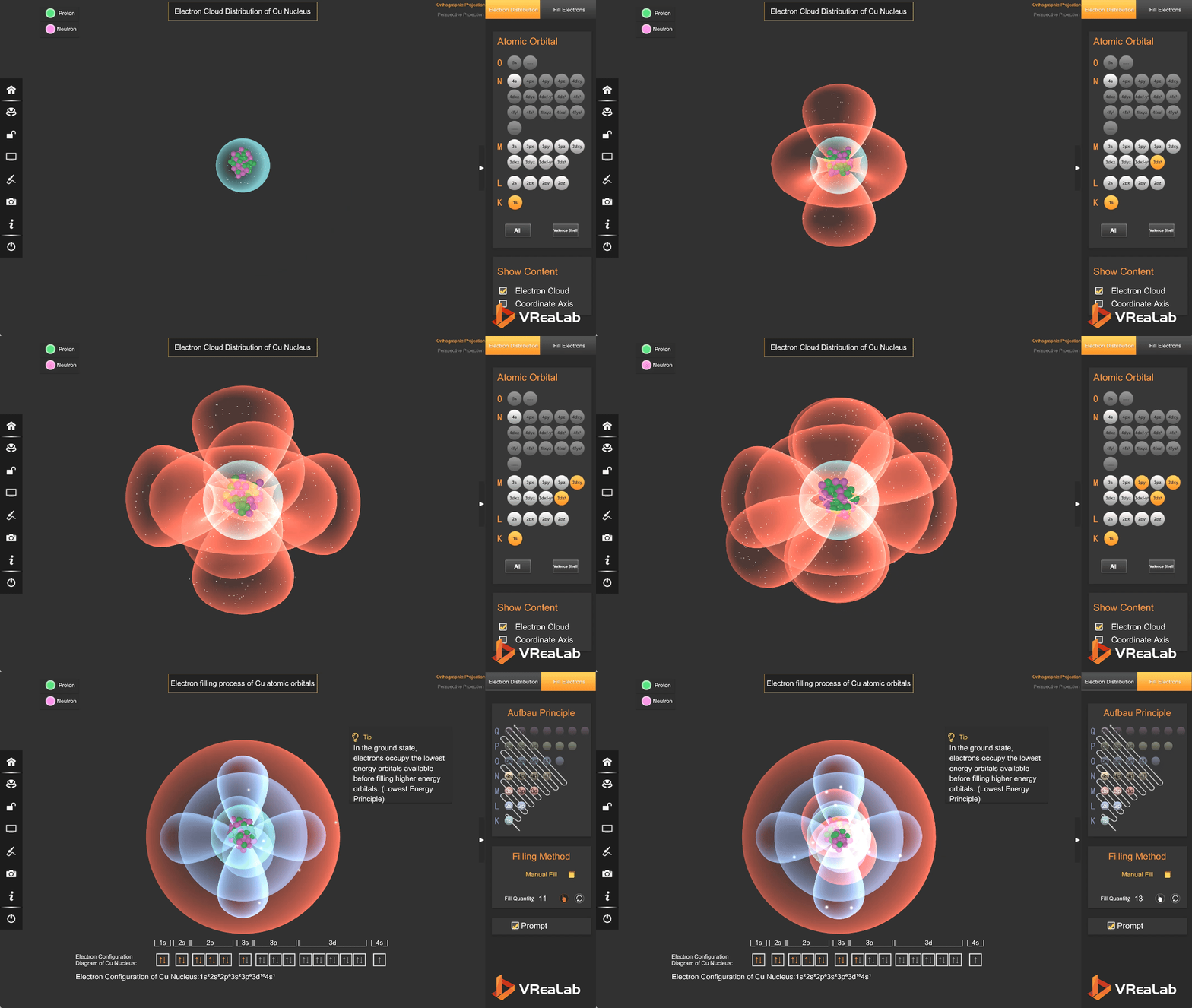
In the laboratory, a micro-scale apparatus simulates the core process of the contact method for producing sulfuric acid: first, sulfur dioxide is generated by reacting sodium sulfite with concentrated sulfuric acid; then it is heated to 400–500°C in a catalytic tube packed with vanadium pentoxide, reacting with oxygen to form sulfur trioxide; finally, the product is absorbed by 98.3% concentrated sulfuric acid to prevent acid mist formation. This simulated experiment is virtually impossible to conduct in a traditional classroom — the gases are highly toxic and temperature control demands are extreme. The VR Chemistry Lab recreates the entire apparatus at 1:1 scale, letting students assemble instruments with their own hands, adjust parameters, and master core principles at zero risk. By examining the 3D Chemistry Structure of catalytic surfaces and reaction intermediates, learners gain an intuitive grasp of how molecular geometry governs reactivity — something no textbook diagram can convey.

The Significance of Virtual Simulation Experiments
From the blue-violet flame to the reversible bleaching of sulfur dioxide, and onward to the extremely hazardous concentrated sulfuric acid, the element of sulfur consistently demonstrates a striking duality. It is both an industrial cornerstone and a pollutant that demands caution. Crystal Structure Visualization and 3D Chemistry Structure models within the VR Chemistry Lab open the door to safe exploration — without facing risk, students can personally complete these classic experiments and experience the unique charm of the most "fragrant" element in chemistry.
Source: Judao Edu