Chemistry Metaverse Virtual Lab: Laboratory Preparation of Free-State Chlorine and Metal Combustion Reactions
Chlorine — always carrying a faint pungent scent — is everywhere yet unobtrusive, deeply involved in every breath and cycle of modern civilization. The chemistry metaverse virtual lab opens a clear prism for students, making chlorine not just a label of odor, but an observable, adjustable, and contemplable active existence.
Chlorine — always carrying a faint pungent scent — is everywhere yet unobtrusive, deeply involved in every breath and cycle of modern civilization. In a quieter, more precise way, it repeatedly recalibrates humanity's understanding of "control" and "risk" along the boundary of oxidation and reduction. The chemistry metaverse virtual lab opens a clear prism for students, making chlorine not just a label of odor, but an observable, adjustable, and contemplable active existence.

The First Encounter with Chlorine: Controllable Preparation in the Laboratory
The chlorine we encounter in daily life exists almost exclusively as chloride ions in combined form. To obtain free-state chlorine gas, the most classic and representative method is the heating reaction of manganese dioxide with concentrated hydrochloric acid — the first window into understanding chlorine gas in the secondary school chemistry system.
This classic experiment faces numerous constraints in real teaching scenarios: the strong corrosiveness of concentrated hydrochloric acid and the acute toxicity of chlorine gas create risks of leakage and chemical burns throughout the entire procedure. Minor deviations in heating temperature control or reagent dripping speed can lead to runaway reactions or impure products. Strict hazardous-chemical regulations make it difficult for most students to perform the full process hands-on and repeatedly. The Virtual Lab solves these problems perfectly — reproducing the entire experimental apparatus and operational logic at 1:1 scale. Without facing hazardous-chemical risks, students can practice every step repeatedly, zoom in to observe micro-level changes such as bubble formation and gas purification, precisely control parameters like temperature and reagent dosage, intuitively understand the design rationale of each operation, and thoroughly master the core logic of chlorine gas preparation in a zero-risk VR Chemistry Lab environment.

Chlorine Gas Reacts with Sodium: The Violent Birth of Gentle Table Salt
In a real experiment, metallic sodium oxidizes extremely easily, making the timing control of polishing and heating exceedingly difficult. During the reaction, the intense combustion of sodium may produce flying molten material, accompanied by the irritating risk of chlorine gas leakage, making it hard to clearly capture the complete reaction phenomena. The Virtual Lab enables precise control of the sodium polishing degree and heating duration, eliminates splash and leakage risks, and allows zooming the camera to fully observe the entire process from sodium melting to combustion to white smoke generation.

Chlorine Gas Reacts with Iron: Demonstrating Exceptional Oxidizing Power
We know that iron reacting with dilute hydrochloric acid produces only +2-valent ferrous ions, yet the strong oxidizing power of chlorine gas can directly oxidize iron to its highest +3 valence — a superb demonstration of chlorine's oxidizing nature.
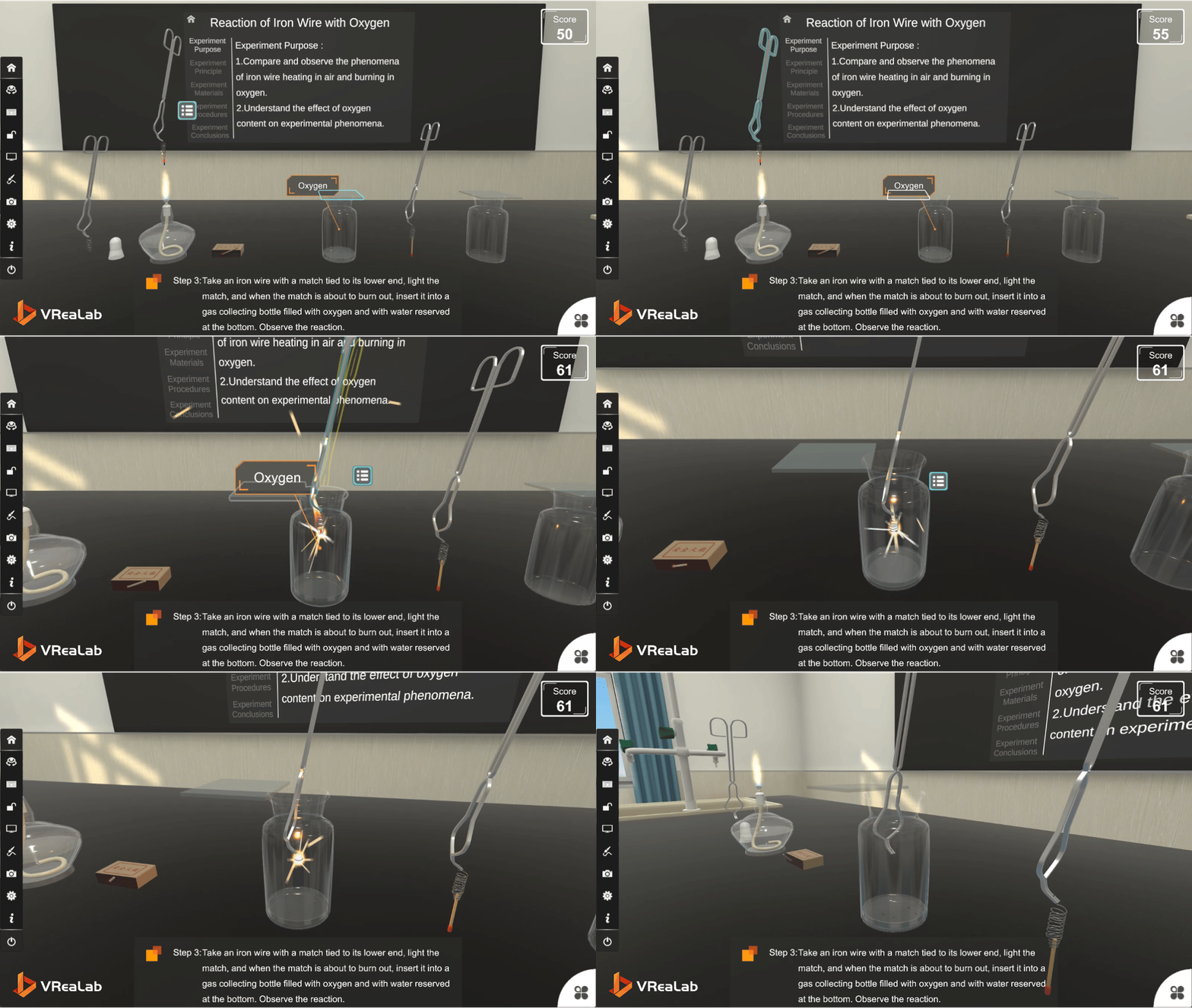
In a real experiment, the ignition timing of the iron wire and the dryness and concentration of the chlorine gas all directly affect the reaction phenomena. Slight deviations lead to incomplete combustion. The generated iron(III) chloride fumes are highly corrosive, easily irritating skin and respiratory tracts, and it is difficult to repeatedly adjust parameters to observe differences. In the VR Classroom, the Virtual Lab precisely controls chlorine gas concentration and iron wire ignition timing, eliminates corrosion and leakage risks, and enables intuitive comparison of the product differences between iron-with-hydrochloric-acid and iron-with-chlorine-gas reactions — deepening students' understanding of chlorine's strong oxidizing power.

From the controllable preparation reaction in the laboratory to the fierce combustion upon colliding with metals, the "dual nature" of chlorine is vividly displayed: it possesses formidable oxidizing power, acute toxicity, and corrosiveness — the slightest misstep brings risk. Yet it is precisely this active chemical nature that enables it to form stable chlorides, becoming a core element supporting modern life and industrial systems. The Virtual Lab builds a safe bridge — without facing hazardous-chemical risks, students can personally touch the chemical essence of chlorine, and through repeated operation and observation, read the complete face of this element hidden behind its pungent odor: both gentle and fierce.
Source: vrealab.com