AI + Virtual Simulation Lab: Empowering "Learning by Doing" in Classroom Practice
Traditional classrooms struggle with abstract concepts, dangerous experiments, and low student engagement. AI-powered virtual simulation labs are solving these pain points, making immersive hands-on learning accessible to every student.
Starting from teaching challenges, delivering through technology
Building digital-intelligent teaching solutions tailored for schools
In traditional classrooms, abstract knowledge is hard to understand, dangerous experiments are difficult to conduct, and student interest is hard to ignite. These teaching pain points are being solved one by one by artificial intelligence + virtual simulation labs.
Starting this fall semester, the Ministry of Education's "Learning by Doing" Pilot Action for Science Education in Compulsory Education will be fully implemented in primary and middle schools nationwide. The initiative emphasizes student-centered, interest-driven, practice-oriented learning, focusing on strengthening scientific inquiry practices and driving the transformation of science education pedagogy.

When "learning by doing" becomes the new classroom requirement, what schools often lack most is an environment where students can "learn by doing." The Guidelines mention that schools with the capacity are encouraged to leverage computer modeling, generative AI, and virtual simulation science experiments and other digital-intelligent technologies to support learning activities.
JuDao's "AI + Virtual Simulation Lab" supports schools in exploring student-centered, experience-driven new teaching and learning models. It transforms abstract knowledge into tangible immersive experiences, making students love learning and enjoy learning, while enabling teachers to teach more intuitively and efficiently. With comprehensive technology application forms, it not only adapts to regular teaching but also meets innovative teaching needs.

Today, we focus on one of the most representative classroom digital-intelligent solutions — the VR Virtual Classroom: How does it help "learning by doing" truly enter daily classrooms, and how does it help schools solve practical problems such as difficult experiments, weak experiences, and low interest?

01 What is a VR Virtual Classroom?
A VR Virtual Classroom is an immersive teaching and learning space built on cutting-edge technologies such as 3D modeling, virtual simulation, and human-computer interaction. Here, highly realistic experiments and scene environments are presented, and students can perform hands-on operations and real-time interactions, understanding knowledge through "doing."


02 How Does the VR Virtual Classroom Work?
The VR Virtual Classroom consists of a teacher side and a student side.
On the teacher side, AI + virtual simulation digital course software and a VR classroom management system are deployed to deliver teaching demonstrations and classroom control. On the student side, VR all-in-one hardware and AI + virtual simulation digital course software provide students with an immersive, interactive self-directed learning environment.

The VR Virtual Classroom operates primarily through AI + virtual simulation digital courses. Teachers can apply AI + virtual simulation digital courses at every stage of teaching, such as pre-class lesson preparation, in-class instruction, and post-class review.
Let's take in-class application as an example.
Teacher Side
AI + virtual simulation digital courses align with the new curriculum standard knowledge points. During instruction, teachers can use AI + virtual simulation digital courses to visually demonstrate abstract, dangerous, microscopic, and macroscopic content. Students can also be invited to the front to operate, enhancing interaction. Through experiment building, various teaching scenarios can be met, such as variable training for daily exercises (physics, chemistry), real exam simulation, and principle verification demonstrations, helping students understand knowledge from multiple dimensions and making explanations clearer and more thorough.


Teachers can also use the VR classroom management system to centrally control learning resources on student devices, view the real-time status of each device and student operation screens, and intervene with guidance at appropriate times, effectively controlling the classroom rhythm and understanding student progress.


Student Side
After putting on the VR all-in-one headset and entering the virtual learning space, students select the corresponding experiment and can independently choose teaching mode or inquiry mode according to their learning needs. The teaching mode features built-in highlight guidance functions that gradually guide students through experimental operations. The inquiry mode supports students in independently exploring experimental procedures, with the system providing real-time operation score feedback to help students promptly understand their performance.
In the virtual learning space, students can personally complete experimental steps such as instrument operation, reagent pouring, and circuit connection, gaining an immersive hands-on experience that feels like being there. In a VR Biology Lab, for example, students can explore cell structures, observe DNA replication, and dissect virtual organisms — experiences that would be impossible or impractical in a traditional lab setting. This is the true power of a High School Science Virtual Lab: turning passive listening into active discovery.


03 Value and Advantages of the VR Virtual Classroom
Expanding the Boundaries of "Learning by Doing"
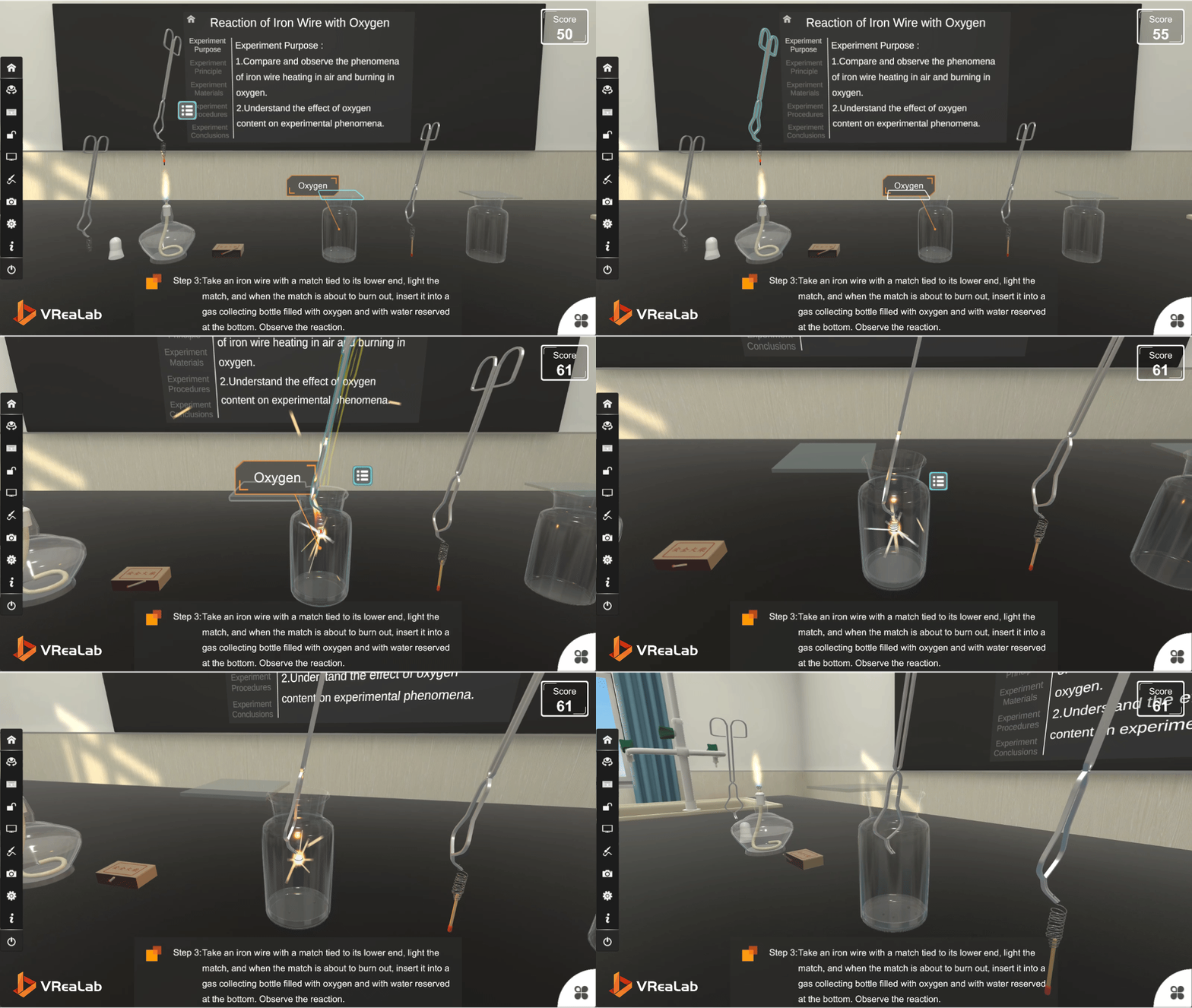
Breaking through the limitations of real-world conditions, experiments that are difficult or impossible to conduct due to safety risks, time constraints, space limitations, or high costs become operable and experienceable. Students have more opportunities for "hands-on" learning, understanding principles through "doing" and growing through "experience."
A High School Science Virtual Lab can simulate everything from chemical reactions with explosive risks to microscopic biological processes that cannot be seen with the naked eye. The VR Biology Lab specifically enables students to explore ecosystems, cellular processes, and genetic mechanisms in a safe, repeatable environment — all at a fraction of the cost of physical lab materials.

Optimizing Knowledge Presentation: Intuitive, Dynamic, Interactive
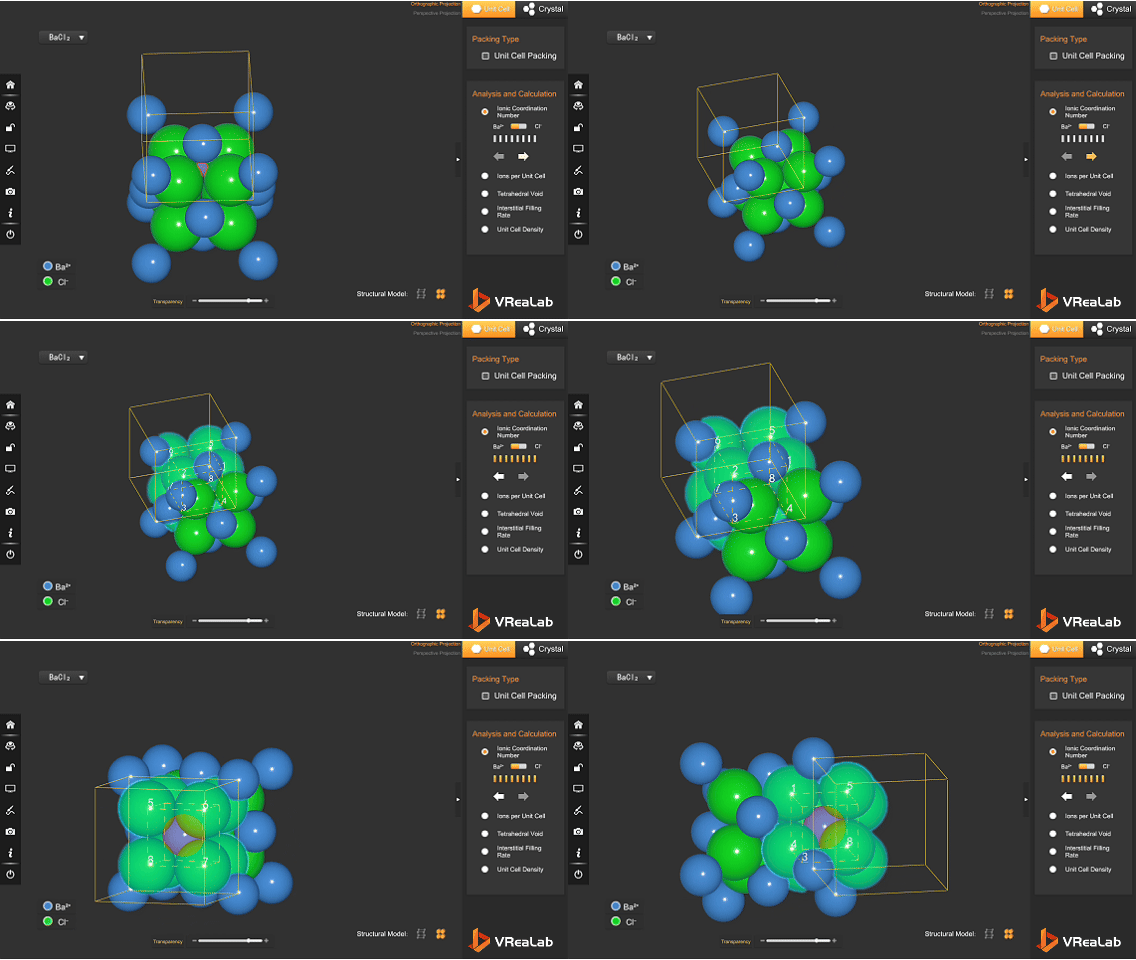
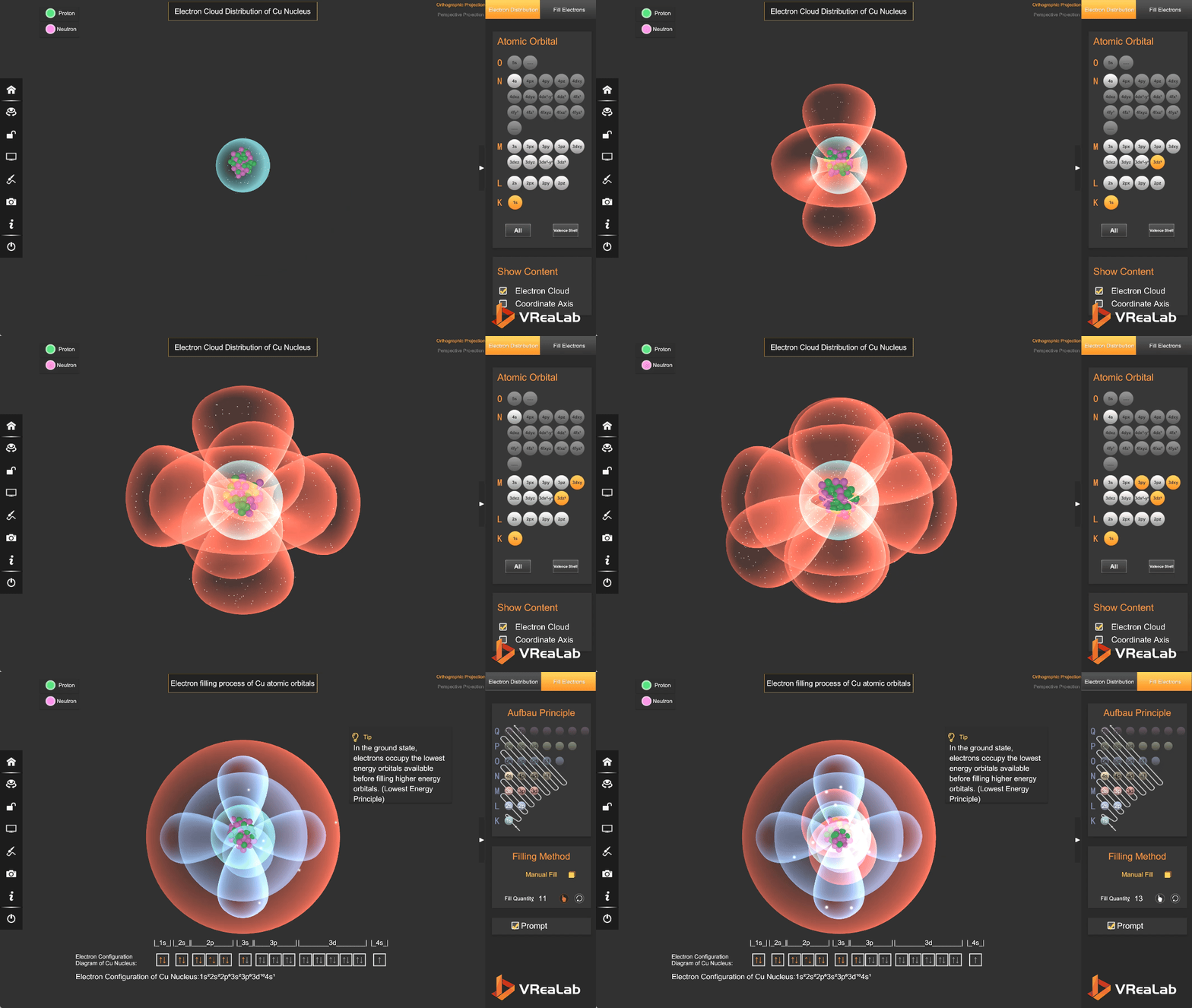
In the VR Virtual Classroom, abstract and difficult principles become intuitively visual content, and static textbook displays become interactive, operable dynamic processes. The three-dimensional presentation of knowledge visualization lowers the cognitive threshold, enabling students to more easily grasp core concepts.
Many structures and relationships that were previously difficult to clarify through imagination alone become clear and perceptible under intuitive guidance, which helps promote the development of students' spatial thinking. Through interactive operations, students can personally explore, zoom in, zoom out, and rotate 3D objects, observing and exploring from multiple dimensions and gradually building a complete understanding of knowledge.


Stimulating Student Interest and Improving Classroom Efficiency
The engaging, immersive teaching method created with AI + virtual simulation digital courses transforms originally dry text and symbols into vivid and interesting interactive experiences, helping to stimulate student interest and enthusiasm for participation. At the same time, it provides teachers with richer teaching resources, contributing to improved classroom quality and efficiency.